
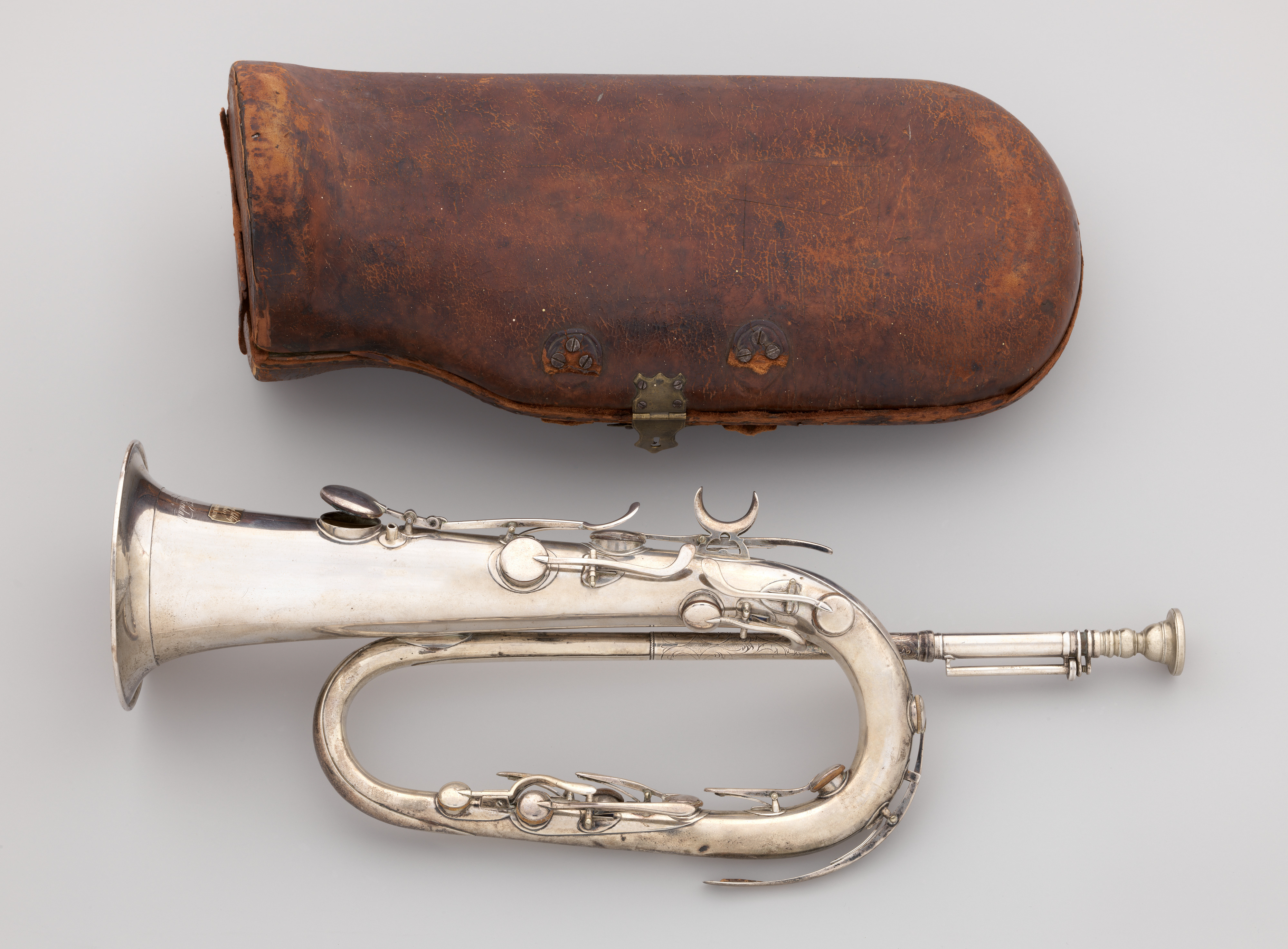
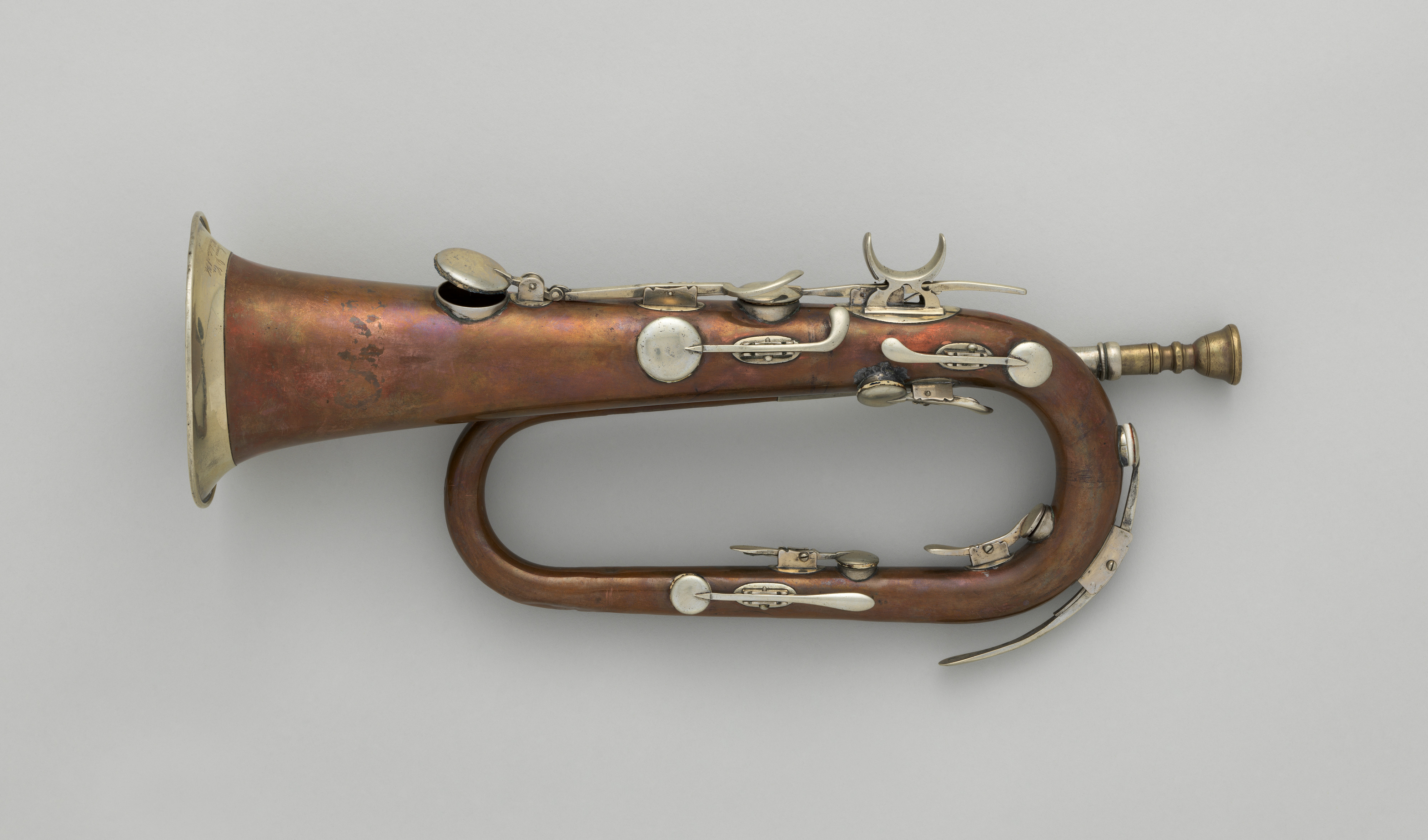
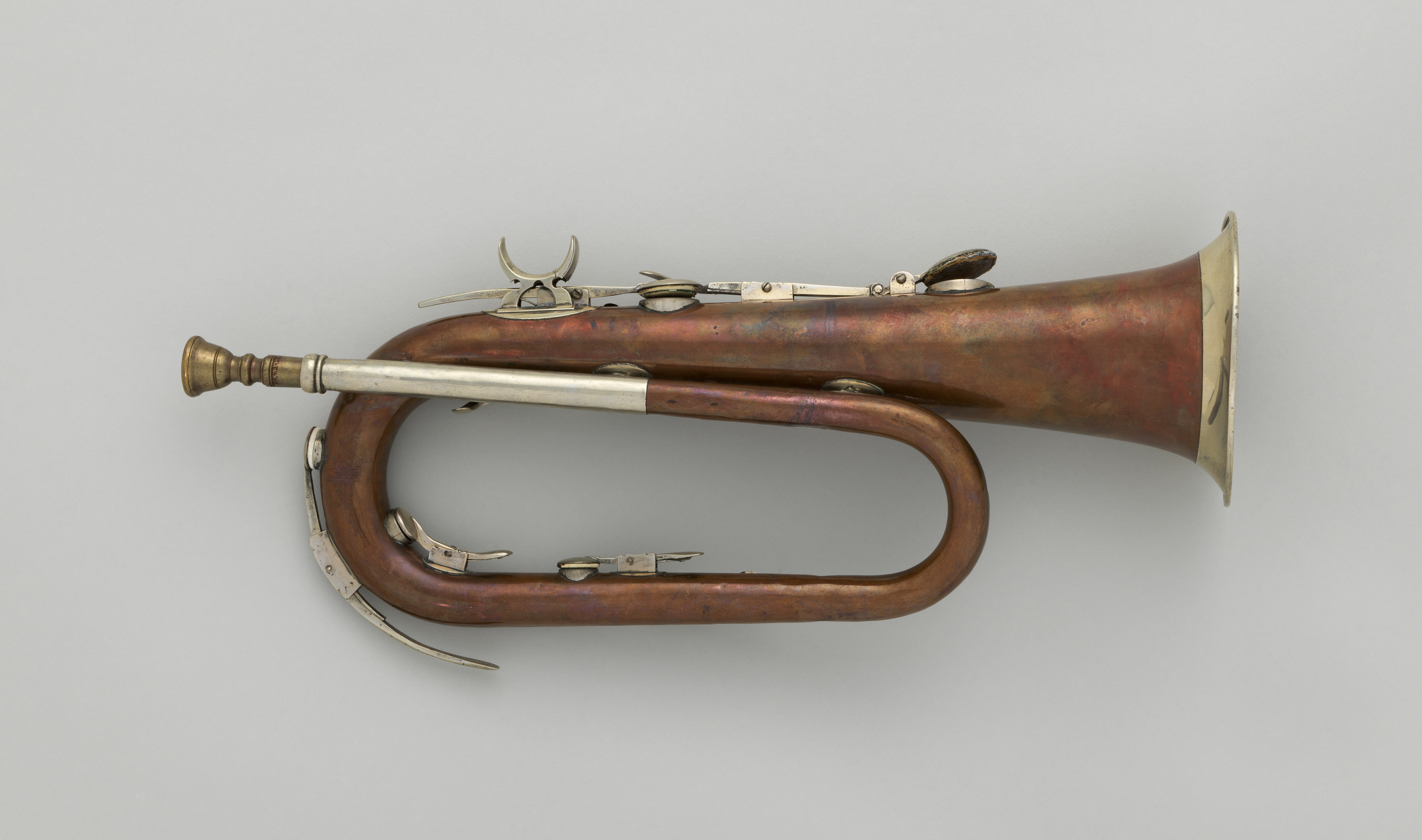
Keyed Bugle
| Category | Wind (brass with keys) |
|---|---|
| Country of origin | Ireland / United Kingdom |
| Classification | wind instrument |
| Wikipedia | en.wikipedia.org |
| Wikidata | Q1744357 |
Overview
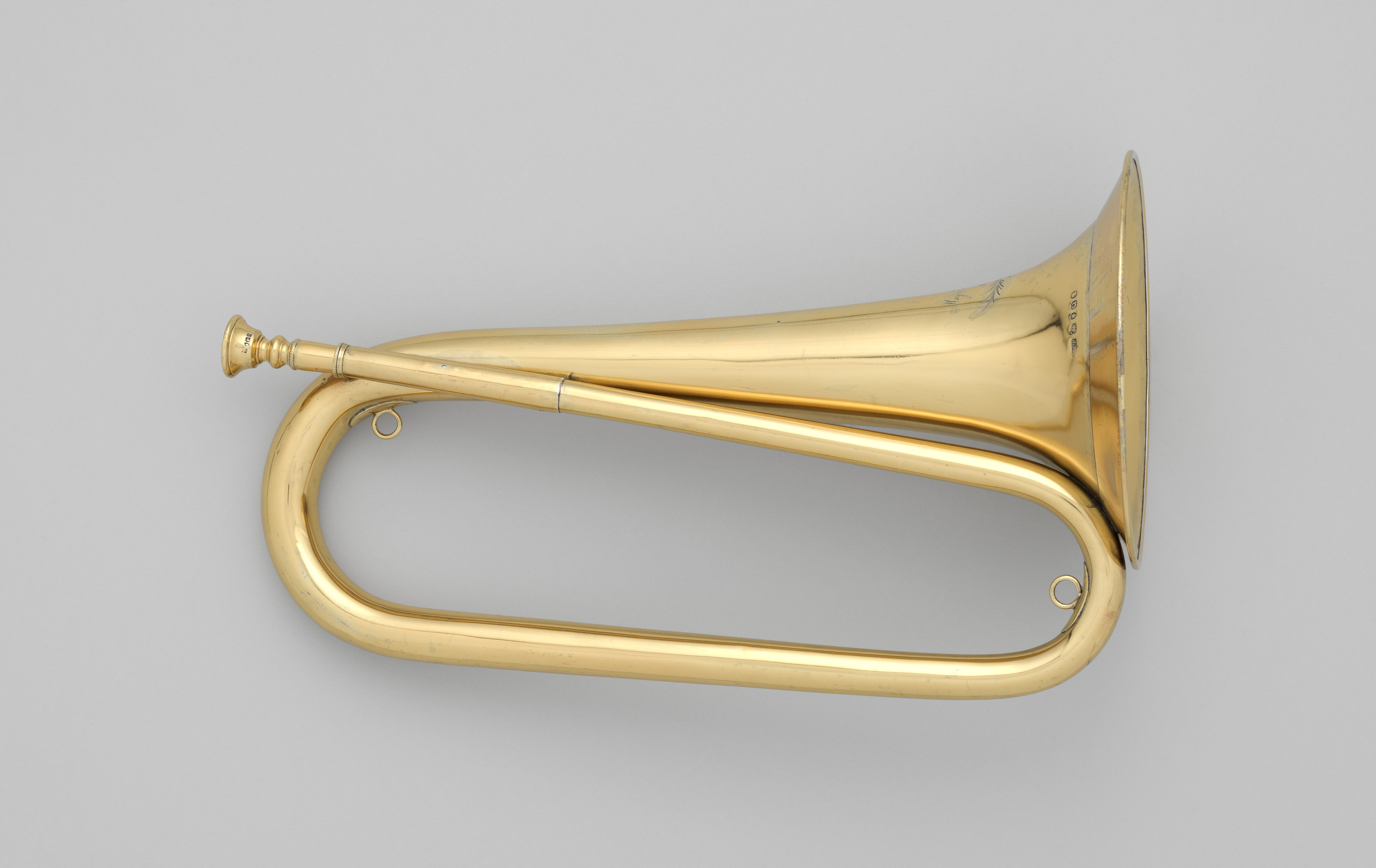
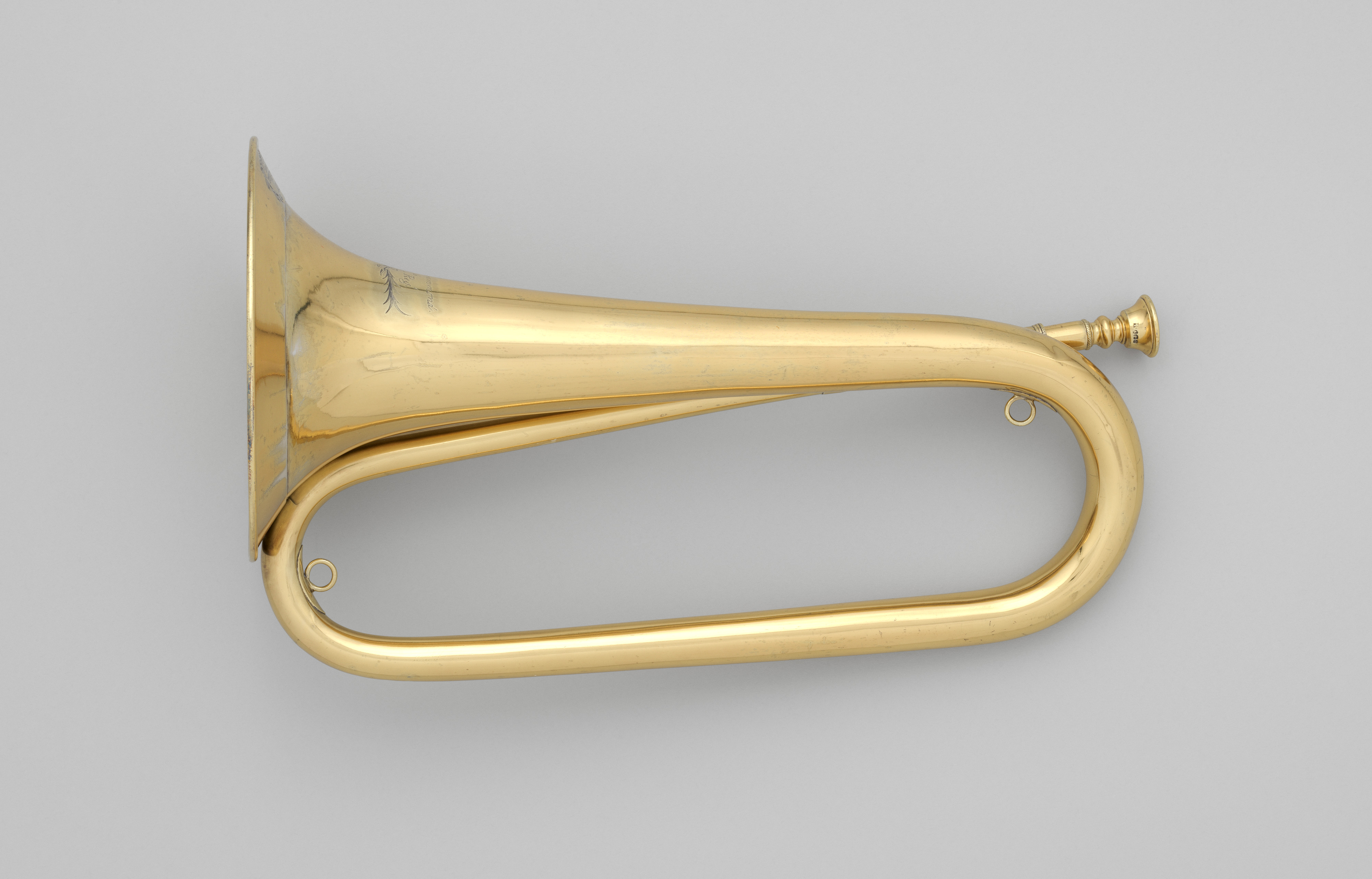
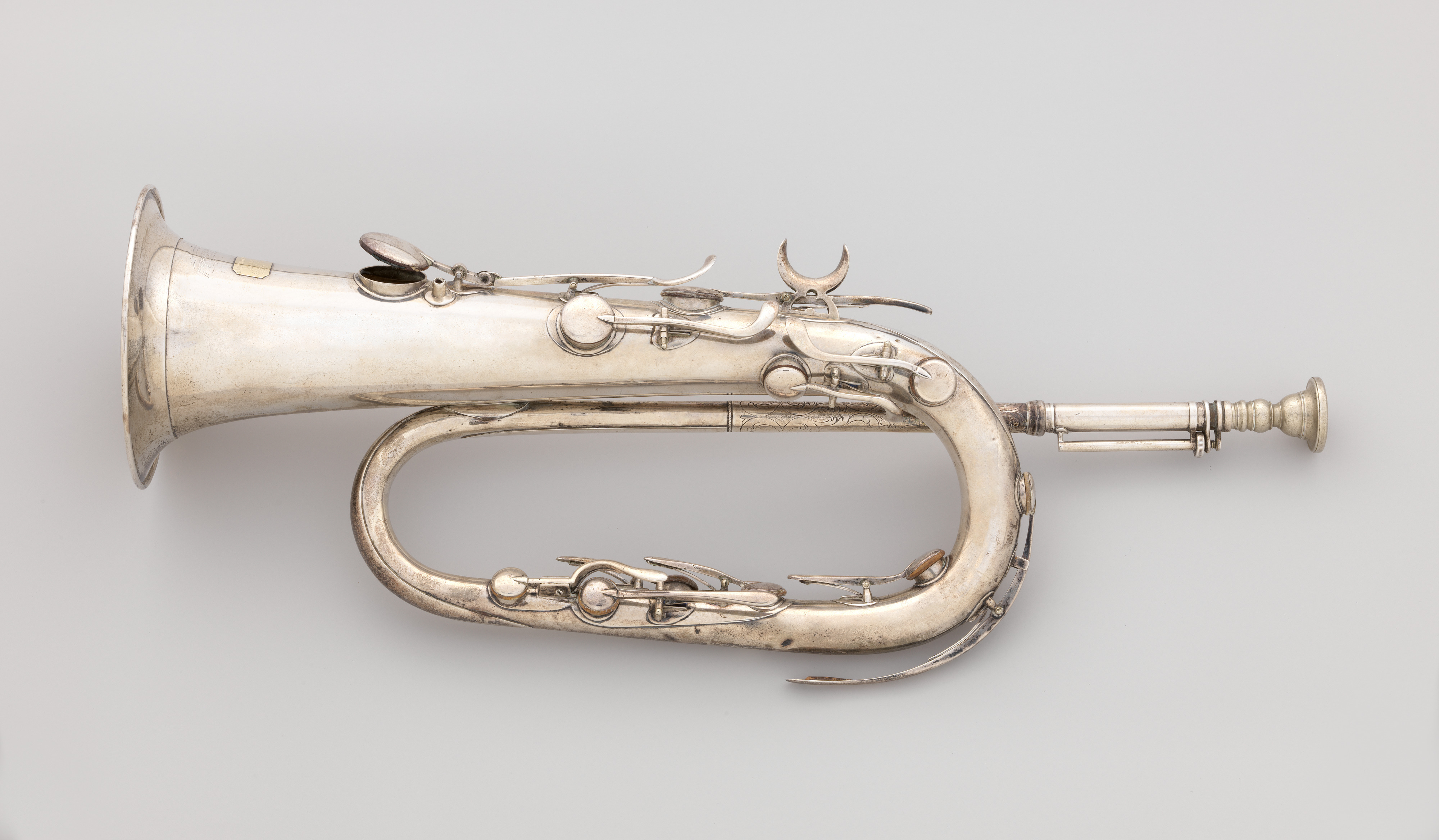
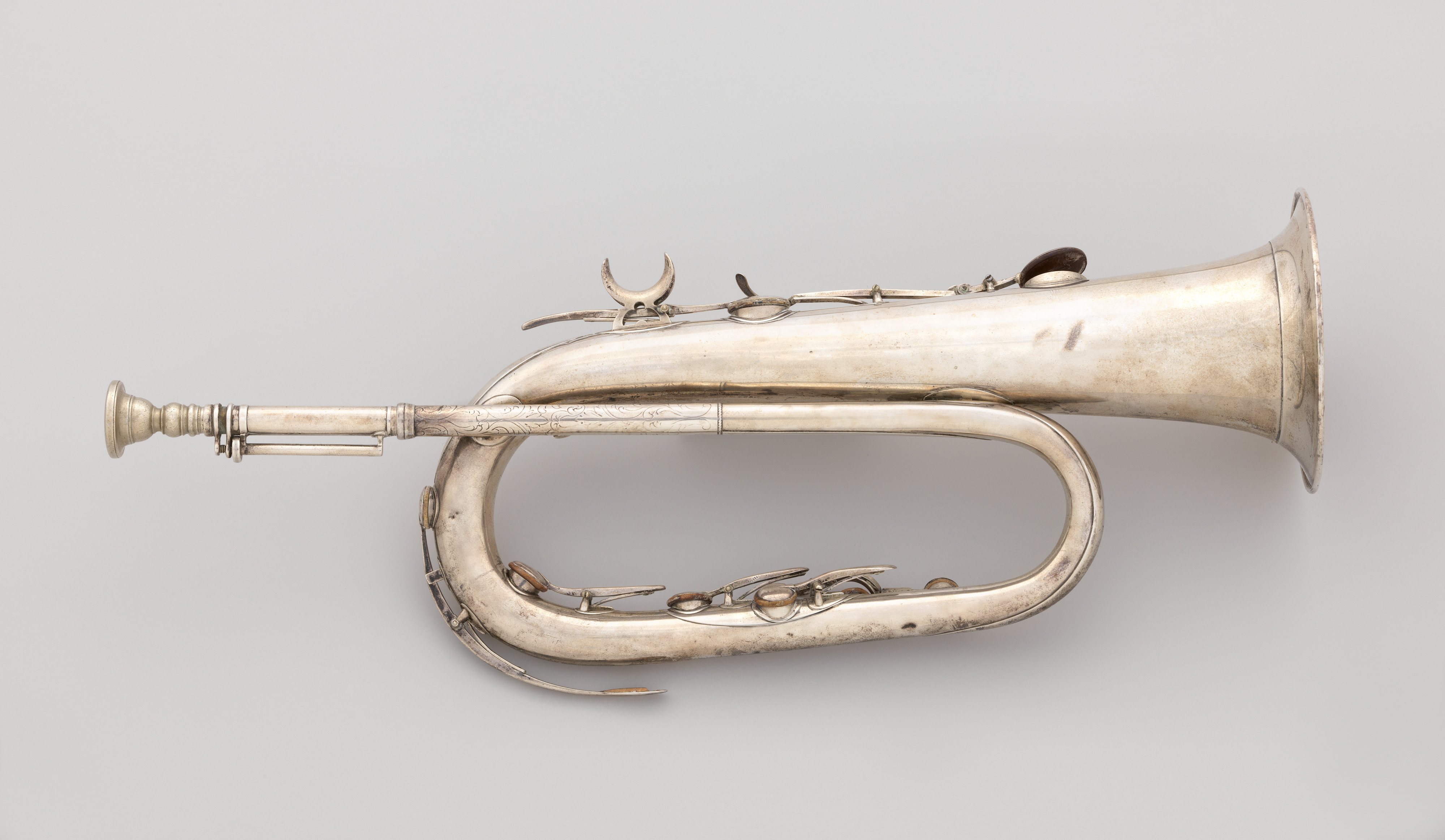
The keyed bugle is a brass instrument from the early nineteenth century. It is shaped like a standard bugle but fitted with side-mounted keys that open and close tone holes along the body. These keys give the instrument a fully chromatic scale, something the simple natural bugle could not produce. The keyed bugle is sometimes called the Kent bugle in honour of an early royal patron.
Origin & History
The keyed bugle was patented in 1810 by the Irish bandmaster Joseph Halliday. Before its invention, brass instruments were largely limited to the notes of the natural harmonic series. By piercing the body with tone holes and covering them with key-operated pads, Halliday adapted the woodwind keying principle to a brass body. The instrument quickly entered military bands across Britain, Continental Europe, and the United States.
How It’s Played
The player buzzes the lips into a cup mouthpiece, as on a standard bugle. The keys are operated by the fingers of one hand, opening tone holes that lower or raise the sounding pitch. By combining lip-controlled harmonics with key fingerings, the player can produce a full chromatic scale across a useful range. The tone is warm but slightly muffled compared with a modern cornet.
Cultural Significance
For about three decades the keyed bugle was the leading brass solo voice in military and town bands. American virtuoso Edward “Ned” Kendall became famous for keyed bugle performances in the 1830s. After about 1840 the instrument was rapidly displaced by the cornet and other valved brass instruments, whose simpler, more reliable mechanism produced a clearer tone. Surviving keyed bugles are now mainly studied as a step in the technical evolution of brass instruments.
Related Instruments
- – the simple valveless ancestor
- – the bass member of the keyed brass family
- Cornet – the valved brass instrument that replaced the keyed bugle
- – an earlier keyed wooden bass relative
- Flugelhorn – a modern cousin in conical-bore brass
Frequently Asked Questions
Who invented the keyed bugle?
The Irish bandmaster Joseph Halliday patented the design in 1810.
Why did the keyed bugle fall out of use?
Valved brass instruments such as the cornet offered a clearer tone and simpler mechanism, displacing the keyed bugle from the mid-nineteenth century onward.
Image: photograph courtesy of the Museum für Kunst und Gewerbe Hamburg, CC0 (Wikimedia Commons).