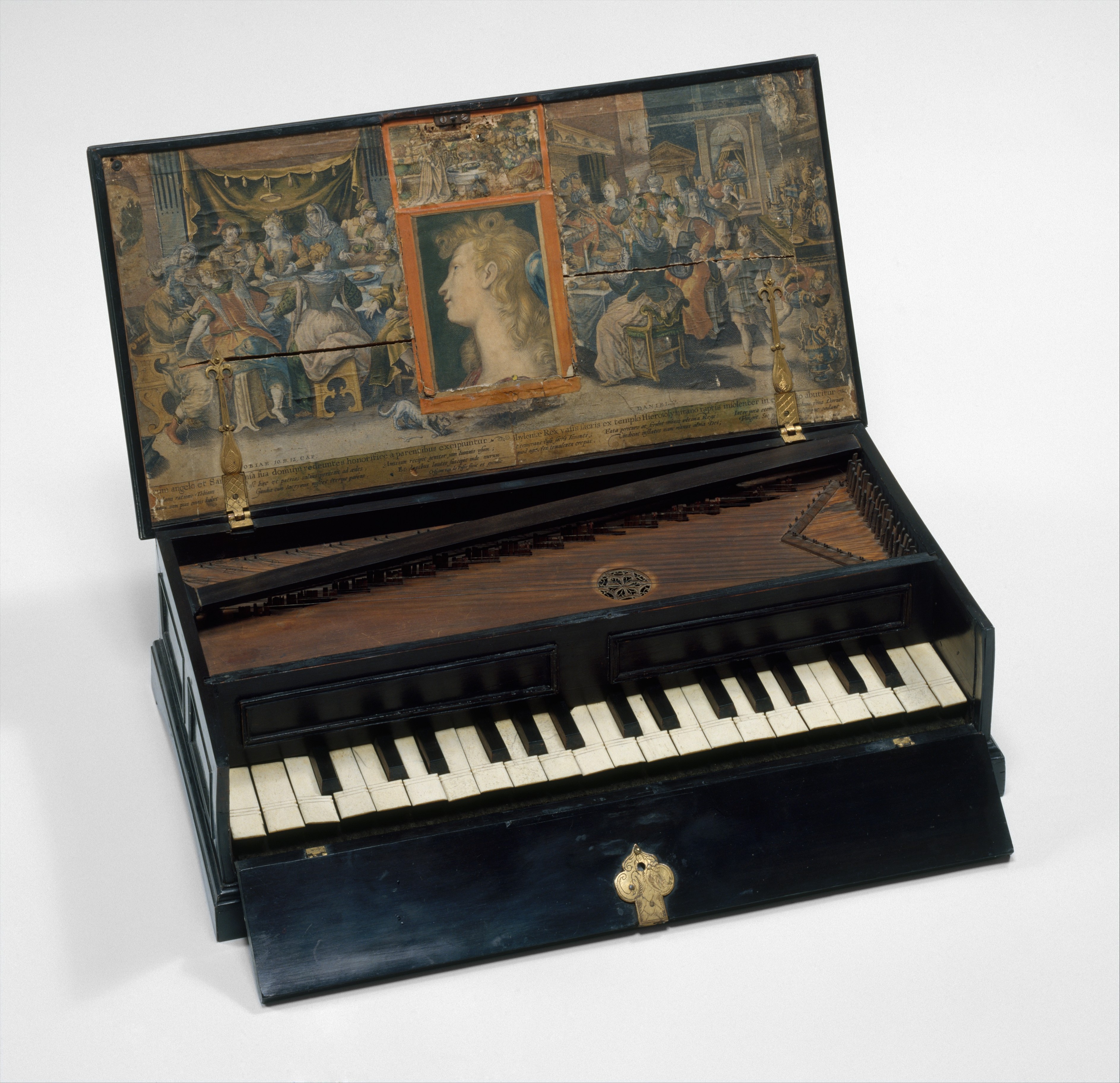

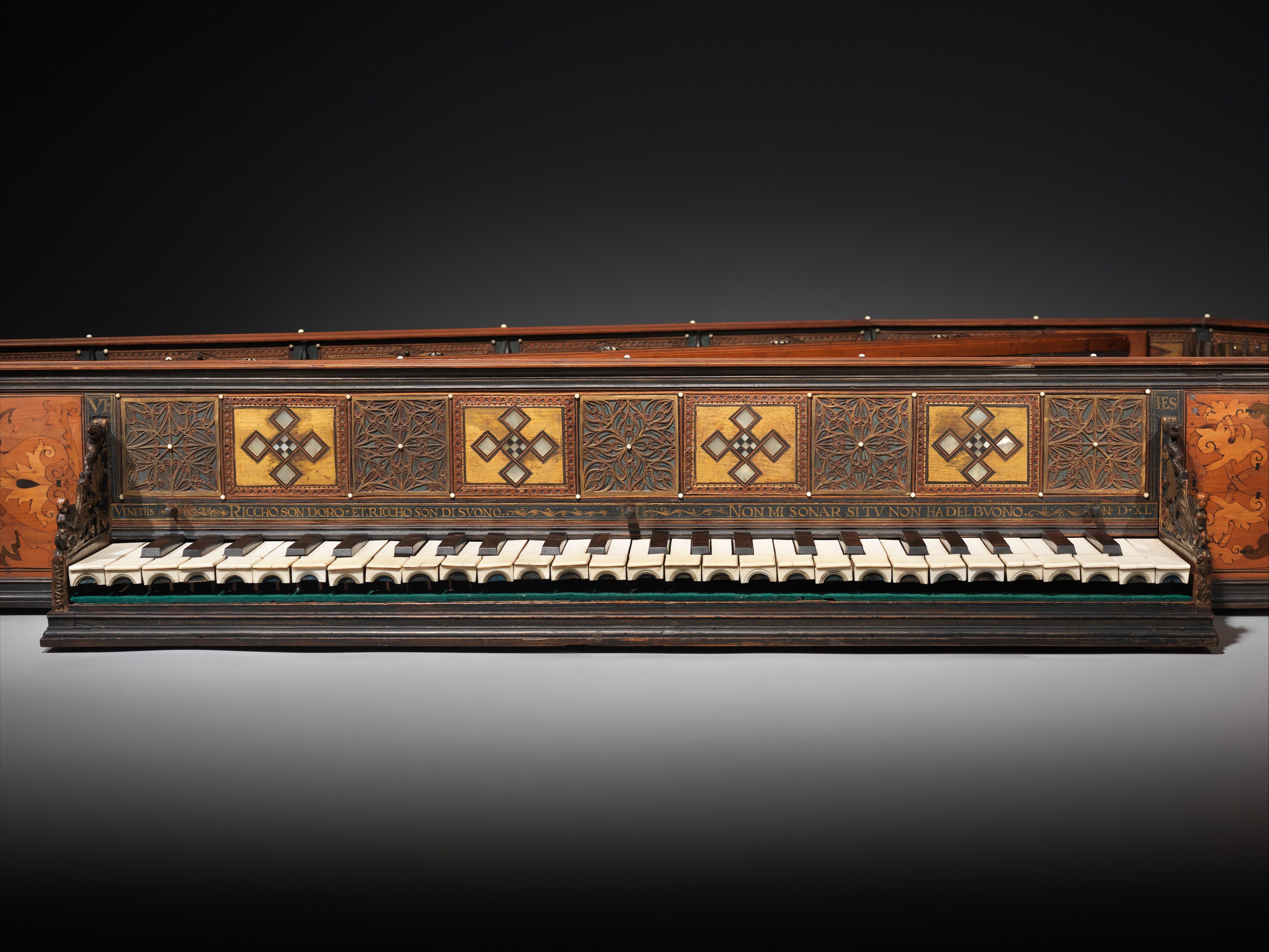
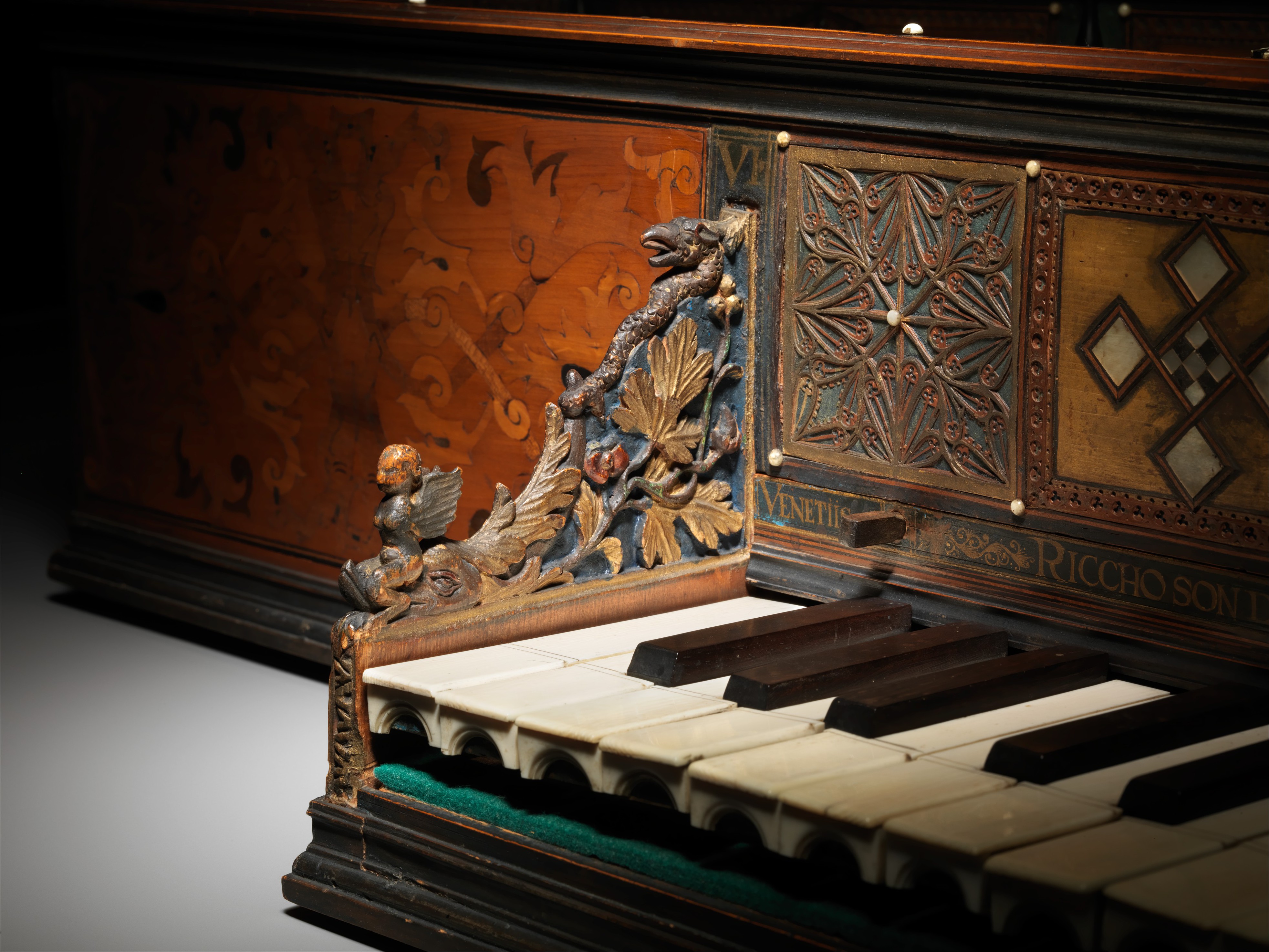
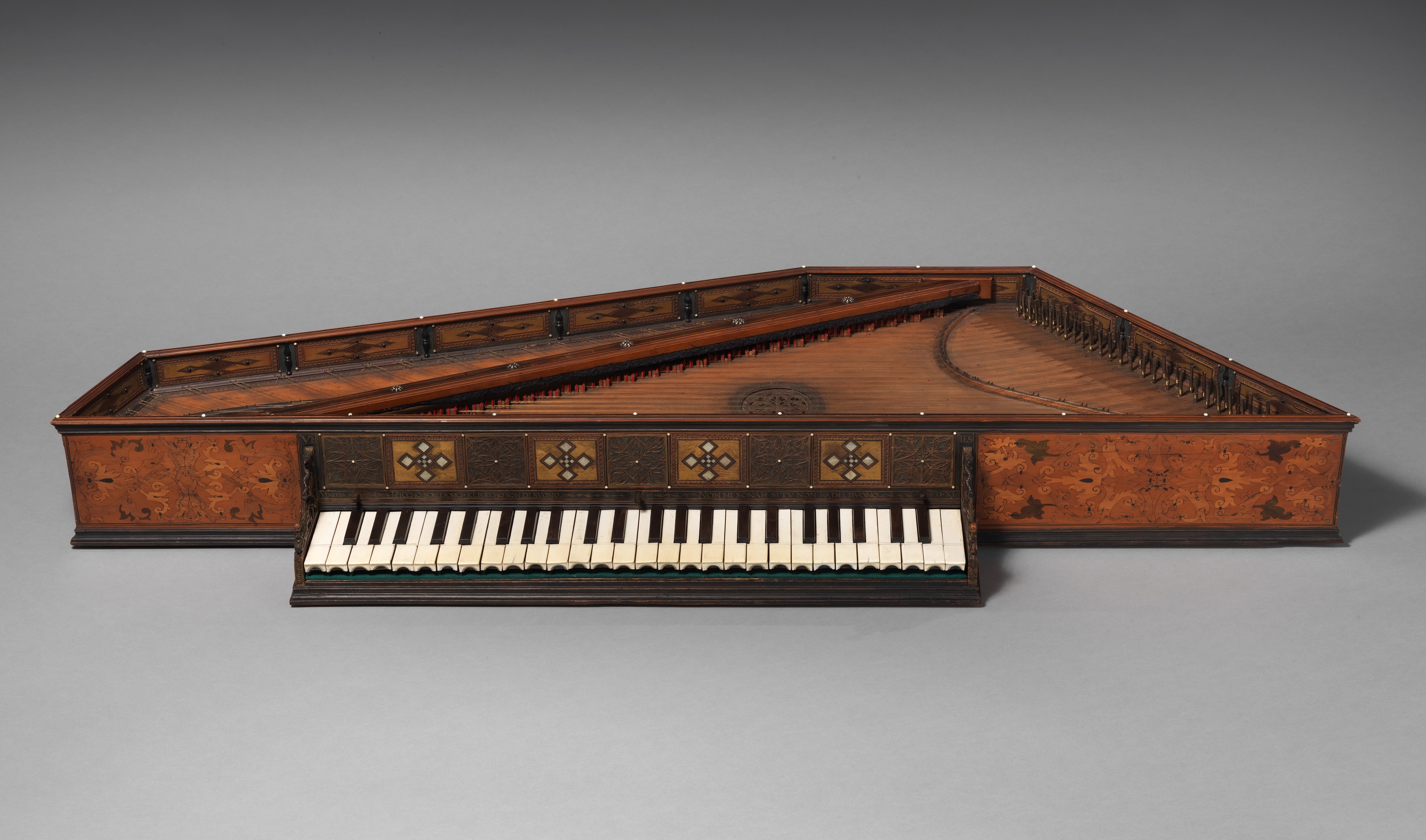
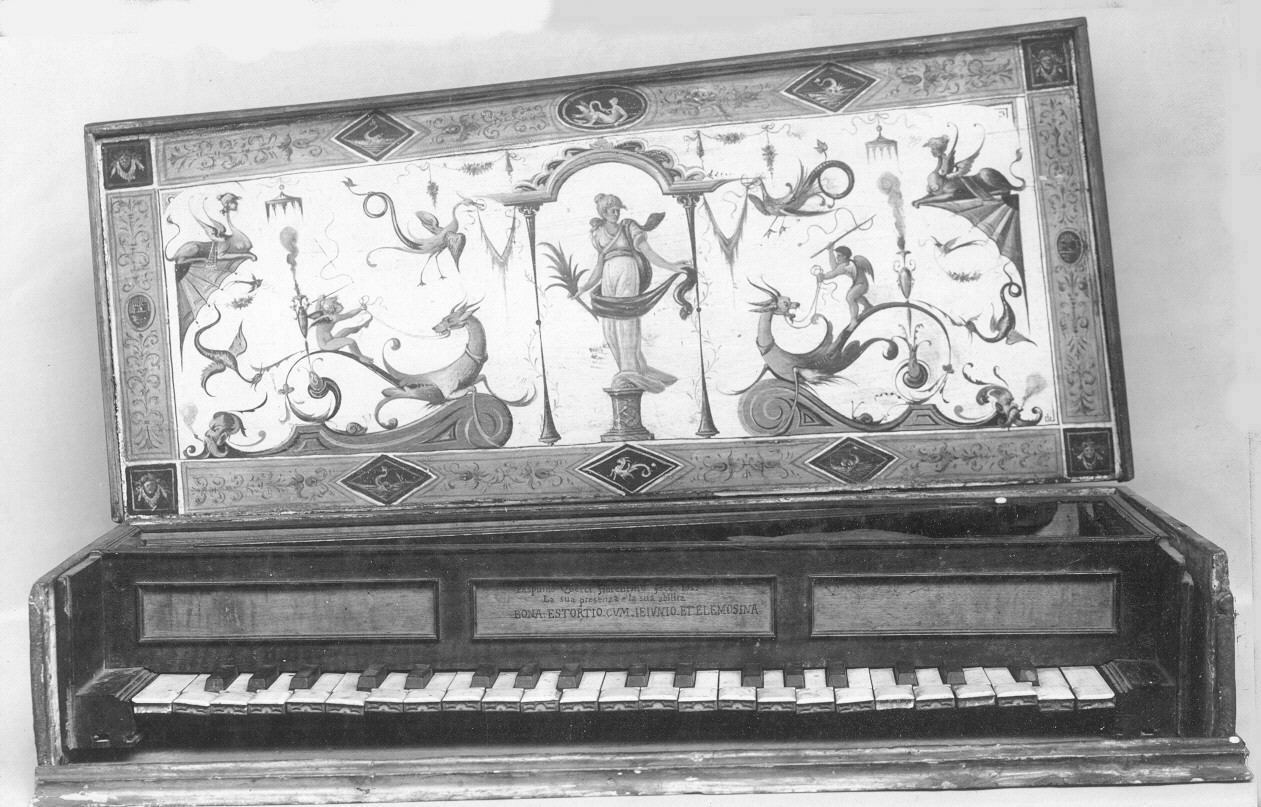
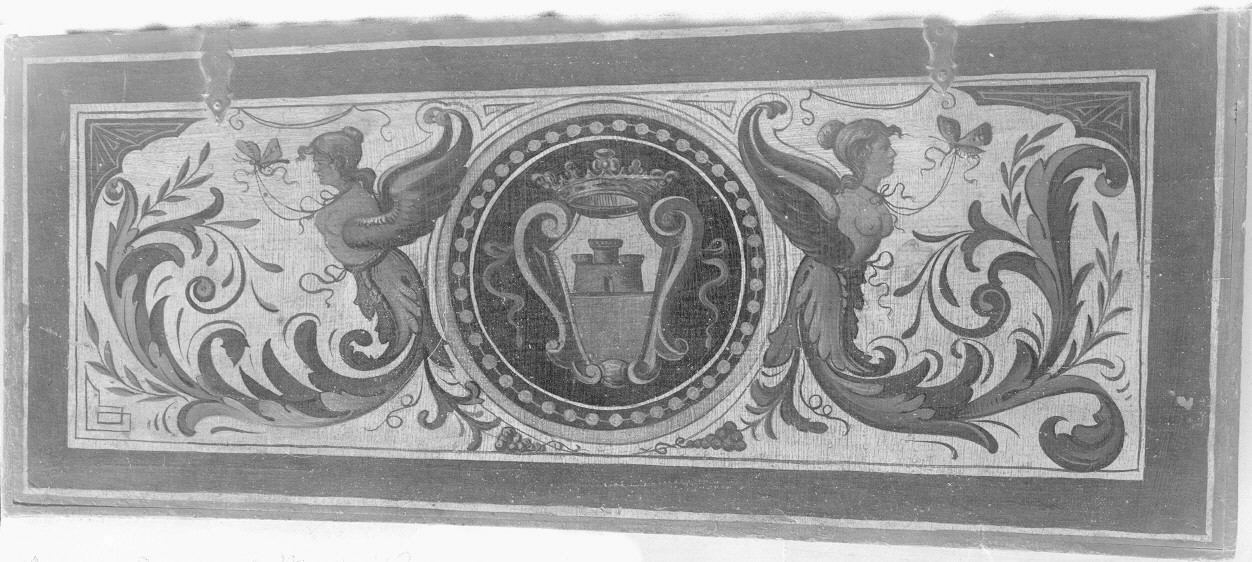

Rectangular Octave Virginal
| Category | Strings (keyboard / plucked zither) |
|---|---|
| Country of origin | Germany (Augsburg, c. 17th century) |
| Classification | ottavino, virginal |
| Wikipedia | en.wikipedia.org |
| Wikidata | Q29385577 |
Overview
The rectangular octave virginal is a small Renaissance and early Baroque keyboard instrument belonging to the virginal family. Like a standard virginal it sounds when keys lift wooden jacks fitted with quill plectra to pluck strings, but it is built at roughly half size and tuned an octave higher than a normal virginal. The case is rectangular — distinguishing it from polygonal or pentagonal virginals — and small enough to be placed on a table or carried easily.
Origin & History
Smaller-than-standard plucked keyboards appear across Europe from the late 16th century onward and were known by names such as ottavino in Italian, Oktavspinett in German, and octave virginal in English. They were produced both as standalone instruments and as portable companions that could rest on top of a larger virginal or harpsichord. The Metropolitan Museum of Art in New York preserves a fine example associated with Augsburg makers in the style of Samuel Biedermann the Elder, illustrating the high craft level applied to these compact instruments.
How It’s Played
Technique mirrors that of a full virginal. The player presses the keys, which lift jacks holding quill plectra; the plectra pluck the strings, and dampers stop the sound when the keys are released. Because the strings are short and thin, the volume is modest and the tone bright and silvery. Octave virginals were used as practice instruments, for accompanying voices in domestic settings, and as continuo instruments paired with larger keyboards or with strings.
Cultural Significance
The rectangular octave virginal reflects the household role of keyboard instruments in late Renaissance Europe — small enough to fit a private chamber, portable enough to move between rooms, and decorative enough to sit prominently on a table. Surviving instruments are prized examples of cabinetry and sound craft.
Related Instruments
- – the standard-size parent instrument
- – closely related plucked-string keyboard
- – the larger, more powerful relative
- Clavichord – contemporaneous tangent-action keyboard
- – a Flemish virginal with the keyboard offset to the right
Frequently Asked Questions
Why “octave”?
Because the instrument sounds an octave higher than a regular virginal at the same notation.
Is it the same as an ottavino?
Ottavino is the Italian term for an octave virginal; the rectangular octave virginal is one regional case form.
Image: Rectangular Octave Virginal at The Met, attributed to a maker in the style of Samuel Biedermann the Elder of Augsburg, CC0 (Wikimedia Commons).