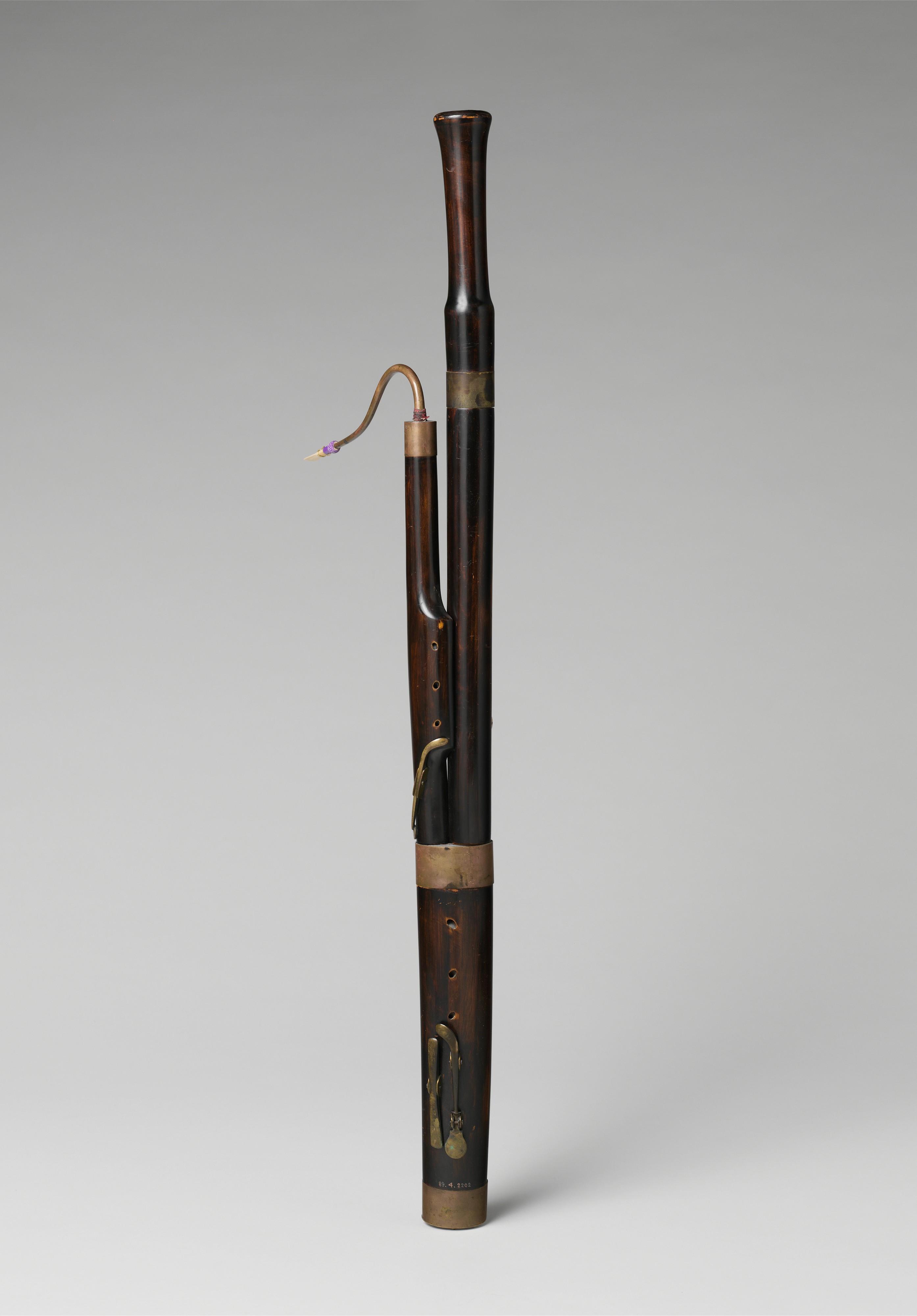
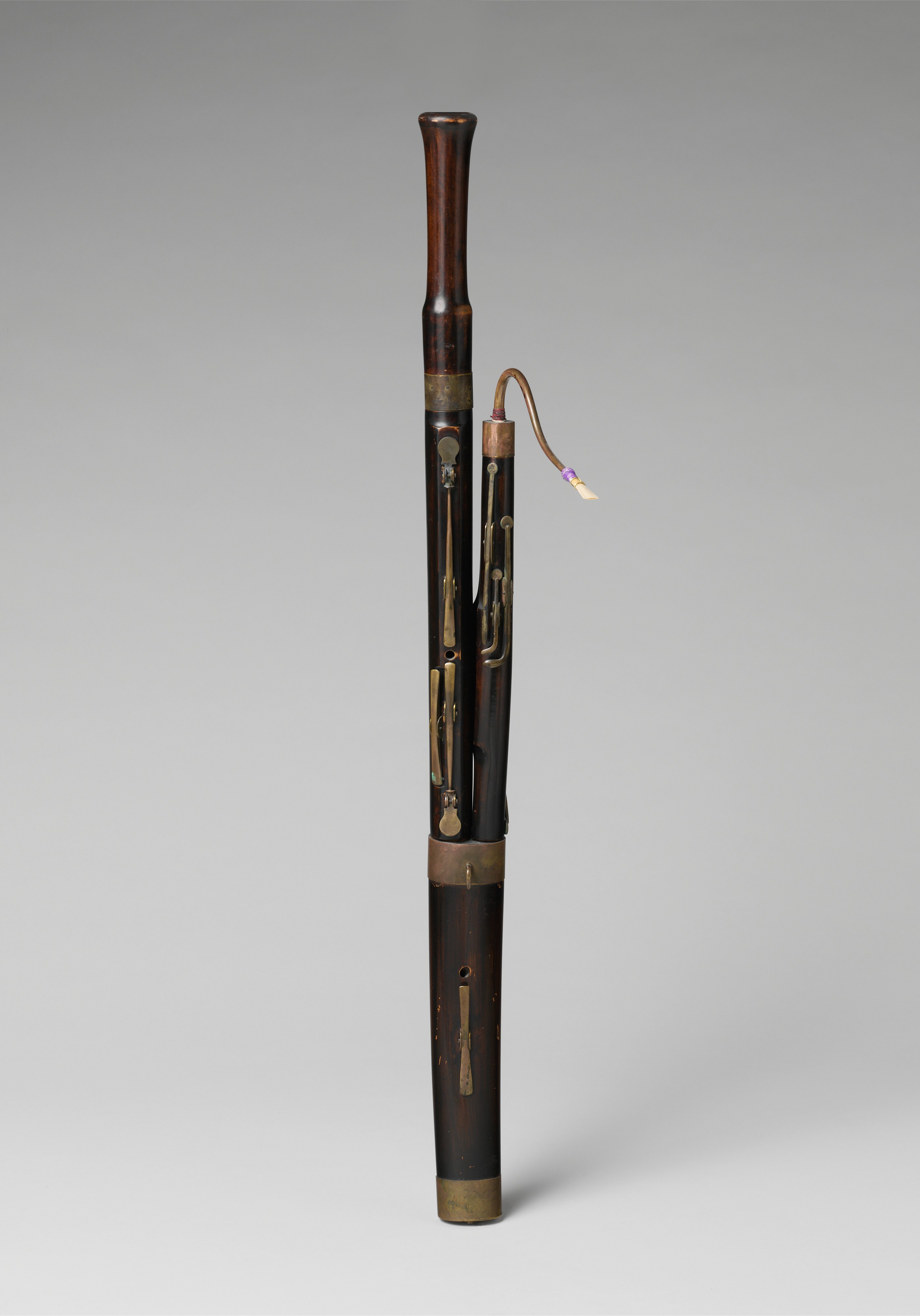
Tenoroon
Tenor bassoon
| Category | Link-debt |
|---|---|
| Country of origin | Germany / Austria (18th-19th century) |
| Classification | bassoon, tenor, type of musical instrument |
| Wikipedia | en.wikipedia.org |
| Wikidata | Q7700581 |
Overview
The tenoroon (sometimes the tenor bassoon) is one of the smaller members of the bassoon family within the double-reed woodwinds, smaller and higher pitched than the standard bassoon. Like its still-smaller cousin the fagottino (octave bassoon, pitched one octave above the standard bassoon), it is a relatively rare instrument with a long history of small-scale use and no settled mainstream role.
The naming of the smaller bassoons is contested in the literature. Fagottino (plural fagottini) has historically been used for any small bassoon but is most properly reserved for the octave bassoon. Quart-bassoon (German Quartfagott) and quint-bassoon (German Quintfagott) refer to instruments pitched respectively a fourth or fifth above the standard bassoon. Confusingly, the same terms are sometimes applied to instruments pitched a fourth and a fifth below the standard bassoon — the so-called semi-contrabassoons — with the keys reversed. The terms bass, tenor, and high are sometimes added to disambiguate.
Origin & History
Smaller bassoons appear in 18th-century instrument inventories across the German-speaking world. Mozart’s Maurerische Trauermusik (1785) and a small body of late-18th-century chamber music call for tenor bassoon parts. The instrument was used both in chamber music — where the bassoon’s full bass register would be excessive — and as a teaching instrument for younger players whose hands could not yet reach the standard bassoon’s key spacing.
Through the 19th century the tenor bassoon was made by makers across the German and Austrian tradition (Heckel, Kohlert, Schreiber) but never became standard. The arrival of the contrabassoon in the late 19th century shifted the bassoon family’s attention downward; the upper-register member did not develop comparable repertoire or institutional support.
The 20th century saw the instrument almost disappear from professional use. The 21st-century revival has been driven primarily by children’s music education: smaller bassoons (notably the modern Howarth-built mini-bassoon and Wolf’s tenoroon) make the instrument accessible to children whose hand size cannot yet manage the full-size bassoon, and have brought a small but real new generation of users to the design.
Construction & Materials
A tenoroon is built like a smaller bassoon, with the same general construction — six pieces (bell, long joint, bass joint, boot, tenor joint, crook), maple body, metal-lined bores, silver-plated keywork — but with all dimensions scaled down. A tenor bassoon (pitched a fourth or fifth above the standard bassoon) is approximately 90 to 100 cm tall, compared with 130 cm for a standard bassoon, and weighs about 2 kg.
Reeds are correspondingly smaller — about three-quarters the size of a standard bassoon reed — and are made by the same hand-shaping process, often by the players themselves. Modern makers including Wolf, Schreiber, Howarth, Mollenhauer, and a small number of specialists produce the instrument; new instruments cost approximately 4,000 to 8,000 USD.
The MET musical-instruments collection holds historical examples documenting the design’s 18th- and 19th-century evolution.
How It’s Played
The tenoroon is played in the same way as the standard bassoon — seated with a seat strap, double-reed embouchure, the same fingering system. The smaller hand spacing makes the keys reachable for children and small-handed adults; the smaller reed and shorter air column make the breathing demands considerably lower than on the standard bassoon. Music for the tenoroon can be written in the same bass and tenor clefs as for the standard bassoon, transposed for the higher pitch.
Standard technique covers the same vocabulary as the standard bassoon — single tonguing, multi-tonguing, the full chromatic range, vibrato, multiphonics — but at the new pitch. The instrument’s tone is brighter and more agile than the standard bassoon’s, sitting closer to the cor anglais in tonal weight than to the bassoon proper.
Cultural Significance
The tenoroon’s significance today is largely pedagogical. The Howarth Mini-Bassoon (developed in the late 20th century) and similar children’s-bassoon designs have made it possible for children to begin learning the bassoon at age 7 to 10 rather than waiting for the hand size required by the full instrument; the substantial growth in school-age bassoon students in the UK, US, and Germany over the past two decades is largely a consequence.
In professional chamber-music settings the instrument appears occasionally in historically-informed performances of late-18th-century repertoire (Mozart’s Maurerische Trauermusik, certain Telemann works, occasional Haydn) and in contemporary new-music writing that exploits the bassoon family’s full range. A small group of specialist players — Sergio Azzolini, Dag Jensen, and others — perform regularly on tenoroons alongside their standard-bassoon work.
Notable Examples & Recordings
- Recording landmarks: Sergio Azzolini’s recordings of Vivaldi and Mozart that include some tenoroon work; the Howarth, Schreiber, and Mollenhauer educational catalogues that document the children’s-instrument repertoire.
- The MET musical-instruments collection includes tenor bassoons from the 18th and 19th centuries that document the historical design.
Related Instruments
- Bassoon — the standard tenor-bass instrument of the family.
- Contrabassoon — the C double-reed instrument an octave below the standard.
- — the still-smaller octave bassoon.
- Oboe — the soprano voice of the double-reed family.
- Cor anglais — the alto oboe in F.
- Dulcian — the Renaissance folded double-reed ancestor of the bassoon family.
- Sarrusophone — the 19th-century brass-bodied double-reed family designed as a bassoon substitute.
Where to Hear It
Live: at school and conservatory junior bassoon-class concerts (most prominently in the UK, where the children’s tenoroon programme has been established); at occasional historically-informed performance dates (Akademie für Alte Musik Berlin, Concerto Köln); and at International Double Reed Society conferences. Recordings are sparse but growing as the children’s-instrument tradition produces a generation of players who continue with the smaller instrument into adulthood.
Learning Resources
A children’s tenoroon (Howarth Mini-Bassoon, Schreiber children’s model, Wolf instrument) costs approximately 4,000 to 8,000 USD; instruments are sold primarily through specialist double-reed dealers. Standard bassoon method material (Weissenborn, Milde, Oubradous) applies directly with the transposition adjusted; the British Double Reed Society and the International Double Reed Society publish pedagogical material specifically for the children’s-instrument programmes.
Frequently Asked Questions
Is the tenoroon a real bassoon?
Yes — it shares the same six-piece construction, the same fingering system, the same double reed, and the same general acoustic principle as the standard bassoon. It is a smaller member of the same family, not a substitute or imitation.
Why isn’t it more common?
Because the standard bassoon’s tenor-bass register has always been the family’s centre of gravity, and the smaller members never developed dedicated solo repertoire to support a separate professional career. The instrument’s modern revival as a children’s-education tool is the strongest position it has held in over a century.
Can adults play the tenoroon?
Yes. The instrument is mechanically identical to a small bassoon and is fully playable by adults. The contemporary children’s-instrument programmes have produced a small population of adult players who began on tenoroon and continue to play it alongside the standard bassoon.
What’s the difference between a tenoroon and a fagottino?
The fagottino (octave bassoon) is pitched one octave above the standard bassoon. The tenoroon (quart- or quint-bassoon) is pitched a fourth or fifth above. The fagottino is smaller still than the tenoroon and is more often used purely as a children’s instrument; the tenoroon has more historical chamber-music repertoire.
Does the tenoroon have its own repertoire?
A small body, mostly 18th-century (Mozart’s Maurerische Trauermusik, occasional Telemann), supplemented by educational material written for the modern children’s-instrument programmes. It does not have a substantial original solo repertoire of its own.


