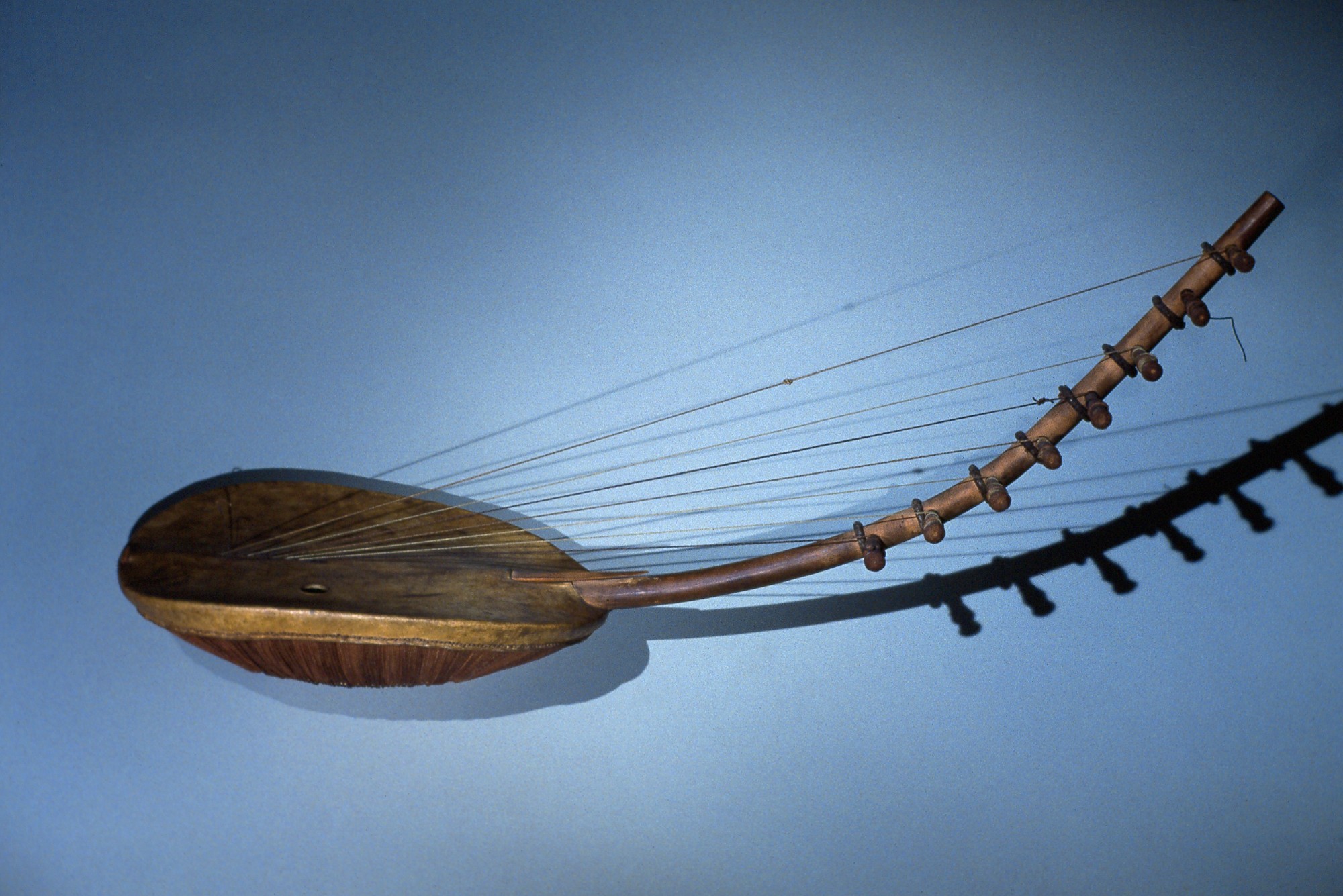
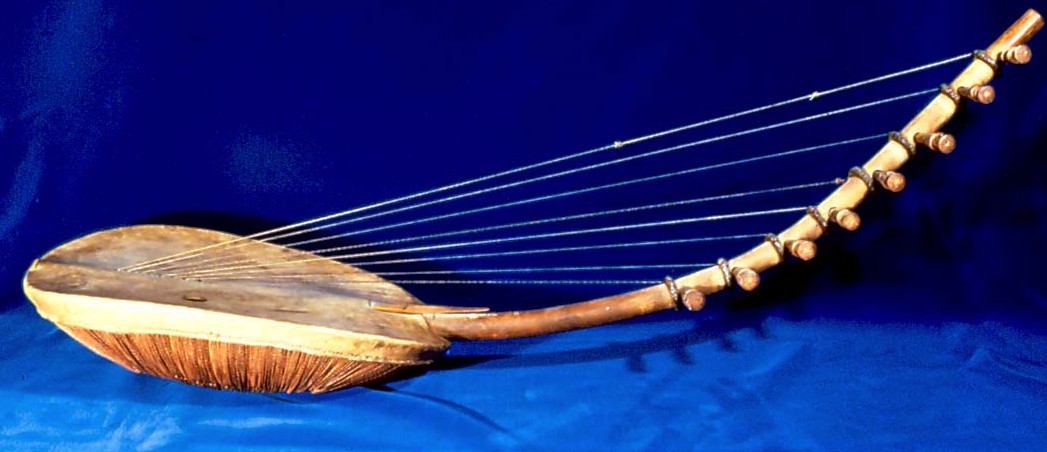
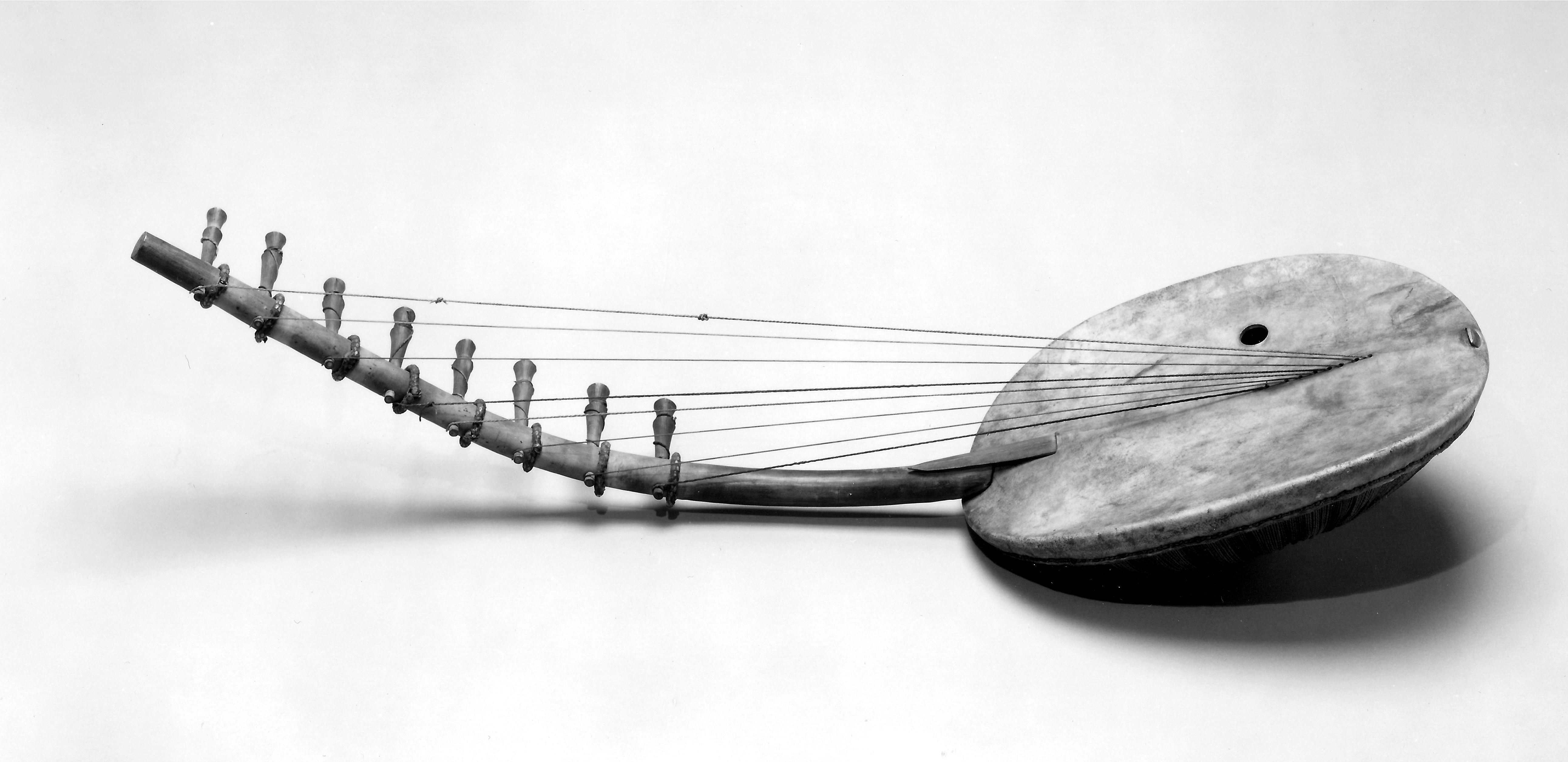
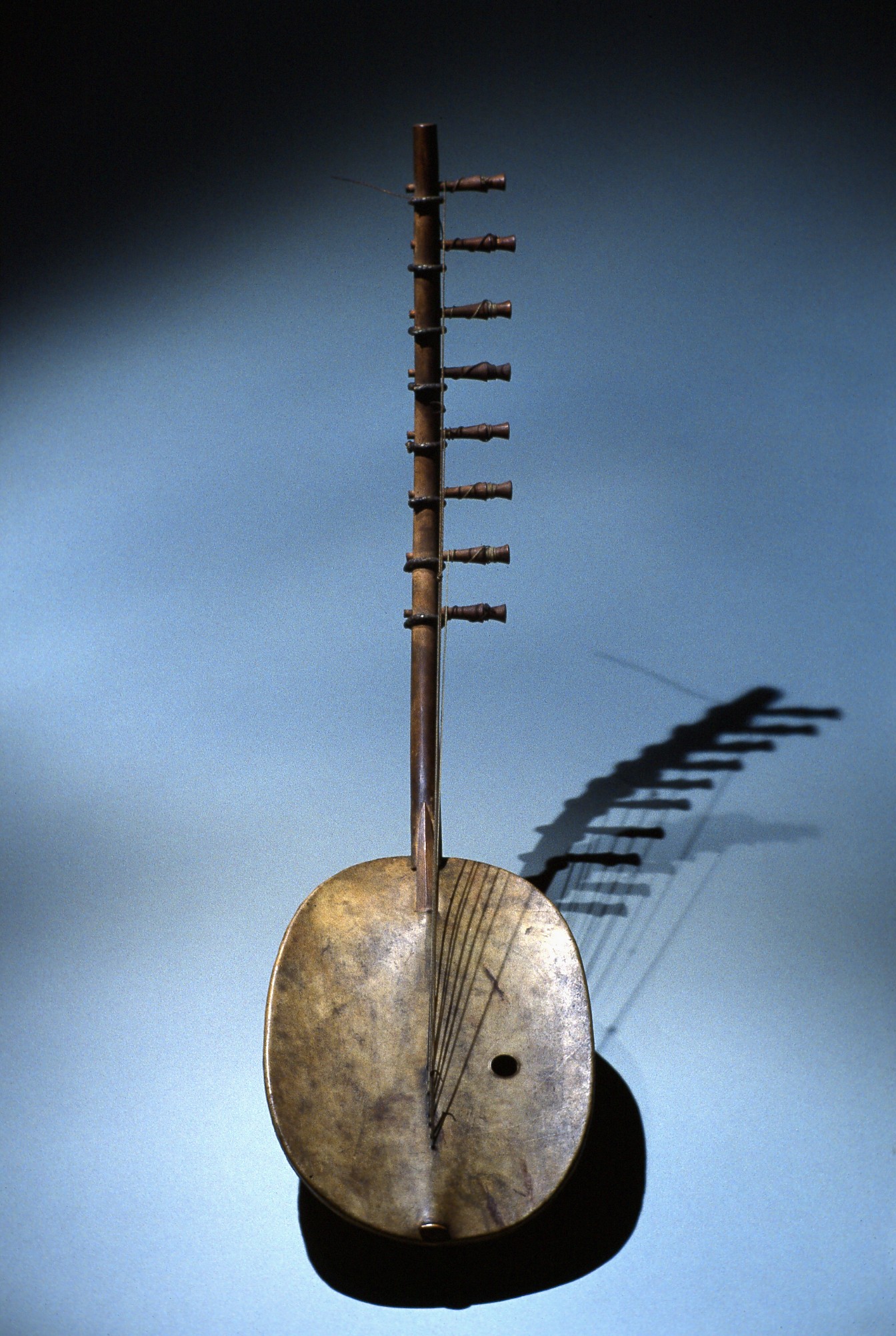
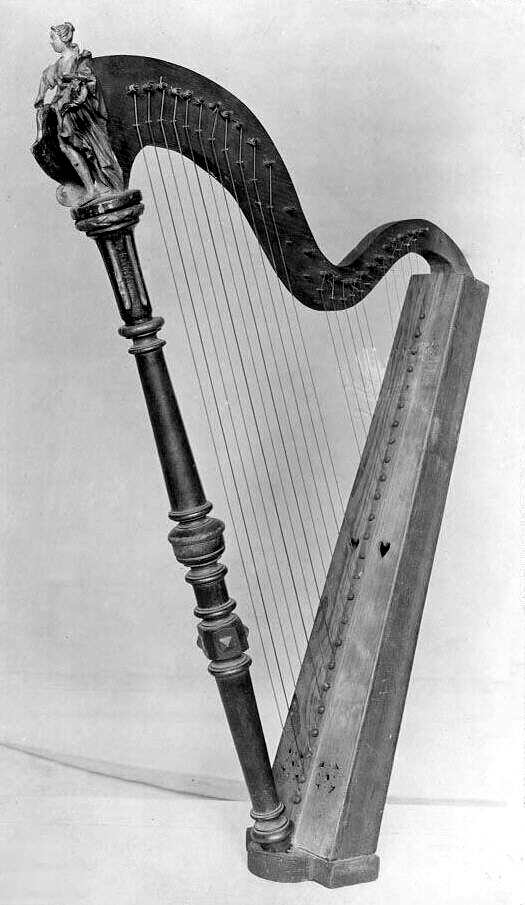
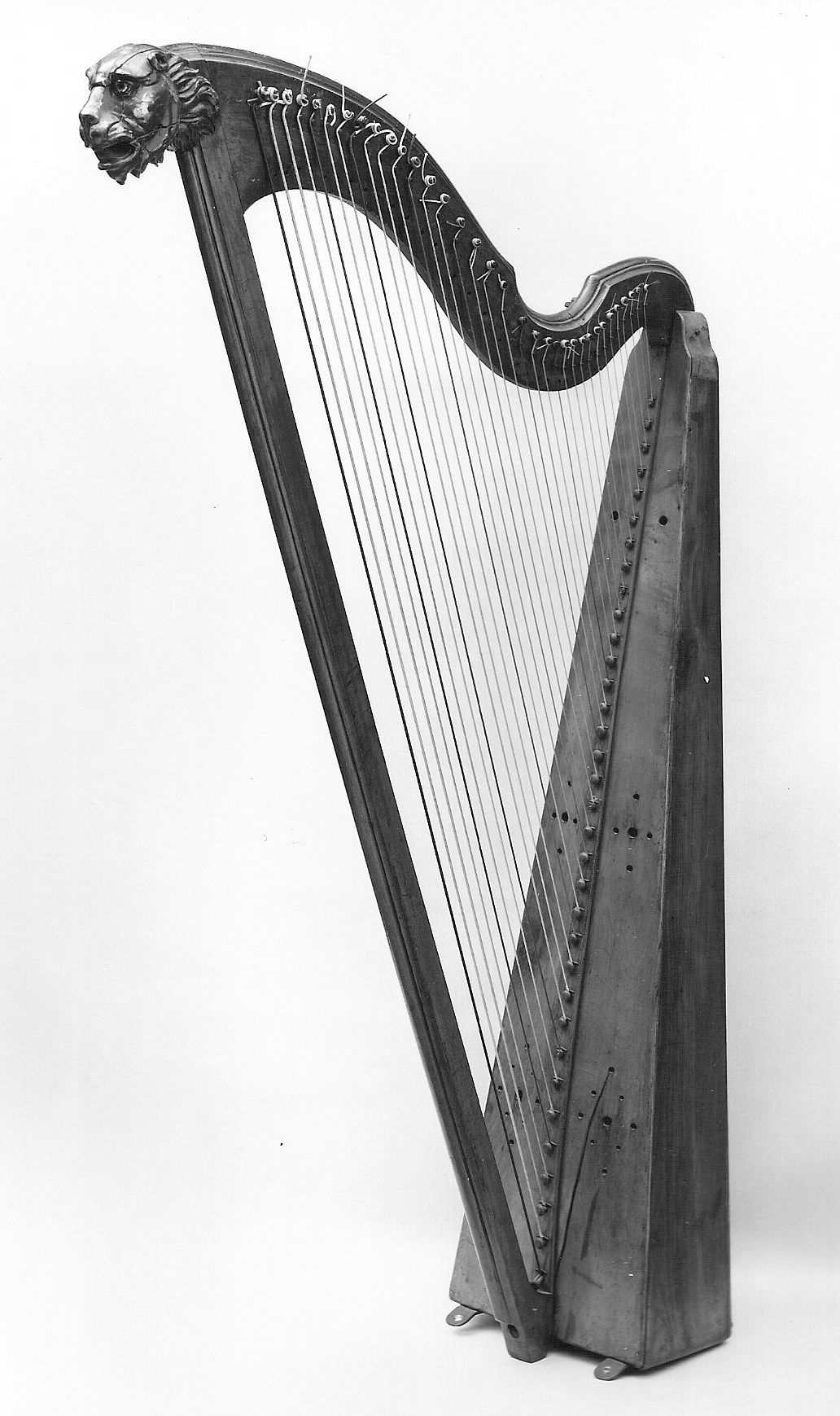
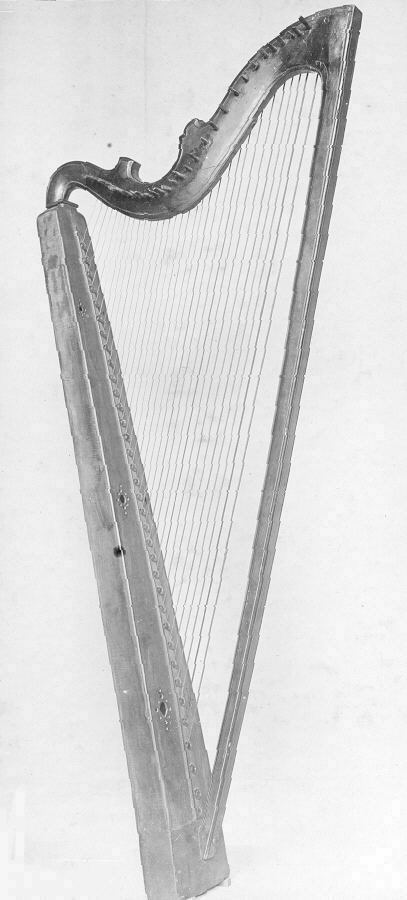

Queen Mary Harp
*Clàrsach na Banrìgh Màiri*
| Category | Museum-grade |
|---|---|
| Country of origin | Argyll, Scotland (c. 1500) |
| Classification | celtic harp |
| Wikipedia | en.wikipedia.org |
| Wikidata | Q7270459 |
Overview
The Queen Mary Harp — Scottish Gaelic Clàrsach na Banrìgh Màiri, also called the Lude Harp — is a Scottish wire-strung clarsach dating from approximately 1500, currently displayed at the National Museum of Scotland in Edinburgh. It belongs to the three-strong group of surviving medieval Gaelic harps; with the other two being the Lamont Harp (both Scottish, both at the National Museum of Scotland) and the Trinity College Harp (Irish, at Trinity College Dublin). All three are believed to have come from Argyll in south-west Scotland.
The instrument is a small triangular harp of the wire-strung Gaelic type, distinct from the gut-strung harps of mainland European tradition. The wire stringing produces a bell-like sustained tone — fundamentally different from the soft pluck of a gut harp — and was the standard sound of medieval Scottish and Irish courtly music for several centuries.
Origin & History
The Queen Mary Harp is dated to around 1500 on the basis of construction style and decorative work. It takes its modern name from the tradition that Mary, Queen of Scots, presented the harp to the harper Beatrix Gardyn (Banchory) in 1563, during a hunting trip in the Scottish Highlands. The harp was reportedly once decorated with a gold portrait of the queen, the source of its association with her name. Through the Gardyn family it passed to the Robertson family of Lude (Perthshire), from which it takes its alternative name.
The 1588 household records of Lady Gardyn’s son mention a servant named Anthony McEwan McChlairser (“the harper’s son”), suggesting the family employed a working harper through that period. The last documented player on the instrument was John Robertson of Lude, who died around 1729; his repertoire survived through the Robertson family and was finally published by John Bowie in 1789, providing one of the few surviving direct lines into the Gaelic harp tradition’s playing practice.
The instrument was acquired by the antiquarian Society of Antiquaries of Scotland in the 19th century and entered the collection of what is now the National Museum of Scotland.
Construction & Materials
The Queen Mary Harp is built from hornbeam and willow (the Gaelic harp tradition typically uses one wood for the soundbox carved from a single block and a different wood for the neck and forepillar), with brass-wire stringing rather than the gut stringing of European mainland tradition. Surviving Gaelic harps of this period are characteristically built with the soundbox hollowed from a single block of wood — an unusual construction technique that produces the instrument’s bright, sustained tone.
The harp has approximately 30 strings, originally tuned in a diatonic scale with two fixed na comhluighe (sister) strings tuned in unison to provide a tonic reference. The decorative carving on the forepillar and neck is characteristic of the Argyll-area workshops believed to have produced the instrument; comparable decorative work appears on both the Lamont and Trinity College harps, supporting the proposed common geographic origin.
How It’s Played
The Gaelic clarsach is played seated, with the harp resting on the player’s left shoulder (opposite the modern pedal-harp practice). The wire strings are plucked with the long fingernails of the right hand and damped with the fingertips of the left, producing a controlled bell-like tone with carefully managed sustain — the player must continuously damp earlier notes to prevent the harmonics of the wire strings from accumulating into a confused texture.
The original playing technique was largely lost when the tradition died out in Scotland in the 18th century and in Ireland in the early 19th century; the modern revival, beginning in the late 19th century, has been a process of inference from the surviving instruments, the small body of surviving manuscript repertoire, and comparison with related living traditions. Modern reconstructions of medieval Gaelic harps — built by makers including Ardival Harps in Strathpeffer — are played by a small but active community of revival players.
Cultural Significance
The Queen Mary Harp is one of three direct material survivals of a musical tradition that once stretched from western Scotland through the entire Gaelic-speaking western world. The tradition produced a substantial body of court music — cruit repertoire in Gaelic, the dance suites and port genres documented in surviving manuscript sources — and supplied the central court instrument of Scottish and Irish chiefly culture from at least the 11th century to the 18th.
The harp also functions as a cultural symbol. The Trinity College harp is the model for the coat of arms of Ireland and the Guinness trade mark; the Queen Mary Harp serves the equivalent symbolic role in Scottish Gaelic cultural memory and is regularly cited in Scottish heritage publications. The early-20th-century revival of the clarsach in Scotland (driven by figures including Patuffa Kennedy-Fraser) drew explicitly on the surviving medieval instruments as design references.
Notable Examples & Recordings
- The instrument itself is on permanent display at the National Museum of Scotland.
- Recording landmarks: Ann Heymann (US-based scholar-performer of the wire-strung Gaelic harp), Siobhán Armstrong (Irish historical-harp specialist), Bill Taylor (Scottish revivalist), the Historical Harp Society’s recorded archive.
- The Bowie 1789 publication of the Robertson-of-Lude repertoire is one of the few primary sources connecting the surviving instruments to actual playing practice.
Related Instruments
- Trinity College Harp — another of the surviving medieval Gaelic harps, in Dublin.
- Lamont Harp — the other surviving medieval Scottish clarsach.
- Celtic harp — the modern revival instrument descended from the medieval clarsach tradition.
- Pedal harp — the modern orchestral concert harp, a separate continental European tradition.
- Welsh triple harp — a related Celtic harp tradition with three rows of strings.
- Bull-headed lyre of Ur — a comparably significant museum-grade ancient string instrument.
- Medici tenor viola — a comparably significant museum-grade Western art instrument.
Where to Hear It
The harp itself is not played publicly. Recordings of revival wire-strung clarsach by Ann Heymann, Siobhán Armstrong, Bill Taylor, and others are widely available. The Edinburgh International Harp Festival and the Edinburgh International Festival regularly programme revival clarsach repertoire.
- Wikipedia: Queen Mary Harp
- Wikidata: Queen Mary Harp (Q7270459)
- DBpedia: Queen Mary Harp
- National Museum of Scotland
Learning Resources
Modern reconstructions of medieval wire-strung Gaelic harps are built by Ardival Harps (Strathpeffer, Scotland), David Kortier (Minnesota), and a small number of other specialist makers; instruments cost from approximately 3,000 to 8,000 USD. The Historical Harp Society publishes scholarly and pedagogical materials on the wire-strung tradition; Ann Heymann’s Secrets of the Gaelic Harp (1988) is the central modern method.
Frequently Asked Questions
Why is it called the “Queen Mary” Harp?
Because of the tradition that Mary, Queen of Scots, presented it to the harper Beatrix Gardyn in 1563. The story is traditional rather than documentarily verified, but the association with the queen has stuck for over four centuries.
Where can I see it?
At the National Museum of Scotland in Edinburgh, where it is on permanent display alongside the Lamont Harp.
Is it ever played?
The original instrument is not played publicly. Modern reconstructions of comparable medieval Gaelic harps are played by a small revival community.
How is it different from the modern concert harp?
The Queen Mary Harp has wire strings, a small triangular frame, no pedals, and is played with the fingernails. The modern concert harp has gut and nylon strings, a much larger frame, seven pedals for chromatic pitch changes, and is played with the fingertips. They belong to two essentially separate harp traditions.
Why are all three surviving medieval Gaelic harps thought to come from Argyll?
Because the construction style and decorative work of all three are closely matched and consistent with what is known of the late-medieval workshops of south-west Scotland. The proposal that they share a common geographic origin is generally accepted in the scholarly literature.


