.jpg)
.jpg)
.jpg)

Duduk
դուդուկ
| Category | Aerophones |
|---|---|
| Country of origin | Armenia |
| Classification | type of musical instrument |
| Wikipedia | en.wikipedia.org |
| Wikidata | Q737917 |
Listen
Audio: SERGO.TEL, CC BY 3.0 / via Wikimedia Commons
Audio: Speaker: WikiLucas00 Recorder: WikiLucas00, CC BY-SA 4.0 / via Wikimedia Commons
Audio: איליה מעזיה, CC BY-SA 4.0 / via Wikimedia Commons
Overview
The duduk is an Armenian double-reed woodwind instrument made from apricot wood, with a wide cylindrical bore and a very large flat reed. Its tone is breathy, soft and unmistakably mournful — a sound that has become internationally famous through film scores including Gladiator, The Last Temptation of Christ and Munich.
The instrument is one of the central symbols of Armenian musical identity. The combination of apricot wood (associated with Armenia) and the duduk’s distinctive timbre make it almost impossible to confuse with any other woodwind anywhere in the world.
Origin & History
The duduk’s roots reach deep into the musical traditions of the Caucasus and Anatolia. Closely related double-reed instruments — the Azerbaijani and Iranian balaban, the Turkish mey, the Georgian duduki — share a common ancestry, all built around a wide cylindrical bore and a large flat double reed. The Armenian form took its modern shape over many centuries and has been continuously played in the Armenian highlands and surrounding regions for at least the past 1500 years.
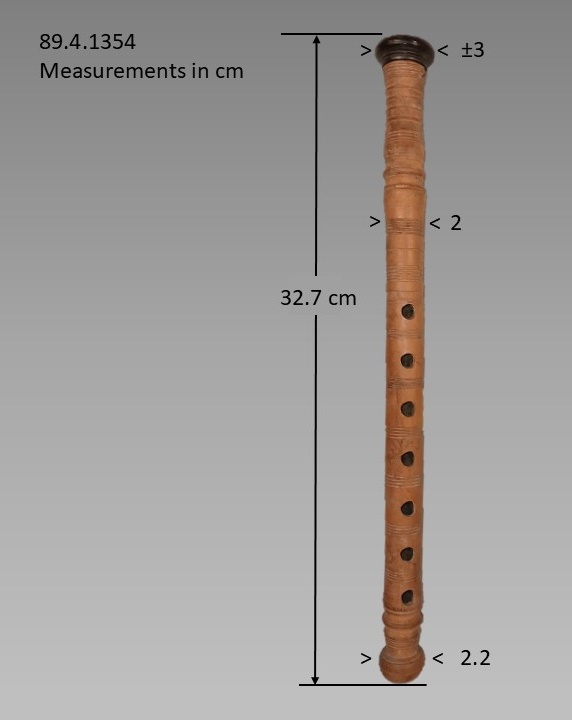
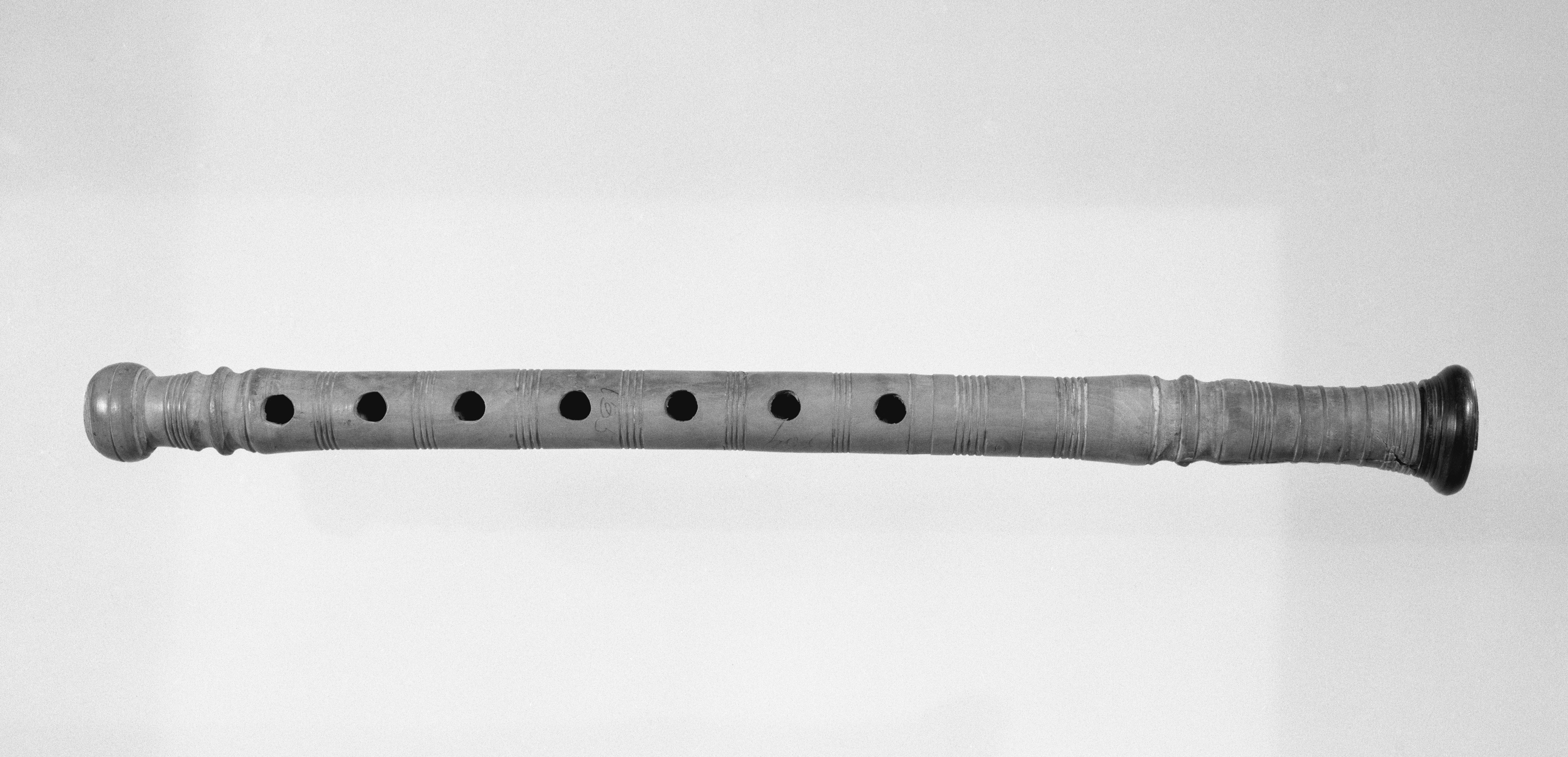
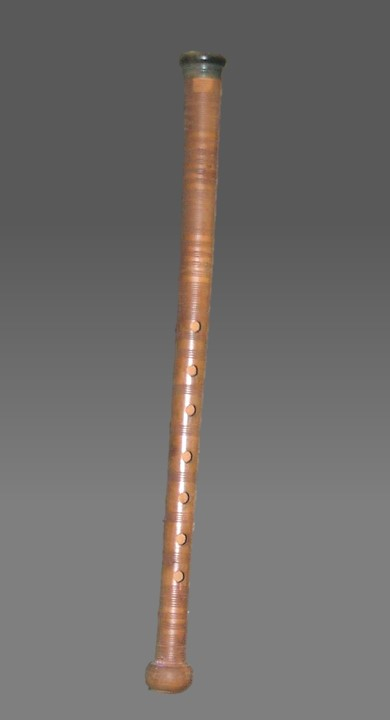
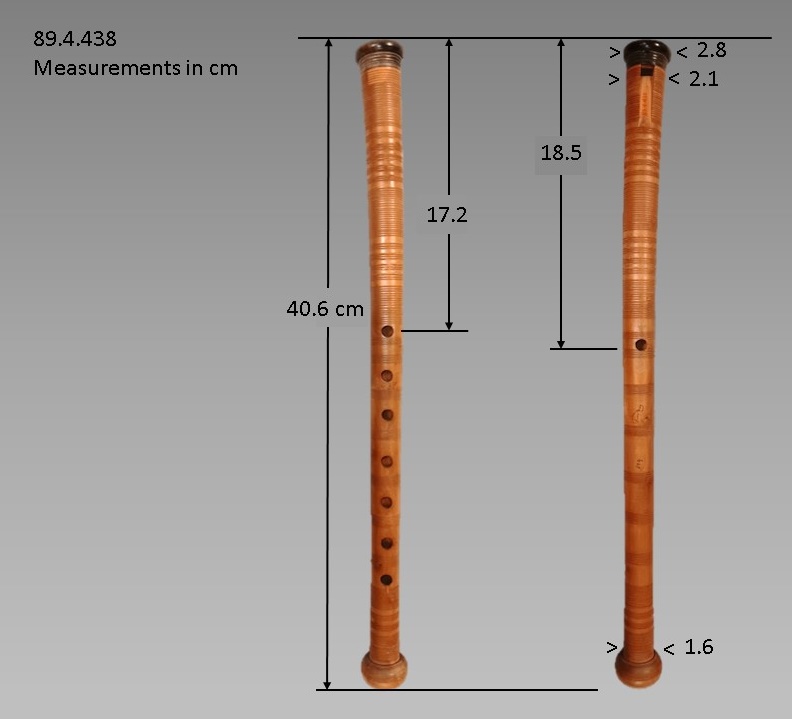
The Metropolitan Museum’s collection holds two relevant late-19th-century duduk specimens. A Düdük (MET object 501920) made of mulberry wood and a second Düdük (MET 501056), both classified as Turkish in the museum catalogue and dated to the late 19th century, sit in the Musical Instruments department. The use of mulberry rather than apricot in these specimens reflects the Anatolian and broader Middle Eastern variants of the family — Armenian tradition specifically prefers apricot wood.
UNESCO inscribed the duduk and its music on its Representative List of the Intangible Cultural Heritage of Humanity in 2005. The inscription specifically identifies apricot wood as essential to the Armenian duduk’s character — one of the few cases in which a specific tree species is treated as a cultural-heritage requirement.
Construction & Materials
The Hornbostel-Sachs system places the duduk in 422.112 (double-reed cylindrical-bore aerophones). The body is a cylindrical wooden tube, around 28-40 cm long depending on the pitch, with seven or eight finger holes on the front and a thumb hole on the back. The Armenian instrument is traditionally turned from aged apricot wood (Prunus armeniaca); the related Turkish and Iranian forms use mulberry, walnut or other dense local woods.
The reed (ghamish) is unusually large for a double-reed instrument — sometimes 12-14 cm long, made from two flattened pieces of cane bound together. Its size and the wide bore of the body together produce the duduk’s characteristic dark, breathy tone. A small metal cap on the upper end of the reed allows the player to adjust pitch by sliding it up and down.
The MET specimens (objects 501920 and 501056) — both turned from mulberry rather than apricot — represent the Anatolian and broader Middle Eastern branch of the family. Armenian instruments would normally use apricot.
How It’s Played
The player holds the duduk vertically in front of the body and blows across the large flat reed. The fingers cover and uncover the holes to change pitch. Continuous breathing — the technique sometimes called circular breathing — is essential for the long sustained phrases that characterise traditional Armenian duduk repertoire.
A duduk performance is conventionally a duo: one player carries the melodic line while a second player provides a sustained drone (dam) on a single fixed pitch throughout the piece. The drone player rests only briefly between sections; the melodic player phrases above the constant low note. This duo structure is fundamental to the duduk tradition and is rarely abandoned even in international concert settings.
Cultural Significance
The duduk is so closely associated with Armenian cultural identity that it functions almost as a national emblem. The instrument is heard at weddings, funerals, religious commemorations, and political ceremonies throughout Armenia and the Armenian diaspora. The most prominent player of recent decades, Djivan Gasparyan (1928-2021), was widely considered a national cultural figure and his recordings are foundational to international knowledge of the instrument.
Outside Armenia, the duduk has gained an unusual level of international recognition through its use in film scores. Its appearance in Hans Zimmer’s score for Gladiator (2000) introduced the sound to global mainstream audiences and led to a wave of further use in Hollywood scoring through the 2000s and 2010s.
Notable Examples & Recordings
The two MET specimens (objects 501920 and 501056) document the closely related Anatolian branch of the family. For listening, recordings by Djivan Gasparyan — particularly I Will Not Be Sad in This World — provide the most influential introduction to the Armenian instrument. Other significant players include Gevorg Dabaghyan, Vatche Hovsepian, and the younger generation including Norayr Kartashyan. The Iranian and Azerbaijani balaban tradition is documented through recordings by Alihan Samedov.
Related Instruments
- – the Azerbaijani and Iranian double-reed cousin
- – the Turkish double-reed cousin
- – the louder, more piercing double-reed used in outdoor and ceremonial music
- Ney – the end-blown reed flute of the Persian and Turkish traditions
- Oboe – the European orchestral double-reed in the same broad family
Where to Hear It
Live duduk performance is part of nearly every formal Armenian cultural event, both in Armenia itself and across the diaspora communities of Russia, Lebanon, France, the United States and Argentina. Religious services in the Armenian Apostolic Church often include duduk in commemorative settings. International concerts by Armenian artists tour widely. The Wikimedia Commons category collects images and audio.
- Wikipedia: Duduk
- The MET: Düdük (object 501920)
- The MET: Düdük (object 501056)
- Wikimedia Commons: Duduk
Learning Resources
Serious duduk study is most easily pursued in Armenia, particularly through the Yerevan State Conservatory or through private study with an established player. Outside Armenia, instruction is offered through Armenian cultural centres in Los Angeles, Paris and Beirut, and increasingly through online lessons by international touring players. The reed itself is the most demanding aspect — quality apricot-wood instruments and well-made reeds are difficult to obtain outside Armenia and the larger diaspora cities.
Frequently Asked Questions
What family is the duduk in?
It is a double-reed cylindrical-bore aerophone, classed as 422.112 in the Hornbostel-Sachs system.
Why is the duduk made from apricot wood?
The Armenian tradition specifically requires apricot wood (Prunus armeniaca), with which Armenia has a deep cultural association. The dense apricot wood produces the soft mellow tone characteristic of the Armenian instrument; other regional variants use mulberry, walnut or other woods.
Is the duduk on the UNESCO heritage list?
Yes. UNESCO inscribed duduk music on its Representative List of the Intangible Cultural Heritage of Humanity in 2005, with the apricot-wood construction specifically identified as essential to the instrument’s identity.
Are old duduks in museums?
Yes. The Metropolitan Museum of Art holds two late-19th-century duduks (objects 501920 and 501056) in its Musical Instruments department, both representing the closely related Anatolian branch of the family.
Why is duduk so common in film scores?
Hans Zimmer’s prominent use of the instrument in Gladiator (2000) brought its sound to mainstream Hollywood attention. Its breathy, mournful tone proved well suited to scoring scenes of loss, ancient settings, and Middle Eastern imagery, and it has been used in dozens of major film scores since.
Is the duduk difficult to learn?
The basic finger technique is not unusually demanding, but producing a clean, controlled tone on the very large reed takes considerable time. The continuous-breathing technique required for traditional repertoire is a separate skill that takes months to develop.


