.jpg)
Ney
نای
| Category | Wind |
|---|---|
| Country of origin | Middle East |
| Classification | type of musical instrument |
| Wikipedia | en.wikipedia.org |
| Wikidata | Q743836 |
Listen
Audio: Mamadou Sy, CC BY 2.0 fr / via Wikimedia Commons
Audio: CC BY / via Internet Archive
Audio: el diabolik, PD / via Internet Archive

Overview
The ney is an end-blown reed flute used across Iran, Turkey, the Arab world, and parts of Central and South Asia. Built from a single hollow length of cane (or sometimes hardwood) with six finger holes on the front and one thumb hole on the back, it is one of the simplest instruments in the world to make and one of the most demanding to play well.
The ney is best known internationally for its central role in Sufi music — particularly in the Mevlevi tradition founded around the teachings of Jalal ad-Din Rumi — but it has been a continuous part of Middle Eastern art music for thousands of years and remains a major solo and ensemble instrument across the region today.
Origin & History
The ney is one of the oldest instruments still in continuous use anywhere in the world. Pictorial evidence and surviving instruments document end-blown cane flutes in the wider Middle East going back roughly five thousand years — including images of related instruments in ancient Egyptian tomb paintings. By the early Islamic period, the ney was already a standard part of Persian and Arab court and devotional music.
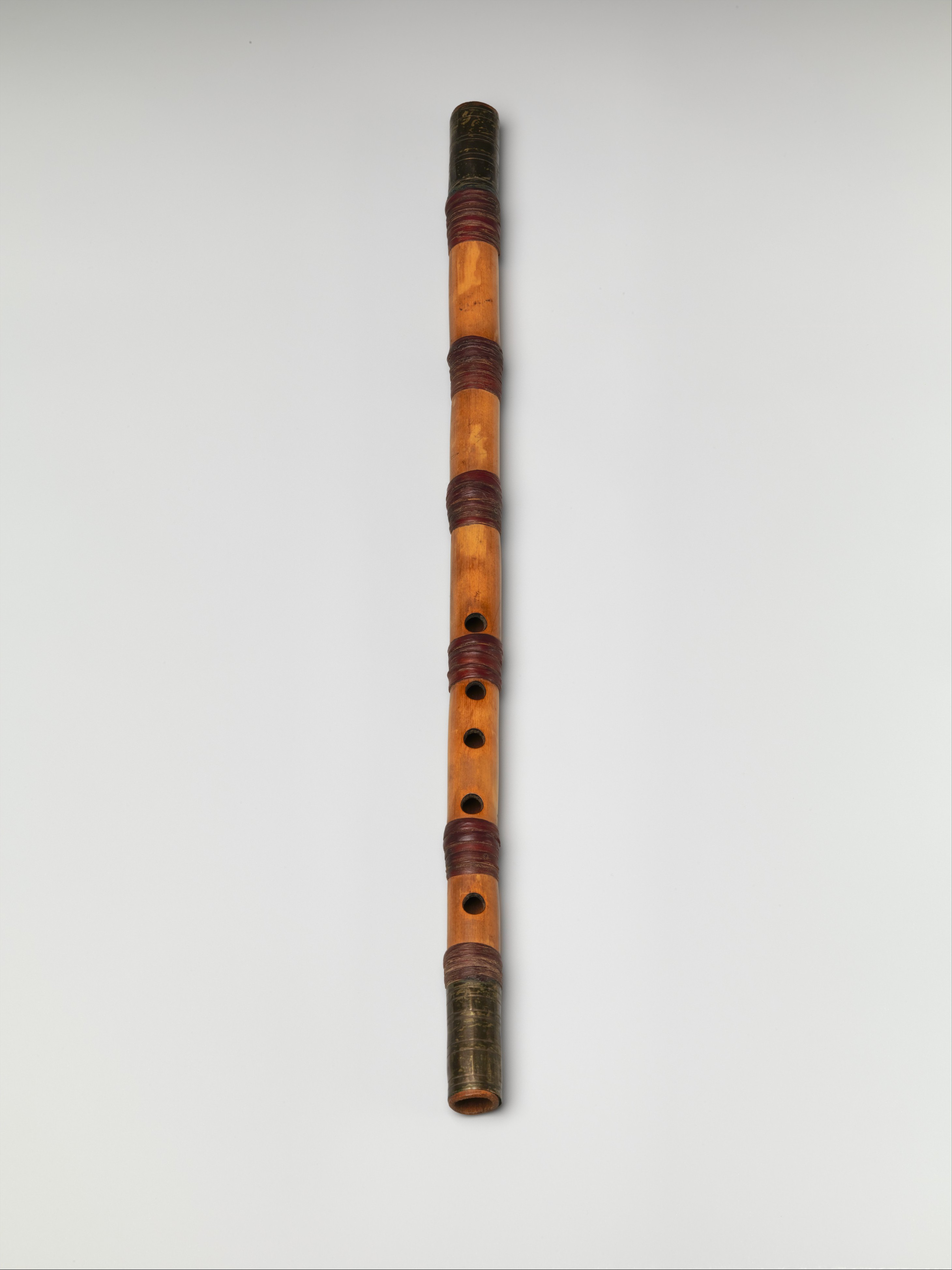
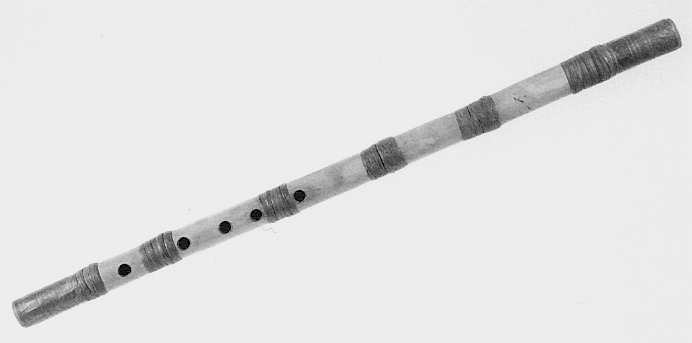
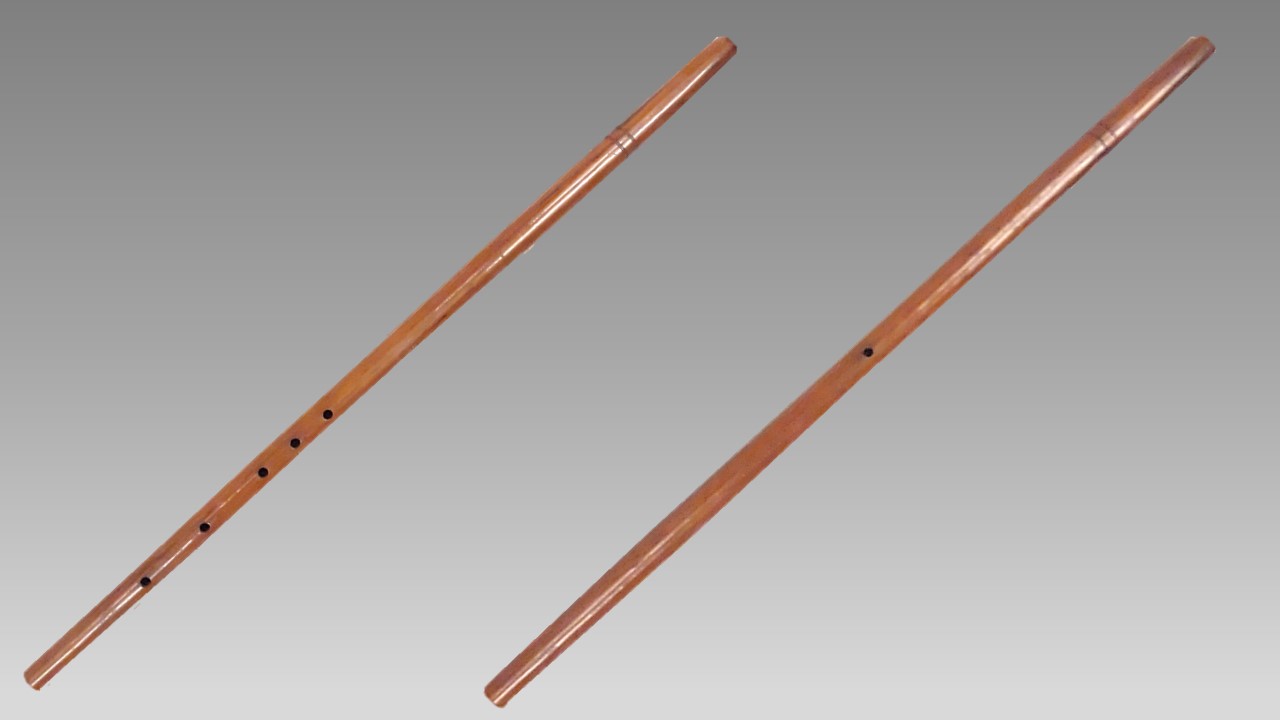
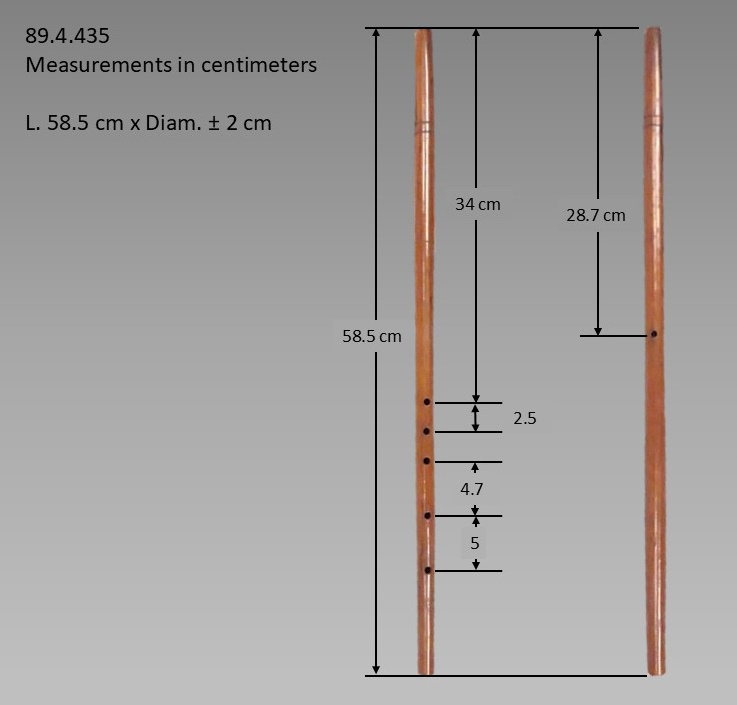
The Metropolitan Museum of Art holds two surviving 19th-century examples that document its modern form clearly: a Persian Ney (object 504821) made of reed, metal, and hide, and a Persian/Turkish Ney (object 501053) made of cherry or plum wood from the village of Hnene. The two together help show the range of materials and the regional variation in mouthpiece design that characterise the modern instrument.
Several distinct regional traditions exist today. The Persian ney is played by inserting the upper end between the upper teeth and using the tongue to channel the air; the Arab ney is played with the upper end against the lips at an angle; the Turkish ney uses a brass or horn mouthpiece (the başpare) fitted to the upper end. Each tradition produces its own characteristic tone.
Construction & Materials
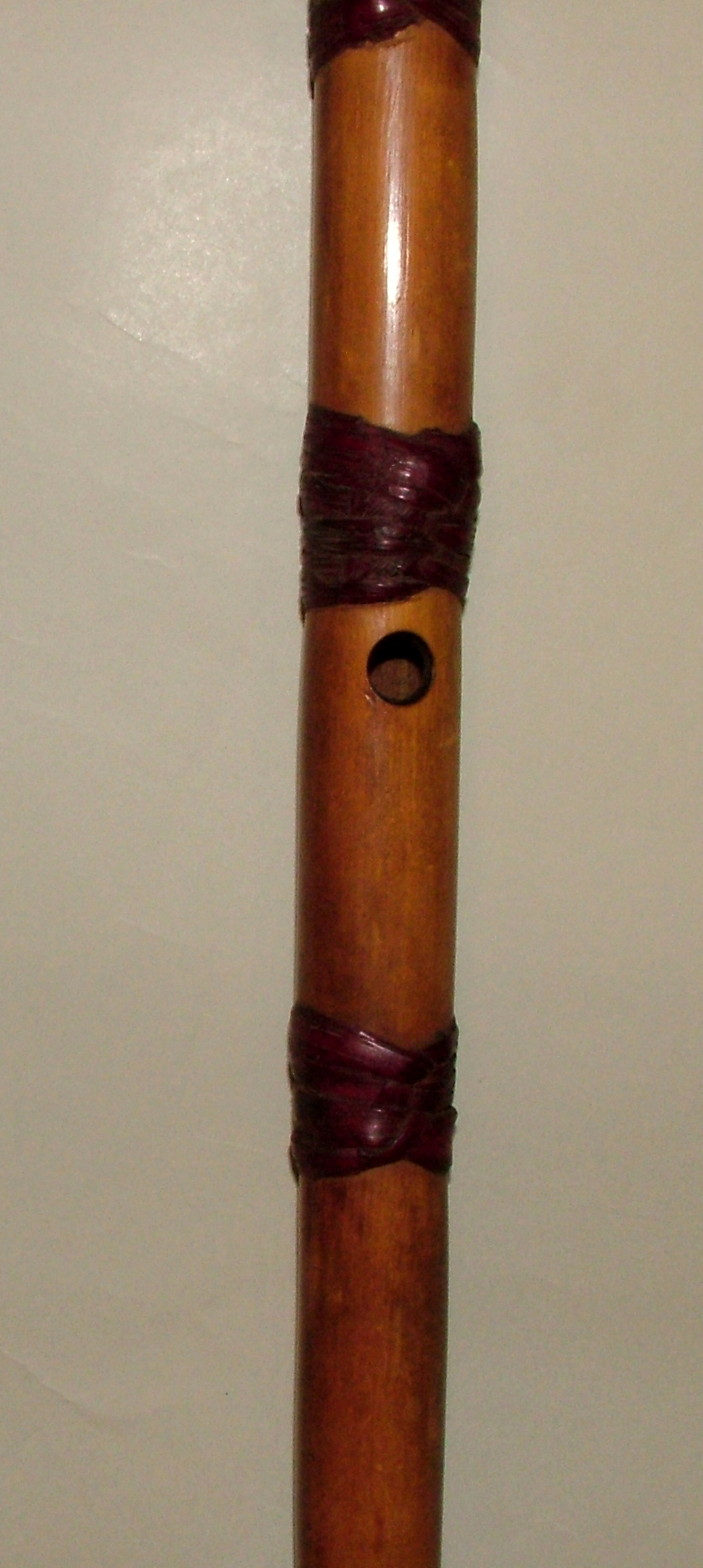
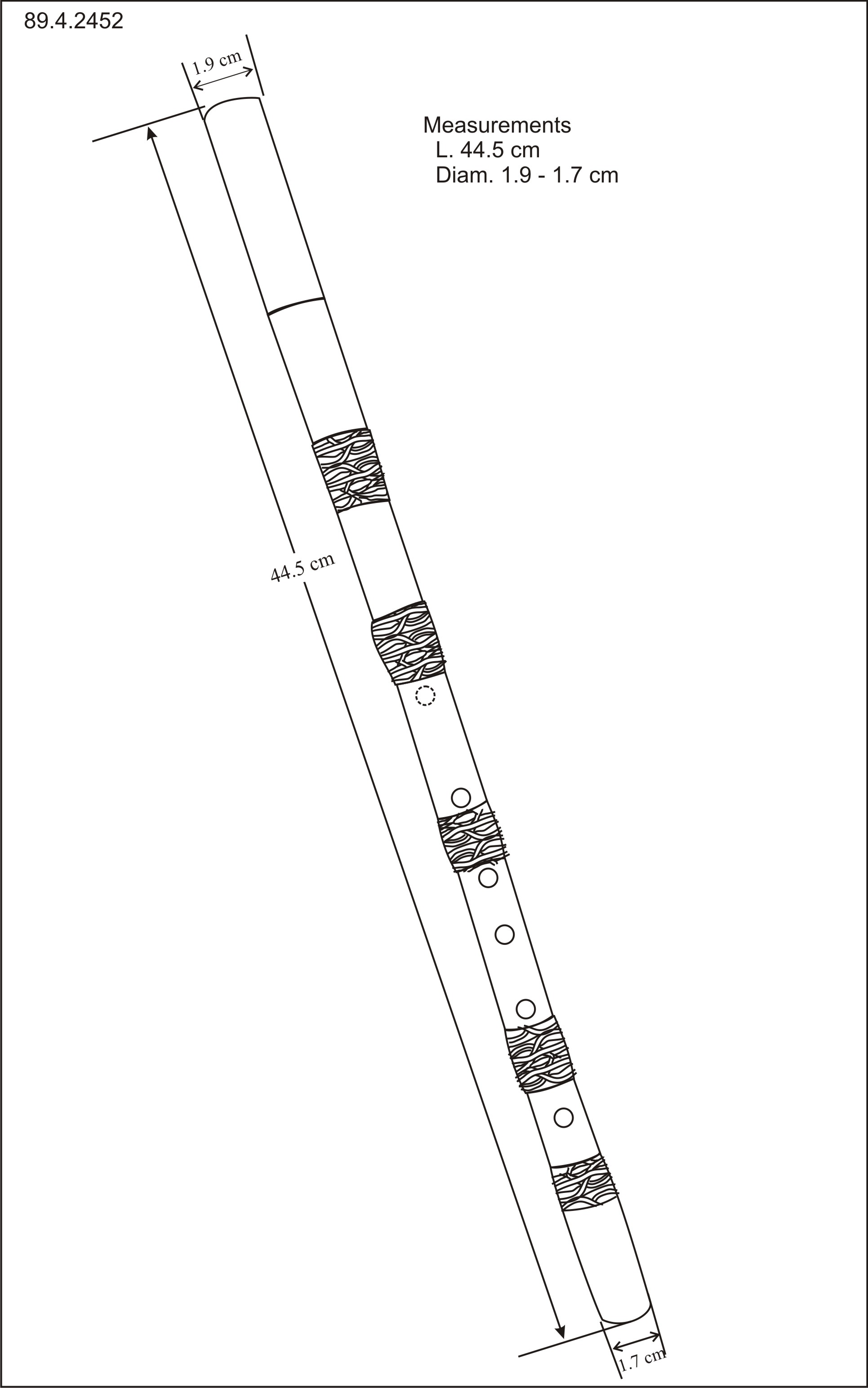
The Hornbostel-Sachs system places the ney among the end-blown flute family. A typical ney is cut from a single internodal section of Arundo donax cane, the same material used for clarinet and saxophone reeds. The instrument has six finger holes on the front and one thumb hole on the back, with no key system. Both ends are open, with the playing end usually slightly bevelled to support the embouchure.
The MET specimens illustrate the variety of materials used historically. The reed-and-metal Persian Ney (object 504821) and the cherry- or plum-wood Persian/Turkish Ney (object 501053) both date from the late 19th century but use very different materials, reflecting both regional preference and the willingness of makers to substitute when good cane was unavailable.
A complete modern ney player typically owns a set of instruments in different keys (most often A, B-flat, B, C, D, E, F, G), since each ney has a fixed fundamental and most repertoire is performed in specific maqam or dastgah.
How It’s Played
The basic challenge of the ney is producing any sound at all. With no fipple and no reed, the player must direct a thin stream of air precisely against the open upper edge of the cane, much like blowing across the top of a bottle but with far less margin for error. The exact technique varies by region, but in all cases it typically takes weeks of patient practice before a beginner can produce a stable tone.
Once the embouchure is settled, the ney has a remarkable expressive range. Players can move smoothly through micro-tonal intervals — essential for Persian dastgah, Arabic maqam, and Turkish makam music — and use breath, embouchure, and head angle to shape every note with an almost vocal flexibility.
Cultural Significance
The ney’s strongest cultural association internationally is with Sufi music, particularly the Mevlevi tradition founded around the teachings of Jalal ad-Din Rumi. Rumi’s Masnavi opens with the famous “Song of the Reed” — a meditation on the ney as a metaphor for the human soul cut from its source and longing to return — and the Mevlevi sema ceremony places the Turkish ney at the centre of its instrumental ensemble.
Beyond the Sufi context, the ney is a major solo and ensemble instrument in Persian classical music (where Hassan Kassai’s recordings remain a touchstone), in Arabic art music, in Turkish art music (where players such as Niyazi Sayın, Kudsi Erguner, and Mercan Dede have shaped the modern tradition), and in many regional folk styles.
Notable Examples & Recordings
The Metropolitan Museum of Art’s two surviving 19th-century neys (objects 504821 and 501053) document both the typical reed-and-metal construction and the wood-bodied regional variants. For listening, recordings by Hassan Kassai (Persian), Niyazi Sayın (Turkish), Kudsi Erguner (Turkish, with significant cross-cultural collaborations), and Mercan Dede (modern Turkish/electronic) together cover the instrument’s expressive range.
Related Instruments
- Kaval – the Balkan end-blown shepherd’s flute in the same broad family
- Shakuhachi – the Japanese end-blown bamboo flute, a more distant cousin
- Quena – the Andean notched-end flute
- Bansuri – the Indian transverse bamboo flute, related through the broader Asian flute tradition
- Dizi – the Chinese transverse bamboo flute, also descending from the broader Asian cane-flute family
Where to Hear It
Persian, Arabic, and Turkish classical concerts are the natural settings for the ney. The instrument is also central to the Mevlevi sema ceremony of the Mevlevi Sufi order, and is widely heard in cross-cultural projects with jazz, electronic, and contemporary chamber music.
- Wikipedia: Ney
- The MET: Ney, Iranian Persian (object 504821)
- The MET: Ney, Iranian/Turkish (object 501053)
- Wikimedia Commons: Ney
Learning Resources
The ney is famously slow to start — most beginners take several weeks of consistent practice before any stable tone emerges. The Persian, Arabic, and Turkish traditions each have their own embouchure technique, and most senior teachers recommend committing to one tradition at the outset rather than trying to learn all three simultaneously. Structured online tuition by senior Turkish, Persian, and Arabic players is now widely available in several languages.
Frequently Asked Questions
What is the ney made of?
A traditional ney is made from a single internodal section of Arundo donax cane — the same material used for clarinet and saxophone reeds. Wood-bodied variants exist, including the cherry- or plum-wood Persian/Turkish ney documented in MET object 501053.
Why is the ney associated with Sufism?
The ney is central to the Mevlevi tradition founded around the teachings of Jalal ad-Din Rumi, whose Masnavi opens with the famous “Song of the Reed” — a meditation on the ney as a metaphor for the human soul cut from its source and longing to return.
How many holes does a ney have?
A traditional ney has six finger holes on the front and one thumb hole on the back, with no key system. Different regional traditions use slightly different hole spacings.
Why are there so many different keys of ney?
Each ney has a fixed fundamental, and most repertoire is performed in specific maqam, makam, or dastgah. A serious player typically owns a set of instruments in several keys to cover the standard repertoire without transposing.
Is the ney difficult to learn?
Producing the first stable tone is famously slow, often taking several weeks of consistent practice. Once the embouchure is settled, progress is steadier, but mastery of the regional maqam or dastgah repertoire is generally a long-term study.


