

Harmonica
harmonica / Mundharmonika
| Category | Wind |
|---|---|
| Country of origin | Germany (early 19th century) |
| Classification | type of musical instrument |
| Wikipedia | en.wikipedia.org |
| Wikidata | Q51290 |
Listen
Audio: Matthias.Gruber 20:44, 26 October 2006 (UTC), CC BY-SA 3.0 / via Wikimedia Commons
Audio: US Army, Public domain / via Wikimedia Commons
Audio: mastermesh, Public domain / via Wikimedia Commons
Overview
The harmonica is a small, hand-held free-reed wind instrument played by directing breath through a row of reed-mounted air channels. Each channel pairs two tuned brass reeds — one sounding on the inhale, one on the exhale — so a player produces different notes simply by changing the direction of the breath. The instrument fits in a pocket, costs less than almost any other serious melodic instrument, and is among the most widely owned wind instruments in the world.
Wikidata classifies the harmonica plainly as a “free reed wind musical instrument,” and the Wikidata P279 chain resolves it specifically as a “set of free reeds” — a structurally accurate description of what makes the family distinct from flutes, reed pipes, or brass.
Origin & History
The harmonica emerged in the 1820s as one of several European experiments with the Asian free-reed principle that had reached Europe in the late 18th century. Christian Friedrich Buschmann is often associated with the earliest mouth-blown chromatic prototype in Berlin in 1821, and instruments along these lines were being made in Vienna a few years later. By the late 1820s the diatonic ten-hole layout that still defines the modern blues harp had appeared in southern Germany.
Industrial manufacture took over quickly. Christian Messner began making harmonicas in Trossingen in the late 1820s, and Matthias Hohner — a young clockmaker in the same town — opened his harmonica workshop in 1857. Hohner’s factory shipped roughly 700 instruments in its first year and several million per year by the 1880s, and the German manufacturing centres of Trossingen and Klingenthal became the world’s main source of harmonicas for the next century.
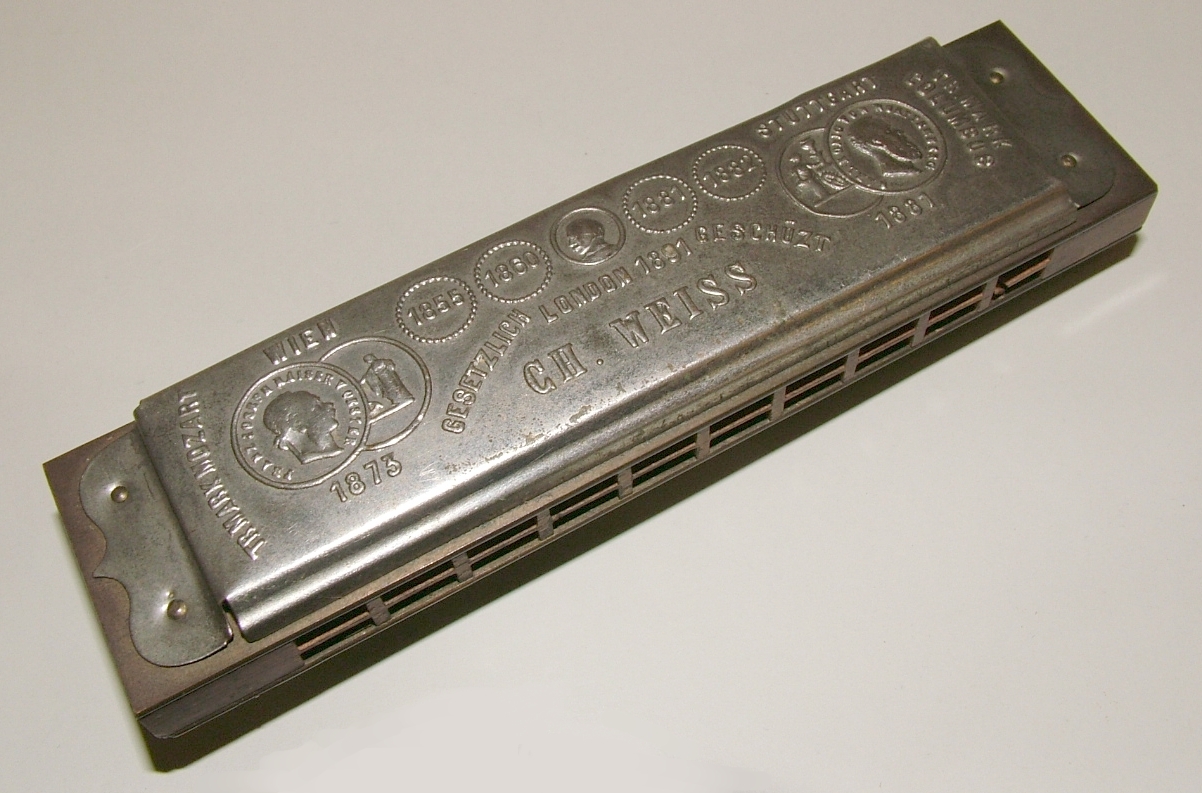
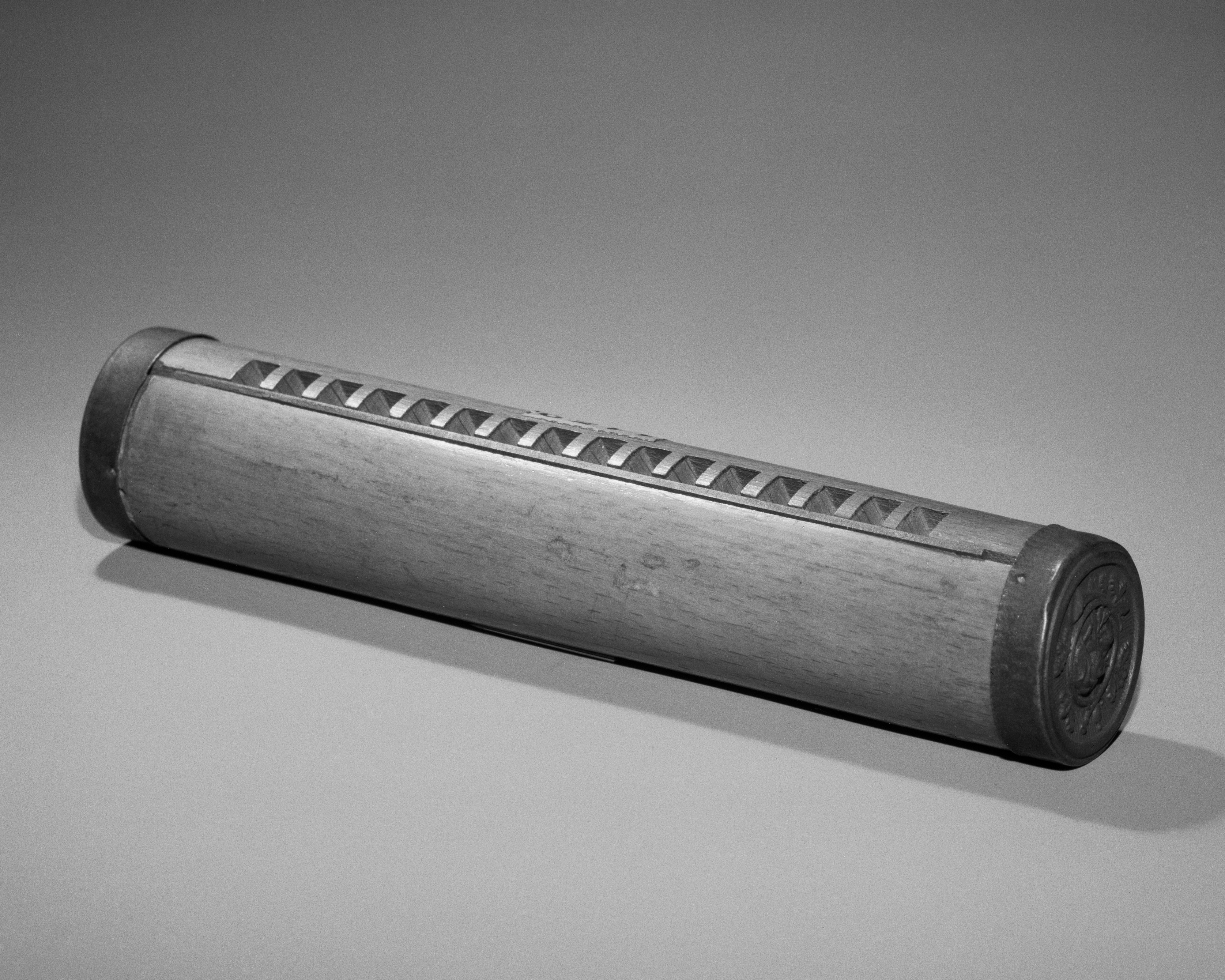
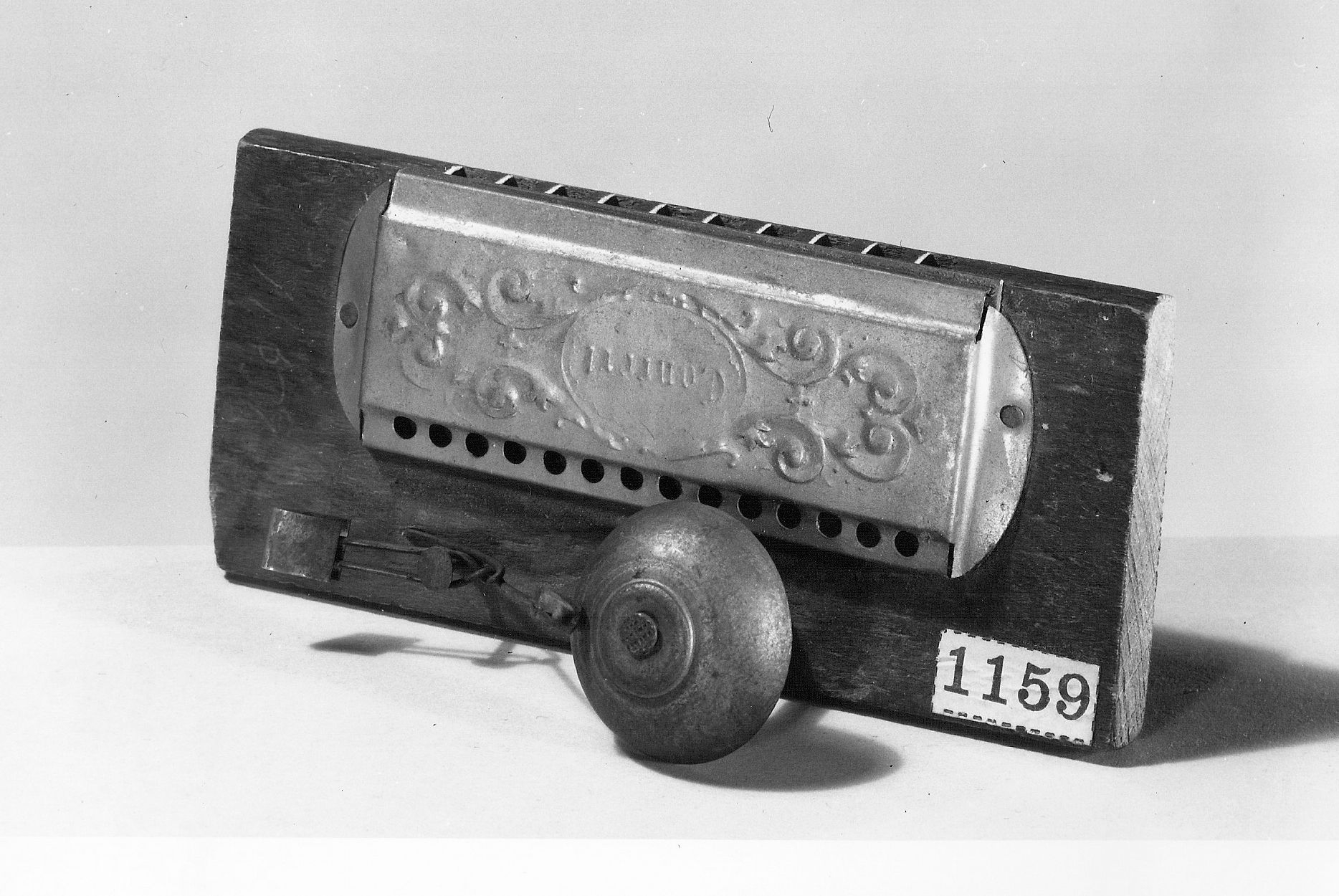
The Metropolitan Museum’s collection holds four German harmonicas from this peak industrial era, all donated to the Crosby Brown Collection in 1889 and held today in the Musical Instruments department. The earliest (object 501726) dates to 1860–70 and is built of beech and metal. Three further specimens — object 501241 from around 1895, object 504196 from around 1900, and object 501730 from the early twentieth century — show how the wood-and-metal comb design hardly changed through forty years of mass production. The MET catalogues all four as Aerophone-Free Reed-mouth organ.
In the early 20th century, German-made harmonicas reached the rural American South in enormous quantities through mail-order catalogues and country stores. African American musicians in the Mississippi Delta adapted the diatonic instrument to the blues by playing it in a key other than the one it was tuned in — the technique now called “cross harp” or “second position” — and by inventing bending techniques that pull pitches downward to fill in the missing notes. From this came the playing of figures such as Sonny Boy Williamson, Little Walter and Big Walter Horton, and the harmonica’s permanent place at the centre of electric blues.
Construction & Materials
A harmonica is built around a comb — a slotted block historically of wood, today often of plastic, metal or composite — with reed plates fixed to the top and bottom. Each reed plate carries a row of brass reeds riveted at one end and free at the other, and metal cover plates form the chamber that the player’s mouth and hands shape. The MET specimens, all wood-bodied with metal reeds and covers, sit at the high end of the late-19th-century product line; cheaper instruments of the same period used soft wood and lower-grade brass.
A standard ten-hole diatonic harmonica weighs around 80 grams and measures roughly 10 cm long. A 12- or 16-hole chromatic adds a button-operated slide that diverts breath through a second set of reeds tuned a semitone higher, giving full chromatic playing without bends.
How It’s Played
The player holds the harmonica in cupped hands and moves it horizontally across the lips while controlling the airstream with the tongue. Three core articulations cover most of the technique:
- Single notes are isolated either by a tightly puckered “pucker” embouchure or by tongue-blocking, in which the tongue covers adjacent holes.
- Bending lowers the pitch of certain reeds by changing the shape of the oral cavity; this is the technique that gives blues harmonica its expressive cry.
- Vibrato is produced with the throat, the diaphragm, the lips, or the cupped hands.
Chromatic players add the slide button to the basic technique, while jazz and classical chromatic players such as Toots Thielemans or Larry Adler use the slide to deliver fully scored melodies and improvisations.
Cultural Significance
The harmonica is the most portable and most democratic of mainstream Western instruments. Its low cost made it a common gift for soldiers in the American Civil War and the two World Wars, and pocket harmonicas formed part of standard kit for trench musicians, hikers, ranchers and miners across continents. In music history its weight is greatest in three places: Chicago and Mississippi blues, American country and folk (where Bob Dylan and Neil Young carried it into rock), and continental European folk traditions where harmonica clubs and small ensembles flourish from Germany through the Czech lands.
The harmonica also entered classical concert music in the 20th century. Vaughan Williams, Milhaud and Villa-Lobos all wrote concertante works for the chromatic harmonica, and the instrument now has its own conservatory programmes in Germany and Asia.
Notable Examples & Recordings
Four MET specimens — objects 501241, 501726, 501730 and 504196 — document the German manufacturing peak that gave the world the modern instrument. For listening:
- Sonny Boy Williamson II, King Biscuit Time — Mississippi Delta blues harp.
- Little Walter, The Best of Little Walter — Chicago amplified blues; defined the modern electric harmonica sound.
- Toots Thielemans, The Brasil Project — chromatic harmonica in jazz and Brazilian repertoire.
- Larry Adler, The Glory of Gershwin — classical and popular chromatic playing across a long career.
Related Instruments
- Sheng – Chinese mouth organ; the Asian free-reed ancestor of the European harmonica family.
- Accordion – the same free-reed principle in a bellows-driven body.
- Concertina – the small bellows-driven free-reed instrument developed in Britain in the same decade as the harmonica.
- Bandoneon – the German free-reed instrument that became Argentine.
- – the keyed mouth-blown free-reed instrument of the mid-20th century.
Where to Hear It
Live blues harmonica is part of the regular calendar of clubs in Chicago, Memphis and across the European blues circuit. Classical and jazz chromatic recitals appear on conservatory programmes in Trossingen, Hanover, Tokyo and Hangzhou. The Hohner factory museum in Trossingen displays harmonicas from the 1830s onward, and the World Harmonica Festival there runs every four years.
- Wikipedia: Harmonica
- The MET: Harmonica (object 501726)
- The MET: Harmonica (object 501241)
- Wikimedia Commons: Harmonicas
Learning Resources
A diatonic ten-hole harmonica in the key of C is the standard starting instrument. Method books by David Harp and Jon Gindick are widely used by self-teachers, and online schools such as the Sonny Terry Estate Blues Harmonica School and the Harmonica.com lessons cover both blues and folk styles. For chromatic harmonica, the methods of Larry Adler and the more recent Yvonnick Prené books cover the jazz repertoire. A first instrument can be bought new for under 30 USD; durable mid-range instruments suitable for years of use are typically 50–80 USD.
Frequently Asked Questions
What family of instruments does the harmonica belong to?
The harmonica is a free-reed aerophone. It is closely related to the accordion, the concertina, the bandoneon and — at the historical root of the family — the Chinese sheng.
What is the difference between a diatonic and a chromatic harmonica?
A diatonic harmonica is tuned to a single major key and gives ten holes of paired blow–draw notes; bending technique fills in the missing chromatic pitches. A chromatic harmonica adds a slide button that swaps in a second set of reeds tuned a semitone higher, giving immediate access to all twelve notes.
Where was the harmonica invented?
The instrument took shape in southern Germany and Vienna in the 1820s. Trossingen, in Baden-Württemberg, became the centre of mass production from the late 1850s onward.
Why is the harmonica so common in blues?
It was cheap, portable and easy to carry on the road or to a juke joint, and the rural American South received millions of them through mail order from the late 19th century. African American players adapted it through cross harp and bending to the expressive needs of the blues.
Are there harmonicas in museums?
Yes. The Metropolitan Museum of Art holds four German harmonicas from 1860–70 (object 501726), around 1895 (501241), around 1900 (504196) and the early 20th century (501730), all in its Musical Instruments department.
How long does it take to play harmonica?
A beginner can play simple folk melodies within hours, blues riffs within a few months, and competent bending within a year of consistent practice. Chromatic harmonica at a high level typically requires five to ten years of formal study.


