
Xiao
簫
| Category | Wind |
|---|---|
| Country of origin | China |
| Wikipedia | en.wikipedia.org |
| Wikidata | Q1394795 |
Listen
Audio: 費玉清 - Fei Yu-ching, PD / via Internet Archive
Audio: ok33, PD / via Internet Archive
Overview
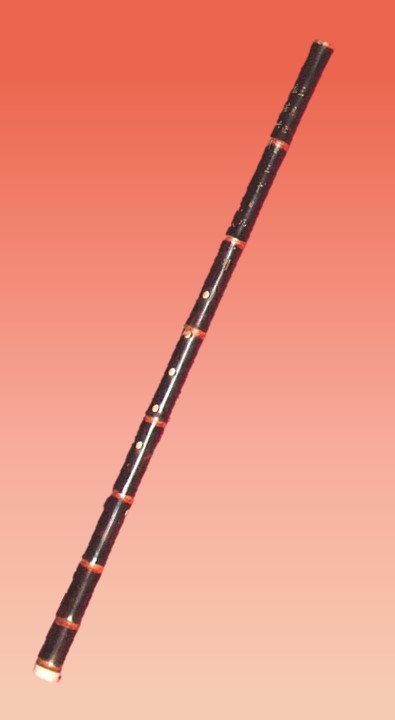
The xiao (簫) is a Chinese end-blown vertical bamboo flute, normally with six finger holes on the front and one thumbhole on the back, played by directing breath obliquely across a notched mouthpiece cut into the top of the tube. Unlike the side-blown dizi, which is bright and reedy, the xiao is gentle, breathy, low and sustained — an instrument associated with literati culture, scholarly meditation and quiet chamber music for two thousand years.
Wikidata describes the xiao as a “Chinese end-blown flute” and places it in the open flute family. Its construction has a clear genealogical relationship with the Japanese shakuhachi, which descends from a Tang dynasty Chinese xiao transmitted to Japan in the 8th century.
Origin & History
The xiao is documented in Chinese sources from at least the Han dynasty (3rd century BCE–3rd century CE) and probably has earlier roots in Neolithic bone flutes. Tang dynasty (618–907) iconography and surviving instruments show a fully formed end-blown bamboo flute close to the modern instrument, and from the Tang onward the xiao was part of the standard scholarly chamber music repertoire alongside the qin (seven-string zither), the pipa and the guzheng.
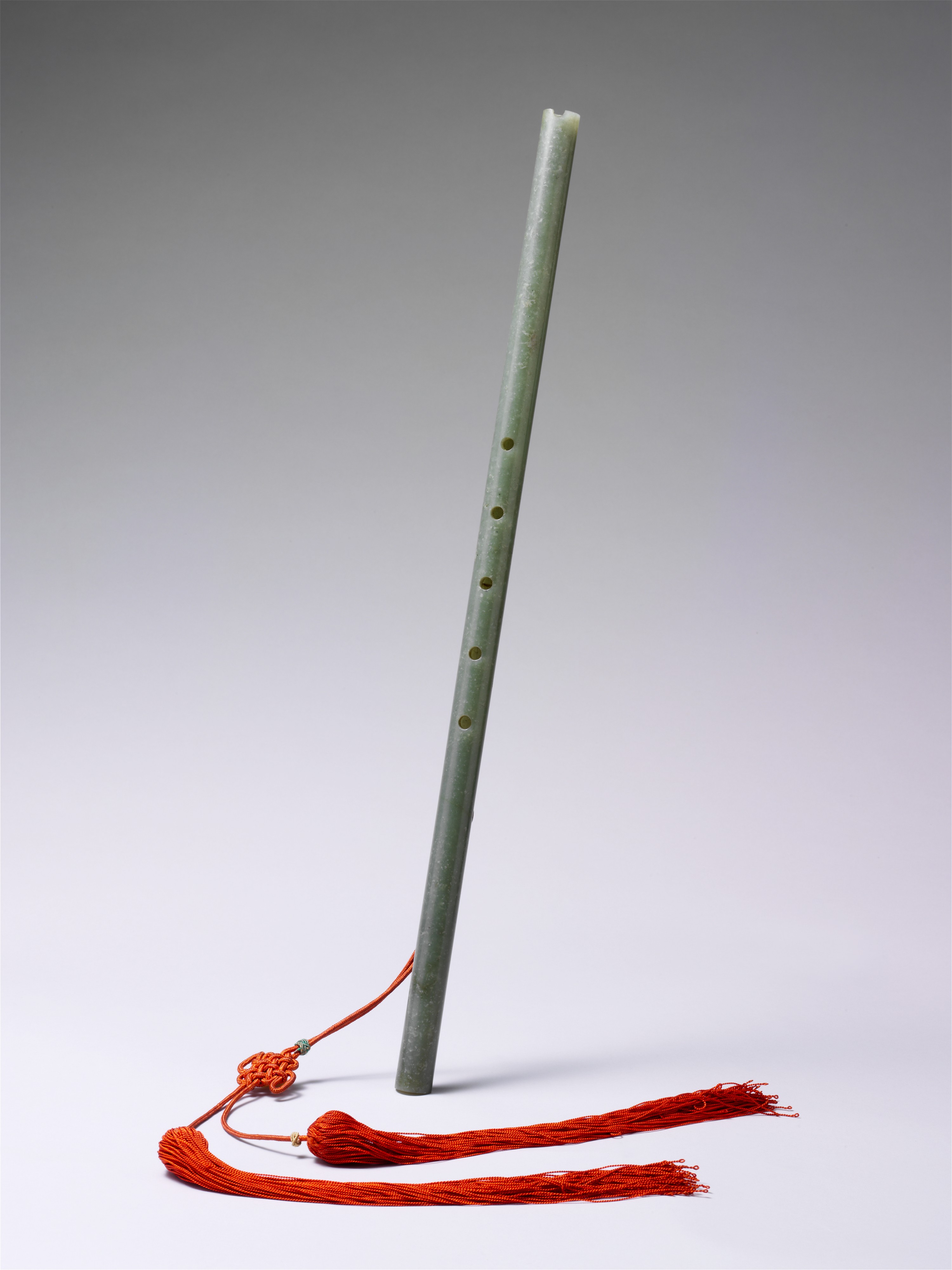
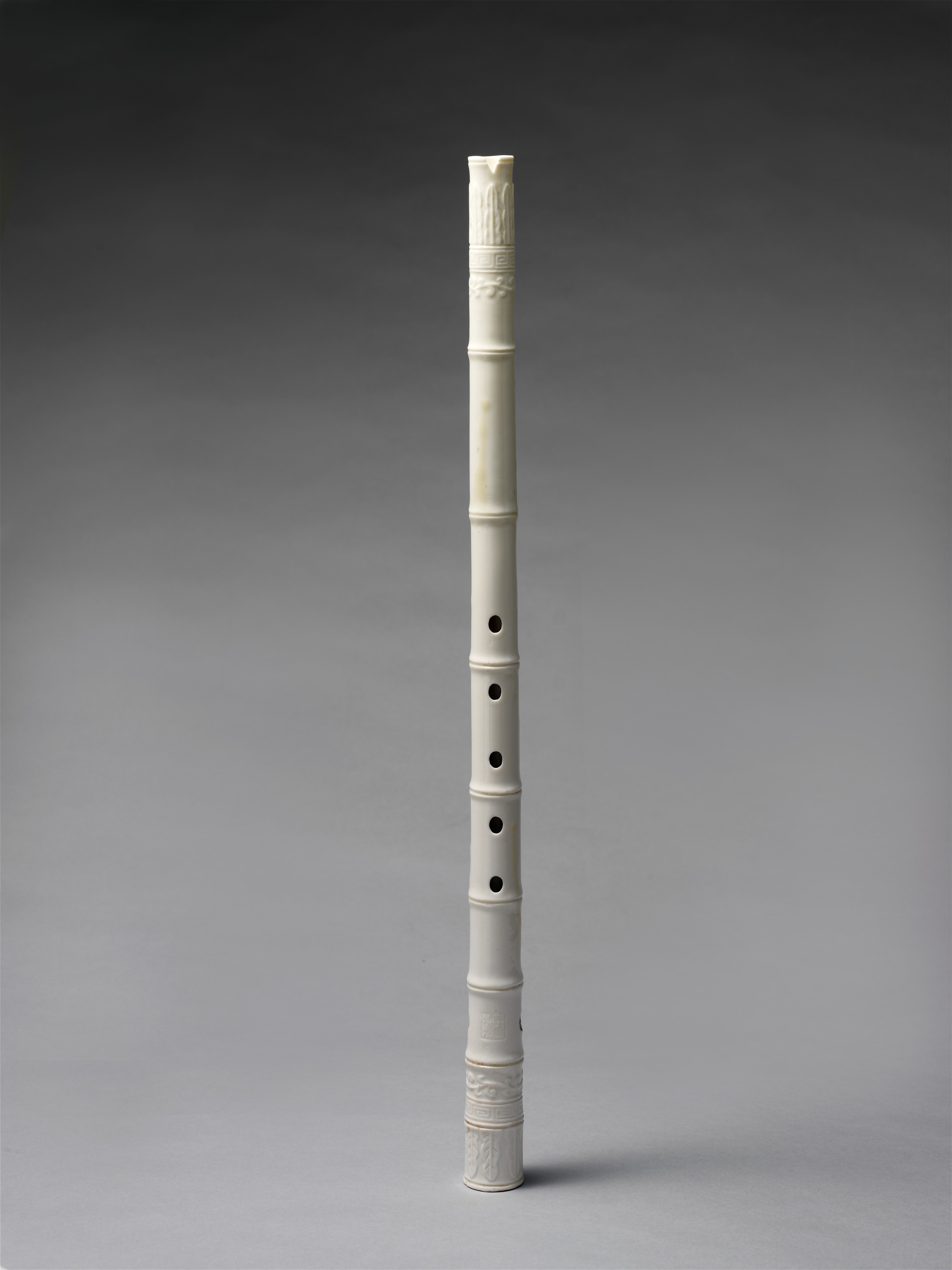
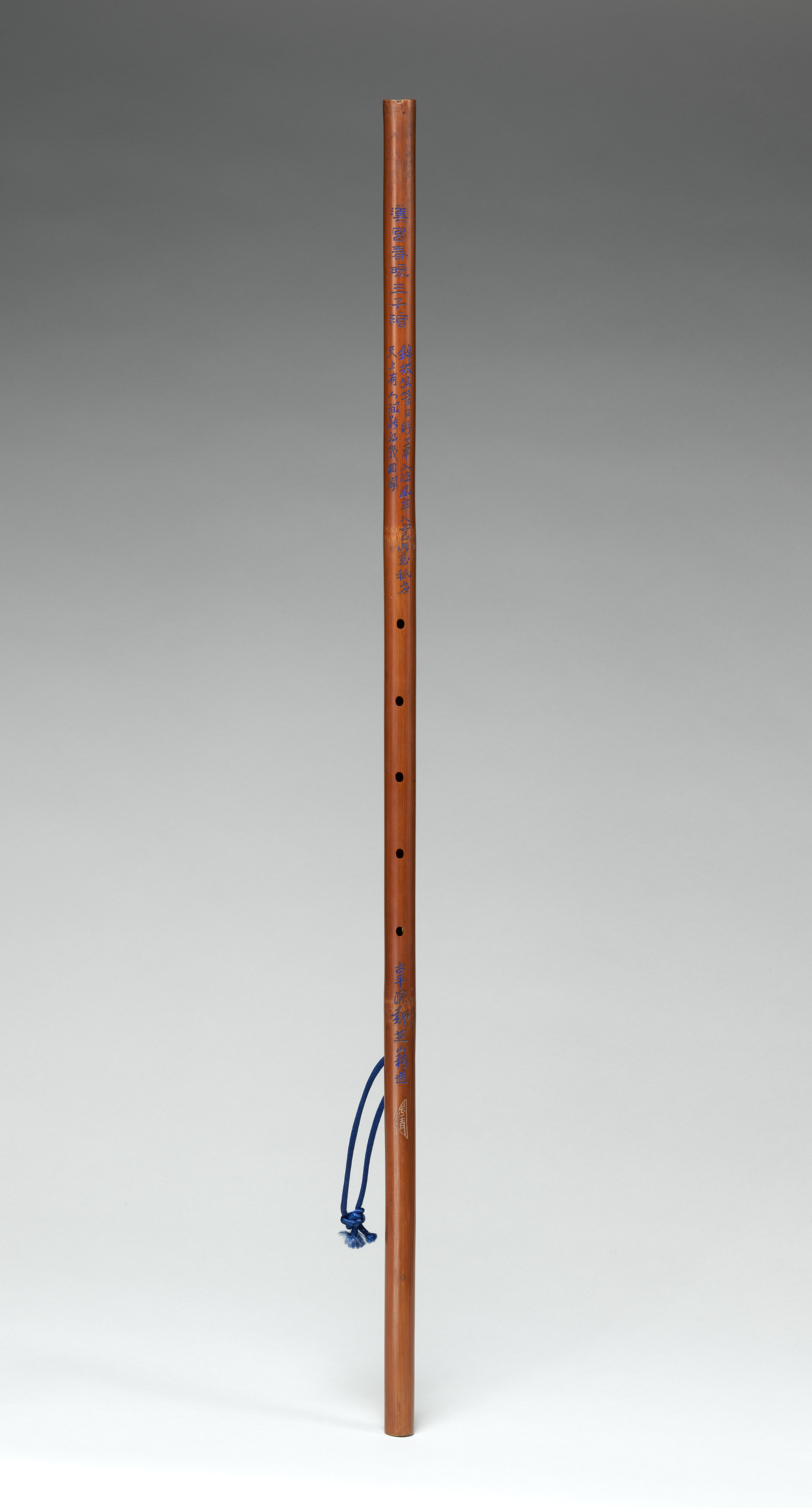
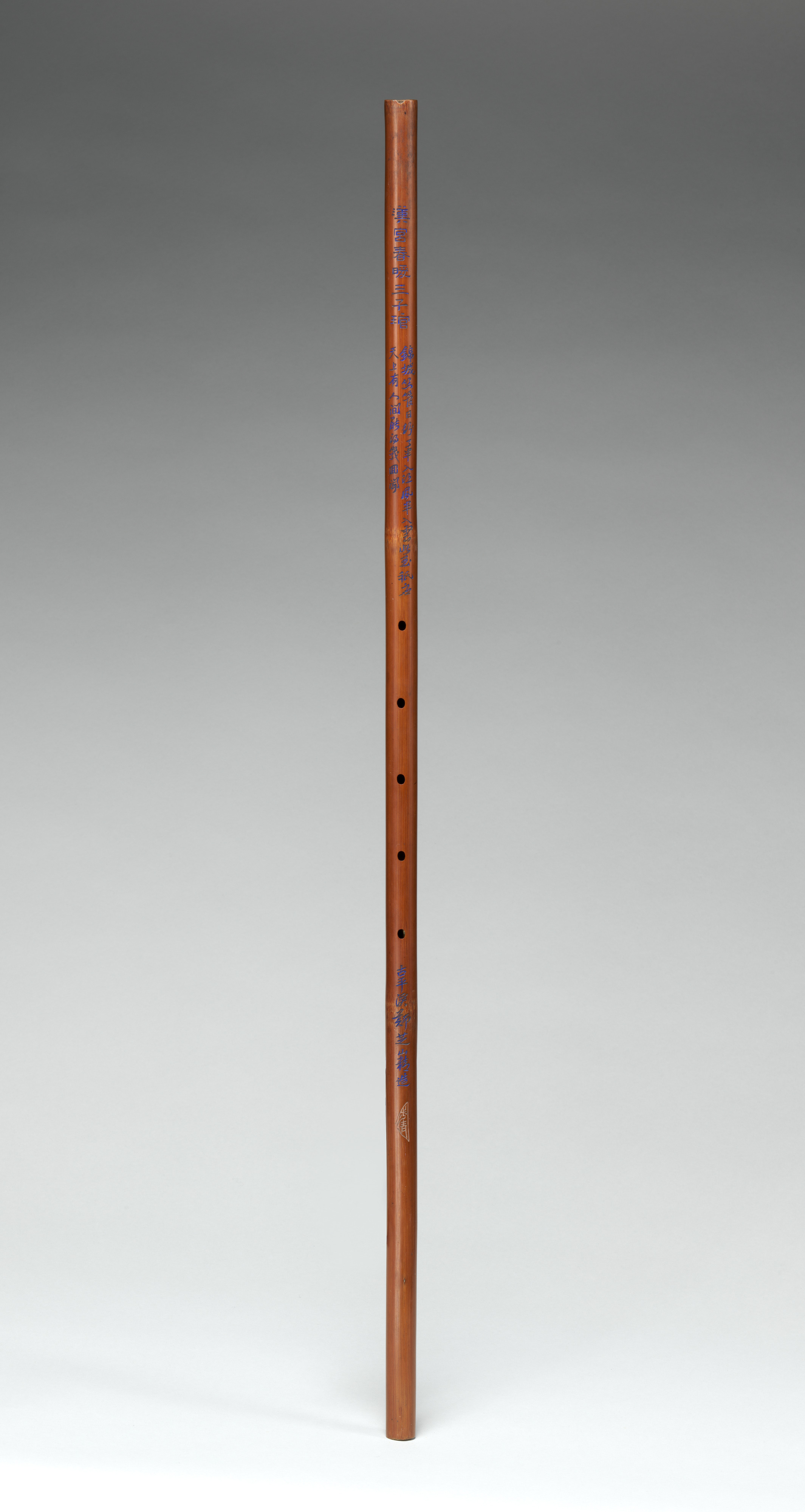
The Metropolitan Museum’s collection holds four xiao that document the late Qing dynasty production of the instrument across an unusually wide range of materials. The most striking is a jade xiao of the 18th or 19th century (object 504182), purchased through the Rogers Fund in 1987 — a luxury instrument intended for display and collecting as much as for playing. A porcelain xiao of the 18th to 19th century (object 503938) is similarly a high-end ceremonial or decorative instrument. A Yuping xiao of around 1890 (object 718397), built of xui water bamboo from the renowned Yuping bamboo region in Guizhou province, represents the high-quality professional playing instrument of the late Qing. A purple bamboo xiao of the late 19th century (object 500633), donated through the Crosby Brown Collection in 1889, represents the more standard playing instrument of the same period. All four are catalogued as Aerophone-Blow Hole-end-blown flute (vertical).
The xiao has been continuously played from the Tang dynasty to the present day, primarily in scholarly chamber music with the qin, in jiangnan sizhu silk-and-bamboo ensembles in the lower Yangtze region, and in Cantonese music. In the 20th century it acquired a substantial solo concert repertoire and became part of the modern Chinese orchestra’s wind section.
Construction & Materials
A standard xiao is around 60 to 80 centimetres long, made of a single piece of bamboo, with five or six finger holes on the front, one thumbhole on the back, and a notched blowing edge cut into the top of the tube. The bamboo is normally chosen from species that produce a thick wall and even bore — purple bamboo (紫竹) and Yuping bamboo are particularly prized.
Different regional types vary slightly: the qin xiao (a smaller, narrower xiao played with the qin zither) is around 60 cm long with a darker, gentler tone; the dongxiao (the standard southern xiao) is around 75 cm long with a fuller voice. Some modern xiao have additional keys to extend the chromatic range, in the manner of Boehm-system Western flutes, but the great majority remain unkeyed.
The MET’s jade and porcelain specimens are extraordinary objects in their own right: cutting and tuning a jade flute requires extreme skill, and a playable porcelain xiao of equal quality is rarer still. Both materials appear in late Qing imperial workshops and document the instrument’s status as both a literati and a courtly object.
How It’s Played
The player holds the xiao vertically, with the notched blowing edge resting against the player’s lower lip and the tube angled gently away from the body. Breath is directed obliquely across the notch, splitting against the edge to set up the standing wave. Six fingers cover the front holes; the right thumb supports the instrument and the left thumb covers the back hole.
The technique relies almost entirely on breath control and embouchure — there are no keys to drive, no reed to manage, and the dynamic and tonal palette comes from the player’s air pressure, mouth shape and finger placement. Skilled players use sliding pitch adjustments (shouwen), grace notes (huayin) and breath-controlled vibrato (qichuan) as their main expressive tools.
The two-and-a-half-octave range is reached by overblowing, which the xiao does smoothly because of its end-blown construction.
Cultural Significance
The xiao occupies a particular place in Chinese culture as the wind instrument of the literati — the educated scholar-official class of imperial China. It pairs naturally with the qin in the standard duet of the Confucian scholar’s chamber, and most surviving Ming and Qing landscape paintings of scholars at leisure show one or both of these instruments. Compared with the dizi’s brighter, public sound, the xiao represents introspection, meditation and contemplative quiet.
The instrument is also the direct ancestor of the Japanese shakuhachi: a Tang dynasty Chinese xiao was carried to Japan in the 8th century and developed there into the shakuhachi as we now know it. The modern Chinese xiao and the Japanese shakuhachi are noticeably different (the shakuhachi is thicker, shorter and more open, with a wider blow-hole) but the genealogical link is direct.
Notable Examples & Recordings
The MET’s four specimens (objects 504182, 503938, 718397, 500633) are documented in the Musical Instruments department. The Music Research Institute in Beijing and the Shanghai Conservatory hold further important Qing dynasty instruments, including playing examples in Yuping bamboo from major Guizhou makers.
For listening:
- Tan Baoshuo, Xiao Solo — leading modern xiao player at the Central Conservatory.
- Wang Changyuan, Cantonese Music for Xiao — southern repertoire with the gaohu and pipa.
- Lin Shicheng (qin) and Sun Yude (xiao), Music of the Qin and Xiao — the classic scholarly chamber duet.
- Daniel Atherton, The Sound of the Xiao — Western player working in the Chinese tradition.
Related Instruments
- Dizi – the Chinese transverse bamboo flute that contrasts with the xiao in playing position and tone.
- Shakuhachi – the Japanese end-blown bamboo flute that descends directly from the Tang dynasty Chinese xiao.
- – the seven-string zither that the xiao traditionally accompanies in scholarly chamber music.
- Paixiao – the Chinese pan flute, a distinct instrument that shares the xiao element of the name.
- – the unrefined Japanese end-blown bamboo flute, closely related to both the xiao and the shakuhachi.
Where to Hear It
Concert recitals featuring the xiao appear in Beijing, Shanghai, Hong Kong, Singapore and Taipei throughout the year. The Central Conservatory of Music in Beijing and the Shanghai Conservatory feature the xiao both as a principal solo instrument and as part of the modern Chinese orchestra’s wind section. The jiangnan sizhu silk-and-bamboo ensemble sessions in Shanghai and the qin music gatherings in major Chinese cities continue to feature the xiao in its traditional chamber-music role. The Yuping Xiao and Dizi Festival in Guizhou province celebrates the instrument’s most famous bamboo source.
- Wikipedia: Xiao (flute)
- The MET: Jade Xiao (object 504182)
- The MET: Porcelain Xiao (object 503938)
- The MET: Yuping Xiao (object 718397)
- The MET: Xiao, late 19th c. (object 500633)
- Wikimedia Commons: Xiao
Learning Resources
The xiao is one of the most accessible Chinese instruments for beginners — it requires no reed, no key system, and produces a pleasing tone from the first attempts. Standard tutor materials include the Central Conservatory’s graded examination books and the Xiao Yanzou Jiaocheng by Tan Baoshuo. Outside China, online instructional series and the publications of the Chinese Music Society of Hong Kong cover the basic technique. New Yuping bamboo instruments by leading Guizhou makers run from approximately 100 to 800 USD; student instruments are widely available from around 30 USD.
Frequently Asked Questions
What is the difference between a xiao and a dizi?
The xiao is held vertically and blown across a notch at the top of the tube; its sound is gentle, breathy and meditative. The dizi is held horizontally, blown across a side hole with a buzzing membrane (dimo) over a separate hole, and its sound is bright and reedy.
Is the xiao related to the Japanese shakuhachi?
Yes. The shakuhachi descends directly from a Tang dynasty Chinese xiao that was carried to Japan in the 8th century. The two instruments are recognisably different today but share the same end-blown notched-mouthpiece principle.
What is the body of a xiao made of?
A xiao is normally made of a single piece of bamboo. Purple bamboo (紫竹) and Yuping water bamboo (水竹) from Guizhou province are the most prized. Luxury instruments in jade and porcelain are also documented historically and are held in museum collections.
How many holes does a xiao have?
A standard xiao has six finger holes on the front and one thumbhole on the back, plus the notched blowing edge at the top of the tube. Some modern keyed xiao have additional small holes covered by keys for chromatic playing.
Are old xiao in museums?
Yes. The Metropolitan Museum holds four xiao: a jade specimen (object 504182), a porcelain specimen (503938), a Yuping water-bamboo instrument (718397) and a purple-bamboo instrument (500633), all in the Musical Instruments department.
What music is the xiao used for?
Traditionally the xiao is played in scholarly chamber music with the qin zither, in southern silk-and-bamboo ensemble music, and in Cantonese music. In the modern Chinese orchestra it sits in the wind section, and it has a substantial solo concert repertoire developed since the 1950s.