.jpg)



Dizi
笛子
| Category | Wind |
|---|---|
| Country of origin | China |
| Wikipedia | en.wikipedia.org |
| Wikidata | Q1146067 |
Listen
Audio: Gorgoroth6669, CC0 / via Wikimedia Commons
Performance video

Video: Mind And Body Relaxation It's Time To Relax Music, Creative Commons (CC BY) / via YouTube
Overview
The dizi is a transverse bamboo flute used across Chinese music, from solo concert recitals to regional opera and folk traditions. It looks at first glance like a recognisable side-blown flute, but it has one distinctive feature that no other major transverse flute shares: an extra hole between the embouchure and the finger holes, covered with a thin membrane of reed-pith called the di-mo. The di-mo vibrates when the player blows, giving the dizi its characteristic bright, slightly buzzing, almost reed-like tone.
The dizi is one of the most widely played instruments in China and is taught in every major conservatory. It has also become a familiar voice in film scoring and in cross-cultural projects worldwide.
Origin & History
The dizi has been in use in China for at least two thousand years, with archaeological precursors going back even further. Side-blown flutes appear in early Chinese musical texts and in surviving instruments from Han-dynasty tombs. Over time the instrument developed two main regional types: the qudi, longer and lower-pitched, used in southern Chinese kunqu opera; and the bangdi, shorter and higher-pitched, used in northern bangzi opera and folk music.
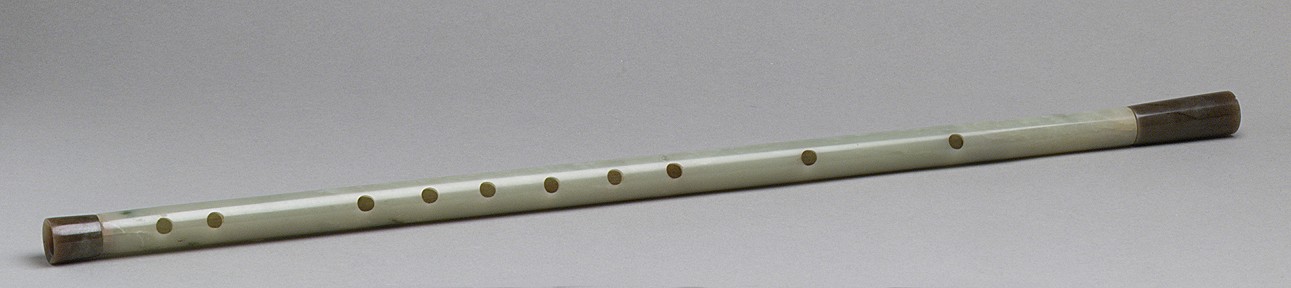
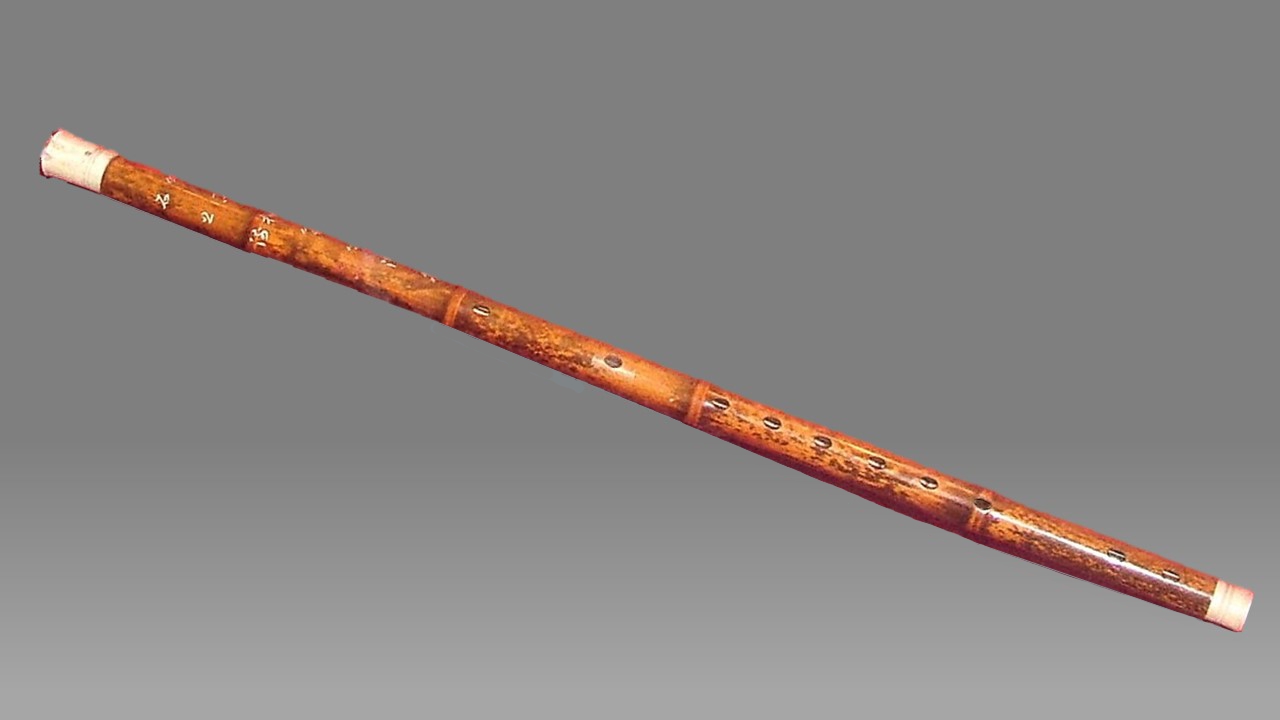
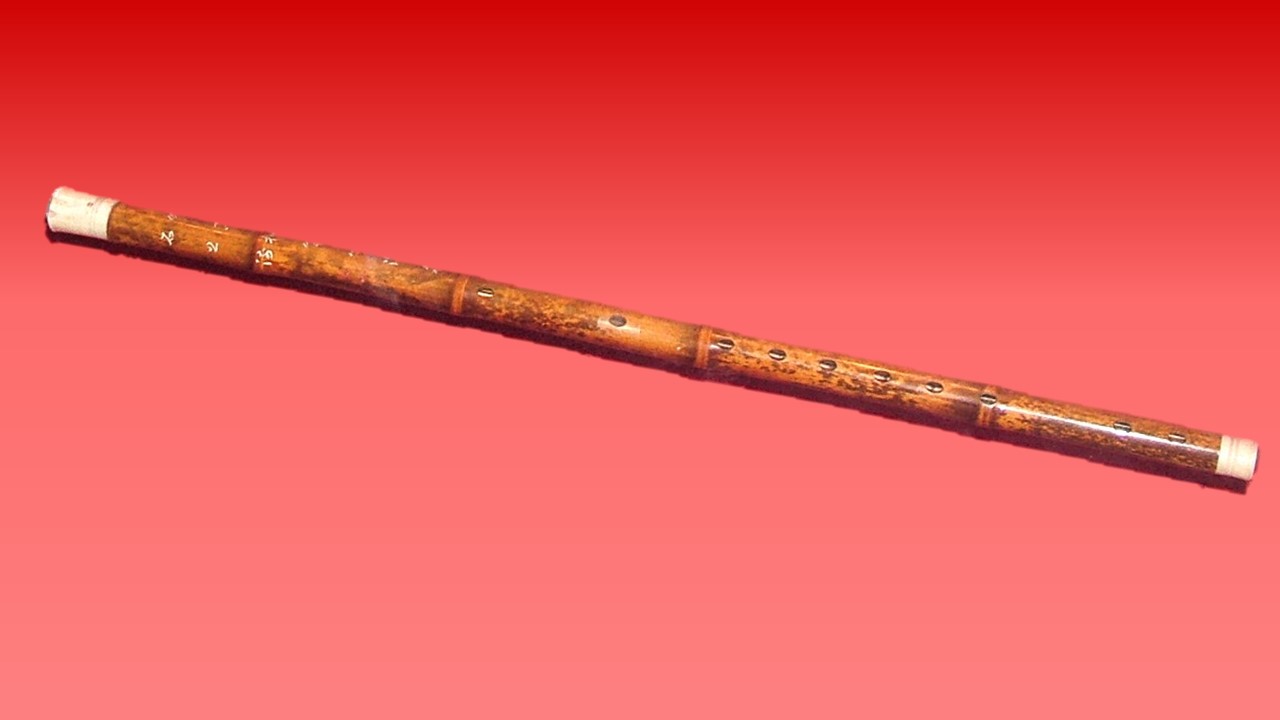
The Metropolitan Museum of Art’s collection includes both a late-18th to early-19th century dizi made of jade (object 503050) and a more typical late-19th century bamboo dizi (object 500635). The two specimens highlight the long-standing use of bamboo as the working material and the parallel tradition of high-status ceremonial dizis carved from precious stone.
Construction & Materials
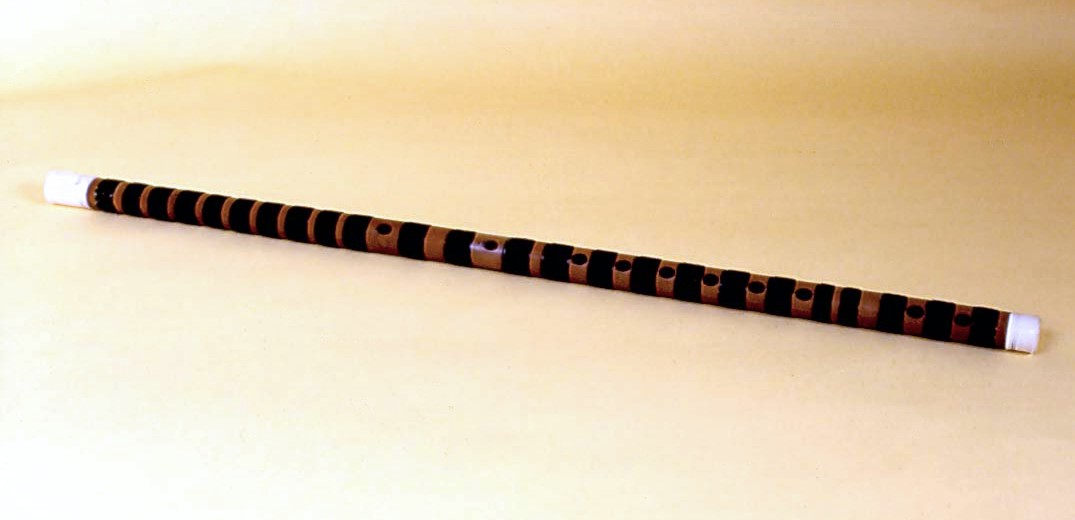
The Hornbostel-Sachs system classifies the dizi as 421.121 — an open side-blown flute with finger holes. A typical concert dizi is cut from a single section of seasoned bamboo and bound at intervals with thread or fine wire to prevent splitting. The bore is roughly 1 to 1.5 centimetres across.
Along the length of the tube there are six finger holes, an embouchure hole near one end, and — in between them — the additional hole covered by the di-mo membrane. The di-mo is made from the inner pith of a particular species of reed and is glued in place with a thin layer of garlic juice or e jiao paste. Players typically replace the membrane every few weeks; setting and tensioning a fresh di-mo correctly is one of the most important practical skills in dizi playing.
How It’s Played
The player holds the dizi horizontally to the right, blowing across the embouchure hole as they would on a Western flute. The membrane buzzes in sympathy with the airstream, sharpening the harmonic profile of every note and giving the instrument its bright, projecting tone. Common techniques include rapid tonguing (tutu), flutter-tonguing, half-holing for chromatic notes, and a wide range of pitch bends and slides.
Different keyings of dizi are used for different repertoire. Conservatory players typically own a set of instruments in several keys (commonly C, D, E, F, and G) to cover the standard repertoire without transposition.
Cultural Significance
The dizi appears across virtually every major Chinese musical tradition: kunqu and Beijing opera, sizhu silk-and-bamboo chamber music, the modern Chinese orchestra, and a wide range of folk traditions. It is also a central instrument in many Chinese film scores, where its bright, vocally inflected tone is often used to evoke landscape, lyric emotion, or historical setting.
In the modern conservatory tradition, the dizi has been the subject of a steady stream of new compositions since the mid-20th century, and several important players — including Lu Chunling, Feng Zicun, and Tang Junqiao — have shaped both the technique and the repertoire of the instrument.
Notable Examples & Recordings
The Metropolitan Museum of Art’s two surviving historical dizis (objects 503050 and 500635) are particularly useful because they document both the everyday bamboo tradition and the parallel high-status practice of carving the instrument from jade. For listening, recordings by Lu Chunling, Feng Zicun, and Tang Junqiao are widely respected starting points, and the dizi also features in many recordings of modern Chinese orchestral music and film soundtracks.
Related Instruments
- Xiao – the Chinese end-blown bamboo flute, with a softer and more meditative tone
- Sheng – the Chinese mouth-organ often paired with dizi in chamber music
- Hulusi – the gourd-bodied free-reed flute associated with Yunnan
- Bansuri – the Indian transverse bamboo flute, a side relative without a buzzing membrane
- Shinobue – the Japanese transverse bamboo flute, used in folk and festival music
Where to Hear It
Chinese conservatory recitals, modern Chinese orchestra concerts, and film soundtracks are the natural settings for the dizi. The instrument also appears regularly in Chinese opera and in cross-cultural collaborations with Western ensembles.
- Wikipedia: Dizi
- The MET: Dizi, jade (object 503050)
- The MET: Dizi, bamboo (object 500635)
- Wikimedia Commons: Dizi
Learning Resources
Beginners typically start by learning to produce a stable tone without the di-mo in place, then add the membrane once the embouchure is settled. Setting the di-mo at the right tension — neither too tight nor too slack — is itself a learned skill, and many beginners struggle here before their first teacher demonstrates the correct feel. The Chinese conservatory grading system for dizi is well established, and structured online lessons and English-language method books are now widely available.
Frequently Asked Questions
What is the buzzing sound of the dizi?
The buzz comes from the di-mo, a thin reed-pith membrane glued over an extra hole between the embouchure and the finger holes. It vibrates with the airstream and gives the dizi its characteristic bright, projecting tone.
How is the dizi different from a Western flute?
Both are side-blown flutes, but the dizi is made from bamboo, has six finger holes rather than a key system, and includes the buzzing di-mo membrane that no Western flute has. Players typically own a set of dizis in different keys to cover their repertoire.
Are old dizis displayed in museums?
Yes. The Metropolitan Museum of Art in New York holds at least two historical dizis (objects 503050 and 500635), including a rare late-18th-century jade specimen.
Is the dizi difficult to learn?
Producing a basic tone is reasonably accessible. The harder skills are setting the di-mo membrane correctly, mastering rapid tonguing and pitch bends, and developing the breath control needed for the longer concert pieces.
Why are there different sizes of dizi?
Different lengths and bores produce different keys. A modern concert player typically owns dizis in several keys to cover the standard repertoire without transposing on the fly.


