Sheng
笙
| Category | Wind |
|---|---|
| Country of origin | China |
| Wikipedia | en.wikipedia.org |
| Wikidata | Q849052 |
Listen
Audio: S099001, CC0 / via Wikimedia Commons

Overview
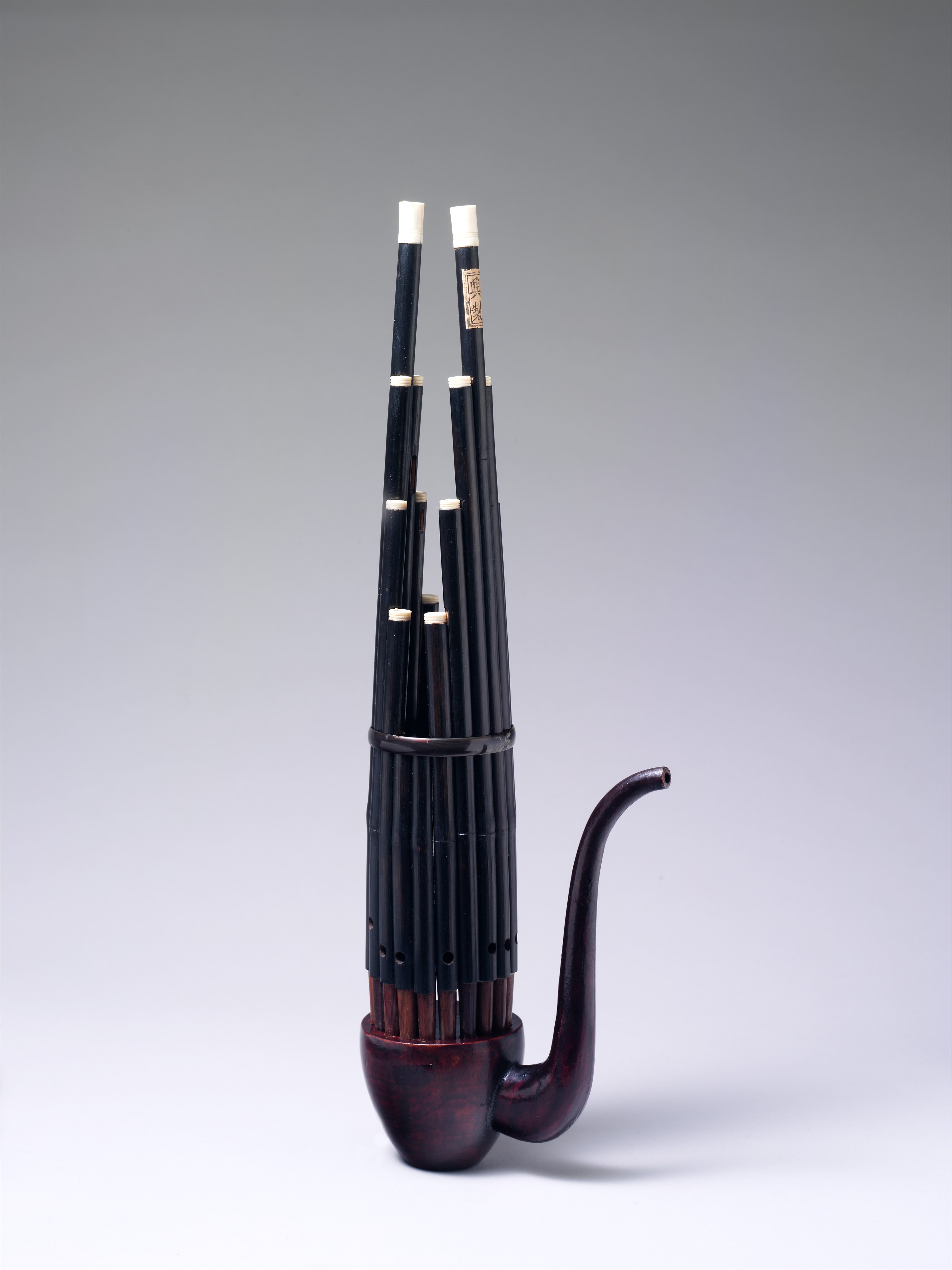
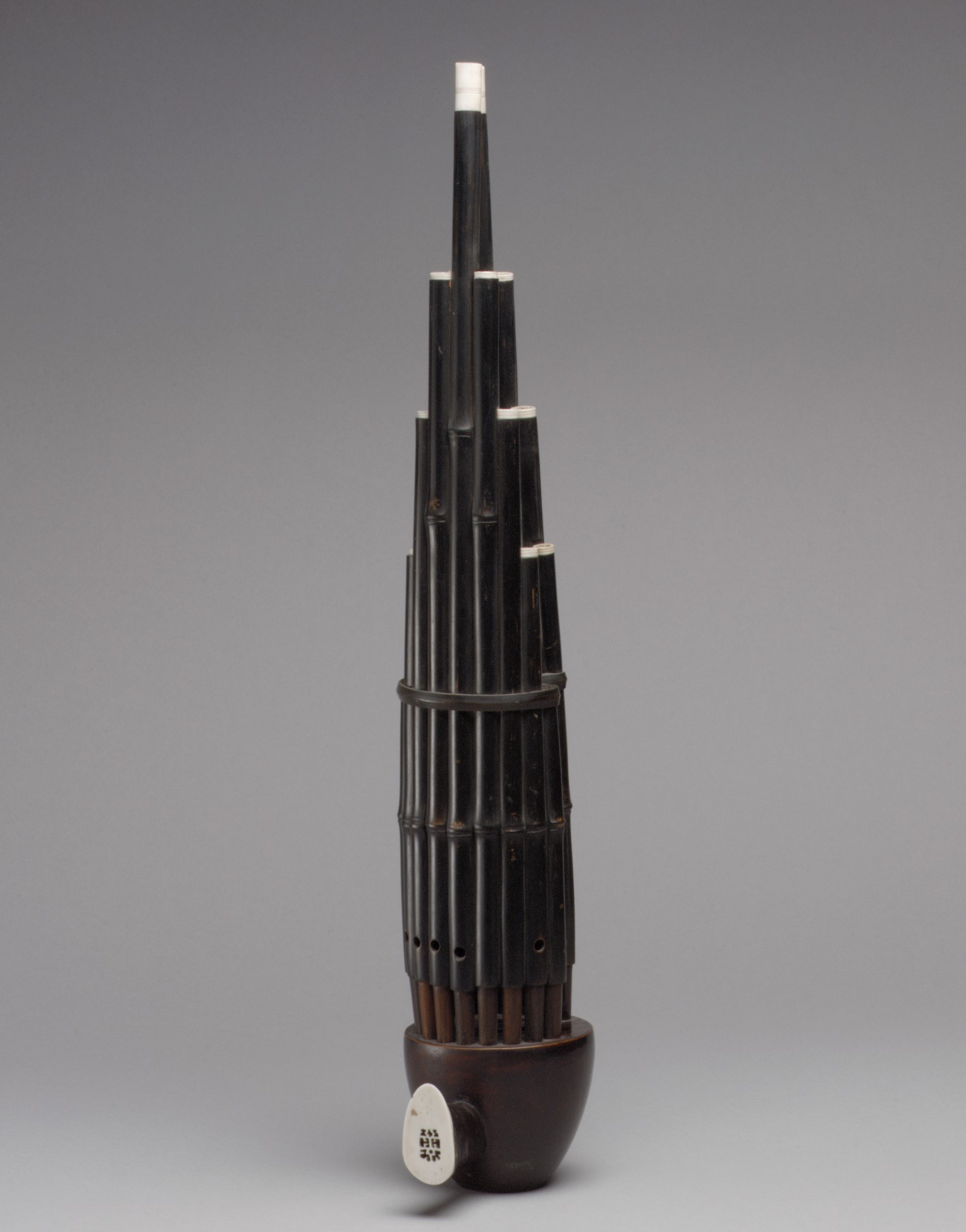
The sheng is a Chinese free-reed mouth-organ, built from a small bowl-shaped wind chamber pierced by a tight cluster of vertical bamboo pipes. Each pipe carries a single metal free reed near its base, and the player covers small finger holes in the pipes to bring individual notes into voice. Because air is drawn into the chamber through the player’s mouth and pushed back out by the same mouth, the sheng can sound notes both on inhalation and exhalation — there is no break in the music between breaths.
The sheng is the oldest surviving free-reed instrument in continuous use anywhere in the world, and through 18th- and 19th-century contact with European travellers it became the model for the harmonica, accordion, harmonium, and concertina. Most of the West’s free-reed family tree starts here.
Origin & History
Free-reed instruments of this general type have been documented in China since the Bronze Age, with archaeological examples from the early Zhou dynasty (around 1000 BCE) and a continuous written record from the Han dynasty onward. The sheng — and its variants the yu and he — appears regularly in early Chinese ritual music and was a standard member of the imperial yayue (court music) ensembles.
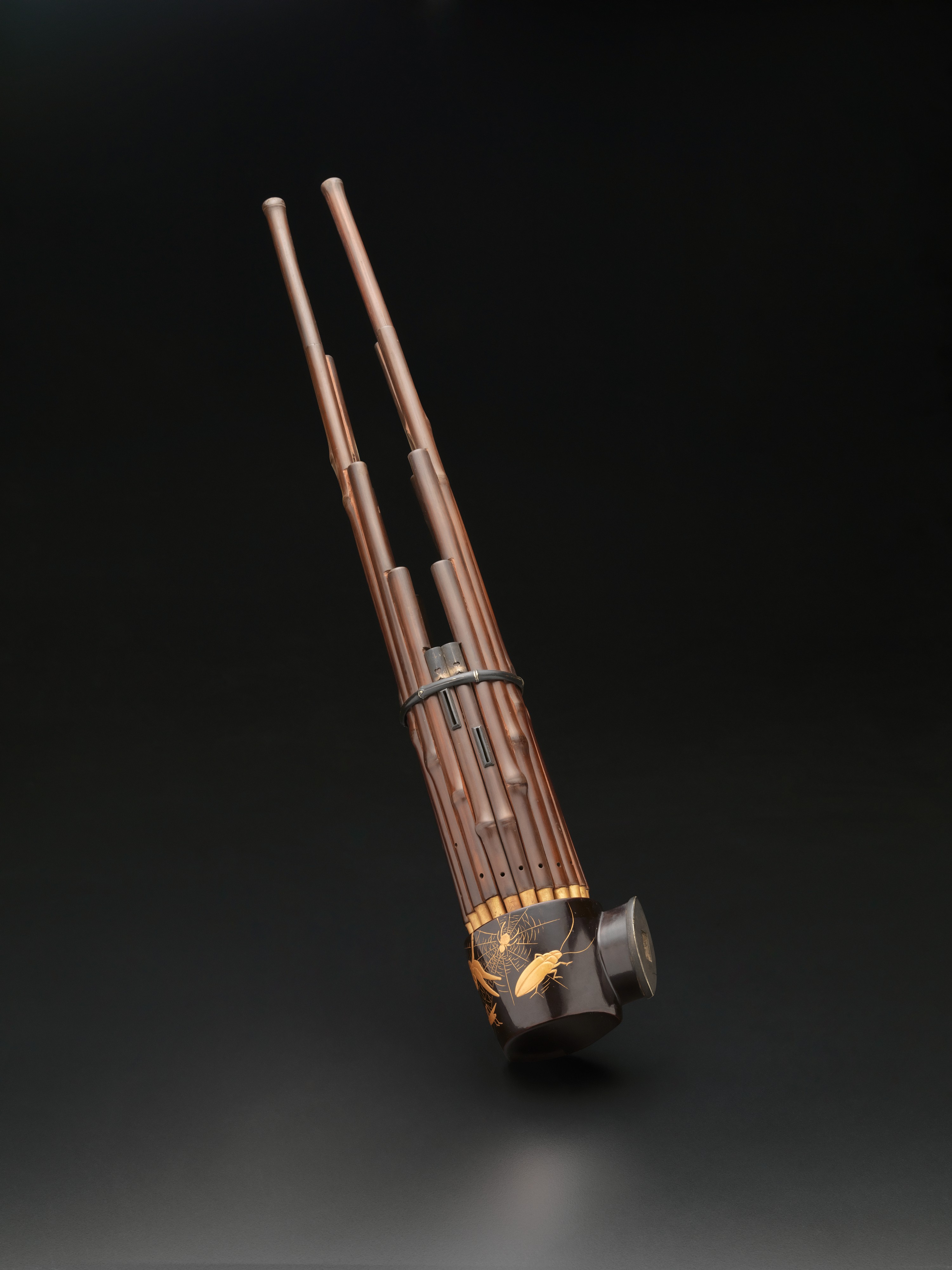
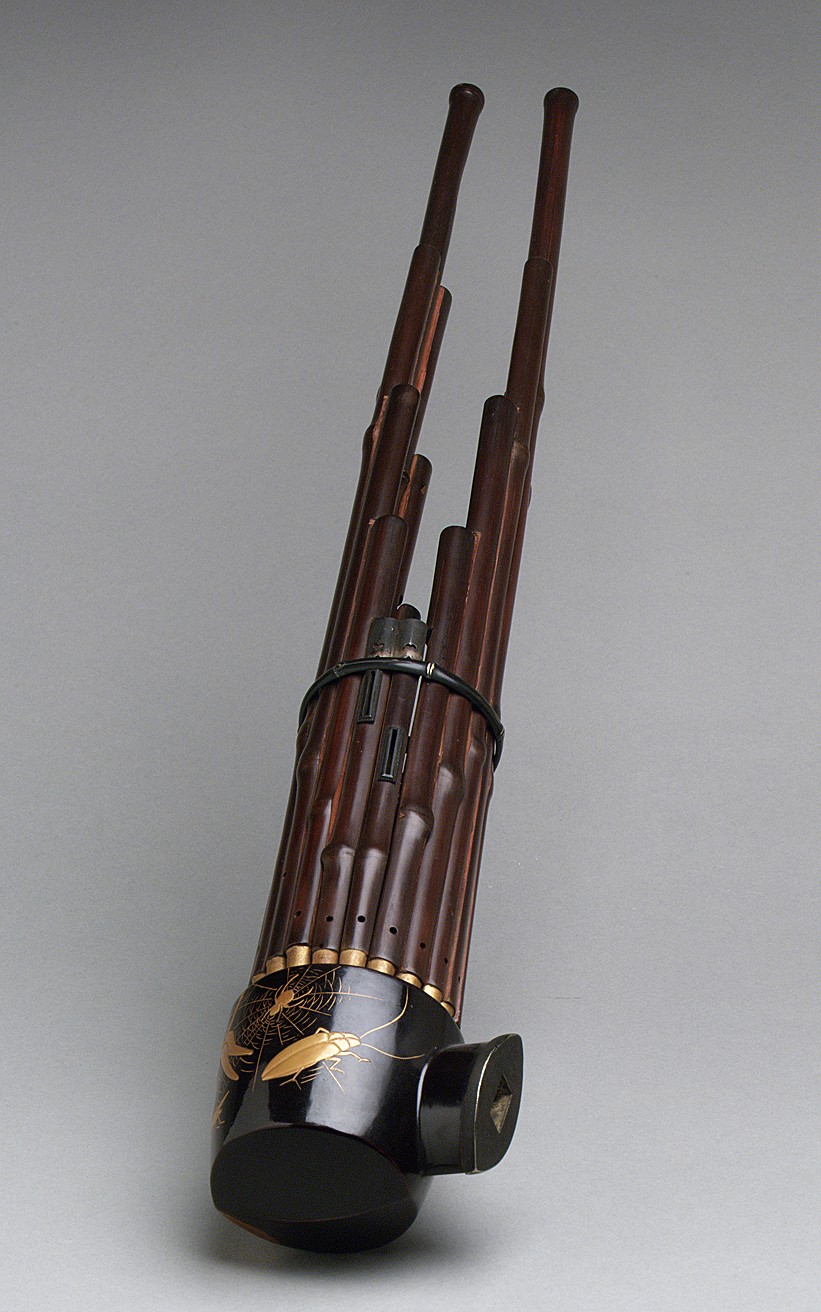
The Hornbostel-Sachs system classifies the sheng as 412.132 — a set of free reeds — and its DBpedia entry explicitly groups its relatives across East Asia and beyond: the Japanese shō, the Lao and Thai khene, the Chinese bawu and hulusi, and the Western harmonica. The Metropolitan Museum of Art holds both a mid-19th-century Chinese sheng (object 505403) and a 19th-century Japanese shō (object 502833) made of bamboo and metal, helping document the broader family.
Western interest in the sheng played a direct role in the development of the modern free-reed family. After examples of the instrument reached Europe in the late 18th century, instrument makers in Germany and Austria experimented with single free reeds in keyboard and bellows-blown configurations, leading within a few decades to the harmonium, the accordion, and the harmonica.
Construction & Materials
A traditional sheng has a small wooden or metal bowl with a single mouthpipe, into which a tight bundle of bamboo pipes — typically seventeen, with thirteen of them sounding — is inserted vertically. Each sounding pipe carries a metal free reed (originally bronze, today usually steel or brass) mounted in a small frame near its base. Each pipe also has a small finger hole drilled into its side; only when the player covers the hole does that pipe sound, because the airflow is directed across the reed.
Modern conservatory shengs include keyed versions with thirty-seven or more reeds, mounted in a metal body and closed by a Western-style key system. These instruments — often called jiajian sheng or simply concert shengs — extend the chromatic range of the traditional design and are the standard solo and orchestral version in most modern Chinese concert ensembles.
How It’s Played
The player holds the sheng upright in both hands, mouth at the mouthpipe, and seals individual notes by covering the finger holes on the chosen pipes. Notes can be produced both by inhaling and exhaling, allowing for very long unbroken phrases. The sheng is one of the few wind instruments in the world that can sound full chords as comfortably as melodies, and most traditional repertoire takes advantage of this.
The keyed concert sheng is played similarly, but with a piano-like layout of buttons that allow rapid chromatic passages and large chordal voicings impossible on the traditional design.
Cultural Significance
In China, the sheng has been a part of court, temple, opera, and folk music for at least three thousand years, and it remains a standard instrument in the modern Chinese orchestra and in many regional ensemble traditions. Its quiet, slightly reedy tone makes it a frequent companion to the dizi and pipa in sizhu chamber music.
Outside China, the sheng’s broader significance is as the historical ancestor of the West’s free-reed family. The harmonica, accordion, harmonium, and concertina all trace back to European experimentation with free reeds inspired by surviving examples of the sheng brought back from East Asia in the late 18th and early 19th centuries.
Notable Examples & Recordings
The Metropolitan Museum of Art’s mid-19th-century Chinese sheng (object 505403) and 19th-century Japanese shō (object 502833) document both the Chinese instrument itself and its closest East Asian relative. For listening, recordings by Wu Tong, Hu Tianquan, and the modern conservatory soloist Wu Wei offer a strong introduction to the instrument’s range — from traditional chamber music to contemporary concertos written for sheng and orchestra.
Related Instruments
- Shō – the Japanese mouth-organ used in gagaku court music
- – the Lao and Thai bamboo mouth-organ in the same family
- – the Chinese single-pipe free-reed flute
- Hulusi – the Chinese gourd-bodied free-reed flute
- Harmonica – the Western free-reed instrument descended (via 19th-century European inventors) from the sheng family
Where to Hear It
Modern Chinese orchestra concerts, sizhu chamber music, and Chinese opera are the natural settings for the sheng. The keyed concert sheng also appears regularly in newly composed Chinese concertos, in cross-cultural collaborations with Western ensembles, and in film scoring.
- Wikipedia: Sheng
- The MET: Sheng (object 505403)
- The MET: Shō (object 502833)
- Wikimedia Commons: Sheng
Learning Resources
Beginners typically start by learning to maintain a steady airflow in both directions and to seal individual finger holes cleanly before progressing to chordal playing. The Chinese conservatory grading system covers both traditional and keyed concert shengs, and structured method books and online lessons are increasingly available in English.
Frequently Asked Questions
Is the sheng the oldest free-reed instrument?
It is generally considered the oldest free-reed instrument in continuous use, with archaeological precursors going back roughly three thousand years and a continuous written record from the Han dynasty onward.
How is the sheng related to the harmonica and accordion?
The harmonica, accordion, harmonium, and concertina all descend from European experimentation with free reeds in the late 18th and early 19th centuries — experimentation directly inspired by surviving examples of the sheng brought back from East Asia.
How many pipes does a sheng have?
A traditional Chinese sheng usually has seventeen bamboo pipes, with thirteen of them carrying reeds and producing notes. Modern keyed concert shengs typically have thirty-seven or more reeds.
Can the sheng play chords?
Yes — and this is one of its defining features. Unlike most wind instruments, the sheng can sound multiple notes simultaneously, and traditional repertoire makes extensive use of parallel fourths and fifths.
Are old shengs displayed in museums?
Yes. The Metropolitan Museum of Art in New York holds a mid-19th-century Chinese sheng (object 505403) and a 19th-century Japanese shō (object 502833), part of the Crosby Brown Collection acquired in 1889.


