
Tin Whistle
feadóg stáin
| Category | Wind |
|---|---|
| Country of origin | Ireland / United Kingdom |
| Wikipedia | en.wikipedia.org |
| Wikidata | Q615403 |
Listen
Audio: Tim Ross, Public domain / via Wikimedia Commons
Audio: Jules Grandgagnage, CC BY-SA 4.0 / via Wikimedia Commons
Audio: Julien Grandgagnage, CC BY-SA 3.0 / via Wikimedia Commons

Overview
Sometimes labelled the penny whistle and sometimes the Irish whistle, this small six-hole fipple flute is most commonly built today from a folded sheet of tin or brass and fitted with a moulded plastic or wooden mouthpiece. The Hornbostel-Sachs system classifies it as 421.221: an open flute with internal duct and finger holes. DBpedia further classifies it as a woodwind, wind instrument, aerophone, and simple system flute.
The instrument is best known as a central voice in Irish music — its low cost, easy basic technique, and bright clear tone have made it ubiquitous in pub sessions, recordings, and concert tours. It is also widely used in Scottish, English, and other folk traditions and has had a steady presence in popular music — from film scores to chart hits — since the 1960s.
Origin & History
Simple six-hole fipple flutes have been documented across Europe for many centuries — early Irish examples in particular have been dated to the medieval period. The modern industrial tin whistle, however, dates from a specific moment: in 1843 Robert Clarke began mass-producing rolled-tin whistles in Manchester (and later in Suffolk), making the instrument cheaply available across the British Isles for the first time. Other manufacturers — most notably the Generation company in the 20th century — followed with similar mass-produced designs.
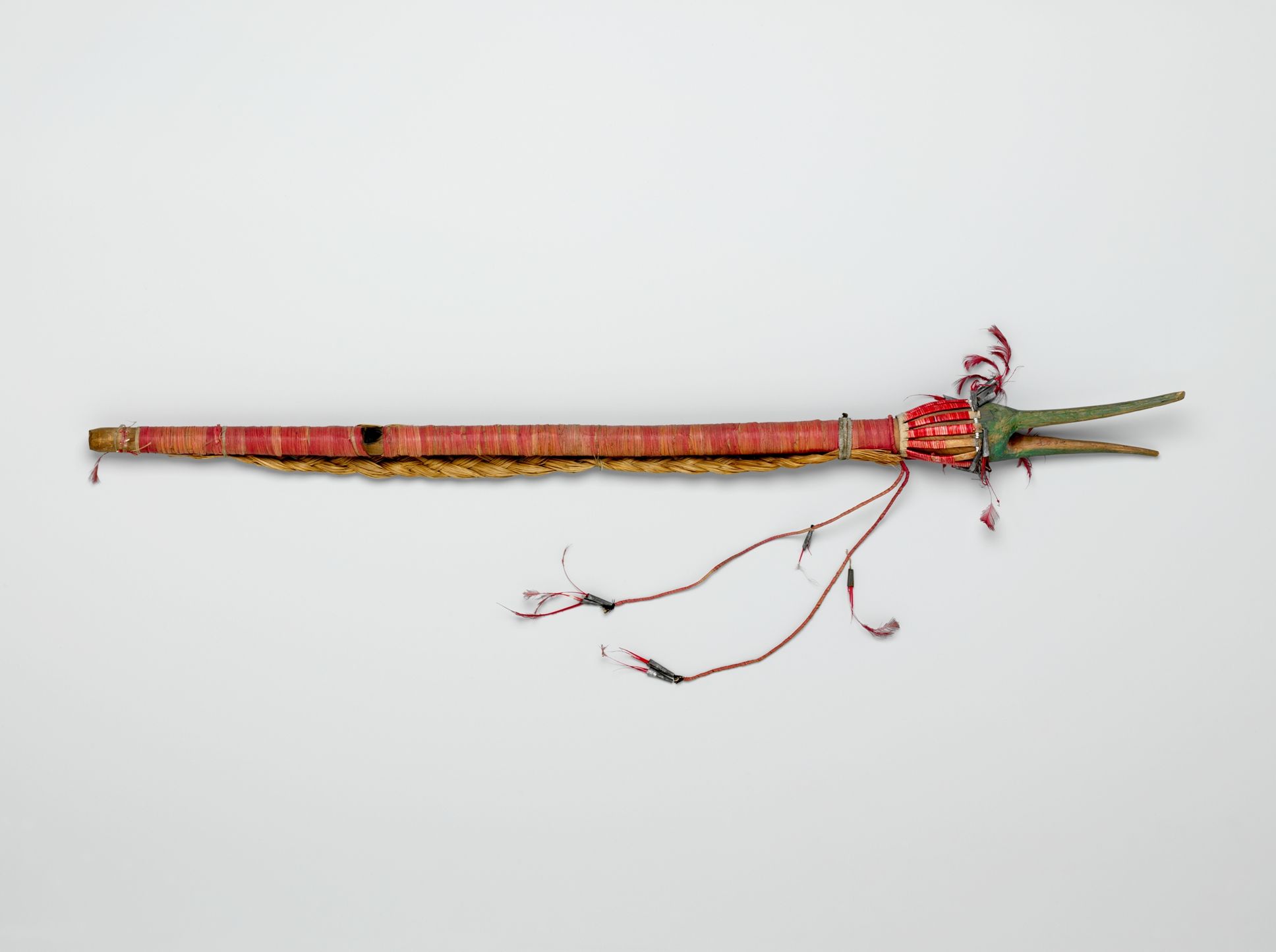
The Metropolitan Museum of Art’s collection includes a 19th-century Native American (Sioux) Whistle (object 502625) made of wood, grass, hide, tin, and porcupine quill. While not itself a tin whistle in the modern Irish sense, this specimen documents the broader 19th-century practice of building simple whistles from sheet tin and other widely available materials.
A central role for this whistle within the Irish session tradition emerged across the twentieth century, particularly during the folk revival of the 1960s and 1970s. Players such as Mary Bergin, Micho Russell — together with Paddy Moloney, the founding piper of the Chieftains — and later Joanie Madden brought the instrument to international concert audiences and established the technical and stylistic standards that most modern players still follow.
Construction & Materials
A standard modern tin whistle consists of a hollow tube — historically rolled from a single sheet of tin or brass and now also commonly turned from solid brass, aluminium, or wood — with six finger holes drilled along the front. The upper end is closed by a fipple mouthpiece, traditionally moulded plastic in mass-produced instruments and turned wood or metal in higher-end ones. The fipple directs a thin sheet of air across a sharp lip, producing the tone.
The most common keys are D and C, with D being the standard for Irish traditional music. Whistles in other keys (G, A, B-flat, E-flat, F, and so on) are widely available; serious players typically own a small set covering several keys. Low whistles — larger instruments tuned an octave below the standard, generally played with extended pinky reach — are a 20th-century development popularised by makers including Bernard Overton.
DBpedia points out the close kinship between this little whistle and several other simple-system aerophones, listing the Irish flute, the pipe and tabor, the fife, the flageolet, and the recorder among its near relatives. All share the basic six-hole simple-system design, with the tin whistle distinguished primarily by its small size, low cost, and fipple mouthpiece.
How It’s Played
The player blows directly into the fipple mouthpiece while covering and uncovering the six finger holes — three with the upper hand, three with the lower. The basic scale runs through the lower octave; overblowing produces the upper octave. Most tin whistles are diatonic, with cross-fingerings used to produce a few chromatic notes.
In Irish music, whistle technique rests on a small but rich vocabulary of ornaments: the cut (a sharp single tongue-like attack produced with a finger), the strike (or “tap”), the roll (a combination of cut and strike around a sustained note), and the cran (a longer multi-finger ornament typically used on the lowest note). These ornaments are more important to the instrument’s sound than any technical complexity in the basic fingering, and learning them well is the main developmental task for an aspiring traditional player.
Cultural Significance
Cultural weight, in the case of this little flute, is inseparable from the Irish session tradition and from its global diaspora. The pub session — an informal gathering of musicians playing reels, jigs, hornpipes, slow airs, and other traditional dance tunes — is the natural setting for the instrument, and tin whistles are routinely played alongside fiddles, flutes, accordions, concertinas, bodhráns, and uilleann pipes.
The instrument’s low cost has also made it one of the most widely accessible traditional instruments in the world. A serviceable tin whistle can be bought for less than the price of a single conservatory piano lesson, and most reasonably motivated beginners can play recognisable simple tunes within a few weeks of starting.
Notable Examples & Recordings
Strong starting points for listening include the album Feadóga Stáin by Mary Bergin, Joanie Madden’s recordings with Cherish the Ladies, the field-style playing of Micho Russell, and the Chieftains albums on which Paddy Moloney’s whistle features alongside his uilleann pipes. The low whistle has its own notable repertoire through players such as Cormac Breatnach, Brian Finnegan, and Davy Spillane, whose work has shaped the instrument’s modern voice.
Related Instruments
- Irish flute – the wooden simple-system flute used in much of the same Irish traditional repertoire
- Recorder – the broader European fipple-flute family
- – the older European fipple flute, a direct precursor to the modern tin whistle
- Fife – the small transverse military flute in the same simple-system family
- Low whistle – the larger, lower-pitched 20th-century descendant of the standard tin whistle
Where to Hear It
Pub sessions in Ireland, the United Kingdom, North America, Australia, and many other countries are the natural setting for the tin whistle. The instrument also appears regularly in film scoring (including James Horner’s Titanic, where Eric Rigler’s low whistle features prominently) and in cross-cultural projects with folk, classical, and popular musicians.
- Wikipedia: Tin whistle
- The MET: Whistle, Native American (Sioux), 19th century (object 502625)
- Wikimedia Commons: Tin whistle
Learning Resources
Among genuinely serious instruments, the tin whistle is one of the most accessible in the world. Beginners typically pick up the basic scale and a few simple tunes within a few weeks, then move on to the ornamentation that distinguishes Irish traditional playing from generic recorder-style technique. Mary Bergin’s tutor book Feadóga Stáin remains a standard reference; Grey Larsen’s The Essential Tin Whistle Toolbox is widely used in North America. Several senior players also offer structured online tuition.
Frequently Asked Questions
Where does the tin whistle come from?
Simple six-hole fipple flutes have been documented across Europe for many centuries. The modern industrial tin whistle dates from 1843, when Robert Clarke began mass-producing rolled-tin whistles in Manchester. The instrument’s central role in Irish session music developed through the 20th-century Irish folk revival.
What key is a tin whistle in?
The standard Irish-traditional tin whistle is in D. Whistles in C, G, A, B-flat, E-flat, F, and many other keys are widely available, and serious players typically own several whistles in different keys to handle the standard repertoire.
What is the difference between a tin whistle and a recorder?
Both belong to the fipple-flute family. The recorder, however, has seven finger holes plus a thumb hole and is tuned chromatically, whereas this whistle uses only six holes, runs on a diatonic scale, and tends to be smaller and louder. The recorder also has a much larger Western art-music repertoire, while the whistle is most associated with Irish and other folk traditions.
Is “penny whistle” the same as “tin whistle”?
Yes. Penny whistle, tin whistle, and Irish whistle all refer to the same general family of instruments. The “penny” name dates from the 19th century, when a basic Clarke whistle could be bought for a single penny.
Is the tin whistle difficult to learn?
The basic scale and simple tunes are unusually accessible — most beginners can play recognisable melodies within a few weeks. Mastering the ornamentation that distinguishes traditional Irish playing typically takes years of focused listening and practice.


