Zampogna
Zampogna
| Category | Wind |
|---|---|
| Country of origin | Italy (medieval origin) |
| Wikipedia | en.wikipedia.org |
| Wikidata | Q145971 |
Overview
The zampogna is the bagpipe of southern and central Italy. Wikidata classifies the instrument as a pipe and as a set of conical-bore double-reed pipes. The Wikipedia summary describes it as an Italian musical pipe and instrument; DBpedia files it among the wind instruments of Italian origin.
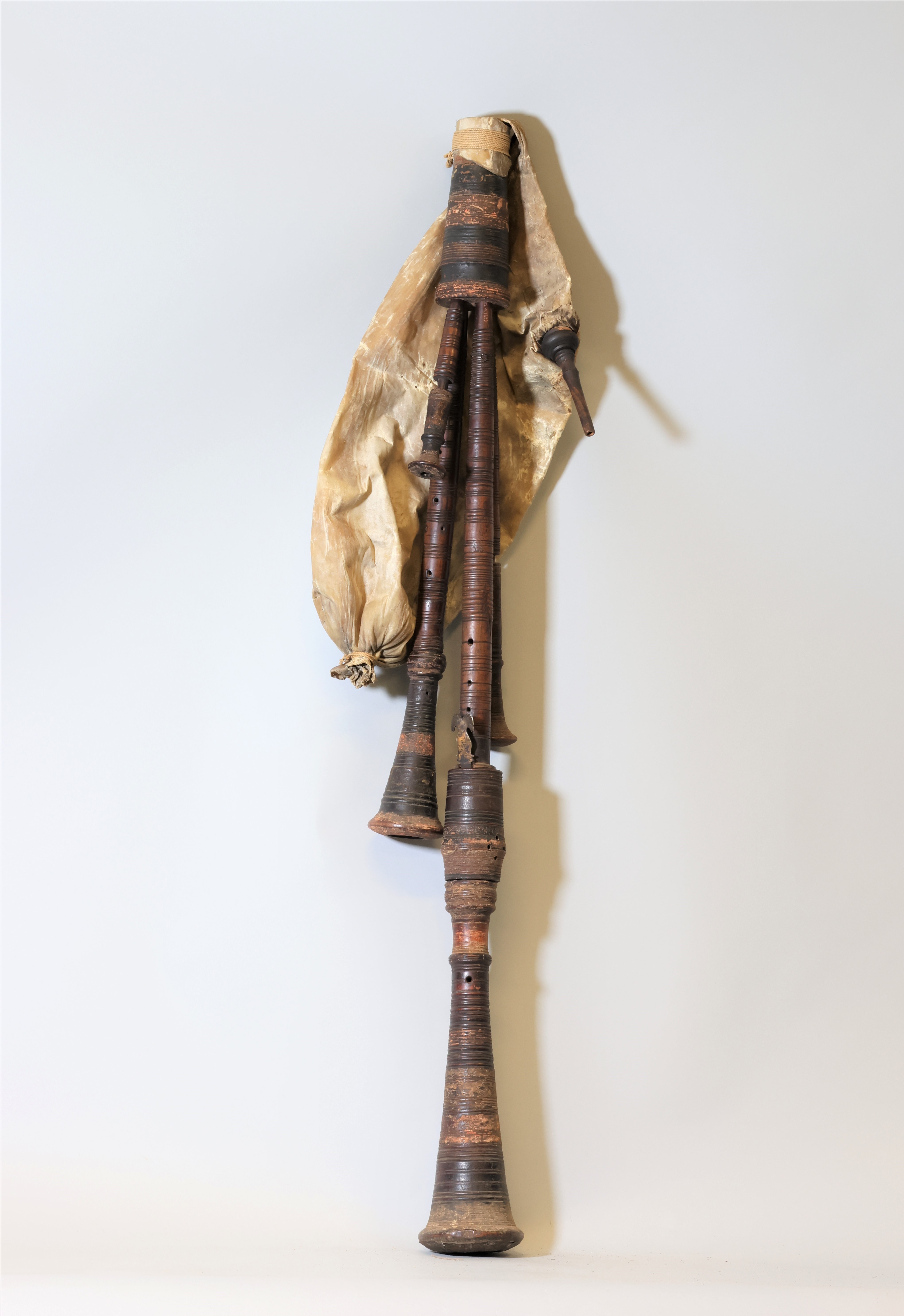
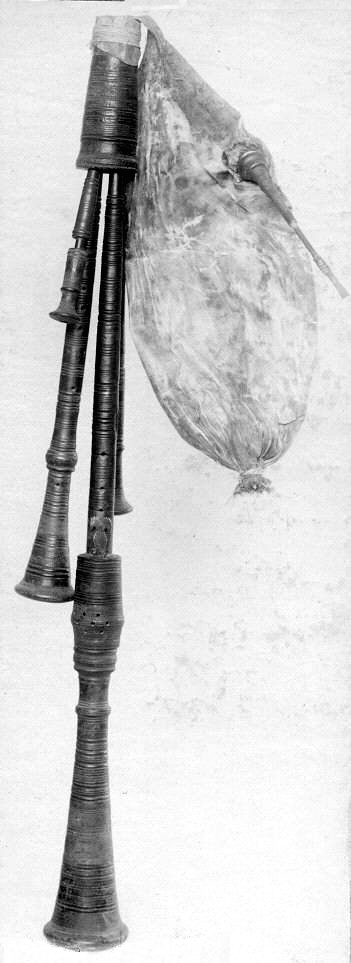
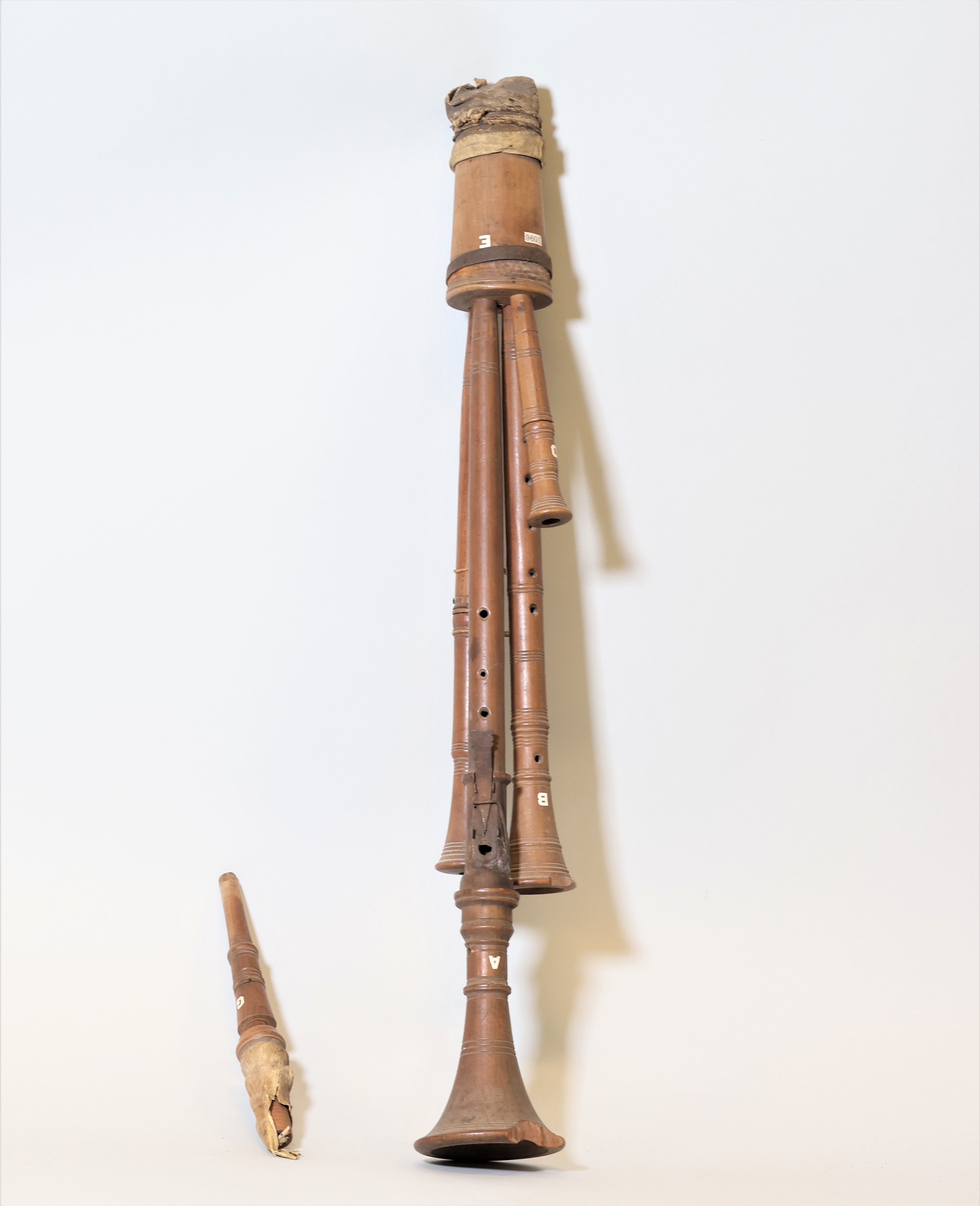
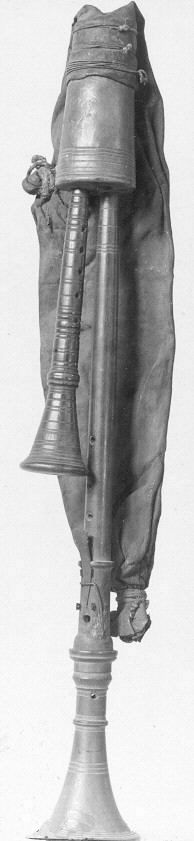
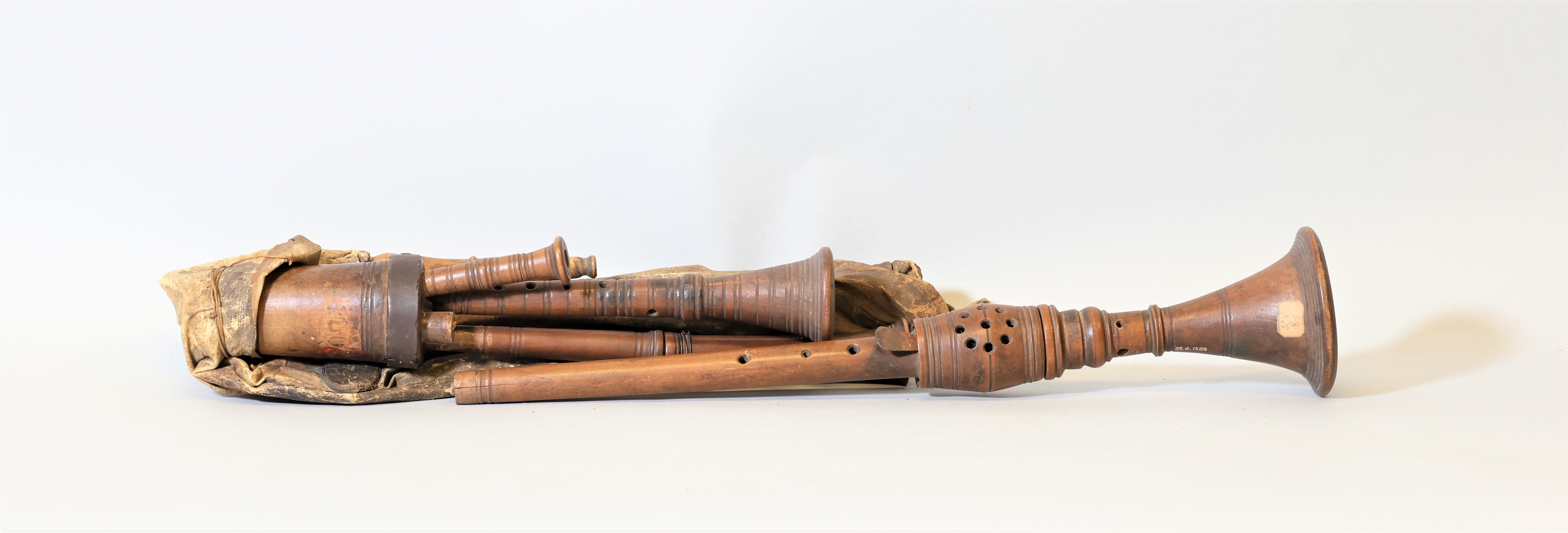
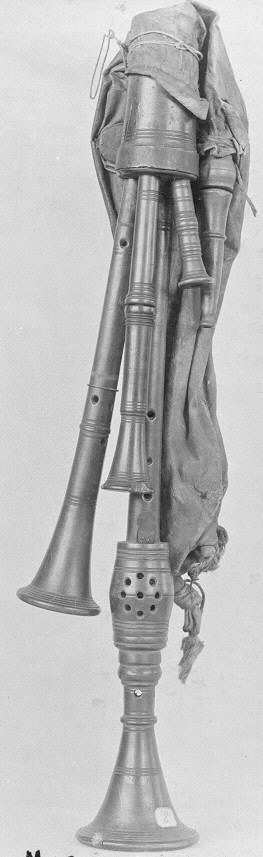
The zampogna is built around an inflated bag — historically the entire skin of a goat or sheep — that supplies continuous air to four conical-bore double-reed pipes inserted into a wooden stock at the throat of the bag. Two of the pipes are melody chanters (one played by each hand, in unison or in interlocking patterns), and two are drone pipes that sound continuous bass tones. The instrument’s distinctive sound — full, harmonically dense, with a strong drone foundation — has been a constant of southern Italian rural music for many centuries.
Origin & History
The zampogna has medieval origins in the wider European bagpipe tradition. References to bag-and-pipe instruments in Italy appear in literary and visual sources from the 12th and 13th centuries onward, and by the Renaissance the zampogna was an established rural instrument across southern and central Italy. Pieter Bruegel the Elder’s 16th-century paintings of European peasant life include detailed depictions of zampogna-style bagpipes, and Italian Renaissance and Baroque painters from Caravaggio onward depicted pifferari (bagpipe and shawm players) in religious scenes.
The instrument’s most enduring cultural association is with Christmas. The southern Italian novena di Natale (the nine days before Christmas) tradition involves pifferari — pairs of musicians, one playing the zampogna and the other playing the piffero (a small conical-bore double-reed shawm) — travelling from village to village or playing at urban street-corner shrines, performing the Novena and other devotional pieces in honour of the Christ child. This tradition is documented in European art and travel writing from the 17th century onward. Italian and English-language Romantic-era travel writers including Goethe and Charles Dickens described pifferari playing at Roman shrines in the early 19th century, and the tradition continues in modified form to the present day.
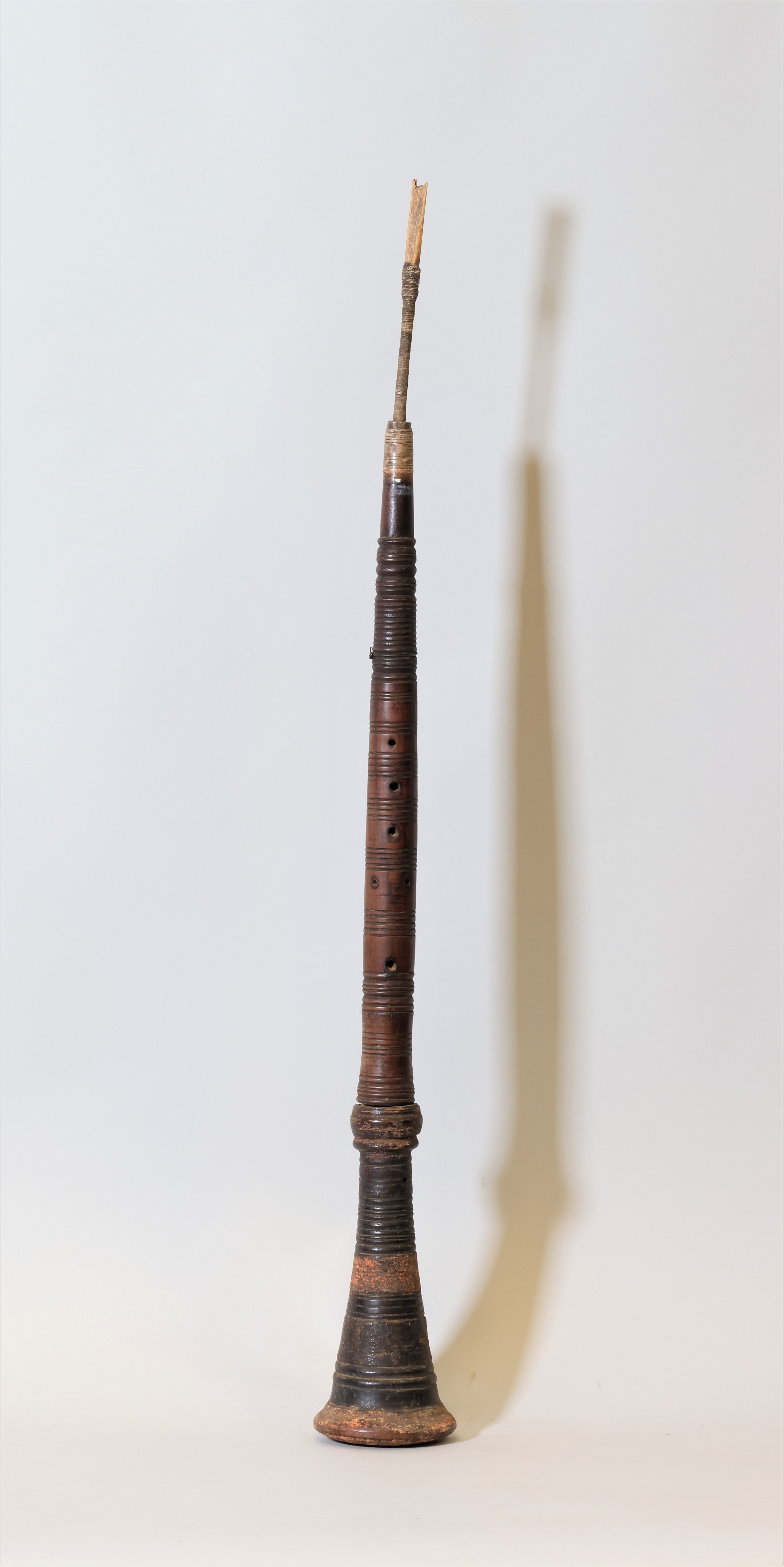
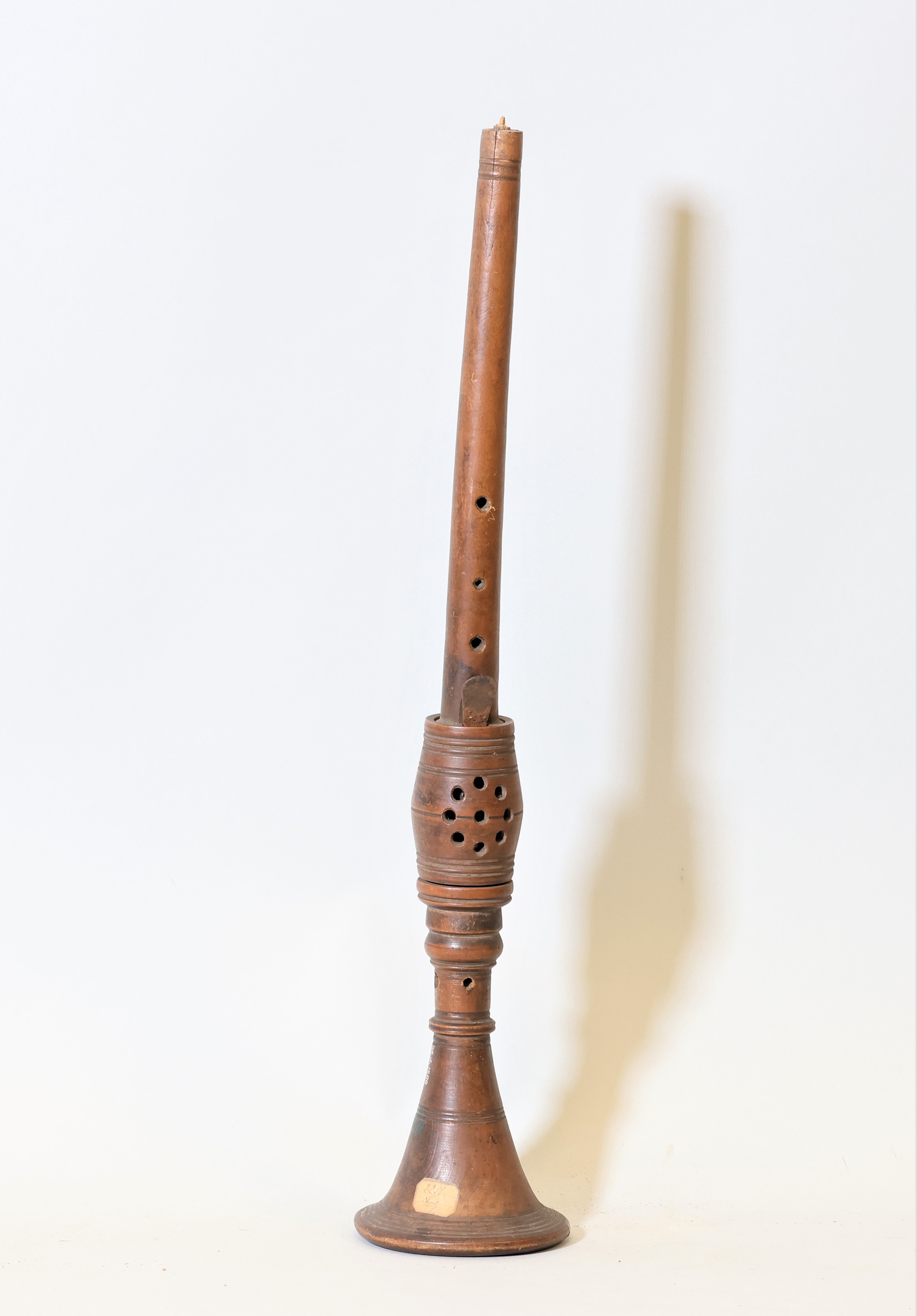
The Metropolitan Museum’s collection includes three 19th-century Italian zampognas: object 502192 (made of wood, goatskin and metal); object 501674 (wood and metal); and object 502023 (wood, goatskin and metal). The three together document the zampogna’s principal regional variants and the construction craft tradition that supplied the active pifferaro practice through the 19th century.
In the late 20th and early 21st centuries the zampogna has undergone a substantial revival as part of the wider Italian folk-music renaissance. Players including Ettore Castagna, Pietro Ricci and the Calabrian master Giorgio Di Lecce have documented and reanimated regional repertoires, and the instrument has appeared in contemporary Italian folk-rock and crossover settings.
Construction & Materials
A zampogna is built around a bag traditionally made from the entire skin of a goat or sheep — the head, legs and tail openings of the skin sealed with wood plugs, with the throat opening fitted with the wooden stock that holds the four pipes. Modern instruments often use synthetic bags (typically of Goretex-style breathable fabrics over a rubber bladder) for tuning stability. The wooden parts — stock, pipe bodies, drone bells — are turned from olive, fruitwood or rosewood.
The four pipes — two melody chanters and two drones — are conical-bore (rather than cylindrical) and use double reeds (similar to those of the oboe family). The two melody chanters are of different lengths: the longer chanter plays the lower part of the melody (typically the bass and tenor accompaniment), and the shorter chanter plays the upper part (the melodic line). Each chanter has finger-holes (typically five or six) that allow a complete diatonic scale, and the player covers the holes with both hands simultaneously, the left hand on the long chanter and the right on the short. The two drones supply continuous tonic and dominant tones beneath the melody.
Regional variants differ in size and number of pipes. The Calabrian surdulina is a small zampogna with two short chanters and a single drone; the zampogna a chiave of the Lazio and Abruzzo regions has a key on one chanter to extend the range; the southern Italian zampogna zoppa has chanters of unequal length giving an asymmetric melodic capability. The MET specimens cover several of these variants in their construction details.
How It’s Played
The player sits or stands with the bag tucked under one arm and inflates it by blowing through a small mouthpiece in the bag-throat. The arm pressure on the bag supplies steady air to the four pipes; the player covers and uncovers the chanter holes with both hands simultaneously to play the melody on the two chanters in interlocking pattern. The drone pipes sound continuously from the moment the bag is inflated until the player stops blowing.
Idiomatic technique includes the close interlocking of the two chanters (so that bass and treble lines weave together to produce a full harmonic texture from a single instrument), the use of fast ornamental figures on the upper chanter, and the novena (Christmas-novena devotional) repertoire of slow chordally-conceived hymns and faster dance-like pieces. Pairing with a piffero (the small double-reed shawm) is the traditional pifferaro configuration: the zampogna provides the harmonic and rhythmic foundation, the piffero plays the lead melodic line above.
Cultural Significance
In southern Italy the zampogna is inseparable from the Christmas tradition. The novena di Natale — the nine-day devotional period before Christmas — is the principal annual context for the instrument’s playing, and pifferari travel from rural villages to urban centres throughout Italy in early December to perform the traditional repertoire. The Vatican has hosted pifferari at the Christmas-eve novena performances at St Peter’s Basilica for several centuries, and the practice continues to the present.
The zampogna is also a regional cultural emblem of Calabria, Basilicata, Molise, Abruzzo, Lazio and Campania. Each region maintains its own variants of the instrument, its own repertoire and its own playing style, and the wider Italian folk-music revival of the late 20th and early 21st centuries has substantially documented and recorded this regional diversity. The Festival della Tarantella in Calabria and the various regional Christmas-music festivals are major performance occasions.
Notable Examples & Recordings
- Ettore Castagna, Zampogna del Pollino — definitive Calabrian zampogna recording.
- Pietro Ricci, recordings of the Lazio and Abruzzo zampogna traditions.
- Giorgio Di Lecce, contemporary Calabrian zampogna in folk and crossover settings.
- Re Niliu, Acqua Cantu Suspiri e Vientu — Calabrian folk-revival ensemble featuring zampogna.
- The MET’s three 19th-century specimens (objects 502192, 501674 and 502023) document the regional variants of the instrument.
Related Instruments
- Bagpipe – the wider European bagpipe family.
- – the small Italian double-reed shawm that pairs with the zampogna in pifferaro duos.
- Gaita – the Galician and northern Spanish bagpipe.
- – the French Renaissance bagpipe and the central French folk bagpipe.
- Uilleann pipes – the Irish indoor bagpipe with a parallel art-music tradition.
Where to Hear It
The zampogna is heard most concentratedly during the Italian Christmas season, with pifferari performances in Rome, Naples, the Vatican, and across the southern Italian regions. The Festival della Tarantella in Calabria, the Festa della Zampogna in Scapoli (Molise) and the regional folk-music festivals of Abruzzo, Basilicata and Campania feature zampogna throughout the year. Recordings appear on Italian folk-music labels including Folkstudio, EthnoSuoni, and on international labels including World Music Network and Real World.
- Wikipedia: Zampogna
- Wikidata: Zampogna (Q145971)
- The MET: Zampogna (object 502192)
- The MET: Zampogna (object 501674)
- Wikimedia Commons: Zampogna
Learning Resources
The Festa della Zampogna in Scapoli (Molise), held annually since 1975, is the principal Italian zampogna teaching event and includes summer workshops with leading masters. The Conservatorio di Musica San Pietro a Majella in Naples and the Conservatorio di Musica di Matera in Basilicata teach zampogna within their folk-music programmes. Method materials in Italian are extensive; English-language pedagogy is limited. A serviceable student zampogna by a recognised Calabrian or Molise maker runs from 600 to 1,500 EUR; concert-grade hand-built instruments by named makers begin at around 2,500 EUR.
Frequently Asked Questions
What is a zampogna?
The Italian bagpipe of southern and central Italy — a four-pipe bagpipe with two melody chanters of different lengths and two drones, played to a long continuous bag-air supply.
Where is the zampogna played?
Across southern and central Italy — Calabria, Basilicata, Molise, Abruzzo, Lazio, Campania, Sicily and parts of central Italy. Each region has its own variants and repertoire.
What is the connection to Christmas?
The southern Italian novena di Natale tradition involves pifferari — pairs of musicians playing zampogna and piffero — performing the Novena and other devotional pieces during the nine days before Christmas. This tradition is documented from at least the 17th century and continues to the present.
How is the zampogna different from the Scottish bagpipe?
The zampogna has two melody chanters (the Scottish has one) and uses conical-bore double-reed pipes (the Scottish Great Highland Bagpipe has a single conical-bore chanter and two cylindrical-bore drones). The two instruments share the basic bag-and-pipe construction but differ in nearly every detail of pipe layout, reed type and playing technique.
Has the zampogna been documented in art?
Yes, extensively. Italian Renaissance and Baroque painters from Caravaggio onward depicted pifferari in religious and rural scenes, and 19th-century European travel writers including Goethe and Dickens described the Christmas pifferaro tradition in Rome and Naples.


