
Bagpipe
bagpipe / piob mhòr
| Category | Wind |
|---|---|
| Country of origin | Worldwide (Eurasia and North Africa) |
| Classification | type of musical instrument |
| Wikipedia | en.wikipedia.org |
| Wikidata | Q8347 |
Listen
Audio: Cseremisz Elian, CC BY-SA 3.0 / via Wikimedia Commons
Audio: Dvortygirl, CC BY-SA 3.0 / via Wikimedia Commons
Audio: Jcb at Dutch Wikipedia, CC BY-SA 3.0 / via Wikimedia Commons

Overview
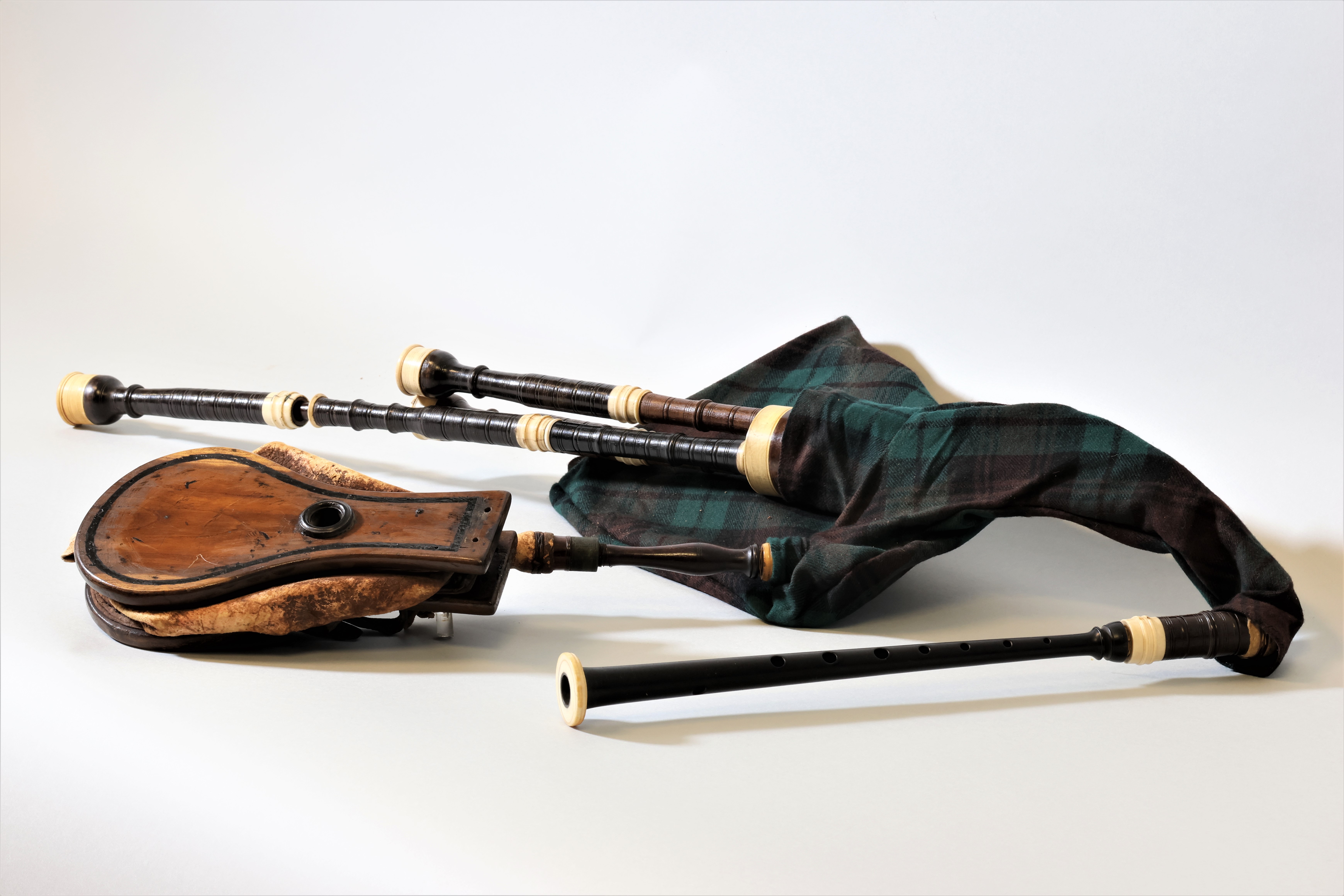
Rather than a single instrument, the bagpipe is best understood as a worldwide grouping of reed-driven aerophones that share one defining trait: an air-storing flexible bag that feeds one or more sounding pipes without interruption. Air enters the bag either by mouth through a blowpipe or by way of a small bellows pumped under the arm; once inflated, the bag is squeezed under the upper arm so that pressure on the reeds remains steady. Because that pressure never drops, the music can flow continuously without any pause for breath.
The instrument family ranges enormously in form and use. Scottish Great Highland pipes, the French musette, Galicia’s gaita, Bulgaria’s gaida, Ireland’s uilleann set, England’s Northumbrian smallpipes, and dozens of regional cousins across Eurasia and parts of North Africa all sit within the same broad category, despite very different reed configurations, tunings, and social settings.
Origin & History
Reed-and-bag aerophones with continuous drones turn up in historical records across most of the Eurasian landmass. Earliest unambiguous evidence reaches back several centuries BCE; by medieval times the instrument was widespread throughout Europe, North Africa, and parts of West and Central Asia. Each region developed its own variants, with different bag materials, drone configurations, and chanter designs.
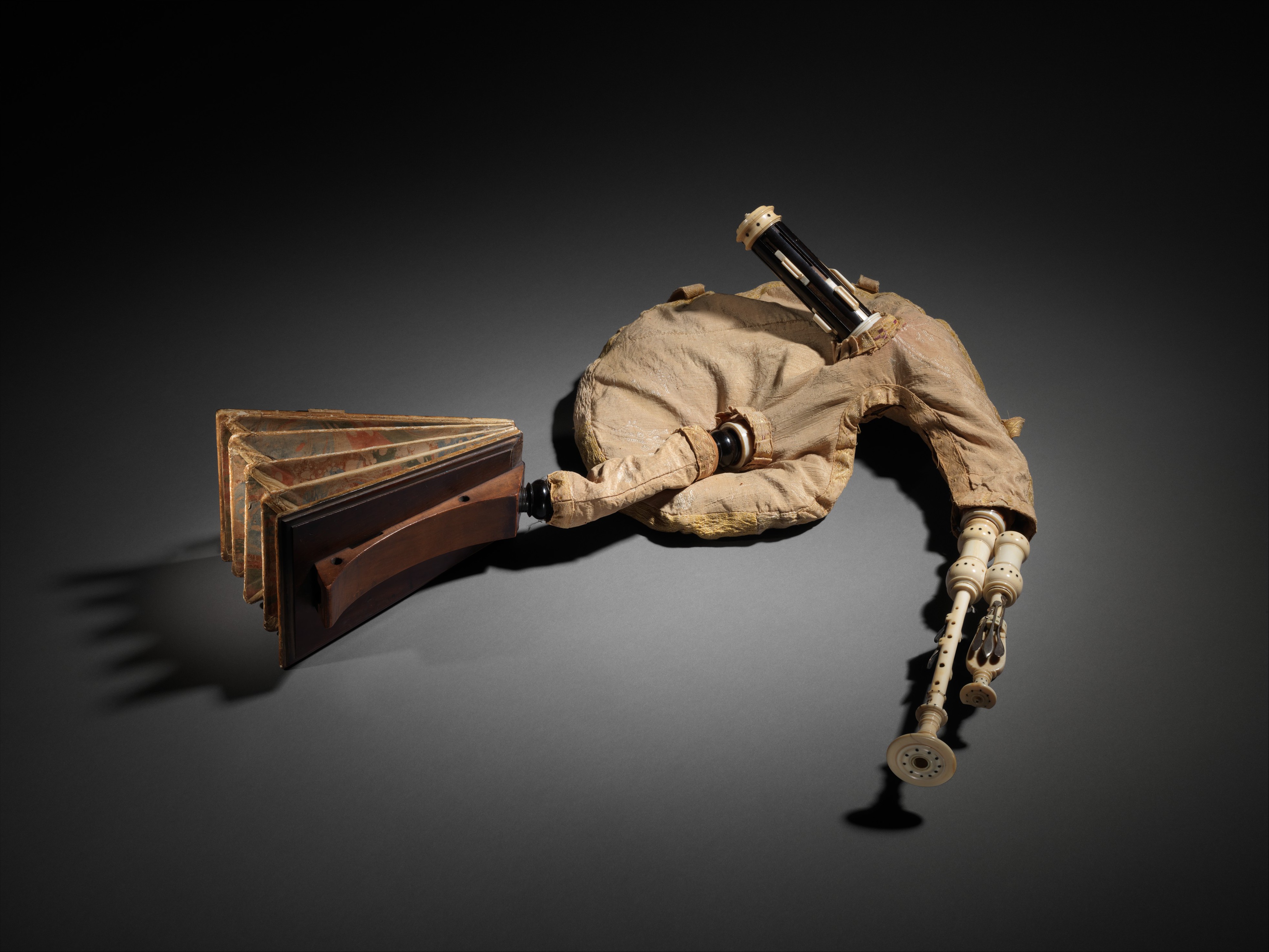
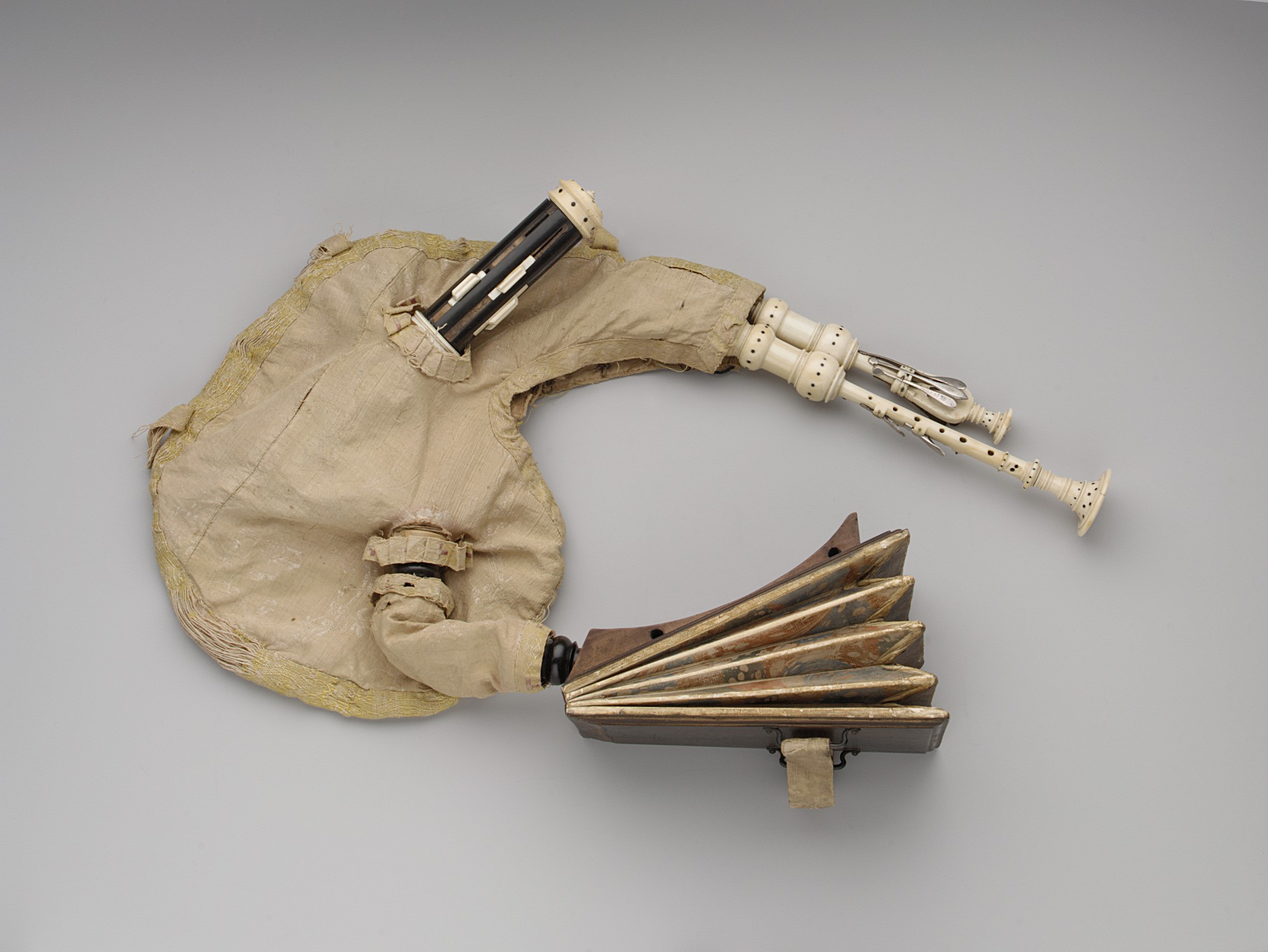
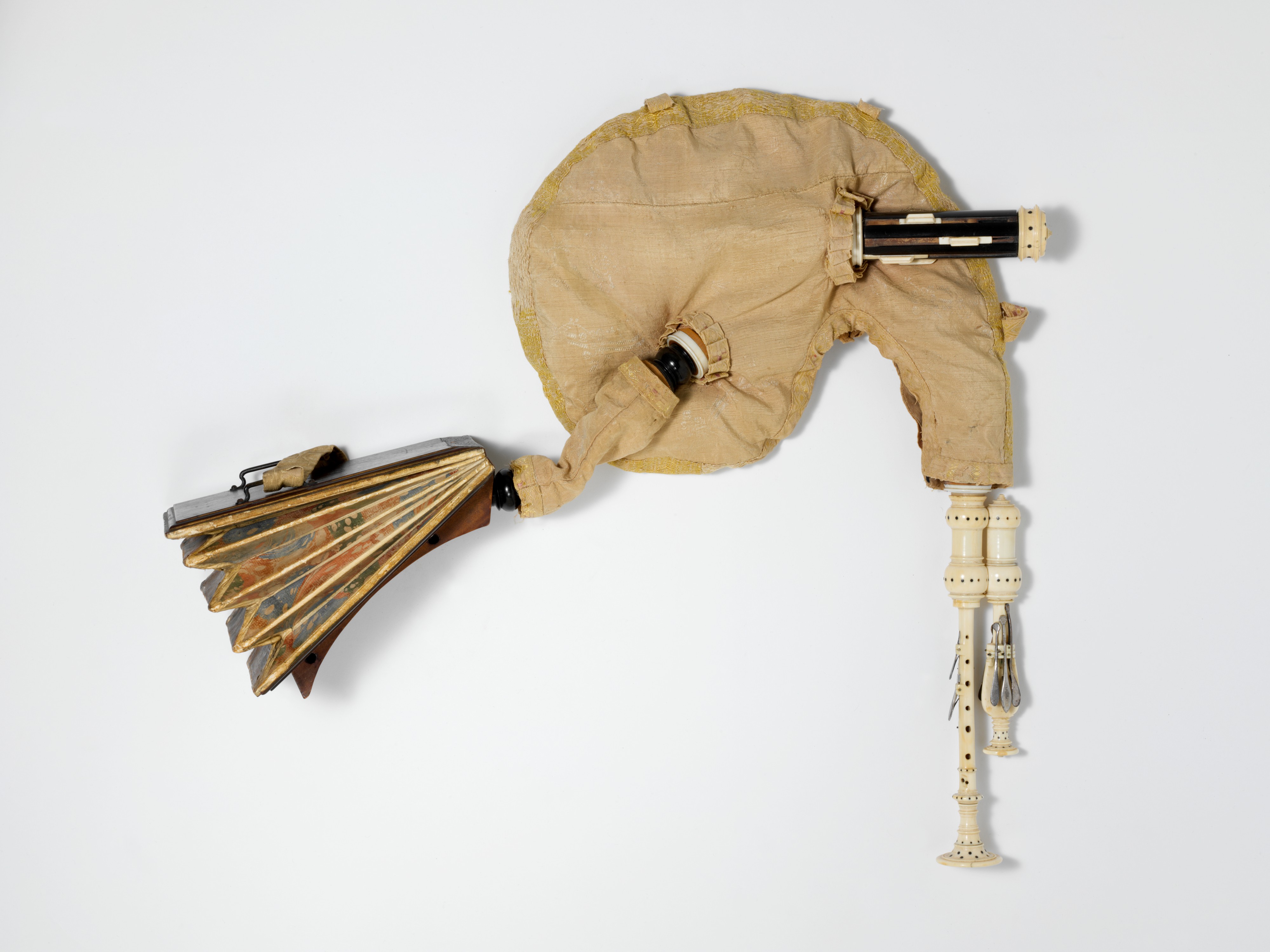
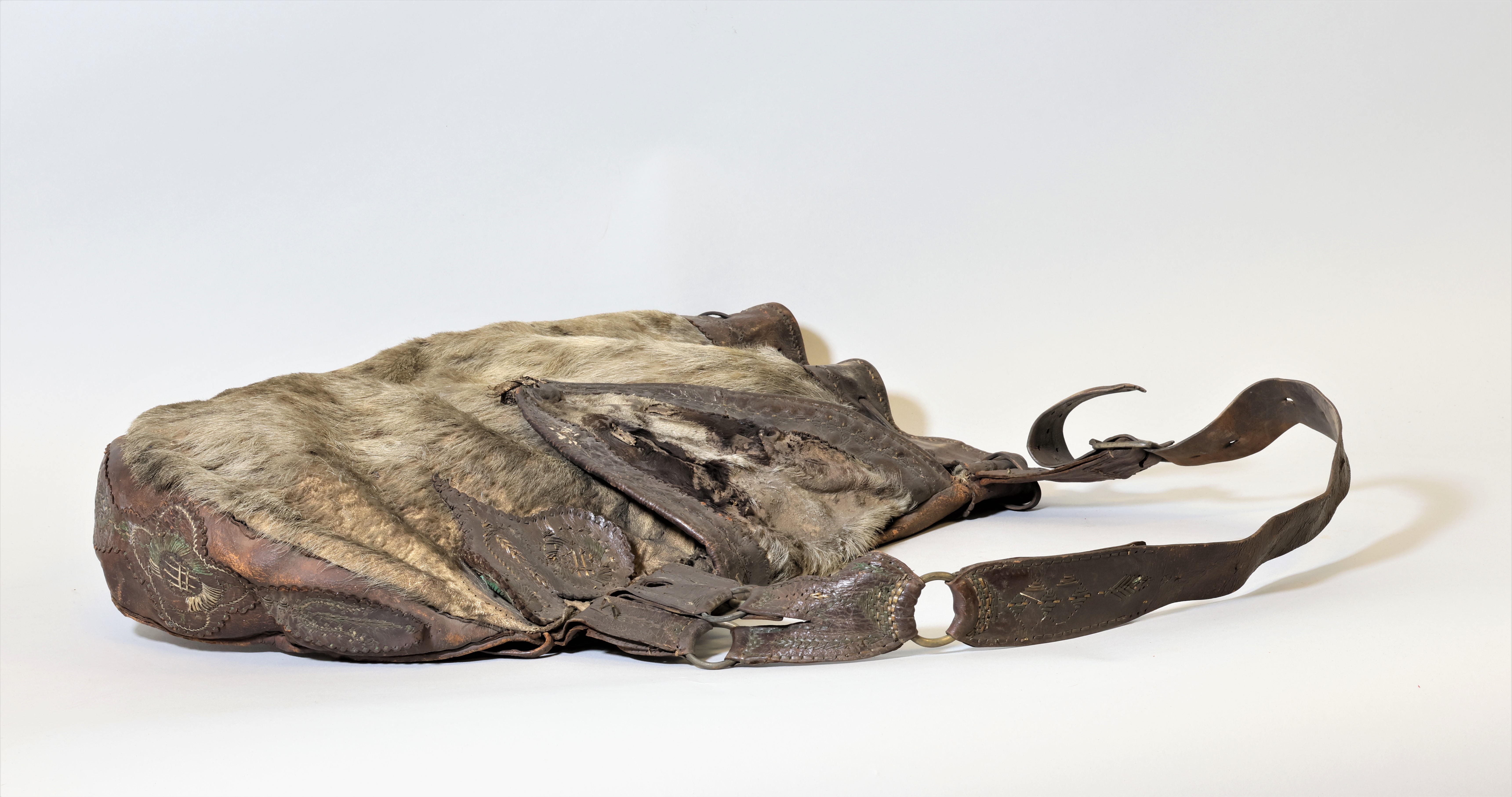
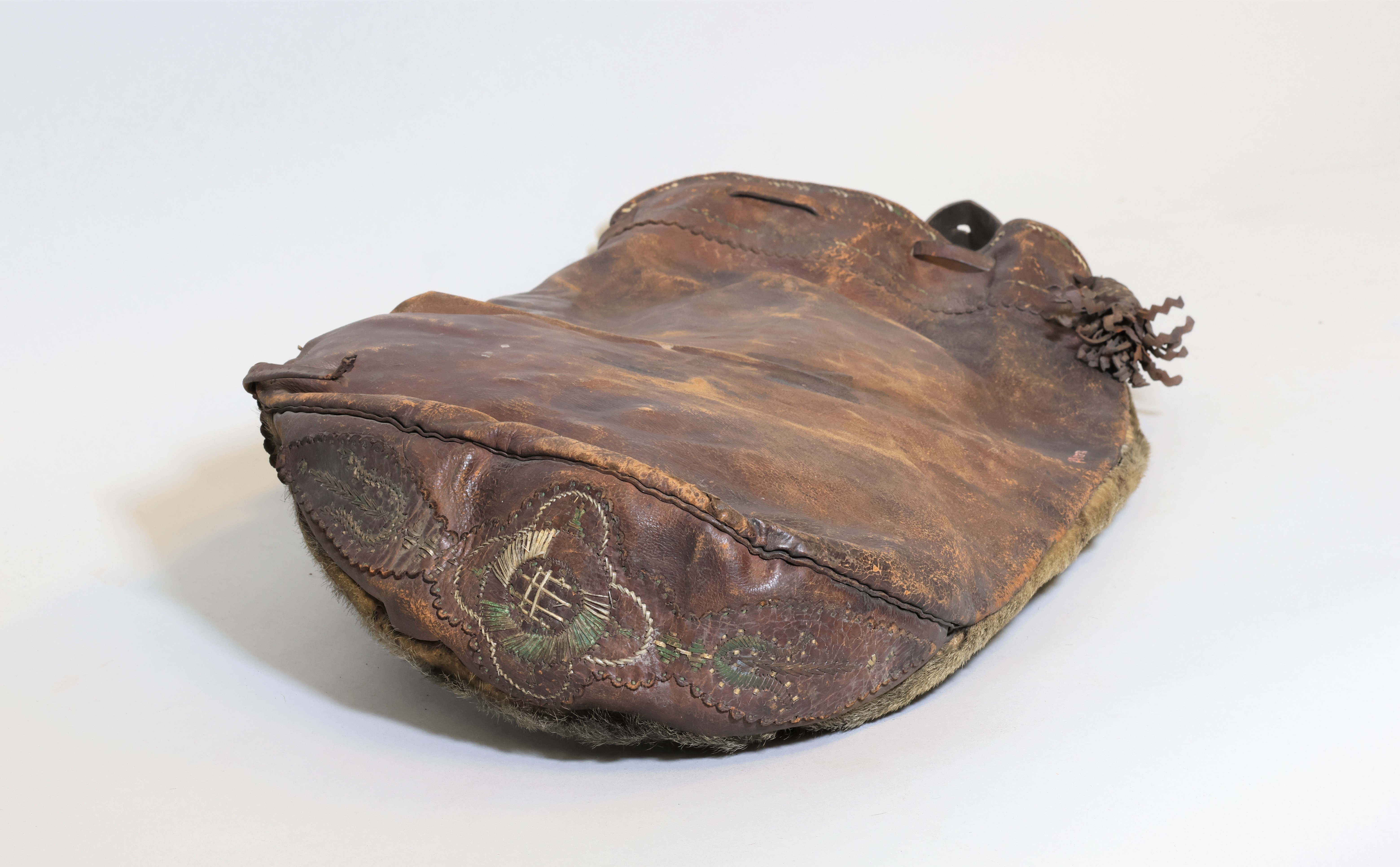
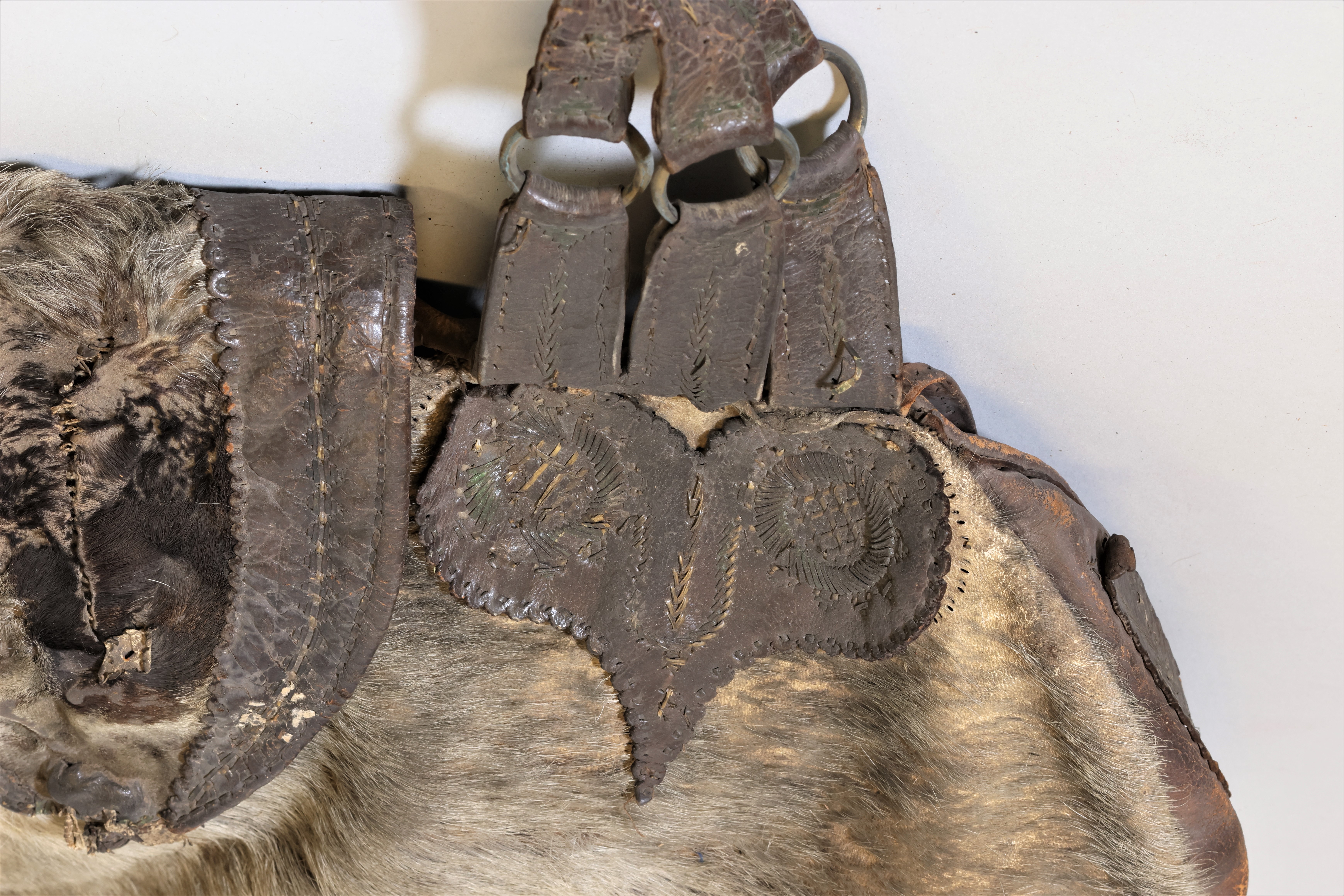
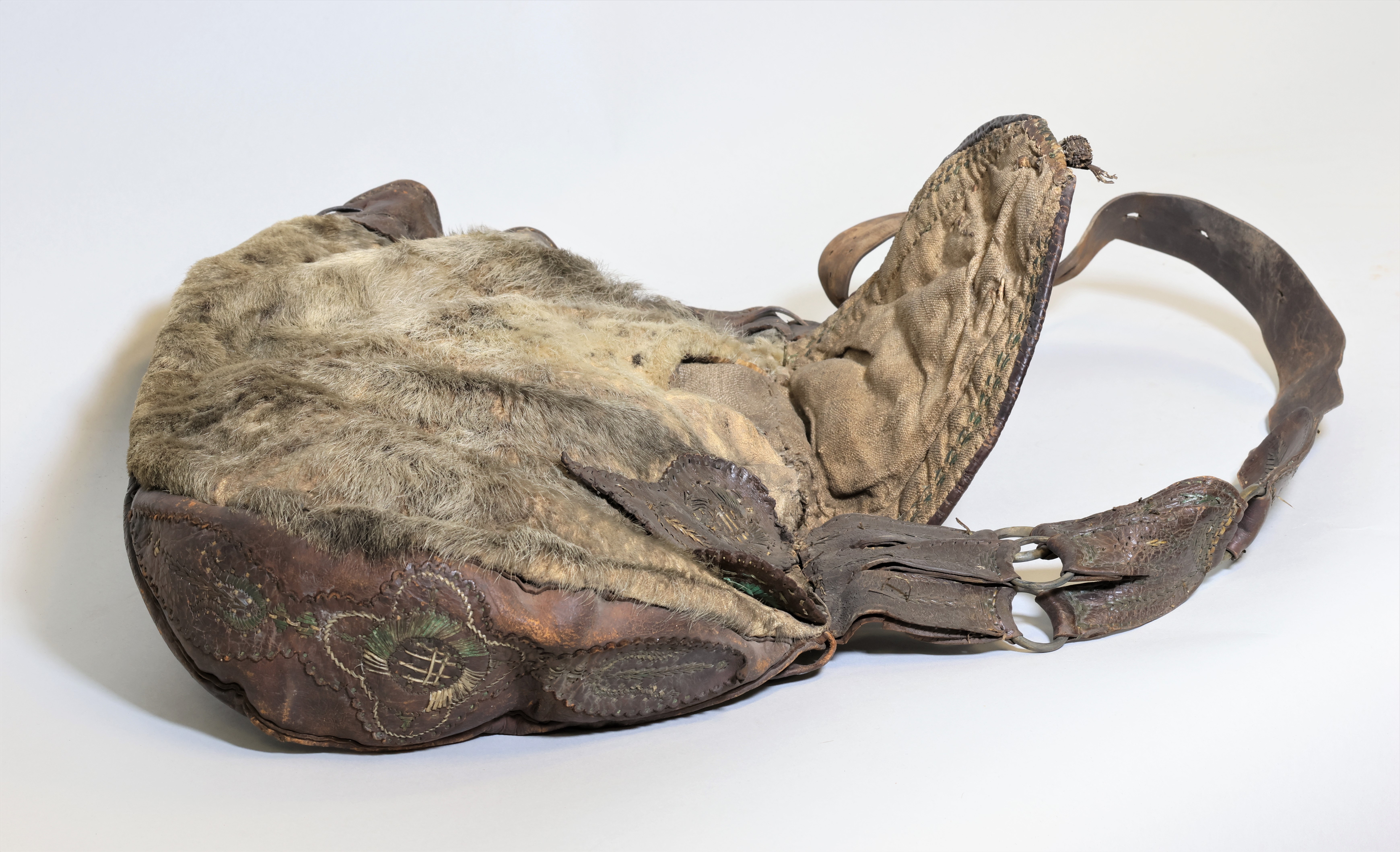
In New York, the holdings of the Met make the breadth of the European tradition visible to anyone with a browser. Object 503578 is a French musette baroque dating from around 1700 — leather, ivory, silk, wood, silver, and iron — an elegant courtly instrument associated with the Baroque period. Object 504031, by contrast, is a much plainer German bag built from leather, burlap, and goatskin. Together these two specimens show that the bagpipe served both elite courtly settings and everyday rural music in early modern Europe.
The Great Highland pipes of Scotland — the variant best known to international audiences — settled into something close to their current shape across the eighteenth and nineteenth centuries, becoming central to Scottish military and ceremonial music in particular. Their current global visibility owes much to the British Empire’s military bagpipe traditions, which carried the instrument around the world.
Construction & Materials
A typical bagpipe has four main parts: the bag, the blowpipe (or bellows), the chanter, and one or more drones. The bag was historically made from a whole sheep- or goat-skin, sometimes with the hair turned inward and the openings tied off around the inserted pipes; modern bags are often made from synthetic materials such as Gore-Tex.
Melody is produced by the chanter — a fingered pipe with either a single or a double reed mounted at its head. Each drone, by contrast, is a simpler pipe sounding one sustained note, typically tuned to the tonic and (in some traditions) the fifth or octave below. The combination of chanter melody over a continuous drone is the bagpipe’s defining sound.
Different regional traditions use very different reed and pipe configurations. The Scottish Great Highland bagpipes use a double-reed chanter and three drones; the French musette uses a single-reed chanter and pumps air with a small bellows; the Irish uilleann pipes use a double-reed chanter, three drones, and three regulators; the Bulgarian gaida uses a single-reed chanter and a single drone. The MET’s French musette baroque (object 503578) and German bagpipe bag (object 504031) document two of these traditions clearly.
How It’s Played
The player blows into the bag through the blowpipe — or, in mouth-free designs such as the uilleann pipes and the Northumbrian smallpipes, pumps the bag with a small bellows held under the opposite arm. Air pressure is maintained by squeezing the bag under the playing arm, allowing the chanter and drones to sound continuously. Because there is no need to pause for breath, bagpipe music typically flows in long unbroken phrases, with ornamentation used to mark melodic structure.
Fingering on the chanter is broadly recorder-like: the player covers and uncovers holes with the fingers of both hands to articulate the melody. Most bagpipes use a fixed scale defined by the chanter’s hole spacing, which is why each regional variant tends to have its own characteristic mode and tuning.
Cultural Significance
The bagpipe’s cultural significance varies enormously by region. In Scotland, the Great Highland bagpipes are central to military, ceremonial, and traditional music; in Ireland, the uilleann pipes are a major voice in traditional music; in Galicia and Asturias, the gaita anchors regional folk traditions; in Bulgaria, the gaida — particularly the large kaba gaida — is essential to many highland communities’ music; and similar instruments serve similar roles across most of Europe and the wider Mediterranean.
In the early modern period, bagpipes also occupied a more elite cultural space. The French musette de cour, of which the MET’s musette baroque is a fine surviving example, was played at the courts of Louis XIV and his successors and was the subject of substantial Baroque chamber repertoire by composers including Hotteterre.
Notable Examples & Recordings
A French Musette Baroque held at the Met (object 503578) ranks among the better-documented surviving early-modern courtly bagpipes available online. For listening, the recordings of Scottish pipers such as Gordon Duncan, Galician gaiteros such as Carlos Núñez, Bulgarian kaba gaida players such as Kostadin Varimezov, French cornemuse and musette players, and Irish uilleann pipers (covered separately on this site) together demonstrate the family’s enormous range.
Related Instruments
- Uilleann pipes – the bellows-blown Irish bagpipe with regulators
- Gaita – the Galician and Asturian bagpipe of north-west Spain
- – the Balkan bagpipe family, including the Bulgarian kaba gaida
- Northumbrian smallpipes – the bellows-blown English smallpipes of the north-east
- – the broader French family of bagpipes including the musette
Where to Hear It
Bagpipe music appears across most of Europe and parts of North Africa and West Asia, in settings ranging from military ceremony to village dance to baroque chamber recitals. The major regional festivals — Lorient (Brittany), Folkest (Italy), Festival Interceltique, Edinburgh’s Royal Tattoo — together offer some of the broadest live exposure.
- Wikipedia: Bagpipes
- The MET: Musette Baroque (object 503578)
- The MET: Bagpipe Bag (object 504031)
- Wikimedia Commons: Bagpipes
Learning Resources
Most students begin on a small fingering tube known as a practice chanter, which has neither a bag nor any drones attached. After the basic ornamentation is reasonably settled, the student transitions to the full instrument and works on coordinating breathing or bellows with steady arm pressure on the bag. Different regional traditions have their own teaching systems, notation, and graded repertoire.
Frequently Asked Questions
Are bagpipes only Scottish?
No. Bagpipes are a worldwide family of instruments found across most of Europe, North Africa, and parts of West and Central Asia. The Scottish Great Highland bagpipes are simply the most internationally visible variant, in large part because of their role in British military music.
How does a bagpipe stay sounding without a break?
The player stores air in a flexible bag and squeezes it under the arm to maintain steady pressure on the reeds. Air can be added either by blowing into the bag through a blowpipe or — in some designs — by pumping the bag with a small bellows.
What are the drones for?
The drones produce sustained single notes (typically the tonic and sometimes the fifth or octave) against which the chanter plays the melody. The combination of melody over continuous drone is the bagpipe family’s defining sound.
Are old bagpipes displayed in museums?
Yes. The Met in New York holds several historical European bagpipes, among them a French Musette Baroque from around 1700 (object 503578) and a German bagpipe bag (object 504031).
Are bagpipes difficult to learn?
Most students begin on a practice chanter and only take up the full instrument after months of preliminary work. Coordinating breathing, arm pressure, and finger ornamentation simultaneously is the main long-term challenge.