.jpg)
Recorder
recorder
| Category | Wind |
|---|---|
| Country of origin | Medieval Europe |
| Classification | type of musical instrument |
| Wikipedia | en.wikipedia.org |
| Wikidata | Q187851 |
Listen
Audio: User:Thparkth, Public domain / via Wikimedia Commons
Audio: Speaker: Lumos Authors of the article, CC BY-SA 3.0 / via Wikimedia Commons
Audio: STEF68, PD / via Internet Archive
Overview
The recorder is a duct flute — a wind instrument in which the player blows into a windway that channels air across a sharp edge to set up the standing wave. Unlike the side-blown concert flute, it requires no embouchure adjustment to sound; the player has only to blow, and the instrument speaks. This quality has made the recorder for five centuries one of the easiest melodic instruments for beginners and at the same time, for accomplished players, one of the most refined instruments of the Renaissance and Baroque repertoire.
Wikidata describes the recorder as a “woodwind musical instrument” and places it in the duct-flute family, specifically the open flute with internal duct and fingerholes.
Origin & History
The recorder appears in European iconography from the 14th century onward, and surviving instruments date from at least the late medieval period. Across the 15th and 16th centuries it became one of the standard wind instruments of the Renaissance, played in matched consorts of treble, alto, tenor and bass — the famous “whole consort” of recorders that appears in inventories of European courts from Henry VIII (who owned 76 recorders) to the Saxon Hofkapelle.
The Baroque period reshaped the instrument. Around 1670 the Hotteterre family of Paris redesigned the recorder into three jointed sections with a narrower bore and stronger tonal differentiation between registers, producing the form now usually called the Baroque recorder. By 1700 this design was standard across western Europe, and the alto in F became the principal solo instrument.
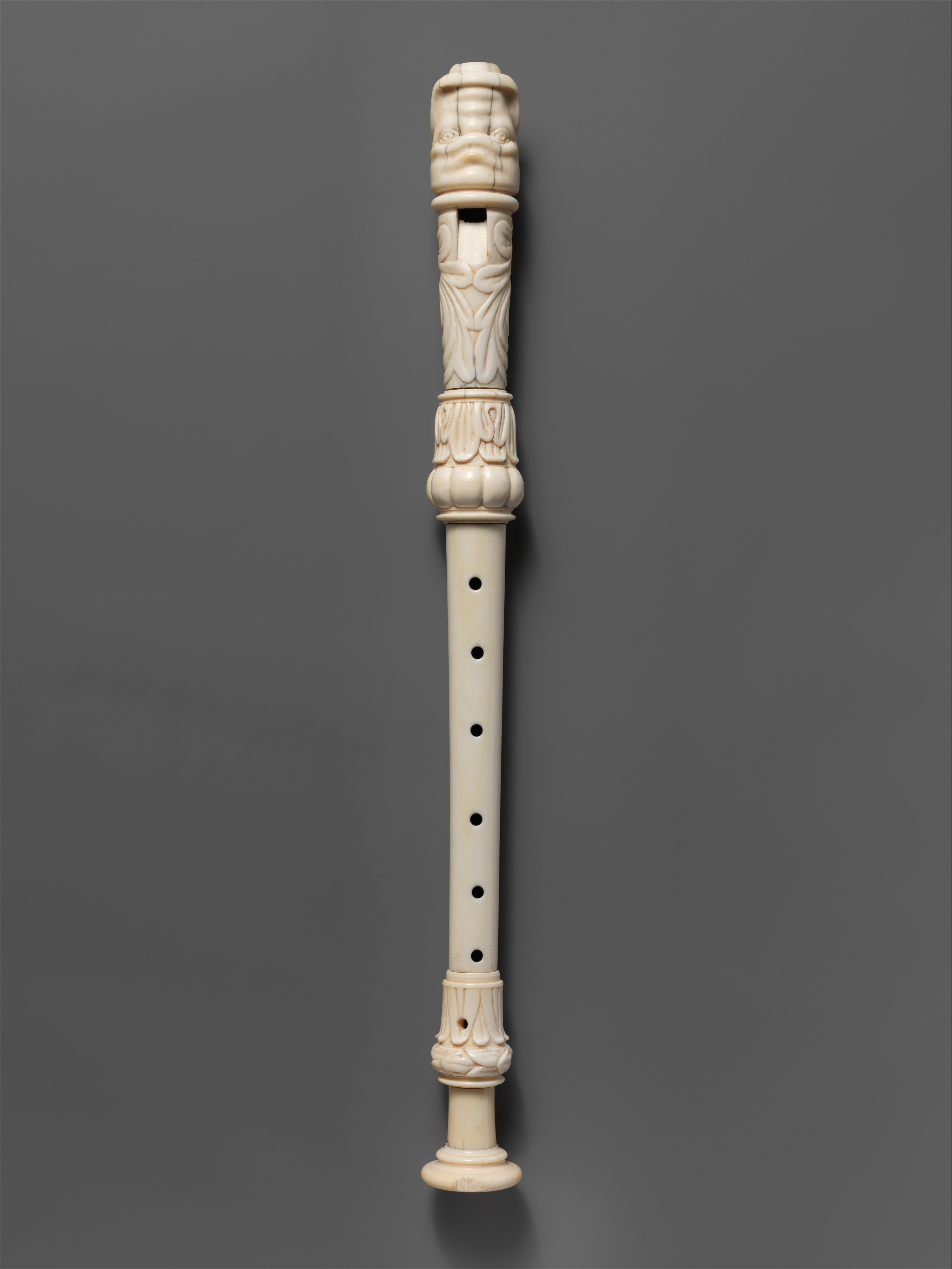
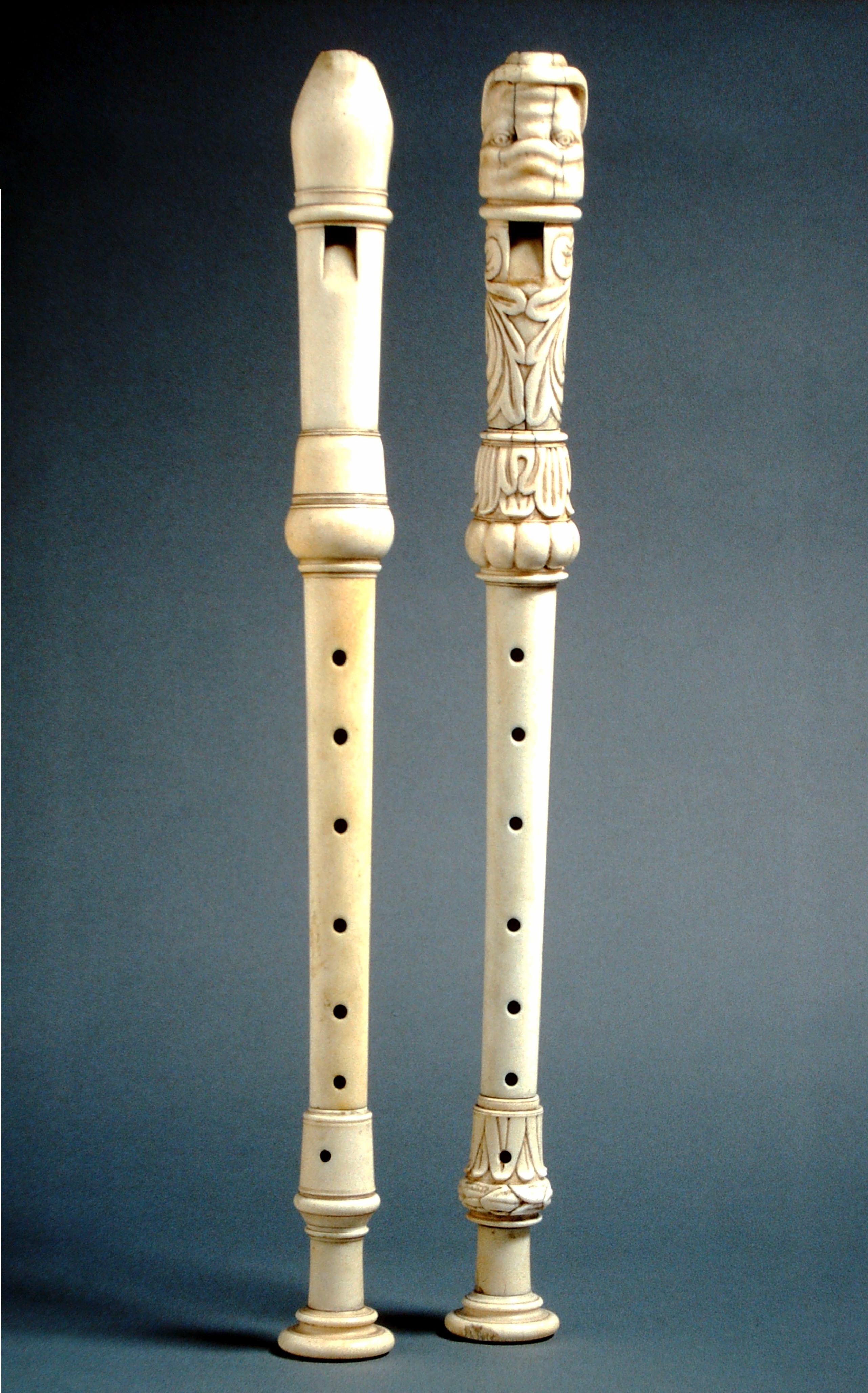
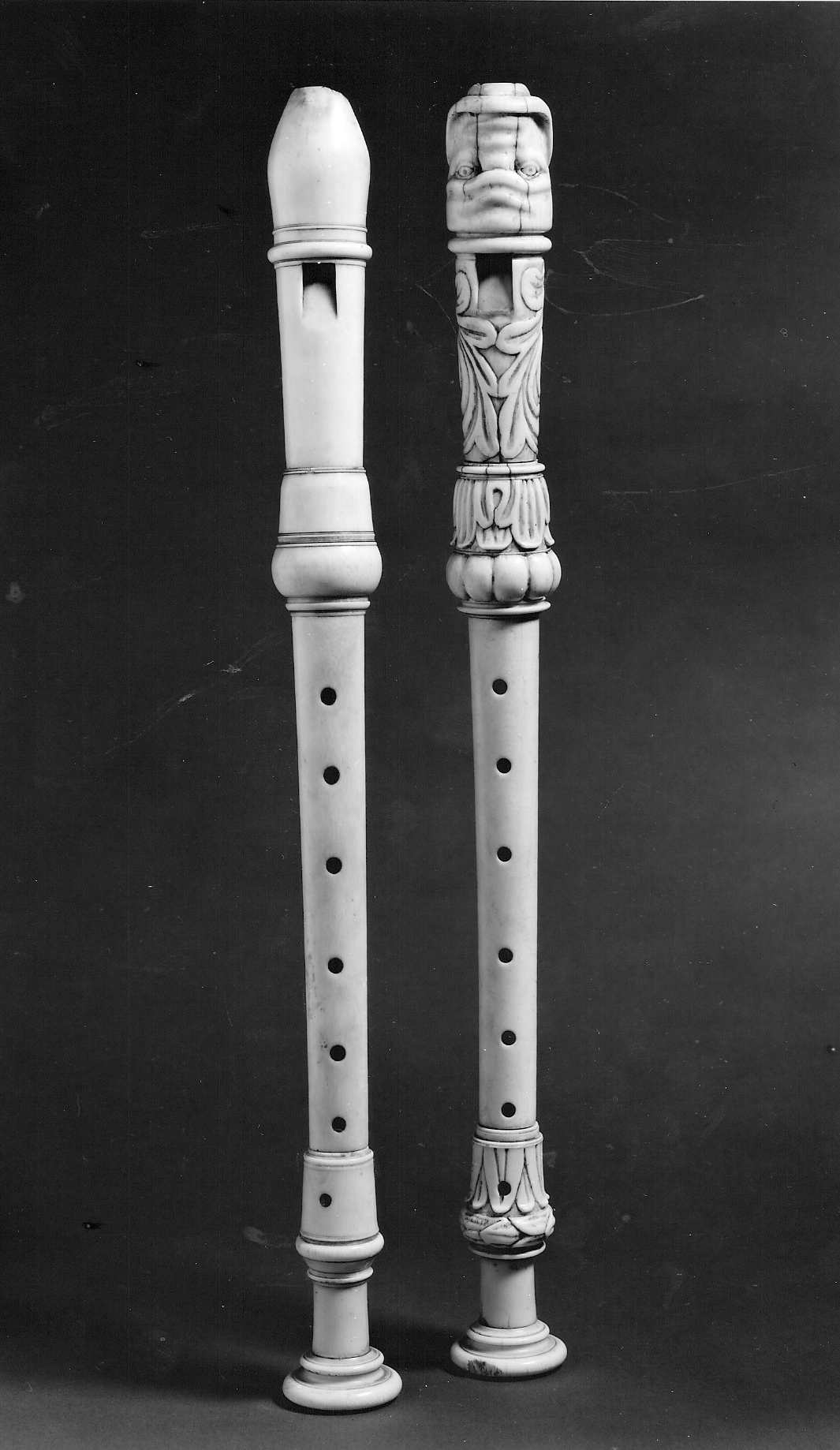
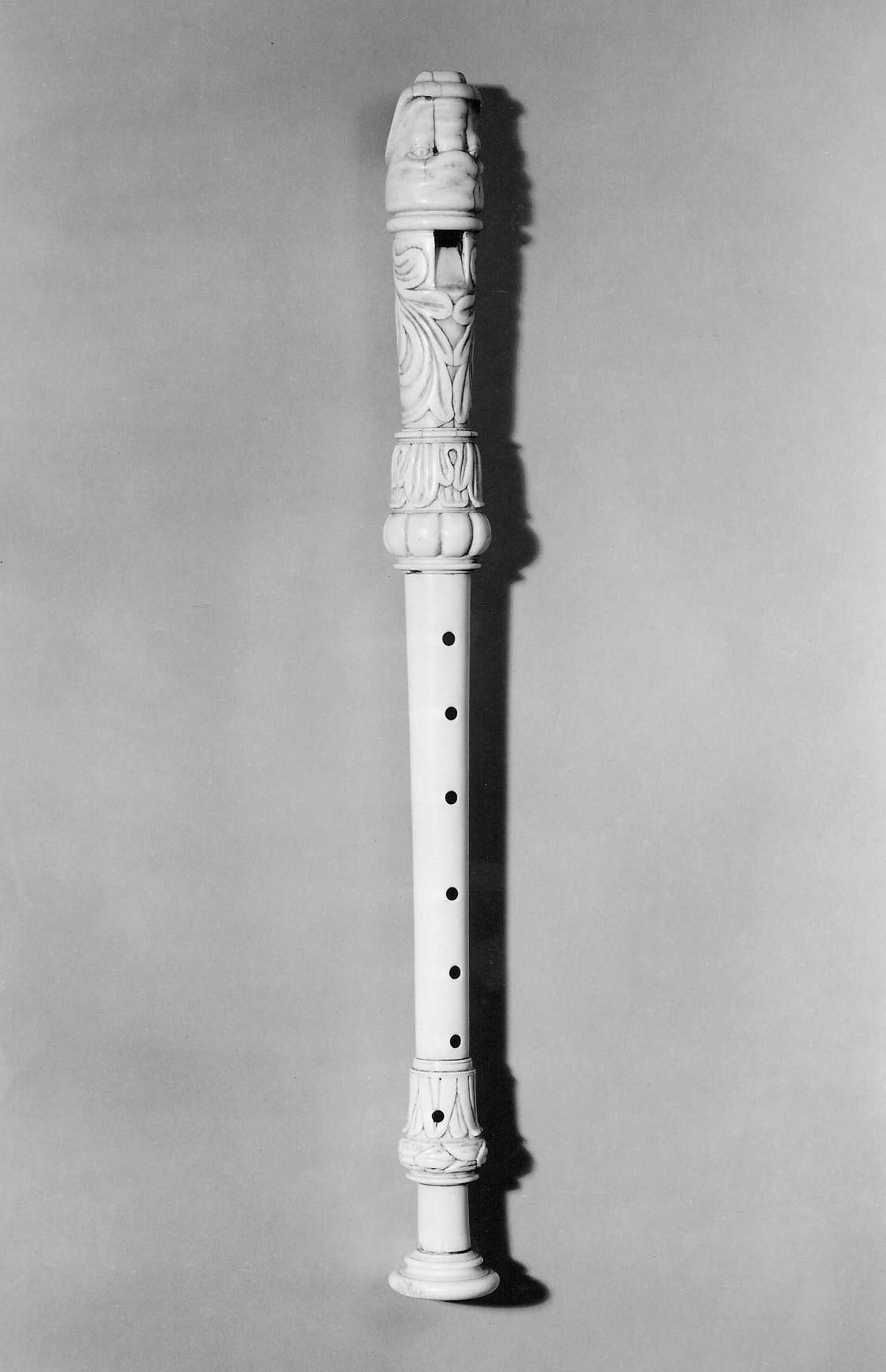
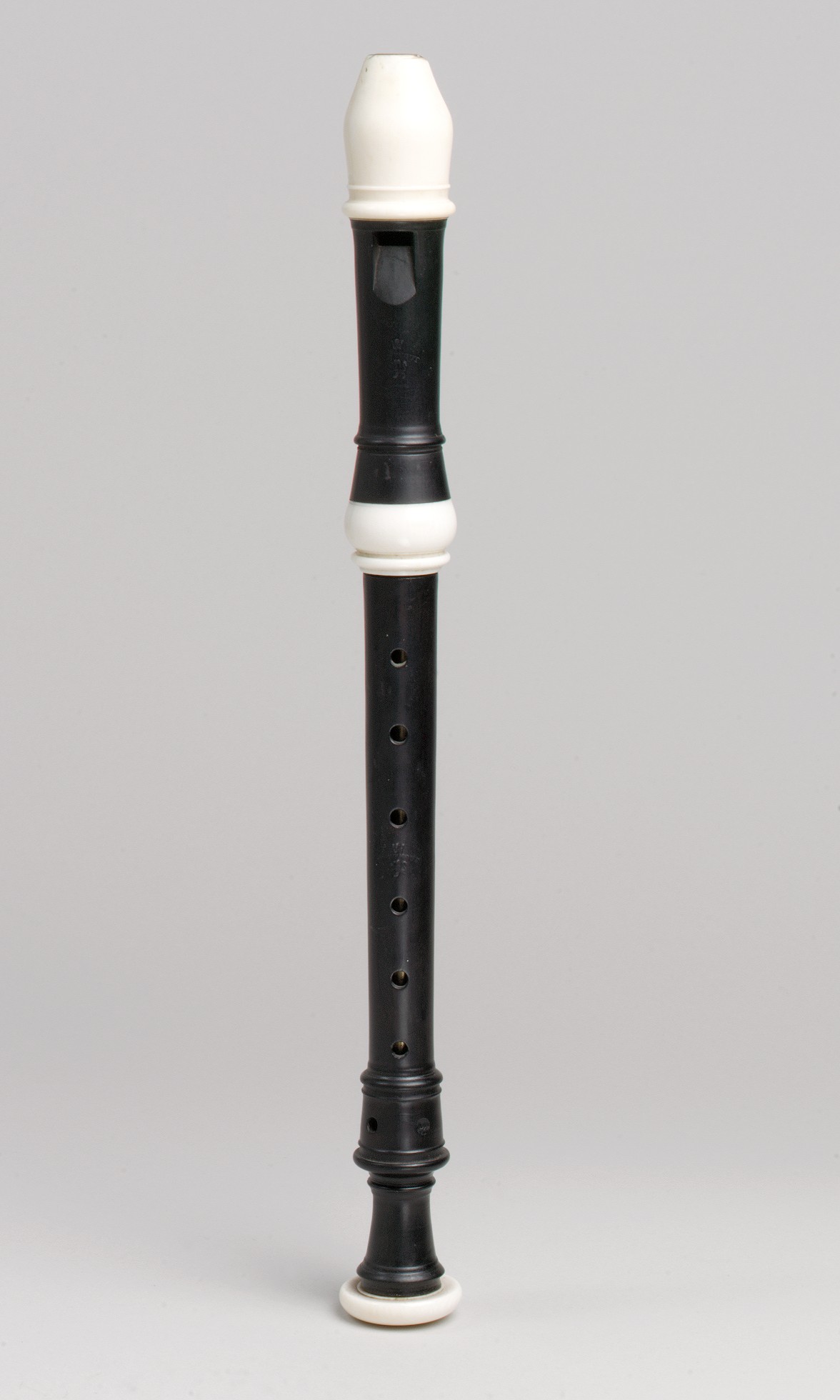
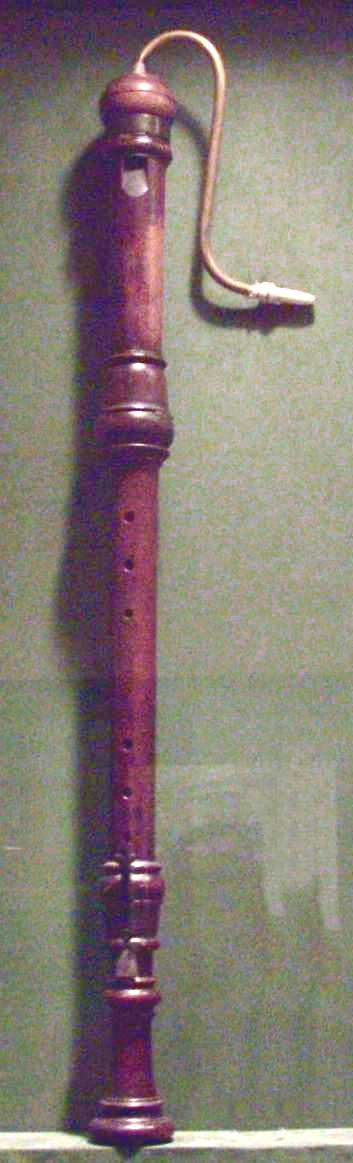
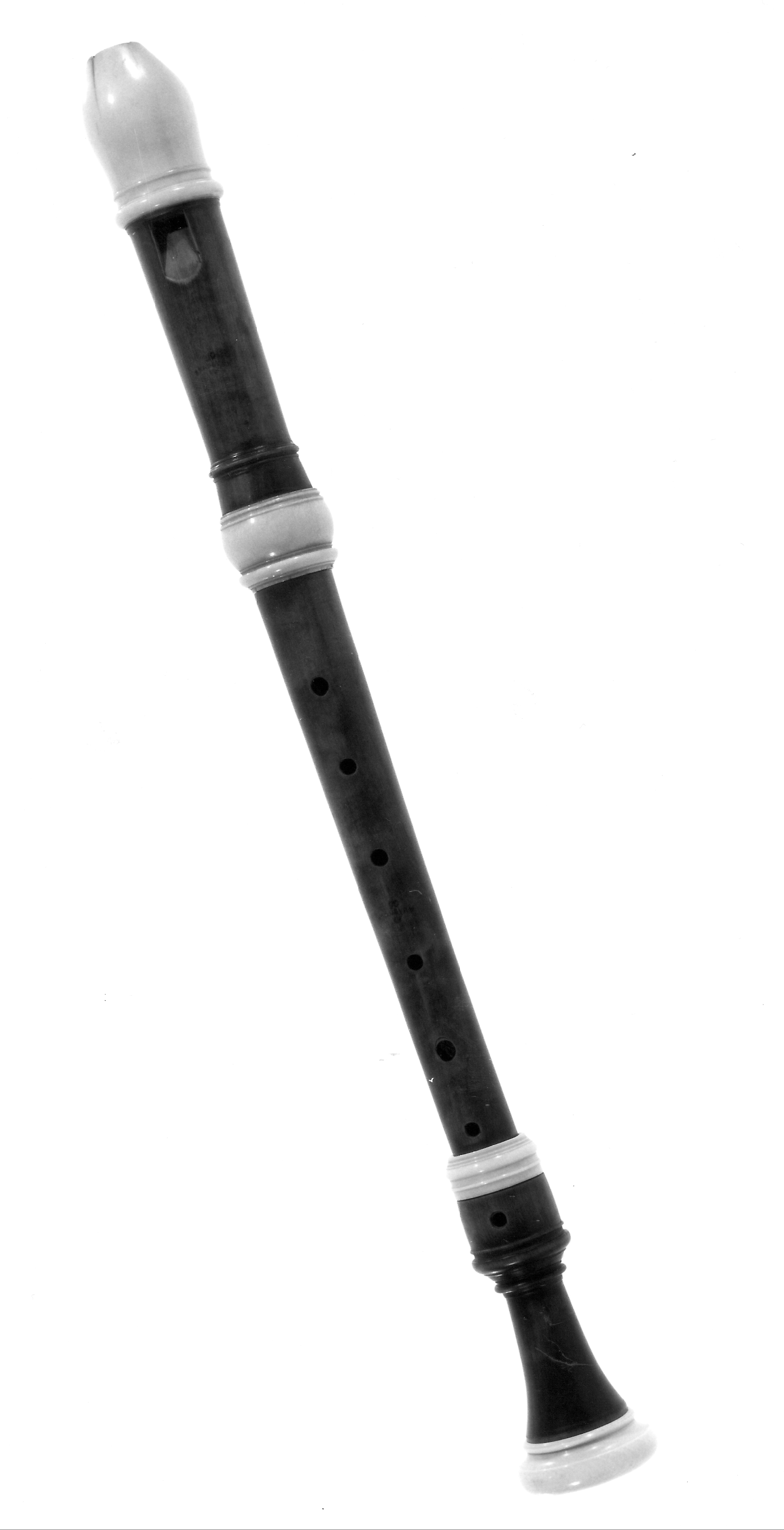
The Metropolitan Museum’s collection holds four exemplary recorders dated around 1700, all from the Crosby Brown Collection or from later targeted purchases, and all catalogued as Aerophone-Whistle Flute-recorder. A Dutch soprano in B (object 501523) is built of ebony with ivory mounts. A German alto in F (object 501520) is built entirely of ivory. A German bass recorder (object 506053), purchased through the Robert Alonzo Lehman Bequest in 2009, is built of fruitwood with brass and ivory fittings. A British alto (object 505681), in wood and ivory, completes the set. Together they document the Baroque recorder family across four national workshops in a single decade.
The recorder fell out of mainstream use in the early 19th century as the side-blown flute and the developing single-reed clarinet displaced it from the orchestra. It returned to wide use in the 20th century through the historical-performance movement led by Arnold Dolmetsch in England and through its adoption in mid-20th-century music education across Europe.
Construction & Materials
A modern Baroque-style recorder is built in three sections: head, body and foot. The head joint contains the windway and labium (the sharp edge). The body carries the seven front fingerholes; the foot carries the eighth thumb-controlled hole at the back. The standard family covers, from low to high, great bass, bass, tenor, alto, soprano, sopranino and garklein.
Tonewoods used historically include boxwood, maple, pearwood, ebony and grenadilla, and high-end instruments often include ivory mounts (now usually substituted with synthetic alternatives). The MET’s German alto in ivory (object 501520) is unusual in being built entirely of ivory rather than wood with ivory rings, and reflects the highest end of around-1700 luxury production.
The Renaissance recorder, by contrast, has a wider bore, a one-piece or two-piece body, and a stronger fundamental with weaker upper register — the sound of consort music rather than solo concerto.
How It’s Played
The player holds the recorder vertically, supports it with the right thumb on the back, and blows gently into the windway while covering and uncovering the seven front holes plus the back thumbhole. Articulation is produced with the tongue using a vocabulary of t and d sounds drawn directly from period treatises. Intonation and tone colour are controlled by air pressure, alternative fingerings, and half-covered hole positions.
The two-octave-plus range of a Baroque alto recorder is achieved through overblowing — partially uncovering the thumbhole at the back to bring out the upper register. Skilled Baroque-recorder players such as Frans Brüggen and Marion Verbruggen built virtuoso careers on the use of this register and on the wide tonal palette available through breath control and articulation.
Cultural Significance
The recorder is the central wind instrument of Renaissance consort music and one of the central wind instruments of the Baroque. The solo and chamber repertoire by Bach, Telemann, Handel, Vivaldi, Couperin, Hotteterre and the Marais family is large enough to sustain a performing career on the instrument alone. Bach used the recorder extensively in his sacred cantatas and in the Brandenburg Concertos (numbers 2 and 4), where the alto recorder takes a virtuoso solo role.
In modern music education the recorder has played an enormous role: in the 20th century it became the standard first wind instrument for primary-school children across Europe, particularly through the influence of Carl Orff’s Schulwerk and Edgar Hunt’s pedagogy in Britain. This double identity — children’s classroom instrument and serious early-music concert instrument — has at times worked against the recorder’s reputation, but the seriousness of the Brüggen, Verbruggen, Maurice Steger and Lucie Horsch generations has reset its status in concert programming.
Notable Examples & Recordings
The MET’s four around-1700 recorders (objects 501520, 501523, 506053, 505681) are useful reference photographs of late-Baroque construction. The Bate Collection in Oxford and the Musée de la musique in Paris hold further important specimens including original Hotteterre instruments.
For listening:
- Frans Brüggen, The Frans Brüggen Edition — the central library of Baroque recorder repertoire.
- Marion Verbruggen, Bach: Sonatas for Recorder and Continuo — Bach’s recorder writing on Baroque instruments.
- Maurice Steger, Una Follia di Napoli — Italian Baroque virtuoso playing.
- Lucie Horsch, Baroque Journey — recent recordings on Baroque alto.
Related Instruments
- Western Concert Flute – the side-blown transverse flute that replaced the recorder in the orchestra after about 1750.
- Tin Whistle – the simpler folk duct flute of the British Isles, in the same wider family.
- Fife – the small transverse military flute that overlapped historically with the recorder.
- – the Renaissance double-reed wind instrument played alongside the recorder in consort music.
- Shakuhachi – the Japanese end-blown bamboo flute; a different family but a parallel single-melodic-line wind tradition.
Where to Hear It
Recorder repertoire is heard at every major early-music festival — Utrecht, Bruges, Boston, Berkeley, Innsbruck, Tokyo. Specialist ensembles including the Loeki Stardust Quartet from Amsterdam and the Flanders Recorder Quartet tour internationally. The Bach cantata cycles in Leipzig and the Brandenburg Concerto cycles in major cities continue to bring the alto recorder onto large concert stages every season.
- Wikipedia: Recorder (musical instrument)
- The MET: Alto Recorder, German ca. 1700 (object 501520)
- The MET: Soprano Recorder, Dutch ca. 1700 (object 501523)
- The MET: Bass Recorder, German ca. 1700 (object 506053)
- The MET: Alto Recorder, British ca. 1700 (object 505681)
- Wikimedia Commons: Recorders
Learning Resources
A plastic soprano recorder is the universal beginner instrument and can be bought new for under 15 USD; it is durable, in tune, and adequate for years of casual playing. Serious students typically move to a wooden alto or tenor by their third or fourth year. Standard method books include those by Manfredo Zimmermann, Walter van Hauwe, Hans-Martin Linde and the Cambridge Recorder Tutors. Conservatory programmes in early music in the Netherlands, Switzerland, the UK and Japan offer recorder as a principal study to the doctoral level. Mid-range wooden recorders by makers such as Mollenhauer or Yamaha cost around 200–500 USD; high-end Baroque-model recorders by makers such as Friedrich von Huene or Fred Morgan run into several thousand.
Frequently Asked Questions
What family of instruments does the recorder belong to?
The recorder is a duct flute — an open flute with an internal windway and fingerholes. The tin whistle and the gemshorn are in the same family.
Why is the recorder used in schools?
It is inexpensive, fully chromatic, durable in plastic, immediately playable by a child, and trains the ear, breath control and finger independence in ways that transfer to other wind instruments.
What is the difference between Renaissance and Baroque recorders?
The Renaissance recorder has a wide bore, a one-piece body and a strong fundamental with limited upper register, suited to consort music. The Baroque recorder, redesigned around 1670 in Paris, has a narrower bore, three jointed sections and a clear two-octave range, suited to solo concerto and sonata writing.
Did Bach write for the recorder?
Yes. Bach used recorders extensively in his sacred cantatas and gave the alto recorder major solo roles in the second and fourth Brandenburg Concertos, alongside Telemann, Handel, Vivaldi and Couperin.
Are old recorders in museums?
Yes. The Metropolitan Museum holds four recorders from around 1700: a Dutch soprano (object 501523), a German alto in ivory (501520), a German bass (506053) and a British alto (505681), all in the Musical Instruments department.
How long does it take to learn the recorder?
A child can play simple folk melodies within weeks. Intermediate Baroque sonata playing typically requires three to five years of consistent practice. Conservatory-level virtuoso playing is a ten-year project comparable to any other serious wind instrument.