.jpg)
Shakuhachi
尺八
| Category | Wind |
|---|---|
| Country of origin | Japan |
| Classification | type of musical instrument |
| Wikipedia | en.wikipedia.org |
| Wikidata | Q524526 |
Listen
Audio: Araki Kodō III (1879–1935), Public domain / via Wikimedia Commons
Audio: --DeletedUser--, CC0 / via Wikimedia Commons
Audio: derivative work: Torsodog (talk) Shikanotoone.ogg: Araki Kodō III (1879–1935), Public domain / via Wikimedia Commons

Overview
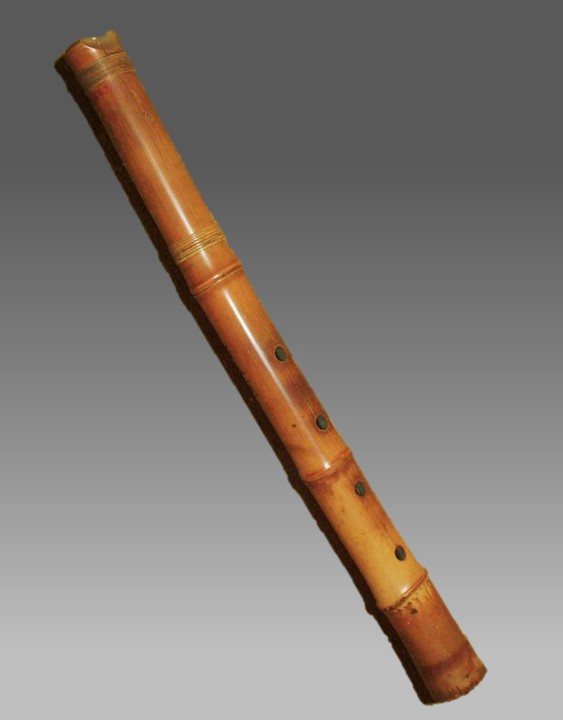
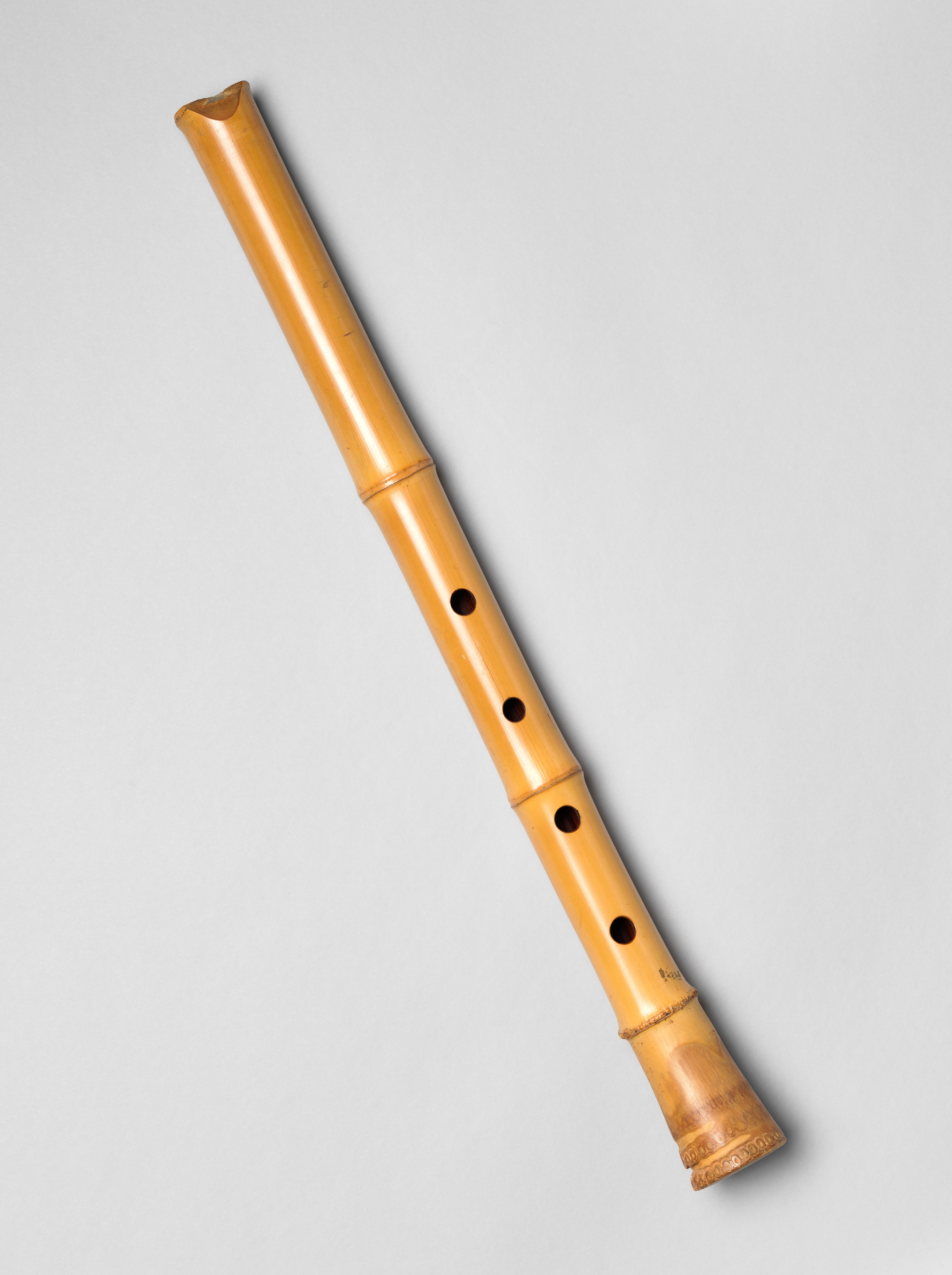
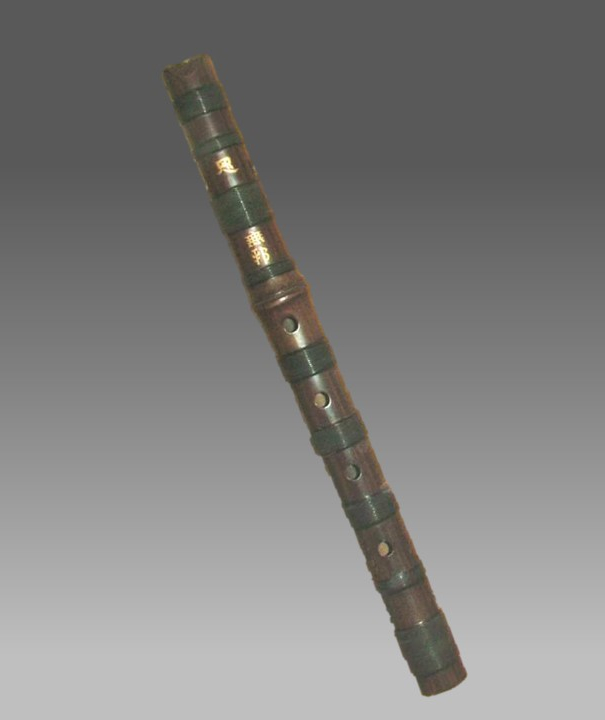
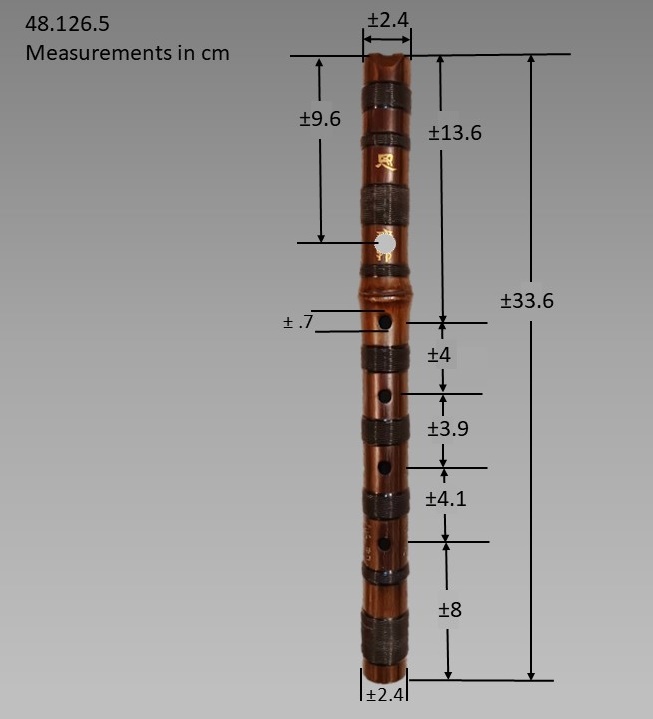
The shakuhachi is an end-blown bamboo flute played across Japan for around 1300 years. It is built from a single section of thick-walled bamboo cut just above the root, with five finger holes — four on the front and one on the back — and a sharp, slanted notch at the upper end across which the player blows. The Hornbostel-Sachs system classifies it as 421.111: an open single end-blown flute with finger holes.
The shakuhachi is closely associated with Japanese Zen Buddhism and with a meditation-focused solo repertoire called honkyoku, but it is also a flexible chamber instrument used in sankyoku trios with koto and shamisen, in modern composition, and in cross-cultural projects worldwide.
Origin & History
End-blown bamboo flutes related to the shakuhachi reached Japan from China during the Nara period (8th century) as part of the gagaku court music repertoire. The instrument went through several major transformations before settling into its modern form. By the medieval period it had become associated with itinerant lay-monks called Komuso (“monks of nothingness”), who used the flute as a meditation tool and were granted unusual privileges of travel and anonymity by the Tokugawa shogunate.
The Komuso developed the honkyoku solo repertoire — pieces meant not as performances for an audience but as a form of suizen (“blowing meditation”). After the abolition of the Komuso order in the early Meiji period, the shakuhachi survived as both a religious practice and a secular concert instrument, with the Kinko, Tozan, and Myoan schools each maintaining their own notation, technique, and repertoire.
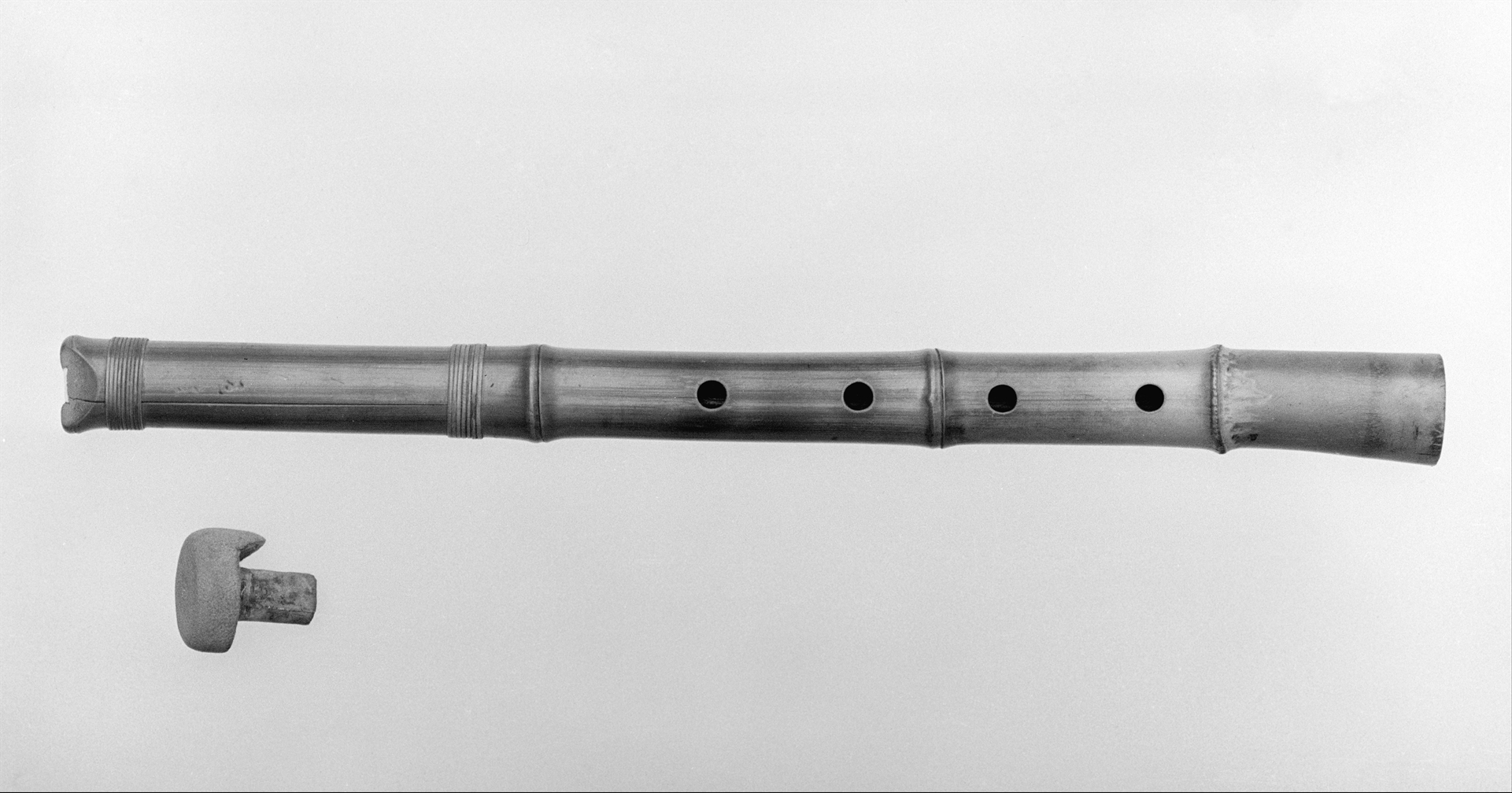
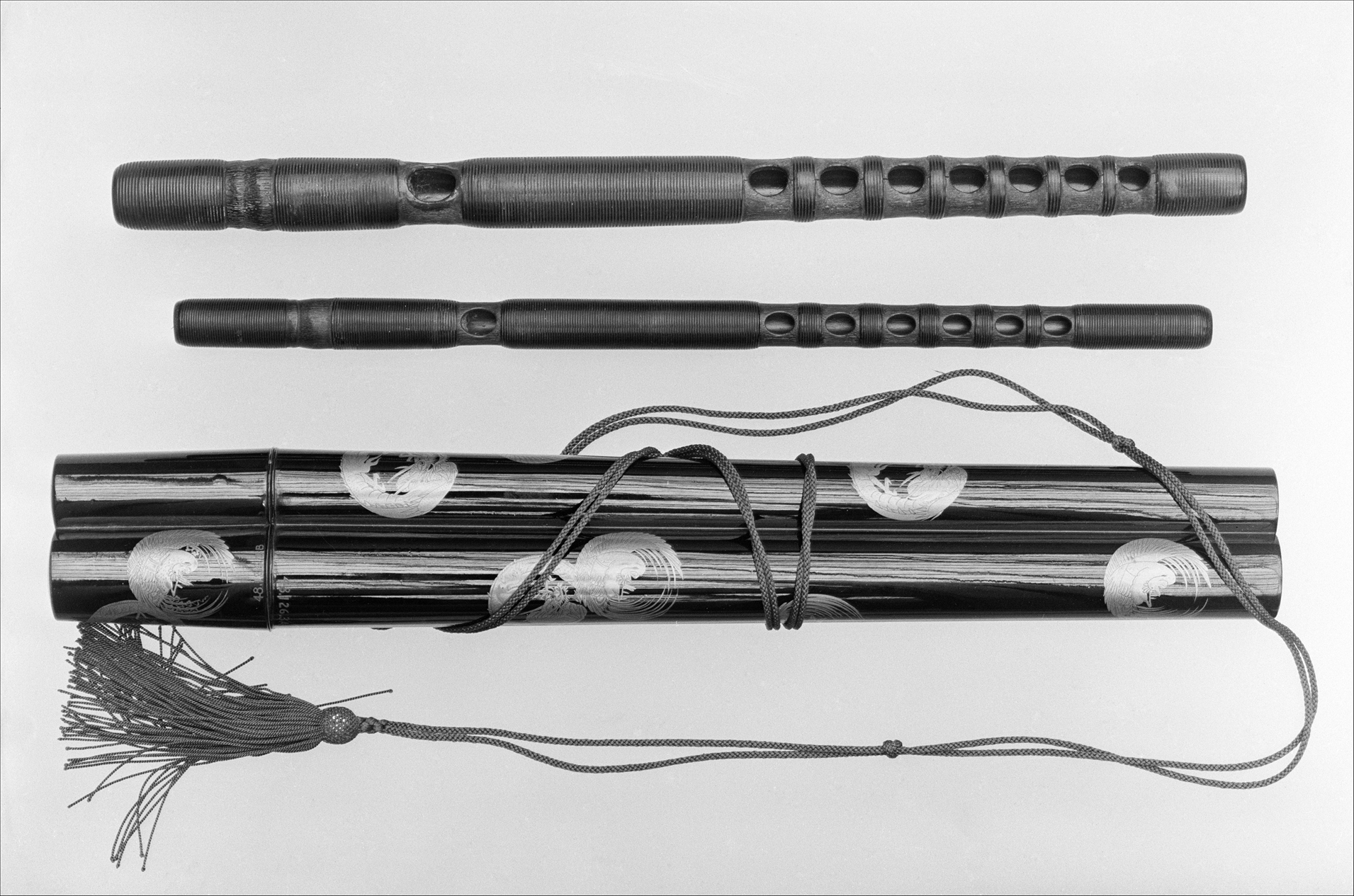
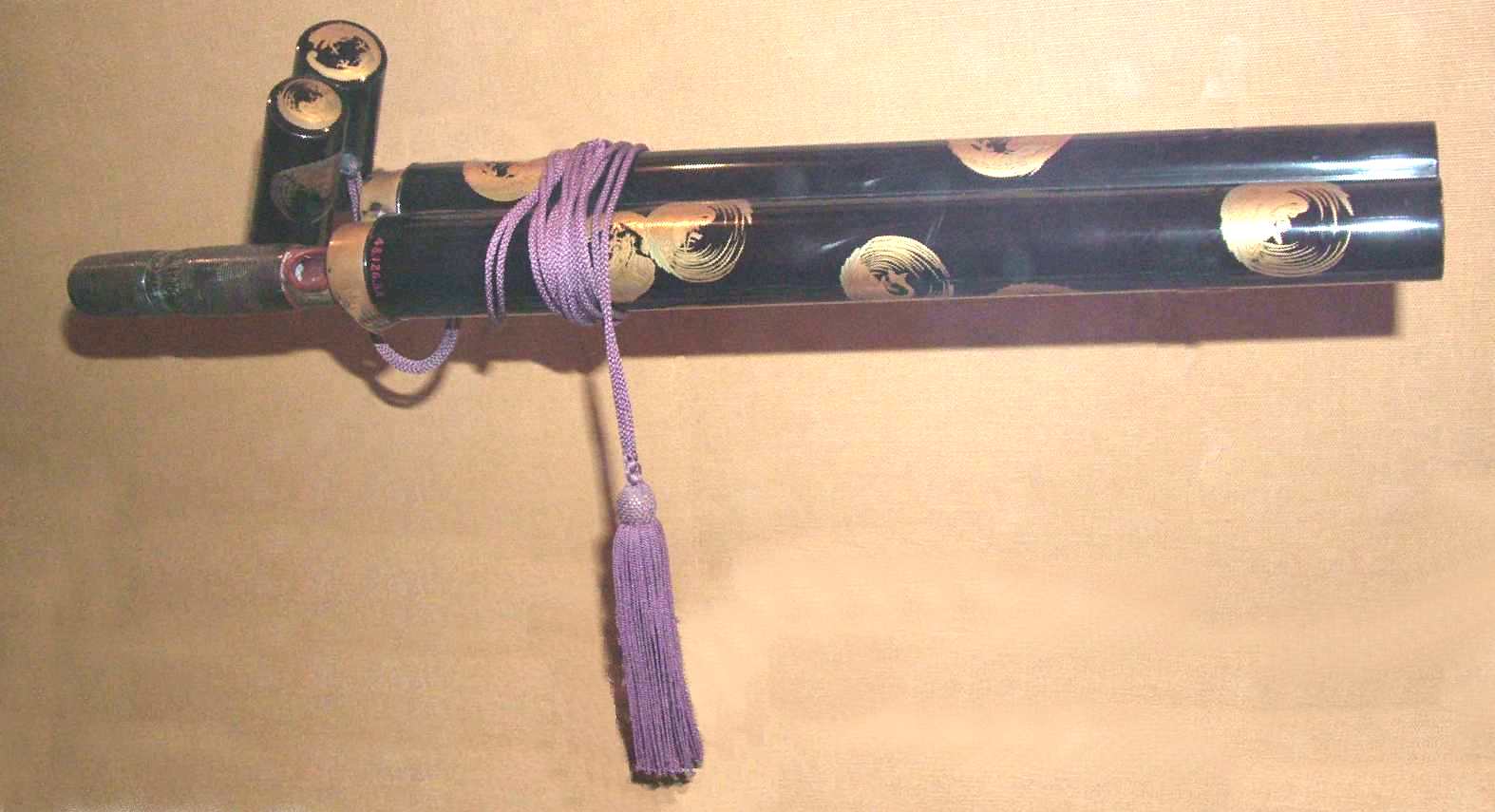
The Metropolitan Museum of Art holds an 18th-century shakuhachi attributed to the Komuso tradition (object 503039) made of bamboo, and a more decorative 19th-century example (object 500684) of bamboo, horn, and lacquer. Together they document how the instrument was being made in two parallel registers — austere Zen practice and high-status craft — at the same time.
Construction & Materials
A traditional shakuhachi is cut from a single section of madake bamboo just above where the stalk meets the root. The thick root section forms the lower flared end of the instrument, giving it the characteristic stubby silhouette. Five finger holes are cut directly into the bamboo, with no key system; the upper end is sharpened on one side into a small angled notch (utaguchi) reinforced with a piece of buffalo horn or hardwood.
The standard length is 1 shaku and 8 sun (about 54.5 cm), giving the instrument its name (shaku-hachi: “1 shaku, 8 sun”). Other lengths exist for different keys and repertoires; longer instruments give a deeper, more meditative sound while shorter ones are brighter and more agile. The interior bore is often lacquered for durability and tonal stability.
How It’s Played
The player holds the flute vertically, like a recorder, but blows across the angled notch at the top rather than through a fipple. Pitch is shaped by a combination of finger holes, head angle, and embouchure. Tilting the head down (meri) lowers the pitch; raising it (kari) raises the pitch. By combining these head movements with partial covering of the finger holes, a skilled player can produce all twelve chromatic notes from an instrument that physically has only five holes.
This dependence on embouchure and head position gives the shakuhachi its enormous expressive range — from breathy, almost whispered tones to powerful overblown sounds — and is also why even the simplest pieces take time to play cleanly.
Cultural Significance
The shakuhachi’s strongest cultural association is with the Komuso tradition and the honkyoku solo repertoire that came out of it. These pieces are organised not around metre and melody in the Western sense but around breath cycles, single tones, and the spaces between notes. Many practitioners treat them as suizen meditation rather than performance.
Beyond the Zen tradition, the shakuhachi is also a central voice in sankyoku chamber music alongside koto and shamisen, and a major modern concert instrument with a substantial 20th-century repertoire — most famously Tōru Takemitsu’s November Steps for shakuhachi, biwa, and orchestra. The instrument is also widely heard in film scoring, in cross-cultural projects, and in popular new-age and ambient music worldwide.
Notable Examples & Recordings
The Metropolitan Museum of Art’s two surviving 18th- and 19th-century shakuhachis (objects 503039 and 500684) usefully document both the Komuso tradition and the parallel high-status craft tradition. For listening, the honkyoku recordings of Watazumi Doso, Yamaguchi Goro, and Yokoyama Katsuya offer the deepest sense of the meditation-rooted repertoire. For modern concert music, Aoki Reibo, Yokoyama Katsuya, and the contemporary players Kakizakai Kaoru and Riley Lee are widely respected starting points.
Related Instruments
- – the more rustic, longer Zen flute used by some Komuso lineages
- Xiao – the Chinese end-blown flute from which the shakuhachi originally derives
- Koto – the long zither typically paired with shakuhachi in sankyoku chamber music
- Shamisen – the three-string lute also part of the sankyoku trio
- Bansuri – the Indian transverse bamboo flute, with a similar emphasis on breath and ornamentation
Where to Hear It
Shakuhachi recitals, sankyoku chamber concerts, modern Japanese composition, and Zen practice settings are the natural homes of the instrument. It is also widely used in film scoring, in ambient and new-age music, and in cross-cultural collaborations with Western ensembles.
- Wikipedia: Shakuhachi
- The MET: Shakuhachi, 18th century (object 503039)
- The MET: Shakuhachi, 19th century (object 500684)
- Wikimedia Commons: Shakuhachi
Learning Resources
Producing a stable first note on the shakuhachi typically takes weeks of patient practice — the angled embouchure is unforgiving and very different from a Western flute. Most students work with a teacher in one of the major schools (Kinko, Tozan, or Myoan), each of which maintains its own notation and graded curriculum. Several senior players, including Riley Lee and Kakizakai Kaoru, also offer structured online courses in English.
Frequently Asked Questions
How does the shakuhachi produce so many notes from only five holes?
By combining finger-hole positions with subtle head movements (meri lowers pitch, kari raises it) and partial covering of the holes, a skilled player can produce all twelve chromatic notes — and many micro-tonal inflections — from the five physical holes.
What is honkyoku?
Honkyoku is the solo repertoire associated with the Komuso lay-monks of the Edo period. The pieces are traditionally treated not as performances but as a form of suizen — “blowing meditation” — built around breath cycles, single tones, and silence.
How is the shakuhachi different from a recorder?
Both are end-blown wooden flutes, but the shakuhachi has no fipple. The player blows directly across an angled notch at the top, shaping every note with embouchure and head movement. This makes the basic tone much harder to produce but gives the instrument an expressive range a recorder cannot reach.
Are old shakuhachis displayed in museums?
Yes. The Metropolitan Museum of Art in New York holds at least two well-documented historical examples (objects 503039 and 500684), spanning the late Edo and Meiji periods.
Is the shakuhachi difficult to learn?
Producing the first stable note is famously slow — most beginners take several weeks of consistent practice before any sound emerges reliably. Once the embouchure is settled, progress is steadier, but the honkyoku repertoire is generally regarded as a long-term study.


