.jpg)



Kaval
кавал
| Category | Wind |
|---|---|
| Country of origin | Balkans / Anatolia |
| Classification | type of musical instrument |
| Wikipedia | en.wikipedia.org |
| Wikidata | Q178374 |
Listen
Audio: Memo Dako Hamo, PD / via Internet Archive
Audio: ЗОРА, PD / via Internet Archive
Audio: N/A - folk, CC0 / via Internet Archive
Overview
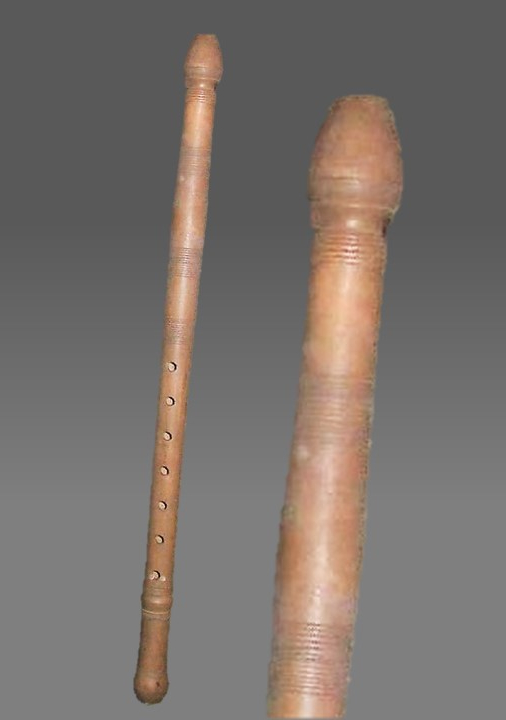
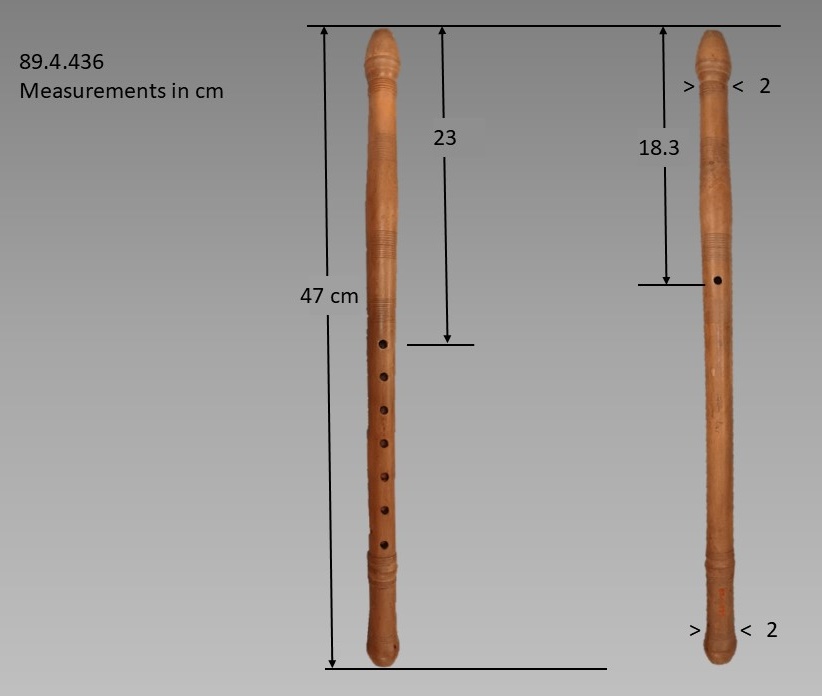
The kaval is an end-blown rim-blown wooden shepherd’s flute played across the Balkans, Anatolia and the wider Ottoman cultural region. The standard instrument is a long, narrow, open-ended wooden tube — typically around 70 to 80 centimetres long — with seven finger holes on the front and one thumbhole on the back. The player blows obliquely across the open top edge of the tube to set up the standing wave, in the same way as a player blows across the lip of a bottle. The result is a soft, breathy, three-octave-range sound that has been the standard wind instrument of Balkan shepherds for centuries.
Wikidata describes the kaval as a “chromatic end-blown blocked-end flute” and identifies Bulgaria as the country of origin, although the instrument is played widely across the Balkans and Anatolia.
Origin & History
The kaval has been documented in the Balkans and Anatolia since at least the late medieval period, and almost certainly has earlier roots in the wider end-blown flute traditions of the Mediterranean and Central Asian worlds. Its uniformity across the wider region — from Bulgaria through Macedonia and Serbia to Turkey, with only minor regional variations — points to a long shared cultural history under the Ottoman Empire and earlier Byzantine and South-Slavic political structures.
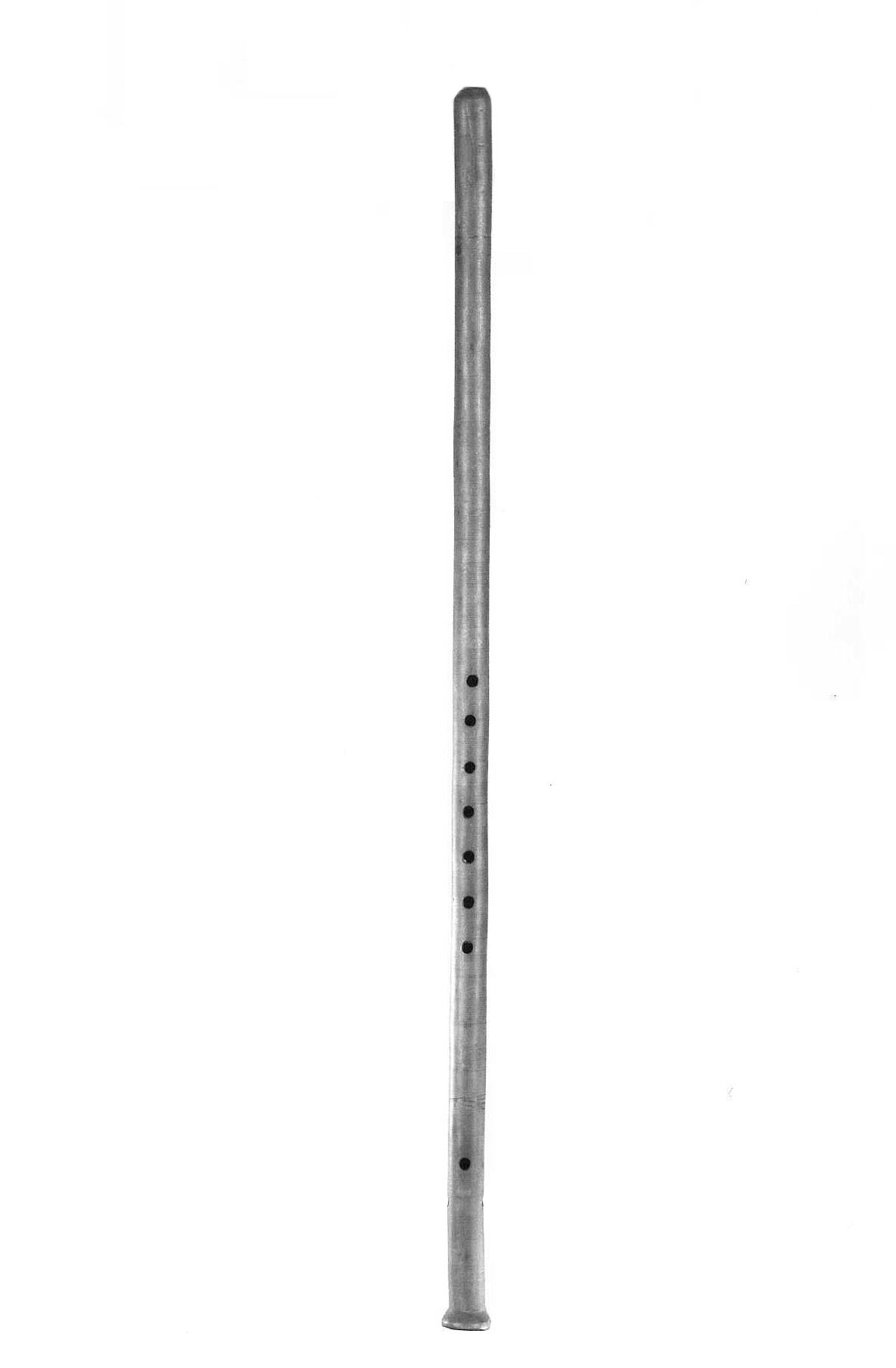
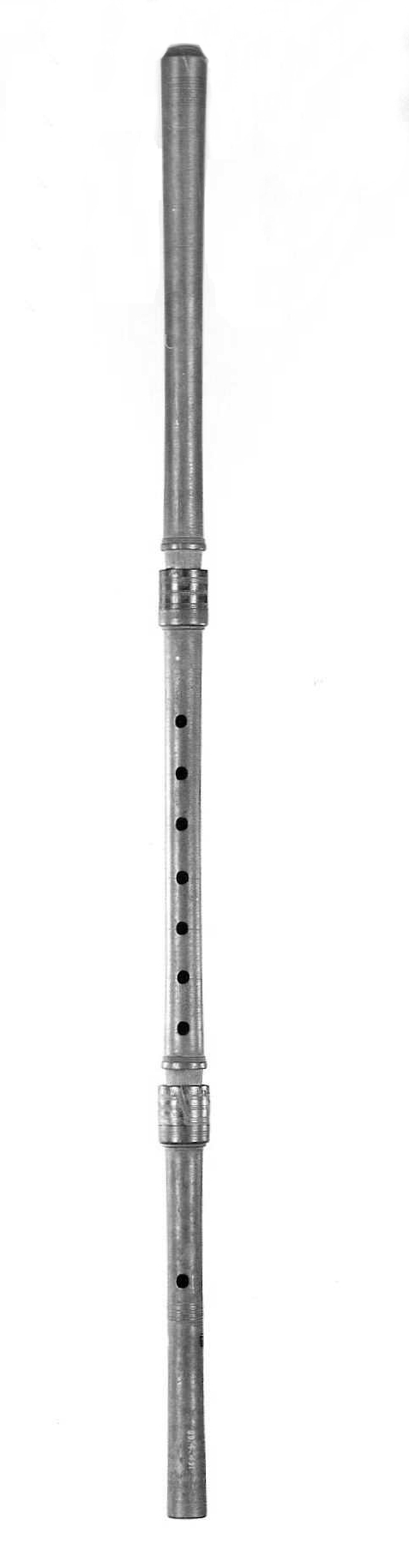
The Metropolitan Museum’s collection holds four kaval that document the instrument’s geographic spread in the late 19th century. Two are Bulgarian — object 501049 and object 501537, both wooden, both late-19th-century, both donated through the Crosby Brown Collection in 1889. A Turkish kaval (object 501054) of the same period is built of boxwood, again from the same Crosby Brown gift. A fourth instrument (object 501479) is catalogued more generally as Eastern European, again late-19th-century wooden construction. All four are catalogued as Aerophone-Blow Hole-end-blown flute (vertical).
In the 20th century the kaval entered the formal Bulgarian conservatory tradition through the work of leading folk musicians such as Stoyan Velichkov and Theodosii Spassov, both of whom established the instrument’s place in modern Bulgarian classical and folk concert music. The Le Mystère des Voix Bulgares choir’s international success in the 1980s brought wider attention to Bulgarian folk music as a whole and indirectly to the kaval.
Construction & Materials
A standard Bulgarian kaval is around 70 to 80 centimetres long and is built in three sections — head, body and foot — each turned from a single block of wood and joined with brass ferrules. The bore is cylindrical and narrow, typically around 16 millimetres. Tonewoods include cornel (the traditional Bulgarian preference), boxwood (more common in Turkish kaval), plum and pear.
Seven finger holes are placed along the front of the tube and one thumbhole on the back; an additional four “devil’s holes” are bored near the bottom of the tube and remain open at all times — they affect the tuning of the lower notes and the instrument’s tonal character but are not covered or uncovered by the player. The MET’s Turkish boxwood specimen (object 501054) and the Bulgarian wooden specimens are typical of late-19th-century construction in their three-section build and brass ferrules.
The full chromatic three-octave range is achieved through a combination of overblowing, cross-fingerings, and partial covering of the holes — meaning the kaval requires substantial breath control and finger technique despite its apparently simple construction.
How It’s Played
The player holds the kaval at a 45-degree angle to the body, with the lower end of the tube angled out to the right or left, and blows obliquely across the open top edge. The lower lip is placed below the rim, and the upper lip directs the breath stream across to split against the opposite edge of the tube — the same principle as blowing across a bottle, but with much greater control.
The first octave (the kaba register) is breathy and low; the second octave (the podgora register) is the most-used clear middle register; the third octave (the vrah register) is bright and piercing. Skilled Bulgarian kaval players move freely across all three registers in a single melodic line, often using sliding pitch ornaments and rapid grace notes characteristic of Balkan folk music.
Cultural Significance
The kaval is the central wind instrument of Bulgarian folk music and one of the central wind instruments of the wider Balkan and Anatolian folk traditions. Its association with the shepherd’s life — long melodic lines played alone in the high mountain pastures during the summer transhumance — is direct and strong, and many of the most famous traditional kaval tunes carry names referring to specific pastoral settings.
In modern Bulgarian conservatory and concert practice the kaval has acquired a substantial repertoire that includes both traditional folk arrangements and original compositions. Theodosii Spassov in particular has carried the instrument into jazz and contemporary classical contexts, with collaborations across the international jazz and world-music scenes. The Bulgarian kaval also features prominently in the recordings of the Le Mystère des Voix Bulgares choir tradition and in the soundtracks of major international films.
Notable Examples & Recordings
The MET’s four specimens (objects 501049, 501054, 501479, 501537) document the instrument across the Bulgarian-Turkish-Eastern European cultural region in a single decade.
For listening:
- Theodosii Spassov, Welkya — leading modern Bulgarian player with extensive jazz and world-music collaborations.
- Stoyan Velichkov, Bulgarian Folk Music: Kaval — central archival recordings of mid-20th-century traditional playing.
- Nikola Iliev, The Sound of the Kaval — strong representation of the Pirin regional tradition.
- Le Mystère des Voix Bulgares, Le Mystère des Voix Bulgares Volume 1 — choral recordings featuring kaval interludes.
Related Instruments
- Ney – the Persian and Arab end-blown rim-blown flute in the same wider Mediterranean family.
- Quena – the Andean notched end-blown flute, a parallel global tradition.
- Shakuhachi – the Japanese end-blown bamboo flute.
- – the Serbian shepherd’s duct flute, the parallel Balkan instrument with a fipple mouthpiece rather than the kaval’s open rim.
- – the Romanian end-blown flute related in design.
Where to Hear It
The Koprivshtitsa National Folklore Festival, held every five years in the Bulgarian Rhodope town, features hundreds of kaval players in mass folk-music performances. The Pirin Folk festival in Sandanski every September, the Pernik Surva festival every January, and the regular folk-music programming at the Bulgaria Hall in Sofia all feature the instrument prominently. Conservatory recitals at the National Academy of Music in Sofia and the Plovdiv Academy of Music feature the kaval as a principal study.
- Wikipedia: Kaval
- The MET: Kaval, Bulgarian (object 501049)
- The MET: Kaval, Bulgarian (object 501537)
- The MET: Kaval, Turkish (object 501054)
- The MET: Kaval, Eastern European (object 501479)
- Wikimedia Commons: Kaval
Learning Resources
The kaval is taught at the National Academy of Music in Sofia, the Plovdiv Academy of Music and at the major Bulgarian folk-music schools (the National School of Folk Arts in Shiroka Lăka in particular). Standard tutor materials include the Methodology for the Kaval by Stoyan Velichkov in Bulgarian and more recent publications by Theodosii Spassov. Outside Bulgaria, the Bulgarian cultural centres in Berlin, Vienna, London and Toronto offer occasional kaval workshops, and online instruction by leading players is increasingly available. New concert-grade kavals by Bulgarian makers run from approximately 200 to 1,000 USD; high-end cornel-wood instruments can reach 1,500 USD.
Frequently Asked Questions
How does the kaval produce its sound?
The player blows obliquely across the open top edge of the tube, splitting the breath stream against the opposite edge to set up the standing wave — the same principle as blowing across the lip of a bottle. The kaval has no fipple, no reed and no mouthpiece — just the open tube end.
What is the difference between a kaval and a ney?
The kaval and the ney are both end-blown rim-blown flutes in the same wider Mediterranean family. The kaval is built in three jointed sections of wood and has a Bulgarian-Balkan repertoire; the ney is built from a single piece of bamboo or reed and has a Persian-Arab repertoire and a particular Sufi association.
Why does the kaval have unstopped “devil’s holes”?
The four open holes near the bottom of the tube affect the tuning of the lower notes and the overall tonal character of the instrument. They are never covered by the player. They are called “devil’s holes” in folk tradition because the kaval was said to be insufficiently musical without them — the devil supposedly added them to complete the design.
Are old kaval in museums?
Yes. The Metropolitan Museum holds four 19th-century kaval: two Bulgarian (objects 501049 and 501537), one Turkish (501054) and one Eastern European (501479), all in the Musical Instruments department.
What music is the kaval used for?
Traditionally the kaval is the shepherd’s solo wind instrument of the Balkans and Anatolia, played alone in pastoral settings. In modern Bulgarian music it is also a conservatory and concert instrument with a substantial folk-arrangement and original-composition repertoire, and it has crossed into jazz and contemporary classical music through the work of Theodosii Spassov and others.
Where is the kaval played outside the Balkans?
The kaval is played in the Bulgarian, Macedonian, Serbian and Turkish diaspora communities worldwide and increasingly by international folk and world-music players. The Bulgarian conservatory tradition has trained a small but growing number of non-Bulgarian players over the past three decades.


