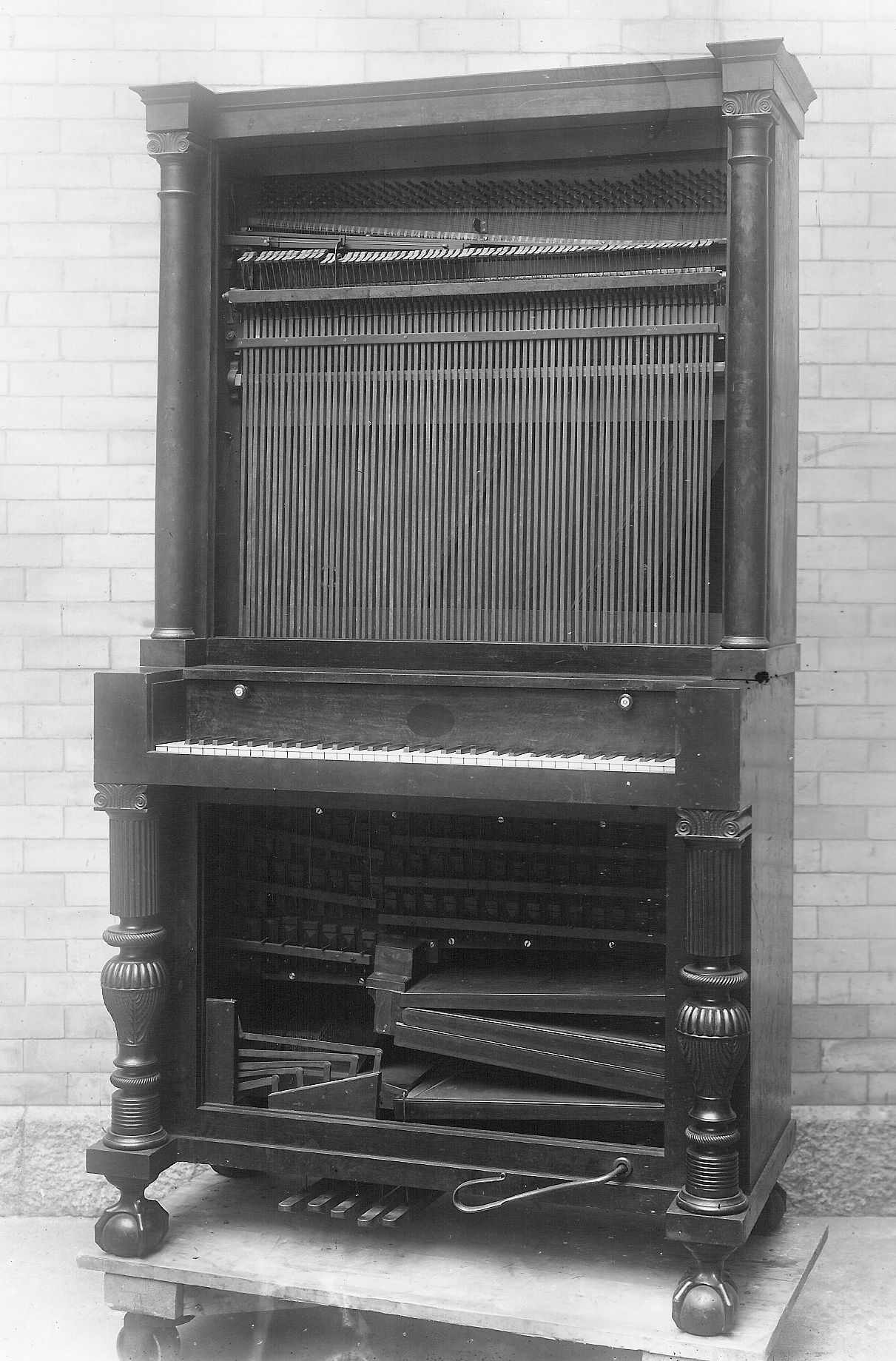

Pedal Keyboard
| Category | Keyboard (organ component) |
|---|---|
| Country of origin | Europe |
| Classification | division, musical keyboard |
| Wikipedia | en.wikipedia.org |
| Wikidata | Q1758965 |
Overview
A pedal keyboard, often simply called a pedalboard, is a musical keyboard played with the feet. It is most commonly found at the base of a pipe organ or large electronic organ, where it extends the instrument downward into the bass register. The pedalboard is laid out with the same arrangement of natural and sharp keys as a manual keyboard, but at a much larger scale to accommodate the player’s feet.
Origin & History
Pedalboards developed alongside the European pipe organ from the late medieval period onward, with German and Dutch builders especially associated with their refinement. By the time of Johann Sebastian Bach in the early eighteenth century, the pedal organ had become an essential voice in serious church music, and Bach’s Trio Sonatas and large preludes and fugues are written explicitly to require independent pedal lines. Pedalboards have also been attached to harpsichords, clavichords, and pianos in earlier centuries; modern electronic and Hammond organs continue the tradition in shorter forms.
How It’s Played
The organist sits on a bench above the pedalboard and plays bass lines with the toes and heels of both feet, using the inside, outside, and tip of the shoe depending on the passage. Skilled players combine pedal lines with two or more manual keyboards, producing genuinely independent voices for each foot and each hand. Pedal technique is taught as a discipline in its own right at conservatoires.
Cultural Significance
The pedal keyboard is one of the features that distinguishes the pipe organ from almost every other keyboard instrument: it gives the organist the ability to sustain a powerful, independent bass line without help from another player. This made the organ uniquely suited to large-scale sacred and concert music in European traditions and continues to define its sound today.
Related Instruments
- Hammond organ – an electric organ commonly fitted with a short pedalboard
- Harmonium – a small reed keyboard, occasionally with pedals
- Fortepiano – an early piano relative without pedals of this type
- Clavinova – a digital keyboard family
- Synthesizer – the broader electronic keyboard category
Frequently Asked Questions
How many notes does a pedalboard have?
A standard concert pipe organ pedalboard typically has 30 or 32 notes, spanning two and a half octaves from low C upward.
Are pedal keyboards used outside the pipe organ?
Yes. Hammond and other electronic organs, some theatre organs, and a small number of historical pedal pianos and harpsichords have used pedalboards.
Image: pedalboard photograph, CC BY-SA 3.0 (Wikimedia Commons).