
Harmonium
Harmonium / Reed organ
| Category | Keyboard |
|---|---|
| Country of origin | France (early–mid 19th century) |
| Wikipedia | en.wikipedia.org |
| Wikidata | Q12460259 |
Listen
Audio: william lewis, CC0 / via Internet Archive
Audio: layne garrett, CC BY-SA / via Internet Archive
Overview
The harmonium — also commonly catalogued as the reed organ — is a free-reed keyboard instrument in which a foot- or hand-pumped bellows pushes air across metal reeds, each tuned to a specific pitch and selected by a piano-style keyboard. Wikidata gives three overlapping classifications: wind instrument with keyboard, set of free reeds, and non-piped organ. DBpedia’s Hornbostel-Sachs reading 412.132 places it among the free aerophones with mechanical air supply.
In Western use the instrument is a 19th-century domestic and chapel keyboard that has largely disappeared from professional life. In South Asian use — under the same name — it is the dominant accompaniment instrument for Hindustani vocal music, qawwali, kirtan, and a wide range of Sikh, Hindu, and Sufi devotional traditions. The two careers diverged sharply in the late 19th century and have remained largely separate ever since.
Origin & History
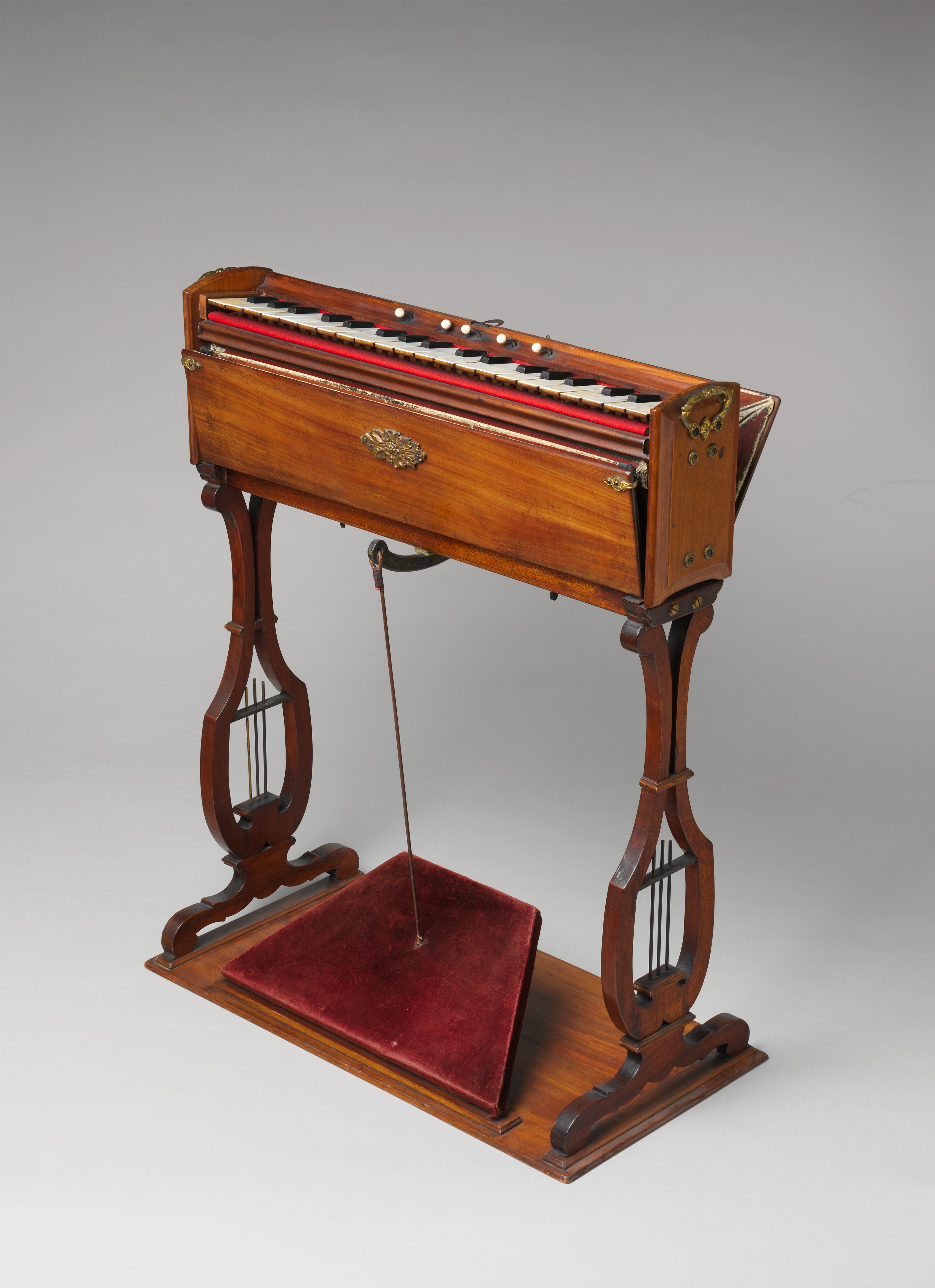
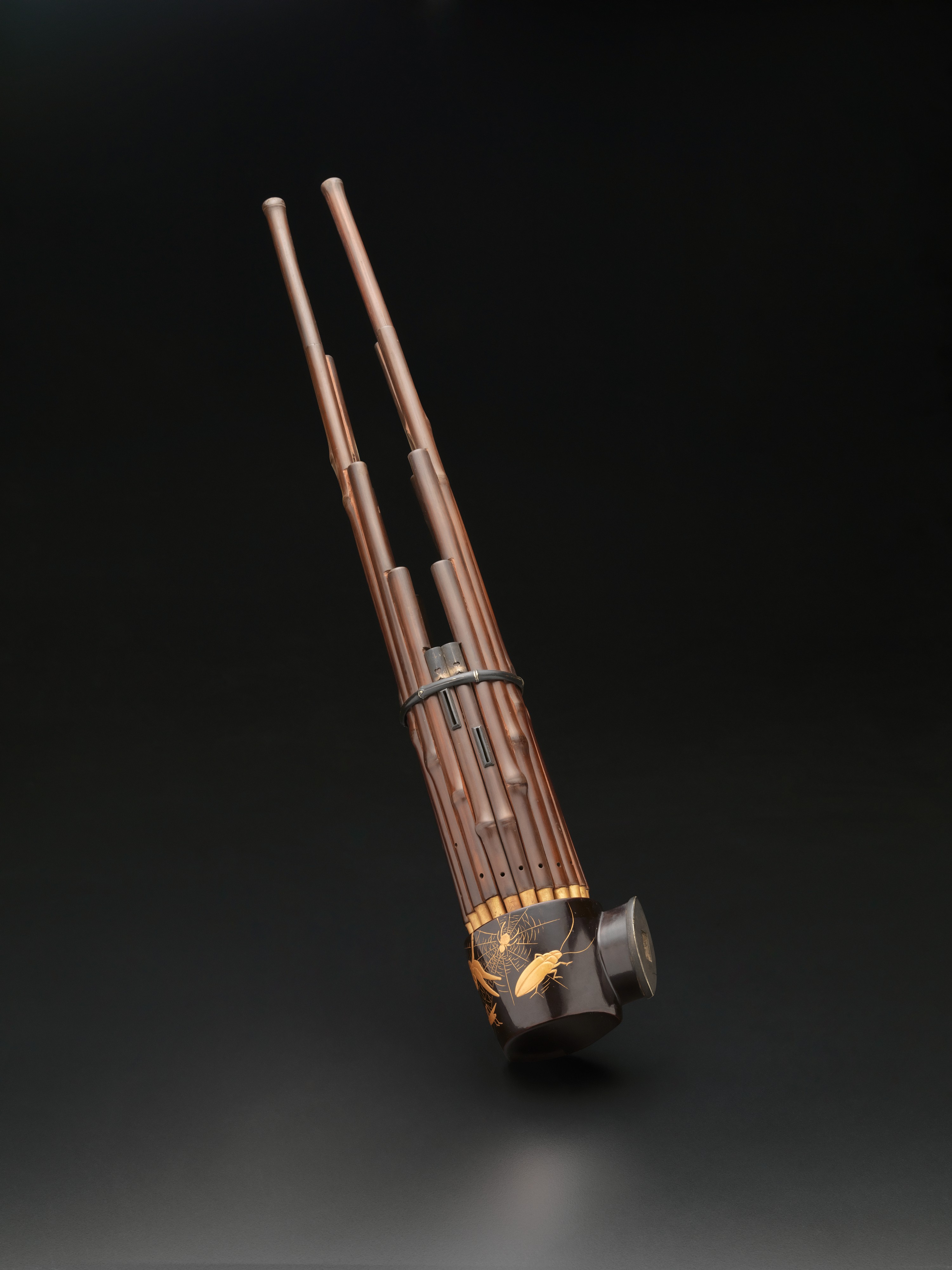
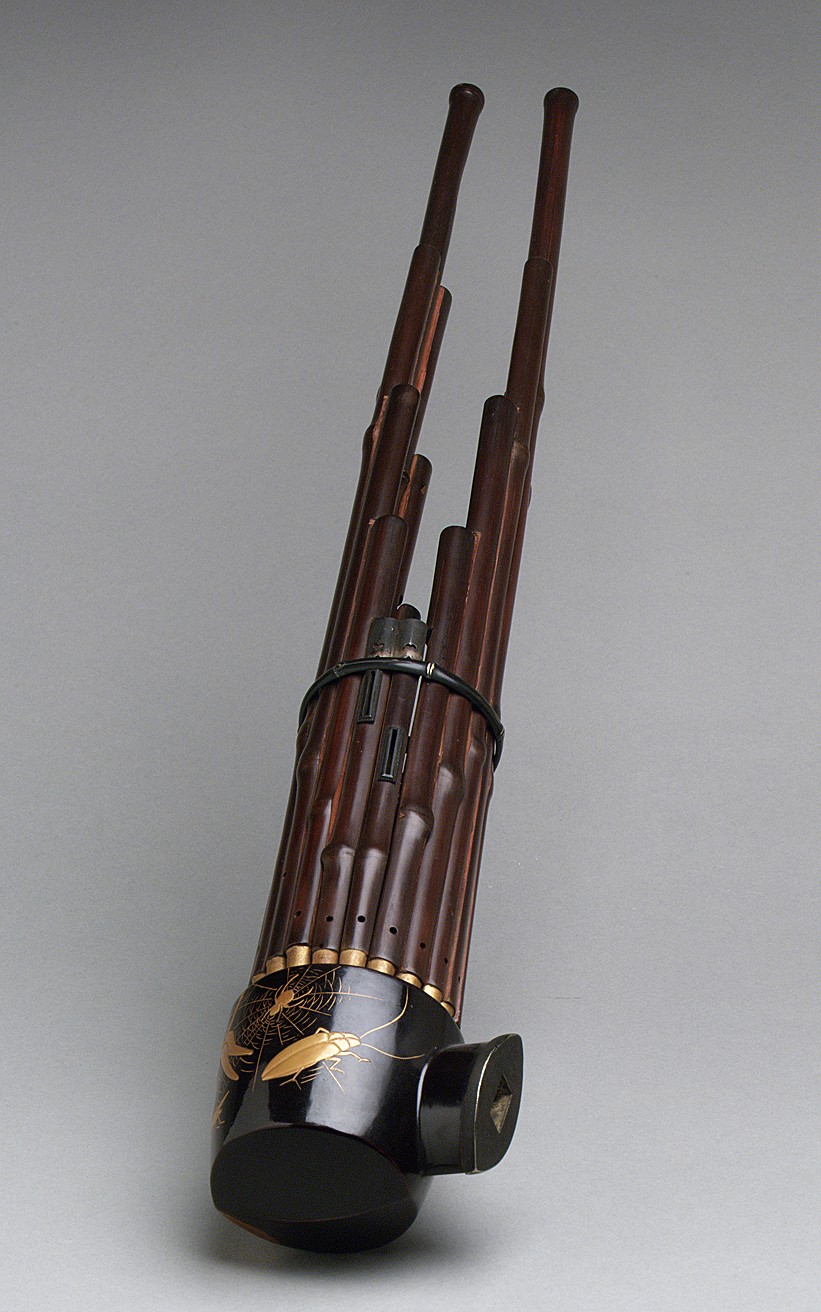
The free-reed principle itself is ancient: the Chinese sheng (MET 505403, dated about 1850-89) and the Japanese shō (MET 502833, 19th century) are the East Asian end of a tradition stretching back at least two thousand years. The 19th-century European harmonium emerged when builders applied keyboard-organ engineering to the same physical principle.
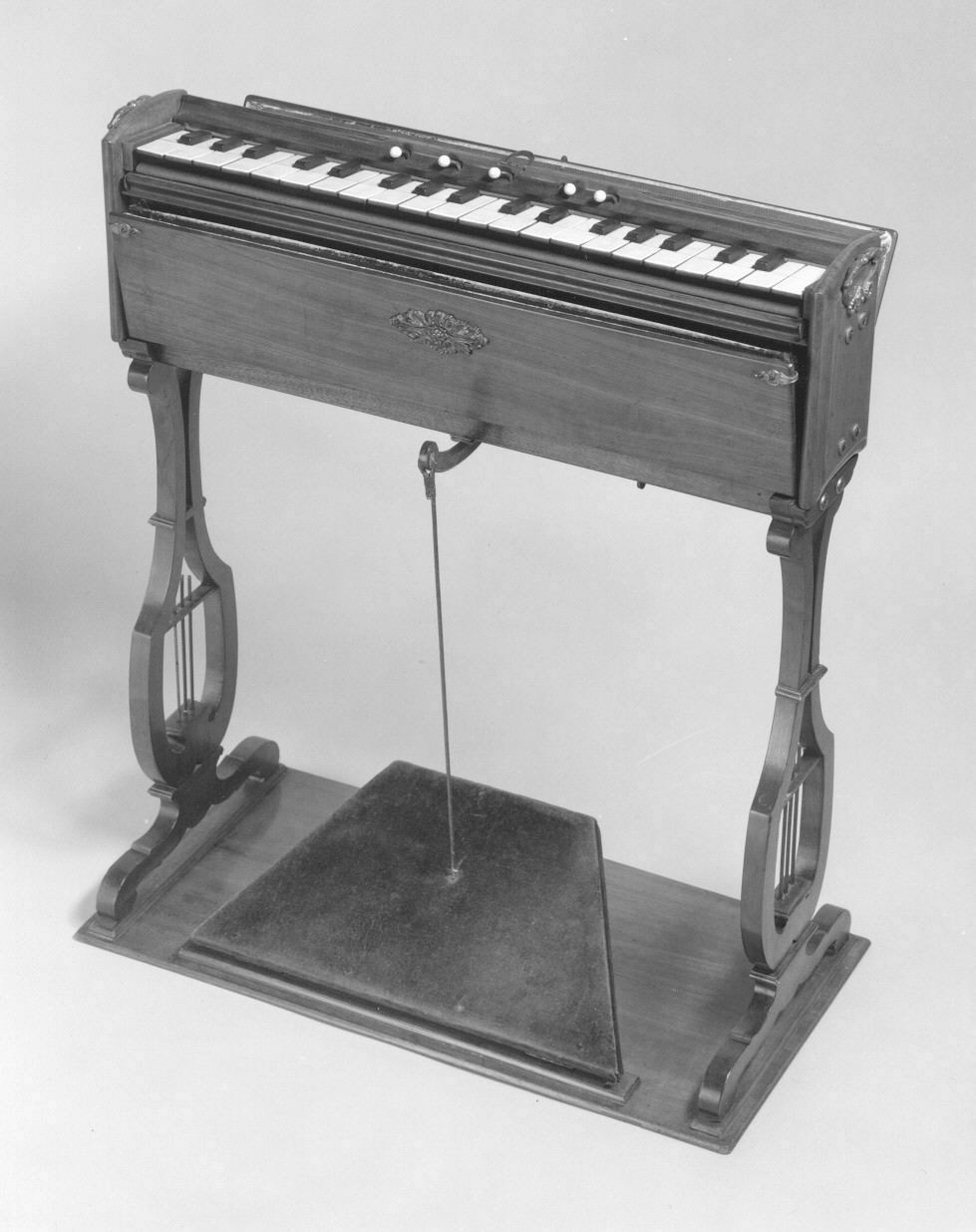
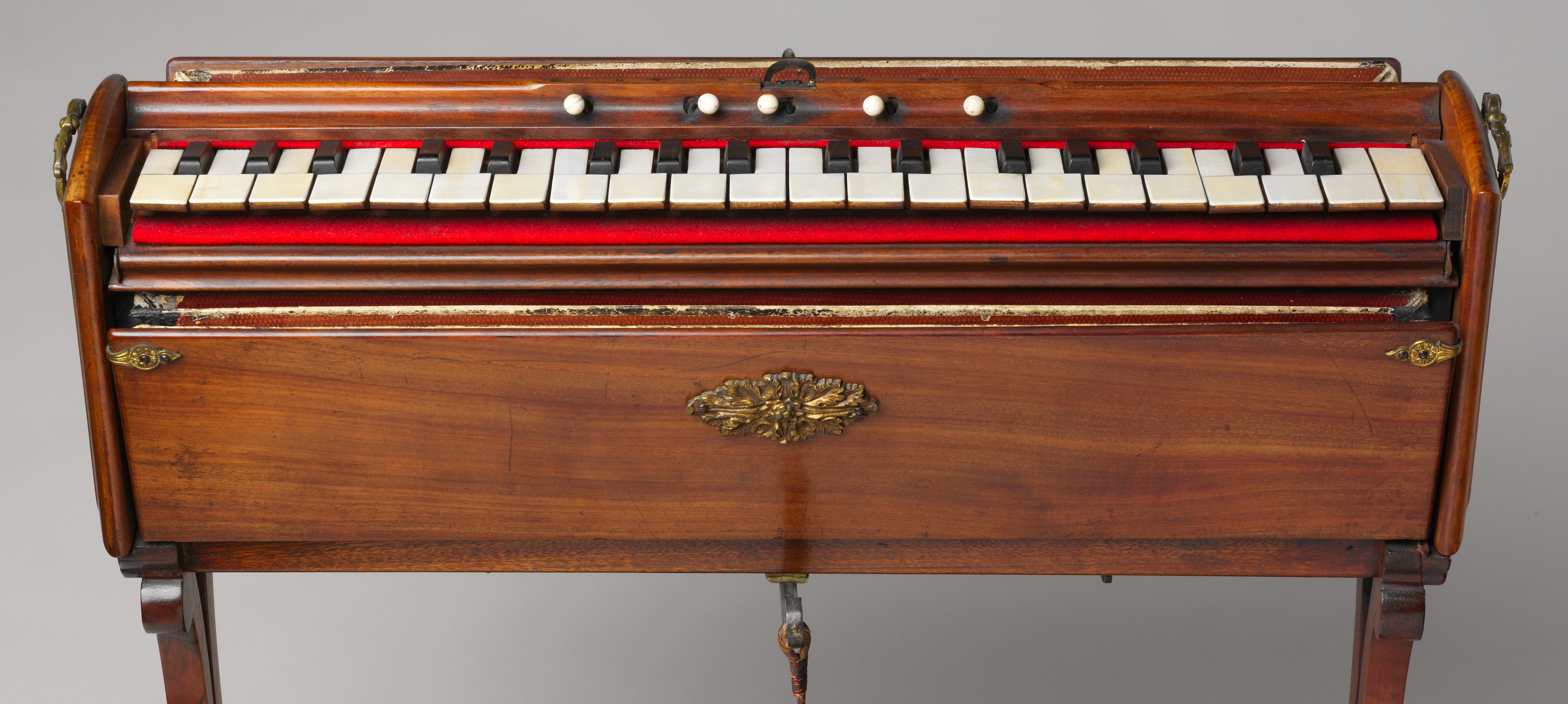
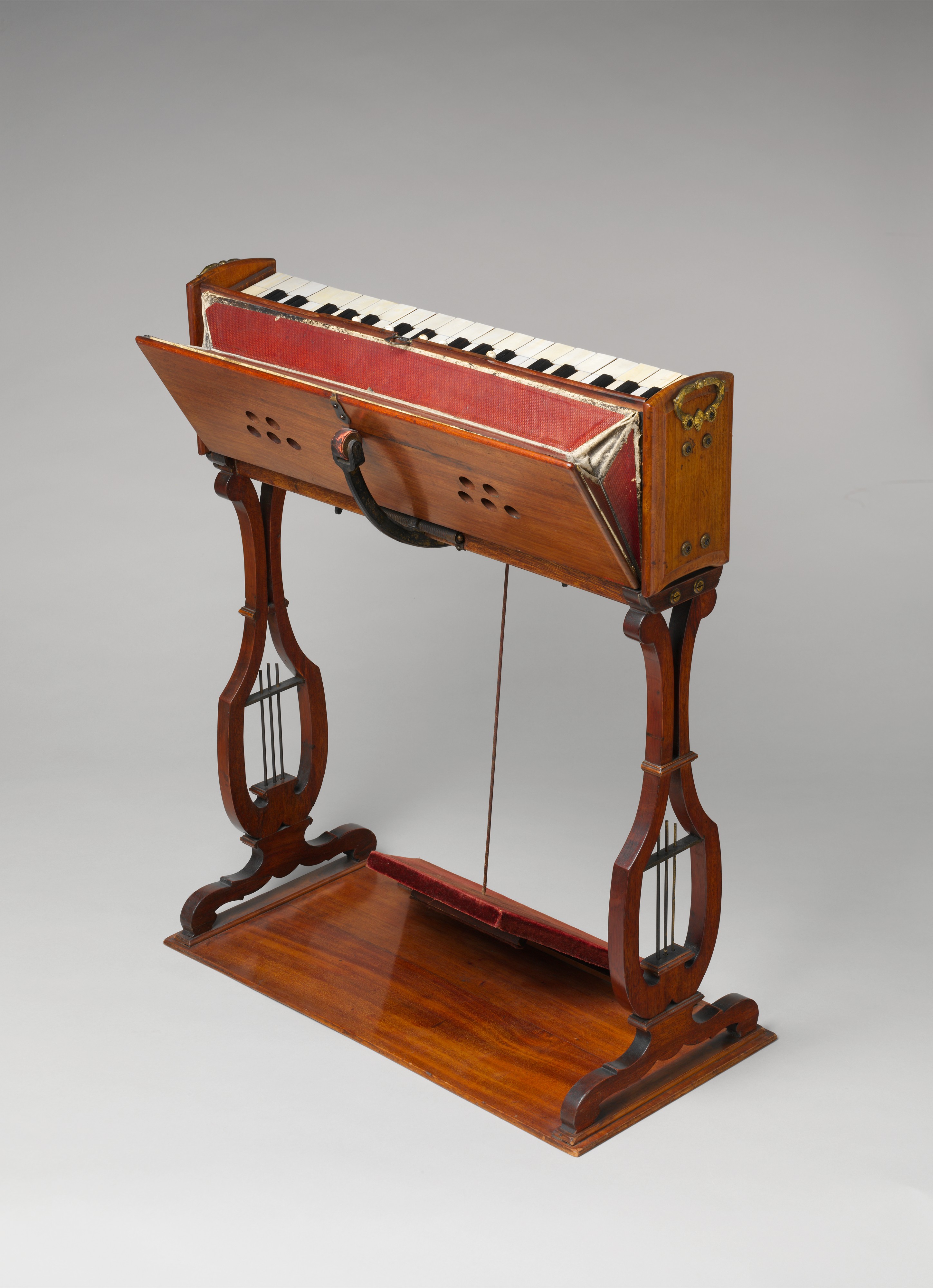
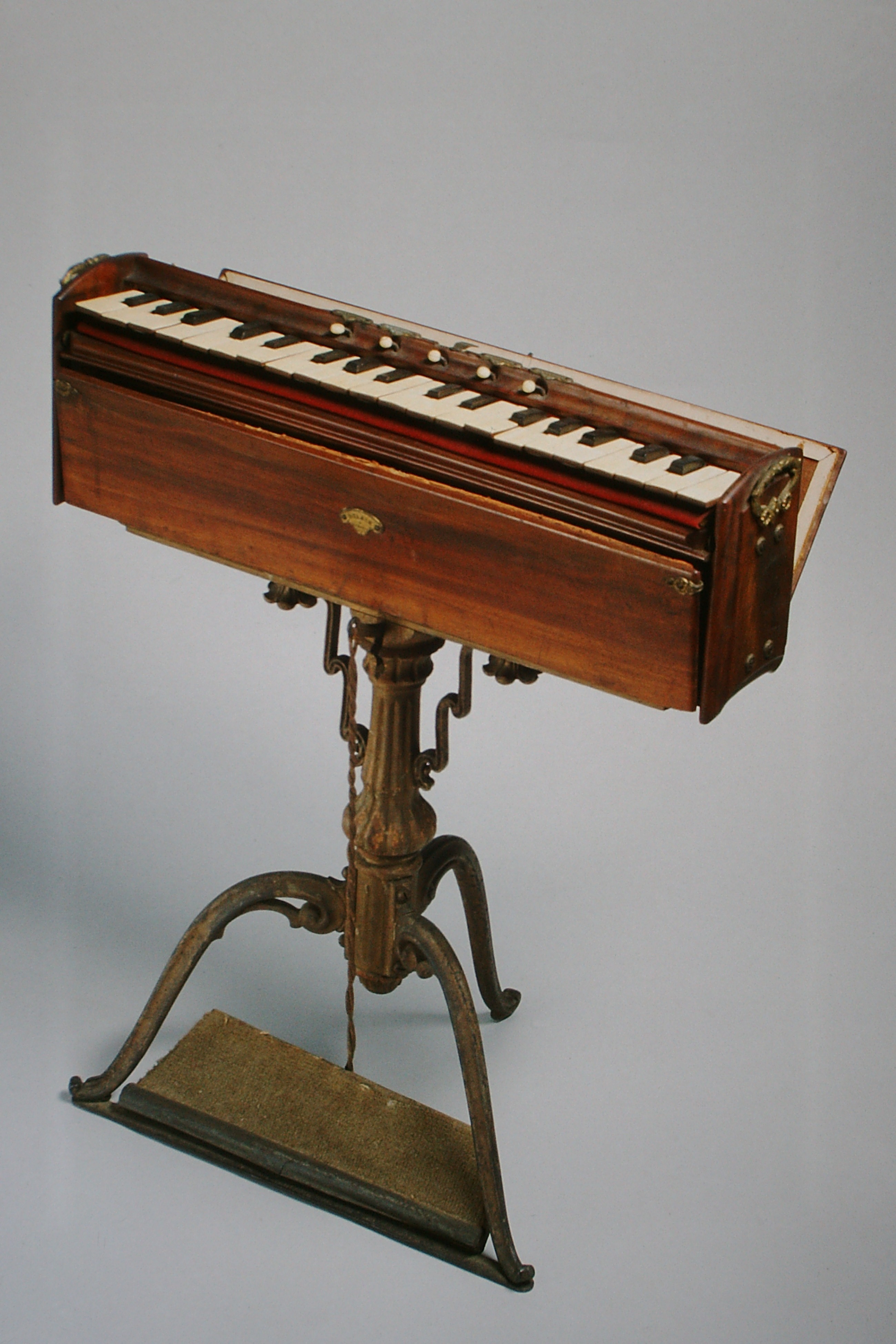
The Frenchman Alexandre Debain patented his “harmonium” in Paris in 1840, fixing both the name and the basic design — a freely-vibrating metal reed mounted in a frame, blown by a foot-pumped bellows, with a piano-style keyboard selecting reeds via simple key-pallets. Earlier related instruments — the French physharmonica (MET 504189 from the early 19th century and MET 504212 from about 1860, both made of palisander, brass, and other woods/metals) and German Aeoline — had appeared in the 1810s and 1820s, but Debain’s patent locked in the standard configuration that everyone else then iterated.
In Europe and North America the harmonium spread rapidly through middle-class homes, small chapels, country churches, and missionary stations between roughly 1850 and 1910. In South Asia, missionaries and colonial-era musicians brought small portable hand-pumped versions to India in the second half of the 19th century. Indian musicians adapted the design — sitting cross-legged on the floor, a single hand pumping the bellows behind the keyboard, the other playing the melody — and within a generation it had become the standard accompaniment instrument for vocal music across North India, Pakistan, Bangladesh, and the wider South Asian diaspora.
Construction & Materials
A standard reed-organ-style harmonium is a wooden cabinet roughly the size of a small upright piano, with a keyboard above and two large foot pedals (treadles) below. Pumping the treadles inflates internal bellows, which feed air into a windchest behind the keyboard. Pressing a key opens a pallet that lets air rush across one or more freely-vibrating brass reeds tuned to that note. Stops on the front of the cabinet bring additional reed banks (different timbres, octaves, or solo voices) into use.
The Indian-style portable harmonium is much smaller, roughly the size of a typewriter case. It sits on the floor; a hinged back-mounted bellows is hand-pumped; the keyboard runs across the front. Inside, the reed assembly and pallets are mechanically simpler than in the Western cabinet form, and there are usually two or three stops only.
MET 504212 (a French reed organ / physharmonica of about 1860, palisander and brass) and MET 504189 (early-19th-century French physharmonica, wood and metal) document the European cabinet tradition. The Wikimedia reference image of a John Church and Co. reed organ shows the late-19th-century American mass-produced form, which was sold by the tens of thousands through Sears Roebuck and similar mail-order channels.
How It’s Played
In Western use the player operates the foot treadles continuously while playing, controlling dynamics through pumping speed and pressure. Stops select reed banks — typically a 4-foot diapason, an 8-foot melodia, an 8-foot salicional, and one or two octave couplers on a typical small chapel organ.
In Indian use the player sits on the floor in front of the instrument, pumps the back-mounted bellows with the left hand, and plays the melody with the right. The instrument almost never plays chords in this context — it doubles a vocal melody or improvises a single-line accompaniment. The fixed equal-tempered tuning of standard harmoniums has been a long-running point of musical debate in Hindustani circles, since Indian classical music uses a much more nuanced microtonal tuning than the harmonium can reproduce.
Cultural Significance
In South Asia the harmonium is the everyday devotional and classical-music keyboard. It accompanies kirtan in Sikh gurdwaras, bhajan in Hindu temples, qawwali in Sufi traditions (Nusrat Fateh Ali Khan, the Sabri Brothers, Abida Parveen — every major qawwali ensemble has a harmonium at its centre), and Hindustani vocal khayal performance. All India Radio actually banned the harmonium from broadcast classical-music programmes between 1940 and 1971 on the grounds that its fixed tempering damaged the integrity of raga performance — an unusually direct case of musical-policy regulation.
In Western use the instrument’s heyday was the second half of the 19th century, when it functioned as a parlour piano substitute and small-chapel organ. By 1930 it had been almost entirely displaced in those roles by the upright piano and (in larger churches) by the electric organ. It survives in folk and revival contexts — Welsh chapel singing, Norwegian Sami music, some North American shape-note traditions — and as a specialist accompaniment in 19th-century song repertoire.
Notable Examples & Recordings
- Nusrat Fateh Ali Khan, Shahen-Shah (Real World, 1989) and the In Concert in Paris live recordings — harmonium-anchored qawwali at world-touring scale.
- Bhimsen Joshi, Raga Marwa and other All India Radio classical recordings — harmonium accompaniment in Hindustani vocal khayal.
- The Sabri Brothers, Ya Habib — Pakistani qawwali with a particularly prominent harmonium voice.
- Iarla Ó Lionáird’s collaborations with the Afro-Celt Sound System — harmonium in modern fusion.
- 19th-century repertoire: Karg-Elert’s harmonium works (specifically composed for the instrument); César Franck’s organ pieces playable on a large harmonium.
Related Instruments
- — alternative names for the Western cabinet form.
- Sheng — the Chinese mouth-blown free-reed ancestor.
- Shō — the Japanese mouth-blown free-reed used in gagaku.
- Accordion — the portable bellows-and-free-reed cousin developed in the same 19th-century European wave.
- Concertina — a contemporary bellows-and-free-reed development.
- Bandoneón — the German-then-Argentine large concertina cousin.
- — the 20th-century mouth-blown keyboard free-reed simplification.
- — the older, larger keyboard wind instrument the harmonium was sometimes designed to substitute for.
Where to Hear It
In North India the harmonium is unmissable: every Sikh gurdwara, most Hindu temple kirtan settings, every qawwali concert, and most Hindustani classical vocal recitals will have at least one. In the UK, the Bradford Mela and the WOMAD festival are reliable annual sightings. Western 19th-century use survives in early-recording reissue series on Hyperion and Dutton Vocalion and in occasional period-instrument concerts.
- Wikipedia: Harmonium
- Wikipedia: Pump organ
- Wikidata: Harmonium / reed organ (Q12460259)
- DBpedia: Pump organ
- MET Object 504212 (Reed Organ / Physharmonica, c.1860)
- MET Object 504189 (Reed Organ / Physharmonika, early 19th c.)
- MET Object 502833 (Japanese Shō, 19th c.)
- Wikimedia Commons: Reed organs
Learning Resources
A serviceable Indian-style portable harmonium (Bina, Paloma, Monoj Kumar Sardar makers in Kolkata, or Bhargava in Delhi) costs 200 to 500 USD; a high-end three-reed model with coupler and scale-changer runs 700 to 1,500 USD. Western reed organs are largely a second-hand market today, with restoration cost typically exceeding new-purchase cost. Pedagogically, harmonium learning in India proceeds through one-on-one lessons in the guru-shishya tradition; published materials include Vinay Mishra’s Theory and Practice of Indian Music and Arvind Parikh’s recorded vocal-accompaniment masterclasses.
Frequently Asked Questions
Is the harmonium Indian or European?
European in origin (Paris, 1840), Indian in current cultural centrality. The two traditions diverged in the late 19th century and have developed independently ever since.
Why was the harmonium banned by All India Radio?
Because its equal-tempered fixed tuning was judged incompatible with the microtonal subtleties of Hindustani classical raga performance. The ban applied to broadcast classical-music programmes from 1940 to 1971 and was eventually lifted under pressure from working musicians.
What is the difference between a harmonium and a reed organ?
Mostly nomenclature. The Western cabinet treadle-pumped instrument is more often called a reed organ in the United States and a harmonium in Europe and India. The Indian portable hand-pumped form is universally called harmonium.
Does the harmonium have stops like a pipe organ?
The Western cabinet form yes — typically four to eight stops including 4-foot, 8-foot, and 16-foot ranks, plus octave couplers. The Indian portable form has two or three stops at most.
How is harmonium tuning chosen?
Almost all factory harmoniums are tuned to equal temperament. A small minority of contemporary South Indian and Hindustani musicians commission custom-tuned instruments to match a specific raga or vocal accompaniment context.


