
.jpg)
.jpg)
Langeleik
Langeleik / Langeleg
| Category | Strings |
|---|---|
| Country of origin | Norway (16th century) |
| Wikipedia | en.wikipedia.org |
| Wikidata | Q2744331 |
Listen
Audio: Alicia Fagerving (WMSE), CC0 / via Wikimedia Commons
Audio: Alicia Fagerving (WMSE), CC0 / via Wikimedia Commons
Audio: Alicia Fagerving (WMSE), CC0 / via Wikimedia Commons
Overview
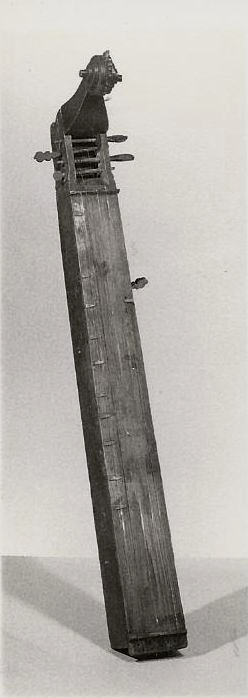
The langeleik is a Norwegian drone zither — a long shallow wooden box with one melody string running over a fretted neck and a number of accompanying drone strings tuned to a fixed harmony. The melody string is stopped by metal tangents arranged in a diatonic scale, and the drone strings sound continuously beneath the melody. The Hornbostel-Sachs system files the instrument at 314.122 — a chordophone of the box-zither type sounded by a plectrum — placing it in the same broad category as the German scheitholt, the Swedish hummel, the French épinette des Vosges and the Appalachian dulcimer.
DBpedia traces the instrument’s development to possibly the 16th century. Today the active langeleik tradition is concentrated almost entirely in the Valdres region of Norway, particularly around the villages of Aurdal, Vang and Slidre.
Origin & History
DBpedia gives the langeleik’s likely development as the 16th century, and several Norwegian church carvings and inventory records of that period support this dating. The instrument is part of the wider European fretted-drone-zither family that flourished from the late Middle Ages through the early modern period across the German-speaking lands and Scandinavia. While the closely related German and Swedish folk-zither traditions (the scheitholt and the hummel respectively) largely faded out as living practices over the 19th and 20th centuries, the langeleik continued in active rural use in the Valdres valleys, where it served as the principal instrument for accompanying social dance and song.
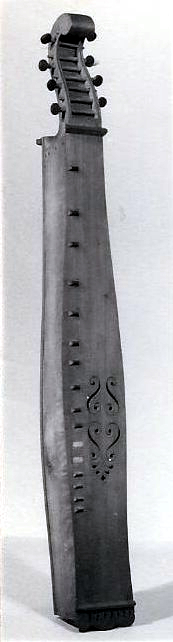
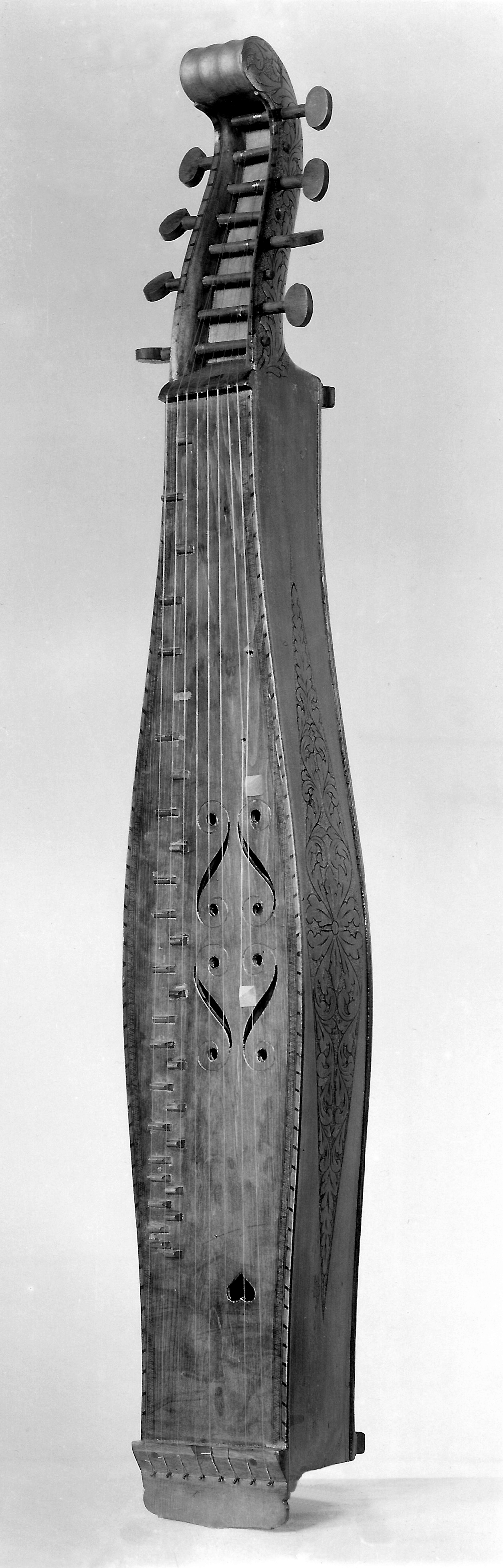
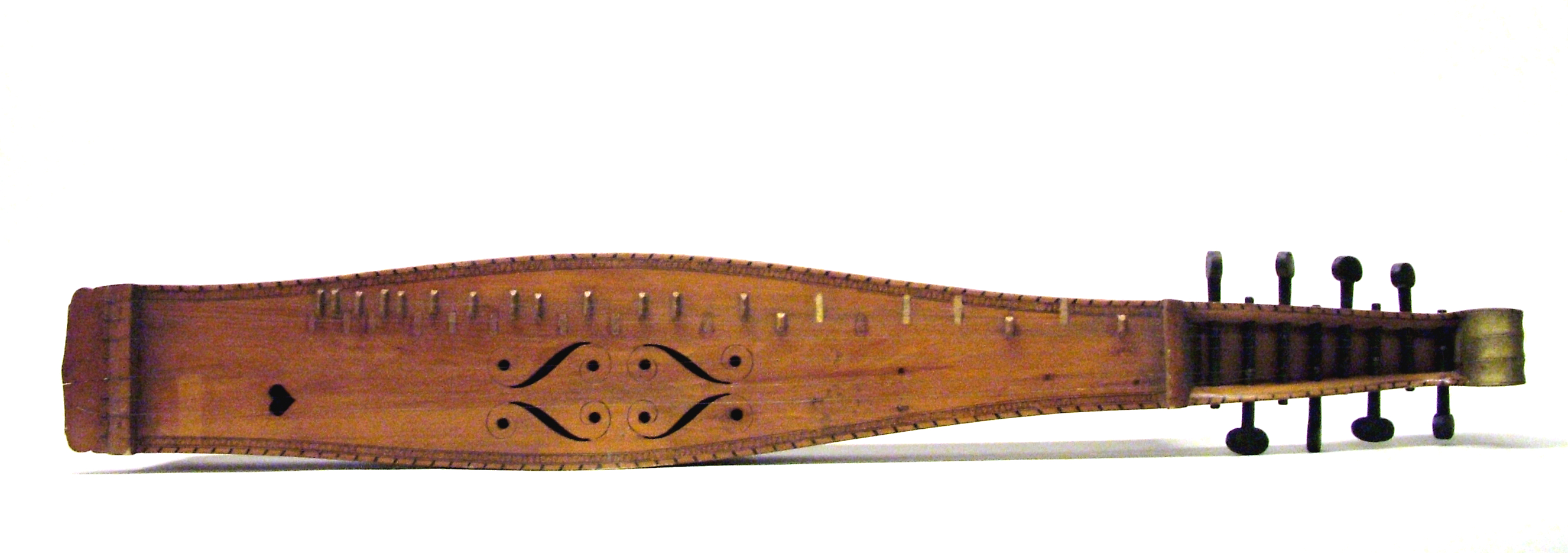
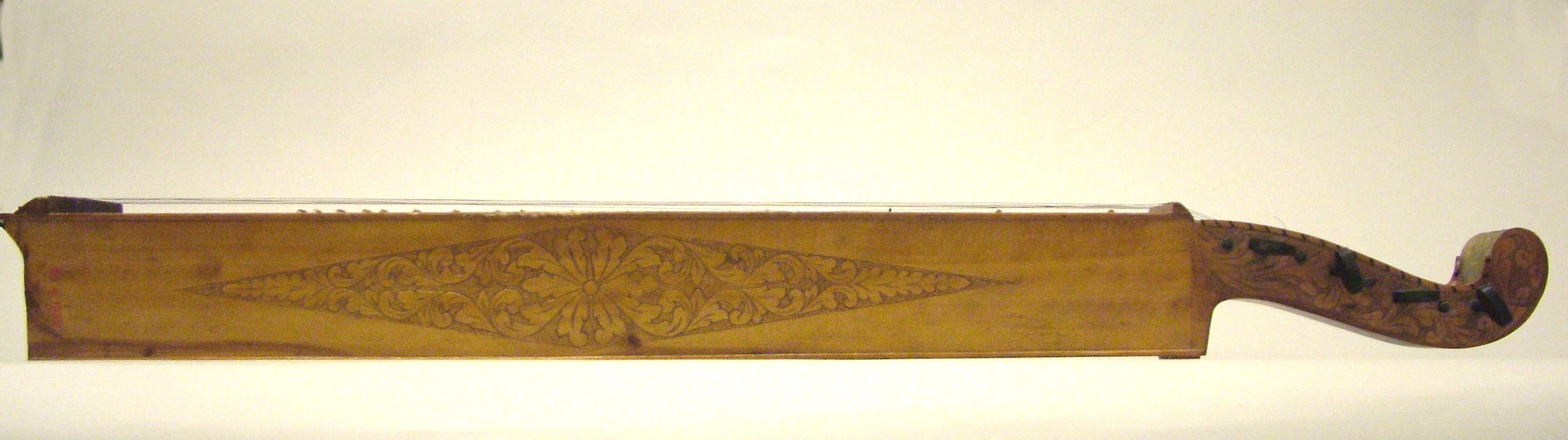
The Metropolitan Museum of Art’s collection holds four Norwegian langeleiks of the 18th century — object 501599 (18th century), object 502451 (late 18th or early 19th century, from Christiania, the historical name for Oslo), object 504750 (precisely dated 1799), and object 505241 (probably 18th century) — all donated to the Crosby Brown Collection in 1889. These four specimens together document the body shape, fret pattern and string count of the instrument across roughly a century of continuous use.
In the late 19th and early 20th centuries the langeleik came under pressure from the spreading Hardanger fiddle and from the harmonium, both of which displaced it as the everyday instrument for dance music in most Norwegian valleys. The Valdres region preserved the tradition almost alone. From the 1950s onward a deliberate revival movement led by players including Reidar Sevåg and Hans Brimi (a Hardanger fiddler also active in langeleik circles) and the modern Valdres playing community has rebuilt the instrument’s place as a documented and taught folk practice.
Construction & Materials
The langeleik is a long flat wooden box, typically between 90 and 120 centimetres long and around 12 to 18 centimetres wide. The body is constructed from spruce or pine for the soundboard and harder local wood — birch, beech or maple — for the back and sides. The bridge and tail block are placed at the two ends of the box; the player’s right end carries the tuning pins and the left end the hitch-pin block. The four MET specimens are all noted as wood and metal, the metal being primarily the strings and a small number of frets.
A typical modern langeleik carries one melody string of metal that runs over a row of metal tangents (frets) set into the upper side of the body, plus seven or eight drone strings of varying gauges that run alongside but pass under or beside the fretted region. The drones are tuned to a major triad on the tonic of the melody scale; the melody string is tuned to the tonic at the open position. The fretting is diatonic — there are no chromatic frets — which gives the instrument a fixed tonality and accounts for its strongly modal character.
How It’s Played
The langeleik is laid flat on a table or on the player’s lap. The player stops the melody string with the fingers or with a small wooden stick called a nod held in the left hand, while the right hand strums the strings — including all the drones — with a plectrum, traditionally a piece of cow-horn or thick leather, sometimes a goose quill. The drone strings sound on every stroke, providing a continuous tonic chord beneath the melody.
Right-hand technique alternates downstrokes that catch all strings with shorter strokes that pick out the melody string alone. The Valdres style uses a vigorous rhythmic strumming pattern that drives the dance — the bygdedans (regional dances) of the Valdres valley were the original repertoire of the instrument and remain its principal repertoire today.
Cultural Significance
The langeleik is a regional emblem of Valdres in central Norway. It has been continuously taught in the area since at least the 18th century and is the focus of an active community of players and makers. The Valdres Folk Music Centre in Fagernes maintains an instrument collection, runs annual langeleik courses, and is the principal institutional home of the tradition. The annual Landskappleik — Norway’s national folk music competition — has held langeleik categories since the 1920s, and Valdres players have historically dominated the competition.
The instrument is also a key example of how a regional folk practice can survive in a single valley while disappearing from the wider cultural landscape. Most other European fretted-drone zithers — the scheitholt, the hummel, the langspil — vanished as living traditions in the 19th or early 20th century. The langeleik, by being held alive in Valdres alone, became one of the best-documented continuous folk-instrument traditions in Northern Europe.
Notable Examples & Recordings
- Anne Hytta, Strålar — modern langeleik recording.
- Ragnhild Furebotten, recordings featuring langeleik in chamber settings.
- Ola Bremnes, contemporary uses of langeleik in Norwegian folk-rock.
- The Valdres Folk Music Centre archive recordings preserve dance music, hymns and ballads from older players including Magnhild Almhjell.
- The Metropolitan Museum’s four 18th-century Norwegian specimens (objects 501599, 502451, 504750 and 505241) are the largest single museum corpus outside Norway.
Related Instruments
- Scheitholt – the German fretted drone zither of the same family.
- – the Swedish version, mostly extinct as a living tradition.
- – the Icelandic relative.
- Épinette des Vosges – the French regional variant from the Vosges.
- Appalachian dulcimer – the American descendant of the same family, brought to the Appalachians by German and Scots-Irish settlers.
Where to Hear It
The Valdres Folk Music Centre in Fagernes, central Norway, runs regular langeleik concerts and the annual Jørn Hilme-stemnet festival, the principal langeleik gathering. Norway’s Landskappleik national competition, held in a different town each year, includes a langeleik class. Outside Norway the instrument is rarely heard live; recordings are available on Norwegian labels Heilo, Grappa, and Etnisk Musikklubb.
- Wikipedia: Langeleik
- Wikidata: Langeleik (Q2744331)
- The MET: Langeleik (object 504750)
- The MET: Langeleik (object 502451)
- Wikimedia Commons: Langeleik
Learning Resources
The Valdres Folk Music Centre in Fagernes is the principal teaching institution. Norges Musikkhøgskole (the Norwegian Academy of Music) in Oslo includes langeleik in its folk-music programme. Method materials in Norwegian include Reidar Sevåg’s foundational scholarship and instructional books published by the Centre. Few English-language method materials exist; the journal Spelemannsbladet (the magazine of the Norwegian folk-musicians’ association) is the primary periodical. A working langeleik from a Valdres maker runs from around 8,000 NOK; antique instruments rarely come on the open market and are normally held within Valdres family lines or by museums.
Frequently Asked Questions
What is a langeleik?
A Norwegian drone zither — a flat wooden box with one fretted melody string and several drone strings, played on the lap or table by strumming with a plectrum.
Is the langeleik related to the Appalachian dulcimer?
Yes. Both belong to the wider European fretted-drone-zither family, and the Appalachian dulcimer is generally accepted to descend from the German scheitholt brought to America by German settlers — a near cousin of the Norwegian langeleik.
Where in Norway is the langeleik played?
Almost exclusively in the Valdres region of central Norway, especially around the villages of Aurdal, Vang and Slidre. The instrument was once played across much of southern Norway but contracted to Valdres in the 19th and early 20th centuries.
How old are the museum specimens?
The Metropolitan Museum of Art’s collection holds four Norwegian langeleiks: object 501599 (18th century), 502451 (late 18th or early 19th century), 504750 (precisely dated 1799), and 505241 (probably 18th century).
Can the langeleik play modern music?
The instrument’s diatonic fretting limits it to a single tonality without retuning, so most repertoire stays within the traditional folk dance and song forms. Some contemporary Norwegian musicians have arranged jazz and modern compositions for retuned or modified langeleiks.


