

Épinette des Vosges
épinette des Vosges
| Category | Strings |
|---|---|
| Country of origin | France (Vosges mountains) |
| Wikipedia | en.wikipedia.org |
| Wikidata | Q17074660 |
Overview
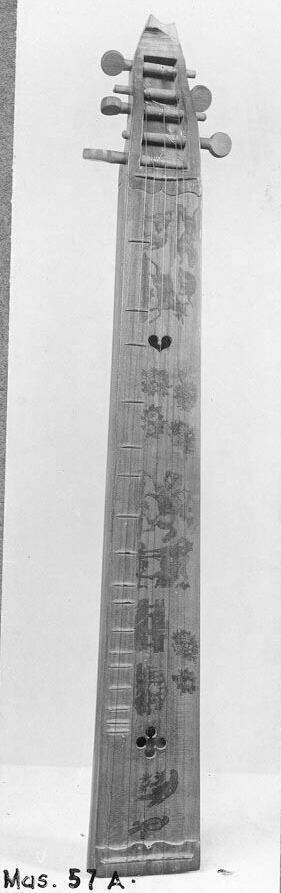
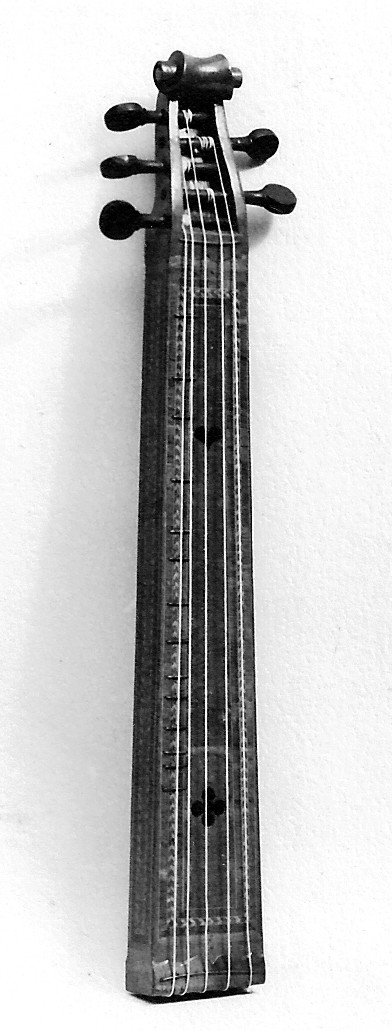
The épinette des Vosges is a small, fretted, plucked zither from the Vosges mountains of north-eastern France. It belongs to the wider European family of fretted folk zithers — the same family that includes the German Scheitholt, the Norwegian langeleik, the Swedish hummel and the Appalachian dulcimer. The instrument is laid flat on a table or on the player’s lap, the melody is fretted on one or two melody strings, and three or four open drone strings sound continuously underneath, producing a quiet, modal, drone-based sound that fits perfectly within French mountain folk repertoire.
Wikidata classifies the instrument as a zither-family fretted string instrument, within the box-zither category. Its DBpedia article is filed under Scheitholt, the German ancestor whose direct descendant the épinette is.
Origin & History
The épinette des Vosges took its modern shape during the 1700s in the high Vosges valleys of the Lorraine region, particularly around Gérardmer, Le Val-d’Ajol and Plombières-les-Bains. Its construction shows clear German influence: Lorraine sat on the historic linguistic border between French and German speakers, and the closely related German Scheitholt was widely played in the Rhineland through the 17th and 18th centuries. The épinette is essentially the French regional development of that ancestor.
For most of its history the épinette was strictly a peasant and family instrument. It was built by local makers, played in the kitchen for evening dancing, and almost never appeared in printed music. Documentation of the instrument before the late 19th century is correspondingly thin, and most of what is known comes from the surviving instruments themselves and from late-19th-century folkloric collecting.
The Metropolitan Museum holds four épinettes des Vosges, all French and all dated to the late 19th century, and together they make up one of the largest single museum sets of the instrument anywhere. Three (objects 501600, 501601 and 501602) entered the Crosby Brown Collection of Musical Instruments in 1889; the fourth (object 505254) was a gift of Alice Getty in 1946. All four are catalogued as Chordophone-Zither-plucked.
The épinette nearly disappeared in the early and mid-20th century with the general decline of French regional folk practice, and was rescued in the 1970s and 80s by a small revival movement led by makers and players in the Vosges and in Paris. Today the instrument has a small but stable following, with annual gatherings in Gérardmer and Le Val-d’Ajol.
Construction & Materials
The épinette is a slim wooden box, roughly 50 to 70 centimetres long and three to five centimetres deep. The body is most often built of fruitwood, walnut or spruce, with a flat soundboard and a flat back joined by ribs. The MET specimens are typical: wood and metal, with the simple late-19th-century construction of a regional folk instrument rather than a luxury production.
The fingerboard runs the length of the soundboard. Frets are diatonic — usually staked into the wood as small wire pins — and reproduce the major scale along the melody string or strings. Three or four open drones are tuned to the tonic and the fifth, in a way that closely parallels the Appalachian dulcimer.
How It’s Played
The player sits with the épinette laid flat on a table, on the knees, or on a small stand. The right hand strums or picks across all the strings together, while the left hand presses the melody string with the fingertips or with a small noter rod. Each strum sounds the melody plus the open drones together, producing a continuous open-fifth harmony under every melodic note.
The technique is very close to that of the Appalachian dulcimer and the Norwegian langeleik. Repertoire is mainly Vosges and Lorraine dance tunes — bourrées, marches, waltzes — and slow ballads.
Cultural Significance
The épinette des Vosges is a strong example of how a single instrument family — the European fretted folk zither — produced regional variants in widely separated places. The Scheitholt of Germany, the langeleik of Norway, the hummel of Sweden, the kannel of Estonia, the Appalachian dulcimer of the southern Appalachian highlands, and the épinette of the Vosges all share the same defining structure (long flat box, fretted melody strings, open drones, lap playing) and all developed within local folk traditions.
In the regional culture of Lorraine the épinette has come to symbolise the older mountain way of life, and it features prominently in tourist and heritage materials in Gérardmer and the surrounding valleys.
Notable Examples & Recordings
The MET’s four French specimens (objects 501600, 501601, 501602, 505254) are documented in the Musical Instruments department. The Musée de la Lutherie et de l’Archèterie Françaises in Mirecourt and the Musée des Vosges in Épinal hold further regional examples.
For listening:
- Christophe Toussaint — modern Vosges player who has recorded extensively in the post-revival repertoire.
- Jean-François Dutertre, Épinette des Vosges — early revival recordings from the 1970s.
- Les Folksingers du Val-d’Ajol — regional ensemble work combining épinette with voice and accordion.
Related Instruments
- Scheitholt – the German fretted box zither and direct ancestor of the épinette.
- Appalachian Dulcimer – the American descendant of the same family, carried by Palatine settlers to the United States.
- Langeleik – the Norwegian regional zither in the same wider family.
- – the Swedish fretted folk zither.
- – the Estonian regional zither.
Where to Hear It
The annual gatherings of the Association des Joueurs d’Épinette in the Vosges, the Plombières-les-Bains festival, and the larger French folk festivals in Saint-Chartier and Châteauroux all feature the instrument. The Musée des Vosges in Épinal holds permanent displays of historical épinettes and runs occasional demonstration concerts.
- Wikipedia: Epinette des Vosges
- The MET: Épinette des Vosges (object 501601)
- The MET: Épinette des Vosges (object 501600)
- The MET: Épinette des Vosges (object 505254)
- Wikimedia Commons: Épinette des Vosges
Learning Resources
The épinette is a relatively easy instrument for beginners thanks to its diatonic fretting; almost any combination of notes sounds harmonious. Method books in French by Christophe Toussaint and Jean-François Dutertre cover the post-revival repertoire and technique. New instruments by Vosges luthiers run from approximately 250 to 800 EUR. Outside France, players approaching the instrument from the Appalachian dulcimer find the playing position and tuning conventions immediately familiar.
Frequently Asked Questions
What family of instruments does the épinette des Vosges belong to?
It is a fretted box zither, in the same family as the German Scheitholt, the Norwegian langeleik, the Swedish hummel, the Estonian kannel and the Appalachian dulcimer.
Where was the épinette des Vosges invented?
It took shape across the Vosges range of north-eastern France during the 1700s, developed from the German Scheitholt that was widely played in neighbouring Lorraine.
Is the épinette related to the Appalachian dulcimer?
Yes. Both descend from the same German Scheitholt ancestor; the Appalachian dulcimer is essentially the form the family took when carried to the eastern United States by Palatine settlers in the 18th century.
How many strings does an épinette have?
Most instruments have four to six strings: one or two melody strings on top of the fingerboard and three or four open drones tuned to the tonic and fifth.
Are old épinettes in museums?
Yes. The Metropolitan Museum holds four French épinettes des Vosges of the late 19th century: objects 501600, 501601 and 501602, all donated through Crosby Brown in 1889, and object 505254, donated by Alice Getty in 1946.
Is the épinette still played today?
Yes. After near-extinction in the mid-20th century the instrument was revived from the 1970s onward, and small annual gatherings in the Vosges keep the playing tradition alive.