
Tiple
Tiple
| Category | Strings |
|---|---|
| Country of origin | Spain / Latin America (16th century) |
| Wikipedia | en.wikipedia.org |
| Wikidata | Q2300910 |
Overview
The tiple is the soprano member of the Latin American guitar family — a small, high-pitched, plucked-string instrument of the wider Spanish-Hispanic vihuela-and-guitar lineage. Wikidata classifies it as a plucked-string chordophone of the guitar family, with a Hornbostel-Sachs number of 321.322 (composite chordophone). DBpedia gives a range of C3 to A5 and notes the closely related Colombian tiple and the Canary Islands timple as the principal regional members of the family.
In modern usage tiple refers to several distinct regional instruments. The Colombian tiple is the most widely known and is the national plucked-string instrument of Colombia; the Puerto Rican tiple jíbaro is a small four-string folk guitar of the Puerto Rican countryside; the Venezuelan and Cuban tiple are small four-string instruments related to the cuatro; and a small Brazilian tiple is documented in 19th-century museum collections.
Origin & History
The tiple takes its name from the Spanish word tiple meaning soprano, and the instrument is a 16th- or 17th-century New World adaptation of the Spanish high-pitched vihuela-derived small guitars carried to the Americas by Spanish colonisers. The earliest documented Latin American instruments were small four- or five-course gut-string guitars used as treble accompaniment instruments in religious and popular music; the modern tiples diverged into their distinct regional forms during the 18th and 19th centuries as each region developed its own folk and salon repertoire.
The Colombian tiple emerged in the central Colombian Andean region (Boyacá, Cundinamarca, Antioquia, Tolima, Caldas) during the 18th and 19th centuries as a 12-string instrument arranged in four triple courses, designed specifically for the rhythmic accompaniment of the bambuco, the pasillo and other central-Colombian Andean genres. By the late 19th century the Colombian tiple was firmly established as the central rhythmic instrument of the Colombian trío típico (the standard Colombian folk trio of bandola, tiple and guitar).
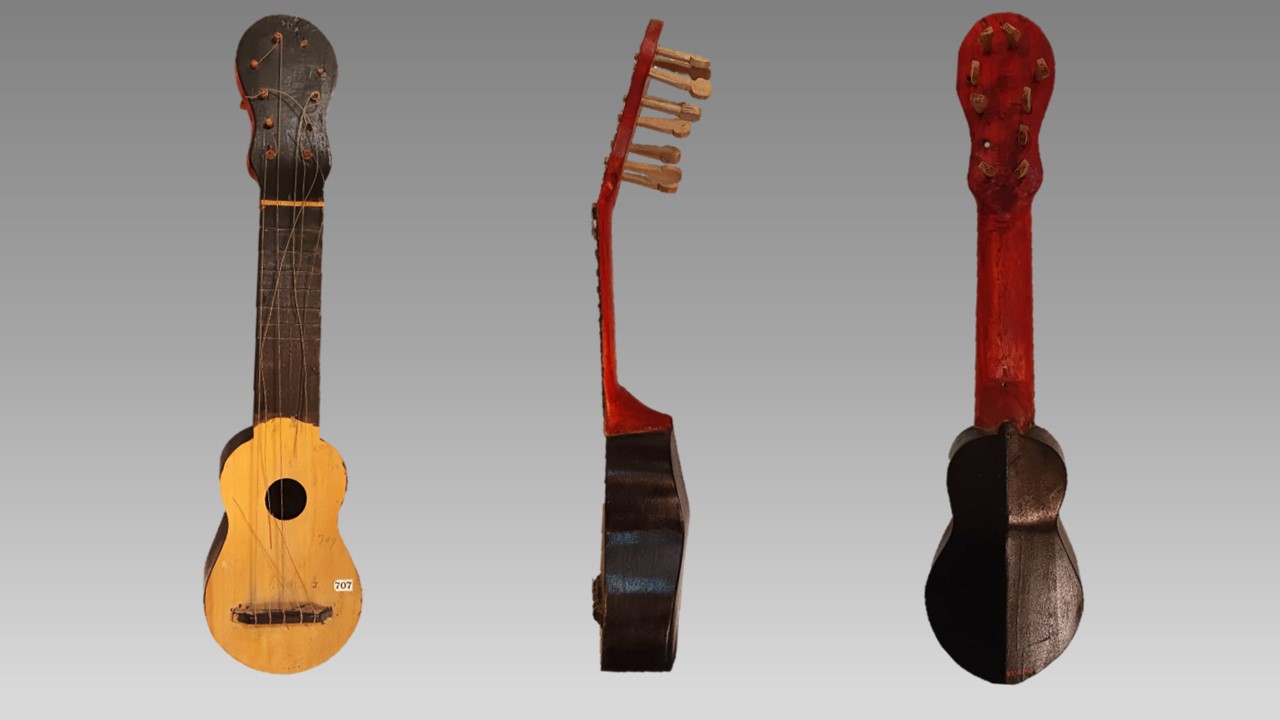
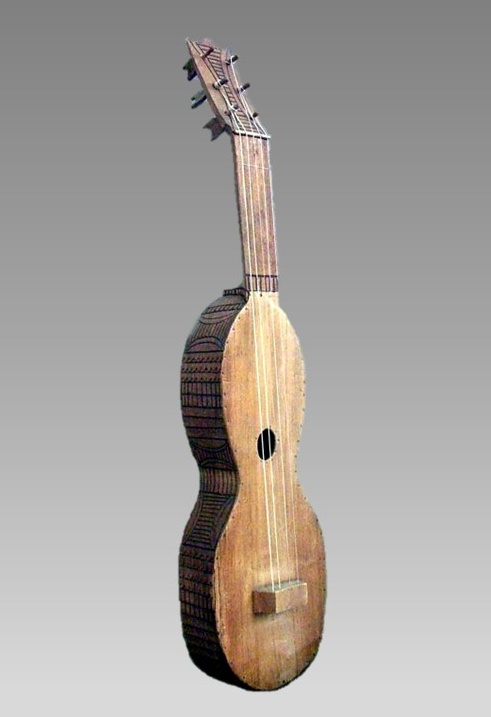
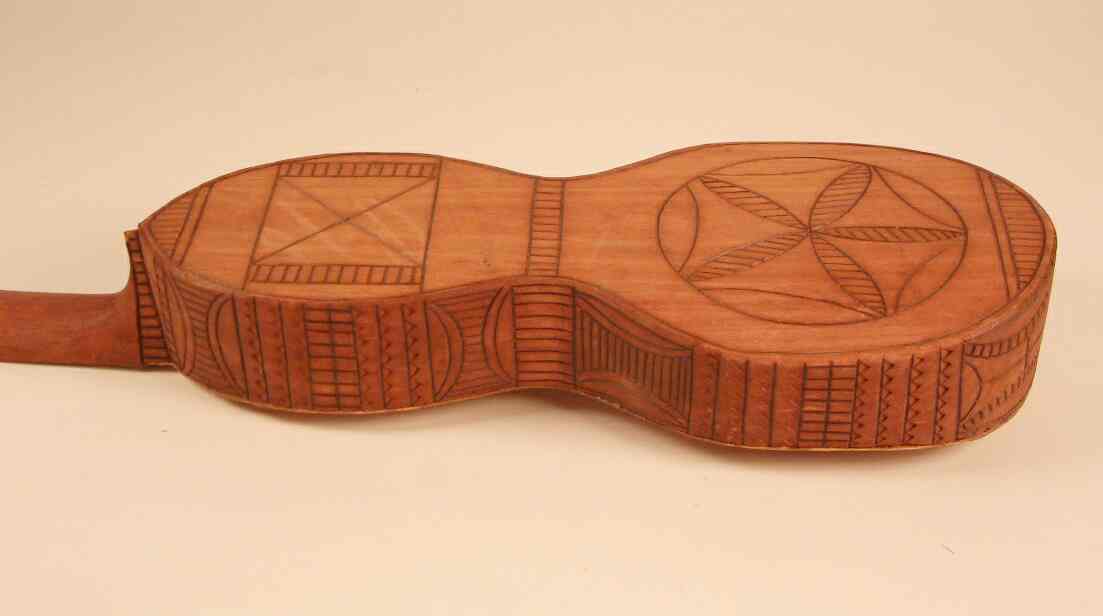
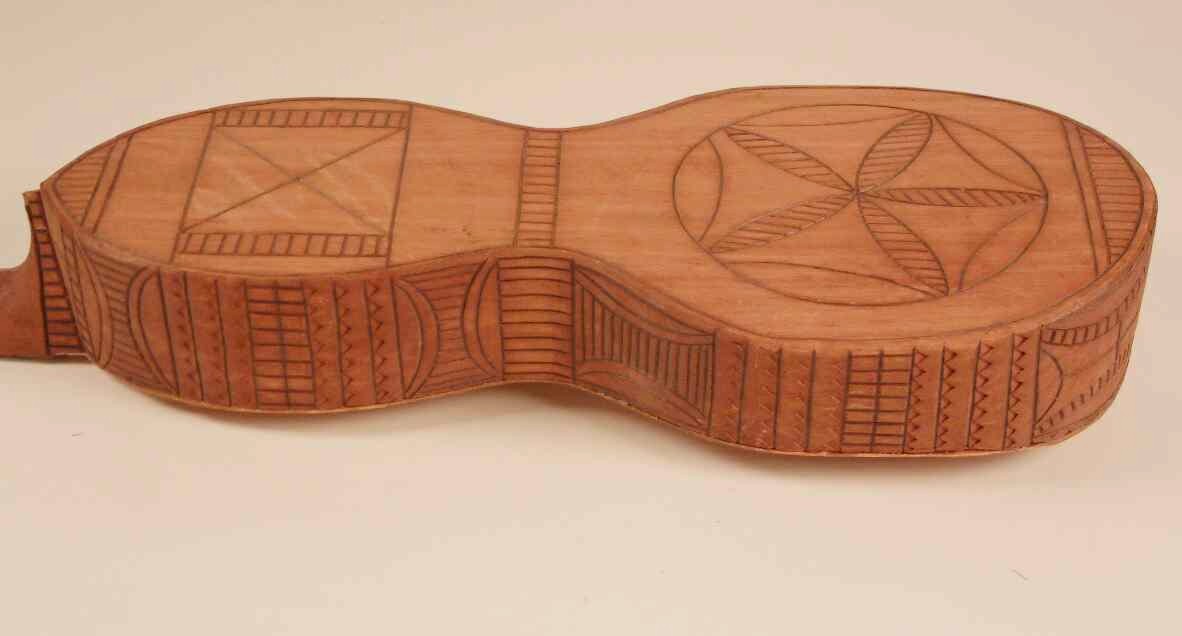
The Puerto Rican tiple jíbaro developed in parallel as a small folk guitar of the Puerto Rican countryside, used to accompany décimas (improvised ten-line poetic stanzas in the Spanish aguinaldo and seis traditions). The Metropolitan Museum’s collection holds a late-19th-century Puerto Rican Jíbaro guitar (object 503576), and a 19th-century South American (probably Brazilian) tiple (object 501323), documenting the geographic spread of the family.
The Venezuelan tiple — closely related to the more famous Venezuelan cuatro — is a smaller four-string instrument used in joropo and Venezuelan folk music. The Cuban tiple, sometimes called tiple cubano, is a small four-string treble instrument used in older Cuban son and guajira ensembles, now relatively rare.
Construction & Materials
The Colombian tiple has a small classical-guitar-shaped body around 35 cm long, a relatively short fretted neck, and 12 metal strings arranged in four triple courses. Each course consists of three strings: in the inner two courses, the central string is tuned an octave below the outer two; in the outer courses, all three strings sound at the same octave. This octavado tuning is the principal source of the Colombian tiple’s characteristic shimmering, bell-like sound. The standard tuning is D4-G4-B4-E5 (with octave doublings as described).
The Puerto Rican tiple jíbaro is smaller still — typically around 30 cm in body length — and carries four single strings of metal or gut. The Venezuelan and Cuban tiples are also four-string instruments, typically tuned to a high open chord. All variants use spruce or cedar tops with rosewood, mahogany or local hardwood backs and sides.
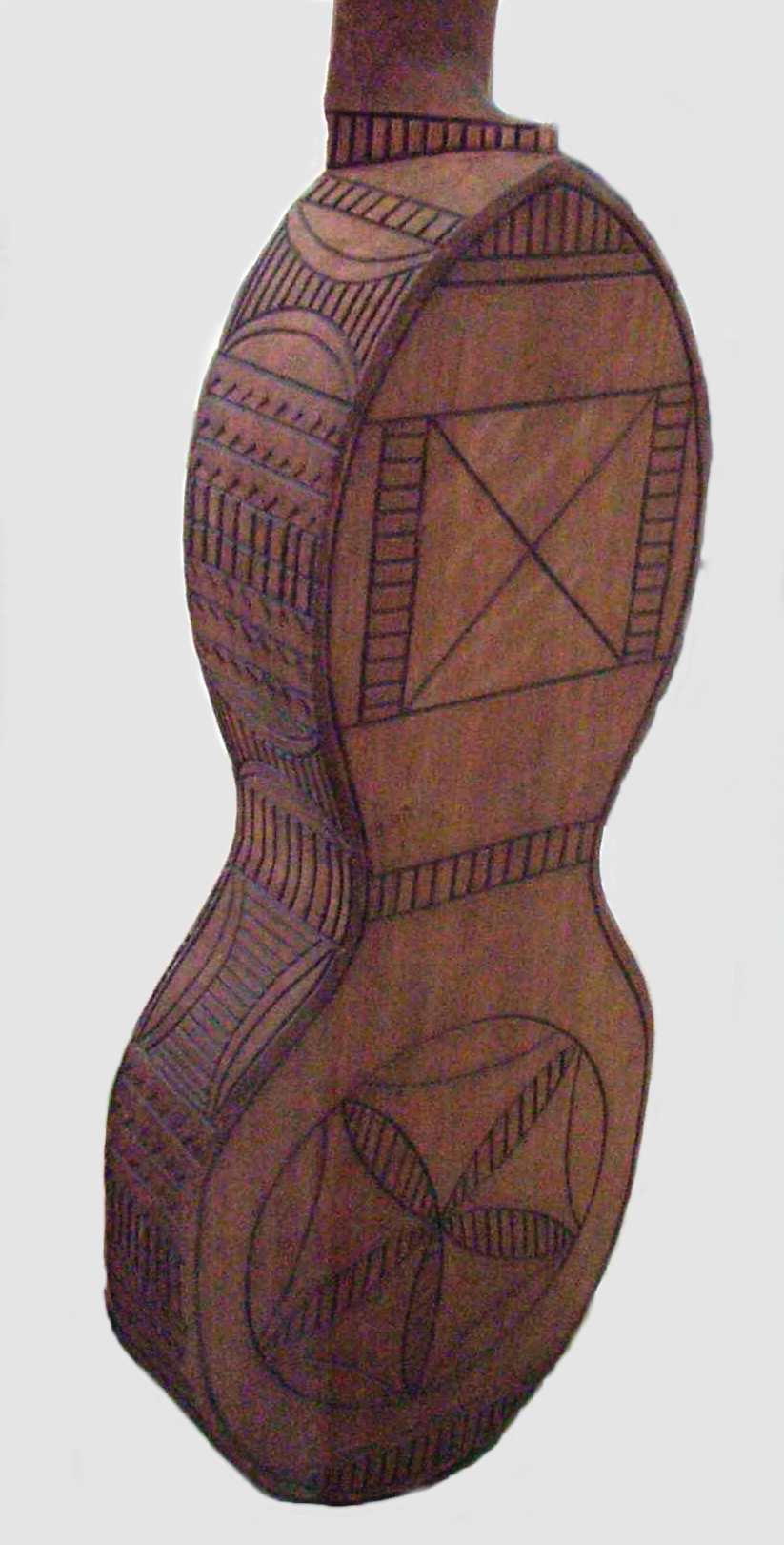
The MET’s Brazilian or South American specimen (object 501323) is described as wood and metal, a 19th-century instrument that documents the family in a region (Brazil) where the tiple has not survived as a major living tradition. The Puerto Rican specimen (object 503576) is documented as a Jíbaro guitar from late-19th-century Puerto Rico, a regional name for the local tiple form.
How It’s Played
The Colombian tiple is held against the body in standard guitar position and played with a flat plectrum, with the fingertips, or with a combination of thumb-and-fingers (pulgar y dedos) technique borrowed from classical guitar. The instrument’s primary role in Colombian trío típico music is rhythmic-and-harmonic accompaniment: the tiplista plays the requinteo (a syncopated rhythmic pattern characteristic of the bambuco in 6/8 time) and provides the chordal foundation under the bandola’s melody and the guitar’s bass line. A skilled tiplista can also play melodic solos on the upper courses.
The Puerto Rican tiple jíbaro is played with a plectrum and a strumming technique close to that of the Puerto Rican cuatro. It is used as accompaniment to décima singing and as a melodic instrument in the wider Puerto Rican folk repertoire. The Venezuelan and Cuban tiples are similarly used as rhythm-section instruments in their respective regional ensembles.
Cultural Significance
In Colombia the tiple is the national plucked-string instrument and is officially recognised by the Colombian government as part of the national cultural heritage. Every significant Colombian city has at least one tiple-bandola-guitar trio active in the local cultural circuit; the Mono Núñez festival in Ginebra (Valle del Cauca), held annually since 1975, is the principal Colombian event for música andina colombiana and the tiple’s annual showcase. The tiple is studied in the conservatories of Bogotá, Medellín and Manizales as a full classical instrument with its own concert repertoire by composers including Luis Uribe Bueno and Gentil Montaña.
In Puerto Rico the tiple jíbaro is part of the folk music heritage of the Puerto Rican countryside and is associated with the aguinaldo (Puerto Rican Christmas carolling tradition) and the seis dance forms. In Venezuela and Cuba the tiple has a smaller but persistent presence in regional folk music.
Notable Examples & Recordings
- Gentil Montaña, La Tiple Colombiana — definitive concert recordings of the Colombian tiple repertoire.
- Trío Morales Pino, classic 20th-century Colombian trío típico recordings.
- Diego Estrada Montoya, modern Colombian tiple concert work.
- Trio Vegabajeño, Puerto Rican tiple jíbaro in the trío format.
- Ramito (Florencio Morales Ramos), classic Puerto Rican jíbaro recordings featuring tiple.
- The MET’s two specimens (501323 South American and 503576 Puerto Rican) document the geographic range of the family.
Related Instruments
- Cuatro – the Venezuelan and Puerto Rican four-string guitar, closely related to the regional tiples.
- Bandola – the Colombian melodic plucked instrument that pairs with the tiple in trío típico.
- Charango – the Andean small high-pitched guitar from a parallel Spanish-colonial lineage.
- – the Canary Islands small five-string guitar, the closest living European relative.
- Vihuela – the Spanish Renaissance ancestor of the wider family.
Where to Hear It
In Colombia the Mono Núñez festival, the Festival Nacional del Bambuco in Neiva, and the regular concert programming of the Banco de la República’s cultural centres in Bogotá, Medellín and Cartagena are major tiple performance venues. Puerto Rican jíbaro festivals — the Festival Nacional del Pleitero in San Sebastián and the Christmas-season Trulla and Aguinaldo events — feature tiple jíbaro. International appearances are limited but Colombian trío típico groups appear regularly at Latin American cultural festivals in Madrid, New York and Miami.
- Wikipedia: Tiple
- Wikidata: Tiple (Q2300910)
- The MET: Tiple (object 501323)
- The MET: Jíbaro Guitar (object 503576)
- Wikimedia Commons: Tiples
Learning Resources
In Colombia the principal teaching institutions are the Universidad Nacional de Colombia in Bogotá, the Universidad de Antioquia in Medellín, and the Universidad de Caldas in Manizales, all of which offer formal tiple programmes. The Fundación Mono Núñez runs annual workshops. In Puerto Rico the Instituto de Cultura Puertorriqueña and the University of Puerto Rico maintain tiple jíbaro teaching programmes. Method books include Gentil Montaña’s classical tiple compositions and the Método para Tiple of Luis Uribe Bueno. A serviceable Colombian tiple from a Bogotá or Medellín maker runs from 250 to 800 USD; concert-grade hand-made instruments by recognised luthiers run from 1,200 USD upward.
Frequently Asked Questions
What is a tiple?
A small high-pitched plucked-string instrument of the Latin American guitar family. The Colombian tiple is the most widely known; the Puerto Rican tiple jíbaro, the Venezuelan tiple and the Cuban tiple are regional variants.
How many strings does a Colombian tiple have?
Twelve, arranged in four triple courses. Each course has three strings; the inner courses have an octave-doubled middle string, giving the instrument its characteristic shimmering tone.
Where did the tiple come from?
From the Spanish vihuela-and-small-guitar tradition that crossed the Atlantic in the 16th and 17th centuries. The Colombian, Puerto Rican, Venezuelan and Cuban tiples are 18th- and 19th-century regional adaptations of the Spanish concept.
What kind of music is the tiple used for?
In Colombia, the bambuco, pasillo, guabina and other central-Colombian Andean genres in trío típico format. In Puerto Rico, aguinaldos, seis and décima singing accompaniment. In Venezuela and Cuba, regional folk-music styles including joropo and son.
Is the tiple a difficult instrument to learn?
The basic strumming technique is straightforward, but the Colombian tiple’s requinteo rhythmic patterns and triple-course intonation require considerable study. A guitar player can transfer to tiple in a few months for basic accompaniment; concert-level playing typically takes several years of focused study.