.jpg)
.jpg)
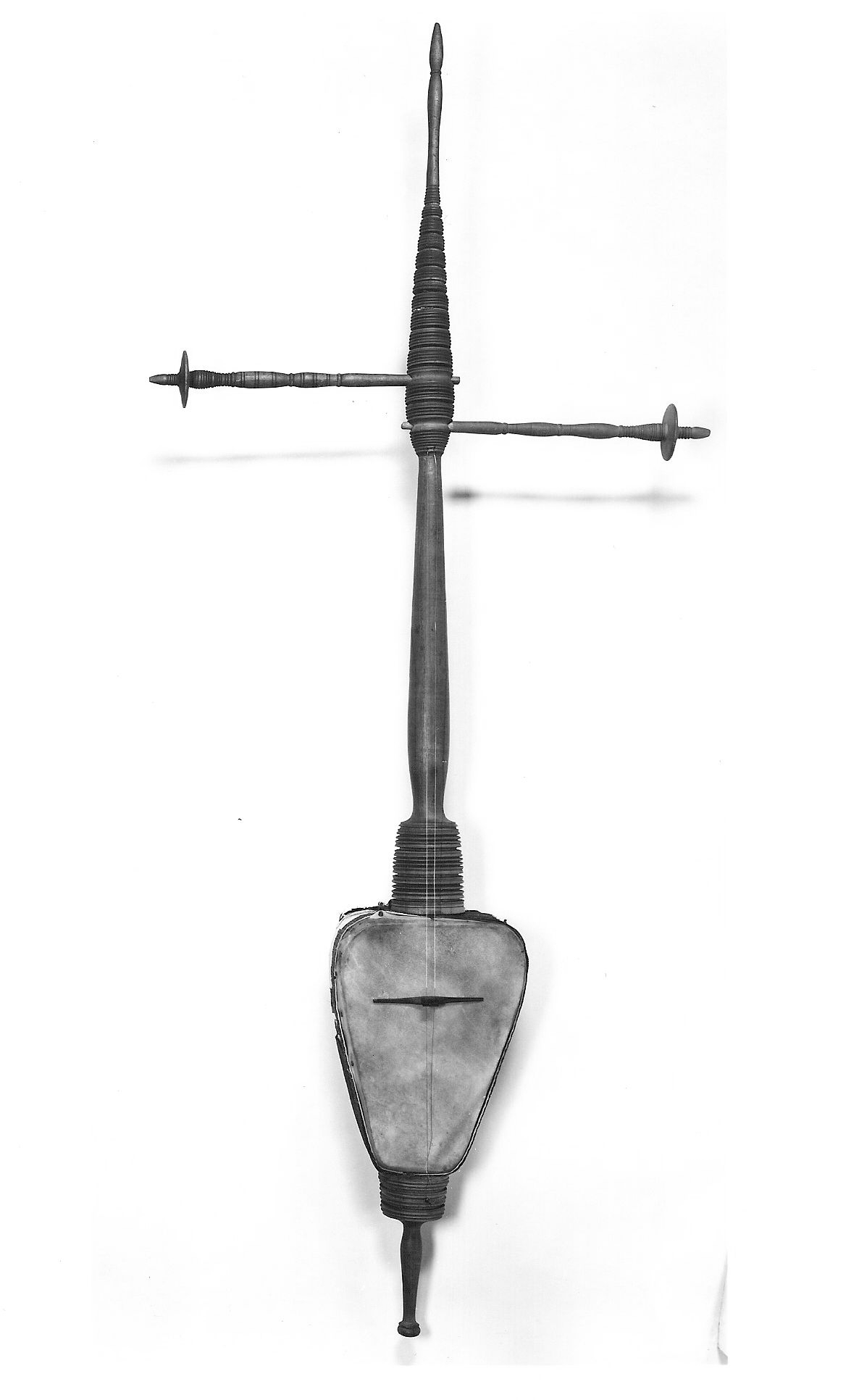
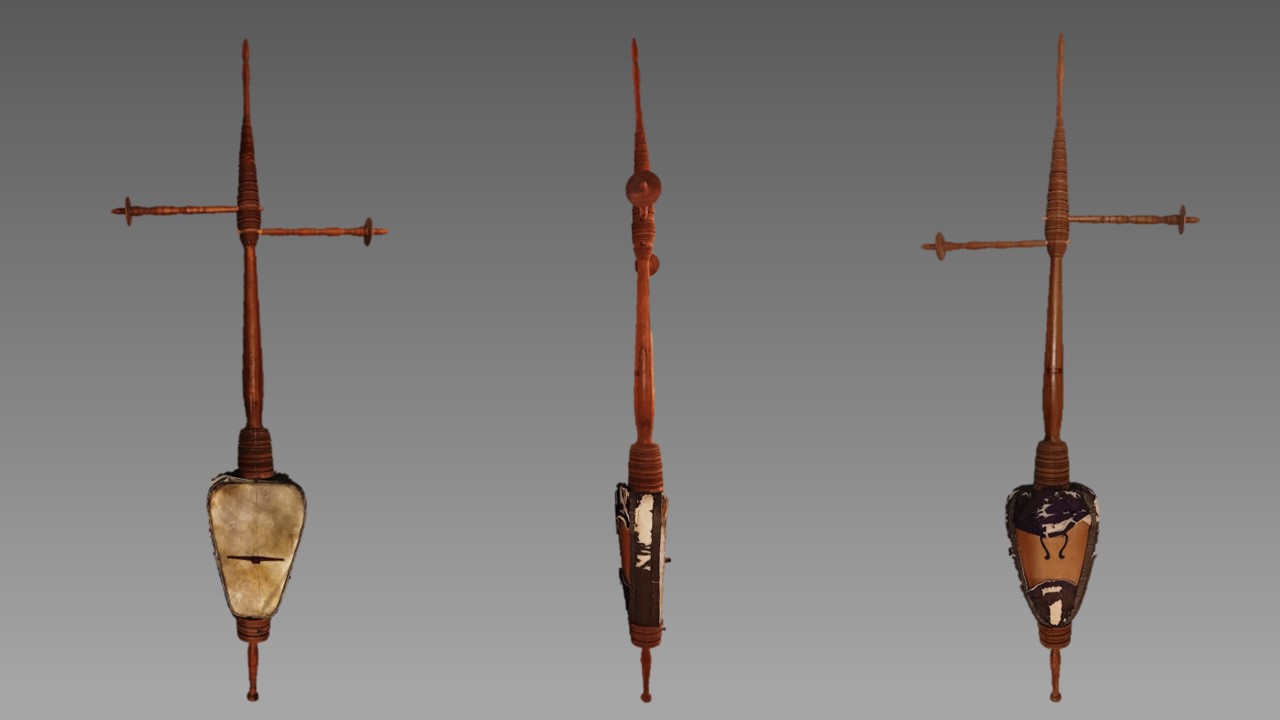
Rebab
رباب / rebab
| Category | Strings |
|---|---|
| Country of origin | Middle East / North Africa |
| Classification | gamelan, musical instrument, string instrument |
| Wikipedia | en.wikipedia.org |
| Wikidata | Q623509 |
Overview
The rebab is not one instrument but a wide family of bowed string instruments that share a name and a broad design heritage across the Islamic world — from Morocco to Indonesia, by way of the Arabian peninsula, Iran, Central Asia, the Balkans, and Sub-Saharan Africa. The shared features are minimal but distinctive: a small carved wooden body, a long neck, one to three strings, and a bow.
The instrument’s importance in music history is hard to overstate. It is one of the principal candidates for the ancestor of the European bowed-string family — the rebec, the medieval fiddle, and ultimately the violin all show structural debts to the Arabic instrument that was carried into medieval Europe through al-Andalus, Sicily, and the wider Mediterranean trade.
Origin & History
The rebab took shape in the medieval Islamic world, with documented references in Arabic musical treatises from at least the 9th century. Al-Farabi, writing in the 10th century, described the instrument in his Kitab al-Musiqa al-Kabir. The instrument spread with Islamic culture through the Maghreb, Iberia, the Sahel, the Indian Ocean trade routes to South and Southeast Asia, and along the Silk Road into Central Asia.
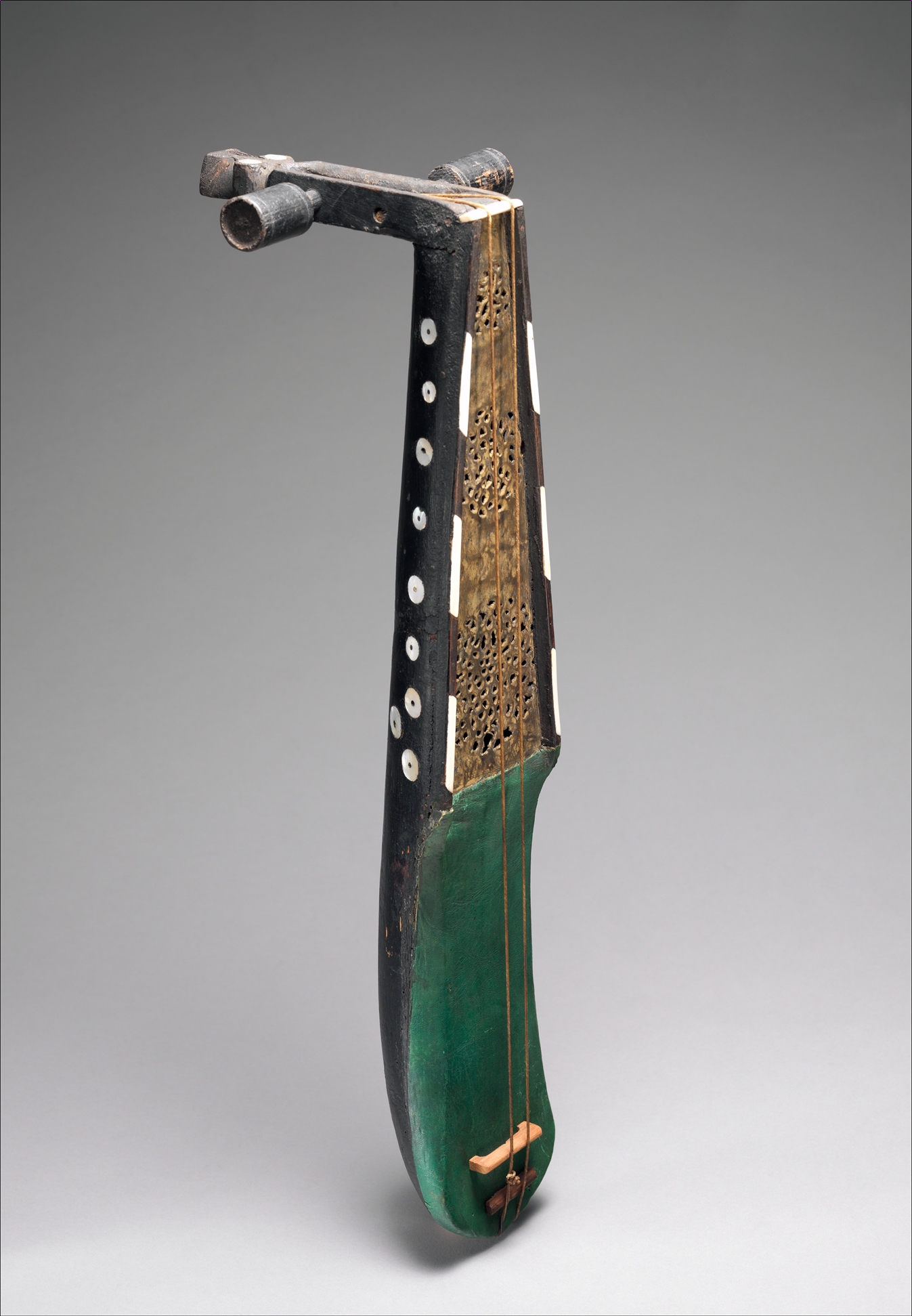
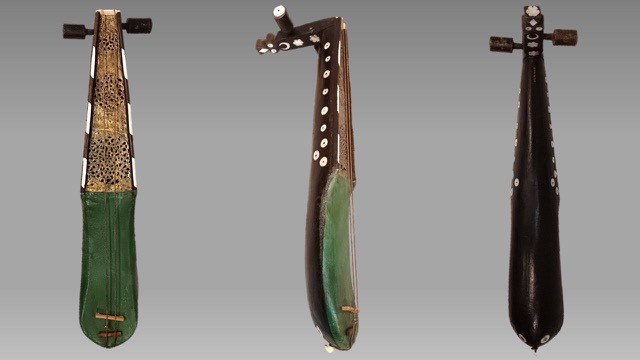
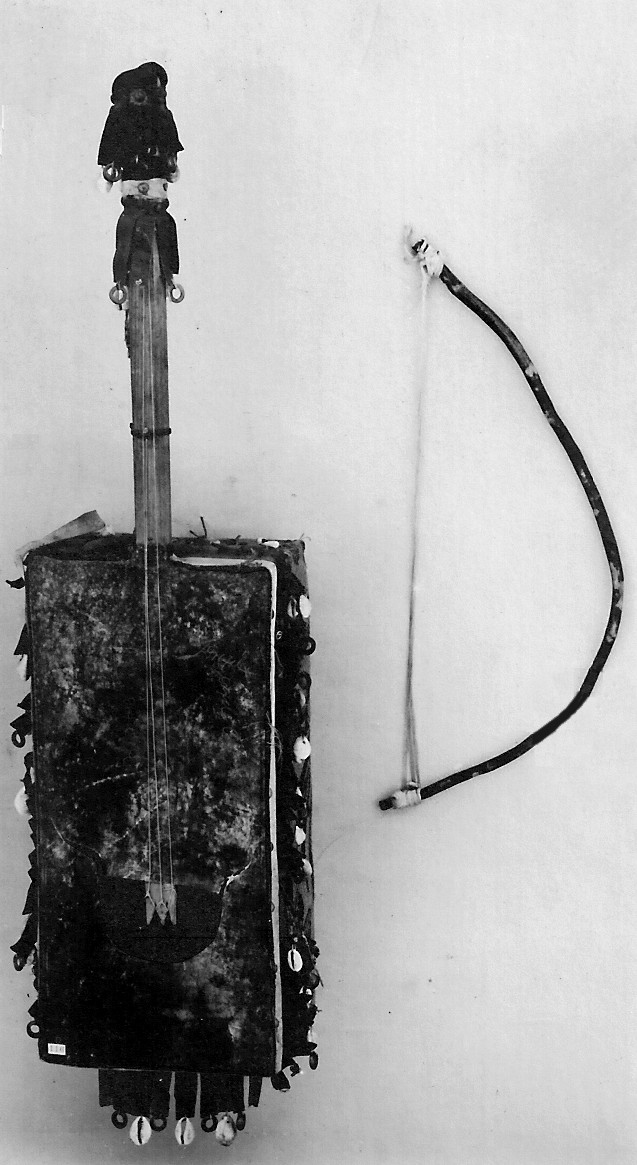
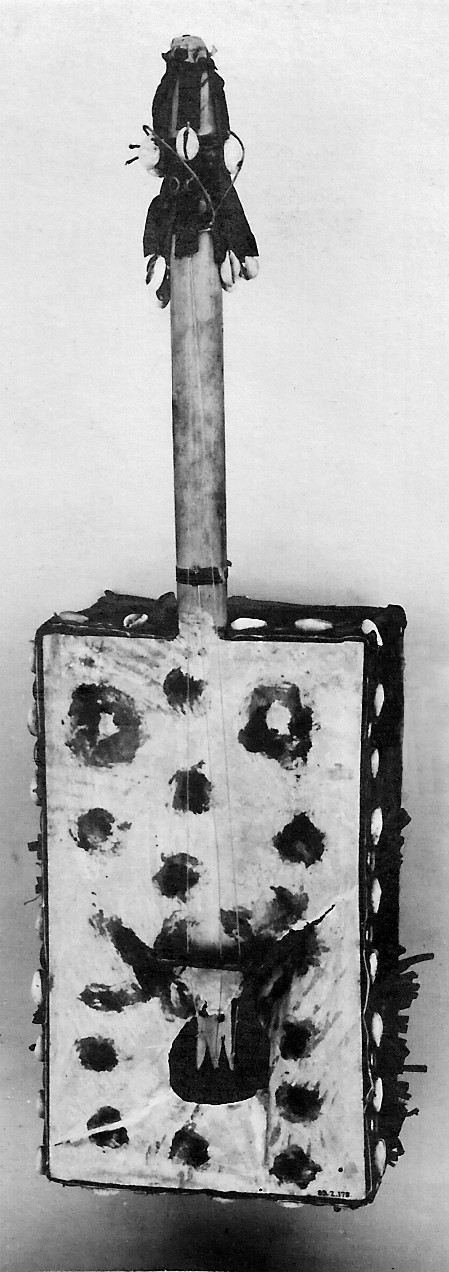
The Metropolitan Museum’s collection holds three rebab specimens that demonstrate the family’s geographic spread within the late 19th century alone. An Algerian or Moroccan rebab (MET object 501021) is built from wood, parchment and metal. A Saudi Arabian instrument (MET 500567) uses wood, leather and shells. A third, possibly Moroccan rebab (MET 500566) is made of wood and parchment. All three sit in the museum’s Musical Instruments department and document three distinct branches of the same family.
In Indonesia, the local rebab developed quite separately from any of these and now functions as a central melodic instrument in Javanese and Balinese gamelan. In Iran the related kamancheh — closely descended from the same root — became the principal bowed instrument of Persian classical music. In medieval Spain the rebab gave rise to the European rebec.
Construction & Materials
The Hornbostel-Sachs system places the various rebab forms in subgroups of 321 (composite chordophones). The body is normally small and either carved from a single block of wood or built from a wooden frame covered with stretched skin or parchment. The neck is long, often unfretted, and topped with a simple peg-box.
The MET specimens illustrate the material range of the late-19th-century instrument. The Algerian or Moroccan rebab (object 501021) and the possibly Moroccan example (500566) both use wood and parchment in the typical Maghrebi style. The Saudi Arabian instrument (500567) substitutes leather and adds shell decoration — a different material vocabulary appropriate to the Arabian peninsula’s craft tradition. Strings vary by region: gut in some traditions, horsehair in Central Asia, metal in some modern variants.
The Indonesian rebab (not represented in the MET specimens above) is an outlier in the family, with a small triangular body covered in fine sheet metal or parchment and two strings tuned a fifth apart.
How It’s Played
In most traditions the rebab is held vertically — either on the lap, between the knees, or on the floor — with the neck pointing upward. The right hand draws a curved horsehair bow across the strings; the left hand stops the strings against the open neck (most rebabs have no fingerboard, instead using fingertip pressure on the side of the neck).
The instrument is well suited to long, sustained, ornament-rich melodic lines. In Arabic art music it carries the taqsim (melodic improvisation) function in some regional traditions. In Javanese gamelan the rebab is one of the leading melodic instruments, weaving a singing line above the bronze percussion. In Persian classical music the closely related kamancheh fills a comparable role.
Cultural Significance
The rebab’s importance lies in its sheer geographic reach. Few instruments connect so many different musical traditions through a single name and shared ancestry — Maghrebi Andalusian classical music, Arabian peninsula folk traditions, Persian classical music, Central Asian maqam music, Indian Ocean traditions, Indonesian gamelan, and the European bowed-string family all owe something to the broader rebab lineage.
For students of music history the instrument is therefore particularly valuable as a case study in how a single design idea, carried by trade and religion, can be locally absorbed and reshaped into many distinct musical roles.
Notable Examples & Recordings
The three MET specimens (objects 501021, 500566 and 500567) cover Maghrebi and Arabian branches of the family in the same collection. For listening, recordings of Andalusian classical music — particularly by ensembles in Tetouan and Fez — feature the Maghrebi rebab. Indonesian gamelan recordings by ensembles such as Gamelan Sekar Jaya feature the Javanese rebab. Persian kamancheh recordings by Kayhan Kalhor demonstrate the closely related Iranian branch.
Related Instruments
- Kamancheh – the Persian and Azerbaijani spike fiddle, closely related
- – the medieval European fiddle that descends from the Arabic rebab
- Sarangi – the north Indian bowed instrument from the same broad fiddle family
- Erhu – the Chinese two-string fiddle, more remote relative
- – the West African one-string spike fiddle from a parallel tradition
Where to Hear It
The rebab is performed in dozens of distinct traditions worldwide. Andalusian classical concerts in Morocco, Algeria and Tunisia feature the Maghrebi rebab; gamelan performances in Java and Bali use the Indonesian rebab; Persian and Azerbaijani classical music feature the kamancheh; and Central Asian maqam concerts feature local variants. The Wikimedia Commons category for rebab collects images and audio across these traditions.
- Wikipedia: Rebab
- The MET: Rebab Algerian/Moroccan (object 501021)
- The MET: Rebab Saudi Arabian (object 500567)
- The MET: Rebab possibly Moroccan (object 500566)
- Wikimedia Commons: Rebab
Learning Resources
The route into rebab playing depends entirely on which regional tradition the student wishes to enter. Andalusian classical study is most easily pursued in Morocco; gamelan rebab in Java or Bali; Persian kamancheh through one of the established schools in Tehran or in diaspora institutions in Europe and North America. The Tehran Conservatory and the Institut Supérieur de Musique in Tunis both offer formal training. English-language method books are scarce; recordings and travel for study remain the primary routes for serious students.
Frequently Asked Questions
What family is the rebab in?
It is a composite chordophone, bowed, with various subclassifications in Hornbostel-Sachs group 321 depending on regional variant.
Where did the rebab originate?
In the medieval Islamic world, with documented references from at least the 9th century. From there it spread across North Africa, the Arabian peninsula, Iran, Central Asia, the Indian Ocean rim, and into Europe.
Is the rebab the ancestor of the violin?
The rebab is one of the principal candidates for the ancestor of the European bowed-string family. The medieval European rebec is its direct descendant, and the rebec in turn contributed to the lineage that produced the violin.
Are old rebabs in museums?
Yes. The Metropolitan Museum of Art holds three late-19th-century rebabs (objects 501021, 500566 and 500567) covering Maghrebi and Arabian branches of the family.
How is the rebab different from the kamancheh?
The kamancheh is the Persian and Azerbaijani branch of the same broader family, with a spherical or hemispherical body and four metal strings; the rebab proper has many more variants and is generally smaller, with one to three strings.
Is the rebab difficult to learn?
Producing a clean bowed tone on a small unfretted neck takes considerable practice. Each regional tradition then carries its own ornament vocabulary and modal system, requiring years of study.


