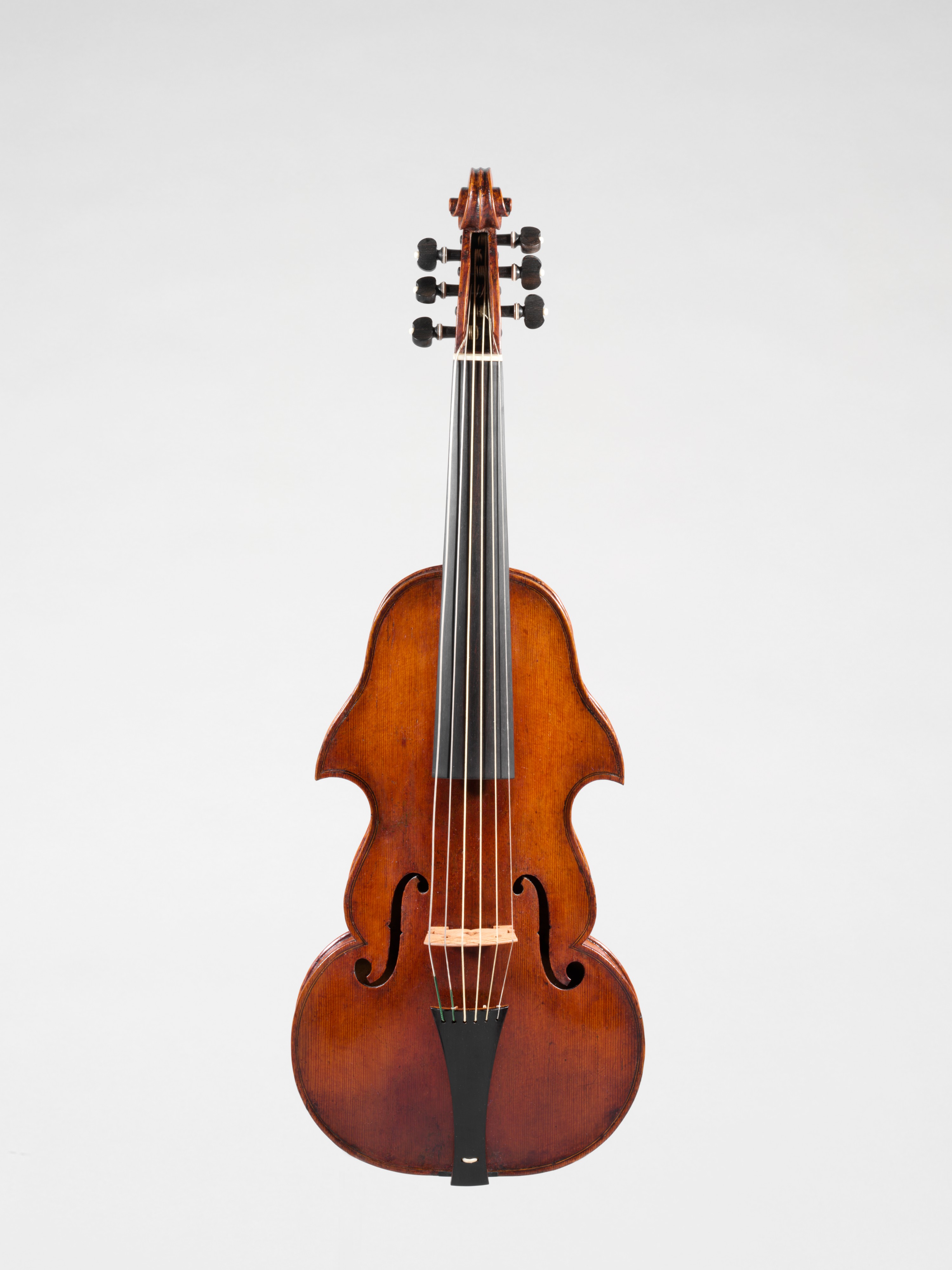
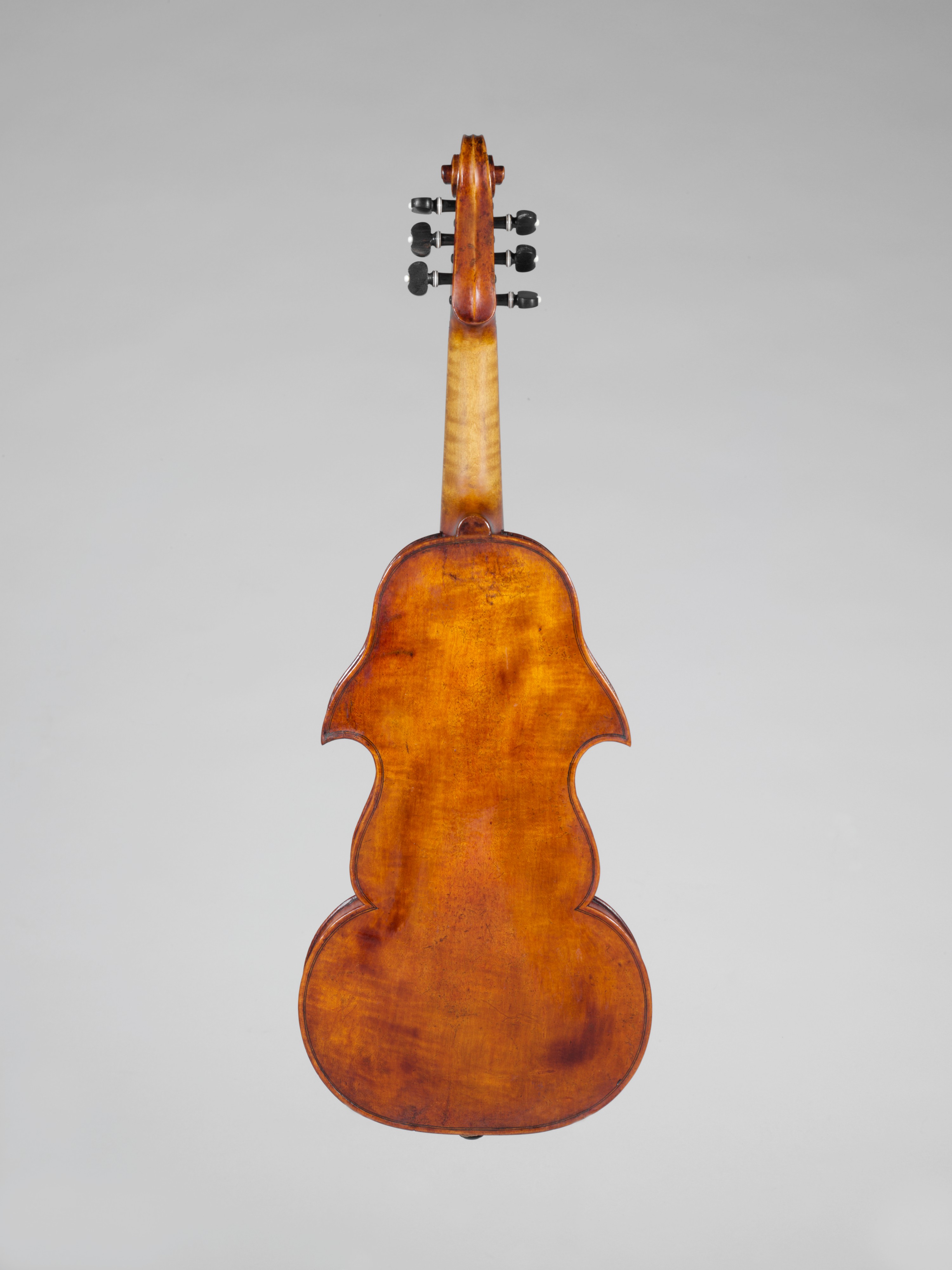
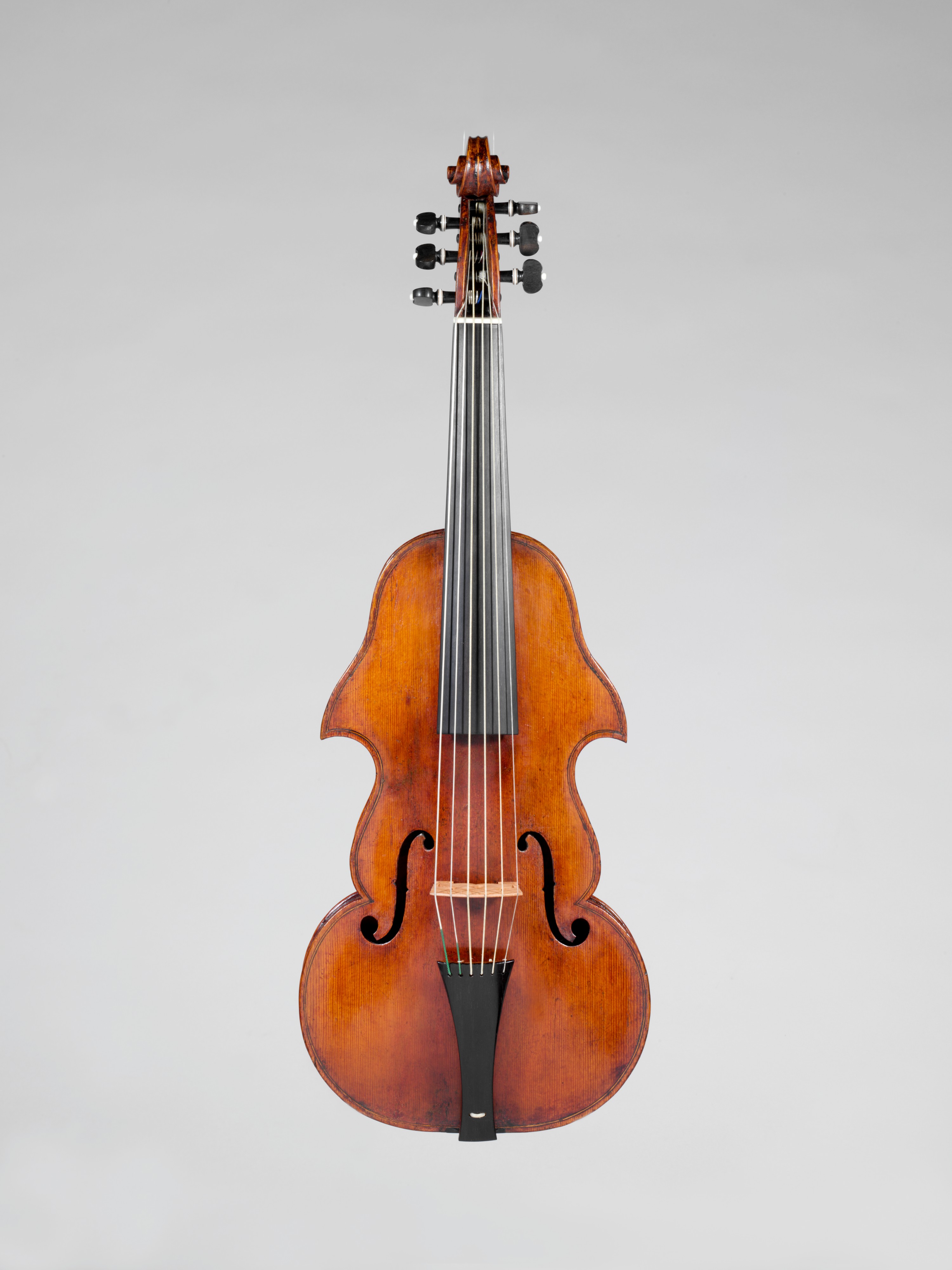
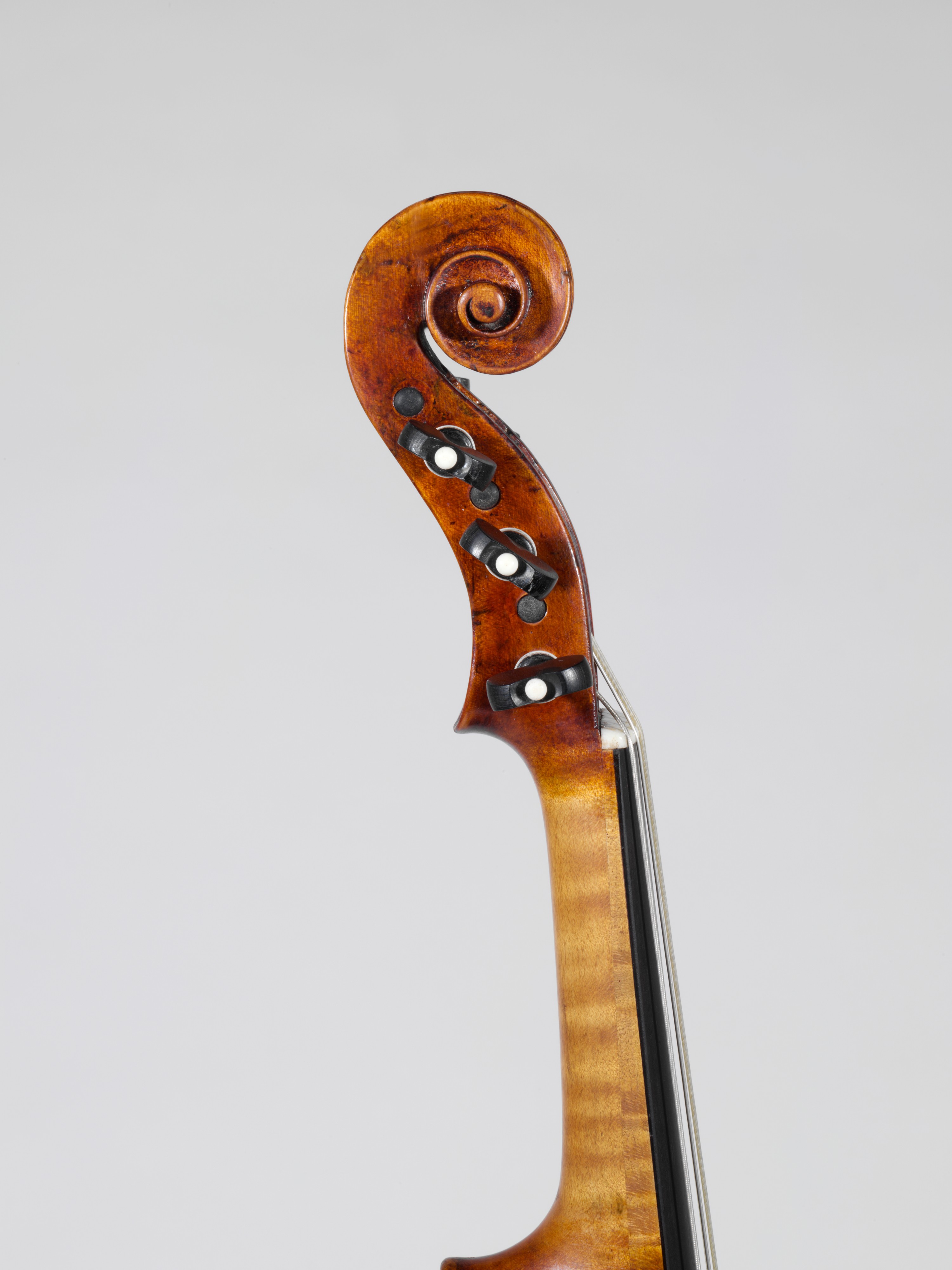

Viola d’Amore
viola d'amore
| Category | Strings |
|---|---|
| Country of origin | Late 17th-century central Europe |
| Classification | type of musical instrument |
| Wikipedia | en.wikipedia.org |
| Wikidata | Q742180 |
Listen
Audio: Jeuwre, CC BY-SA 4.0 / via Wikimedia Commons
Overview
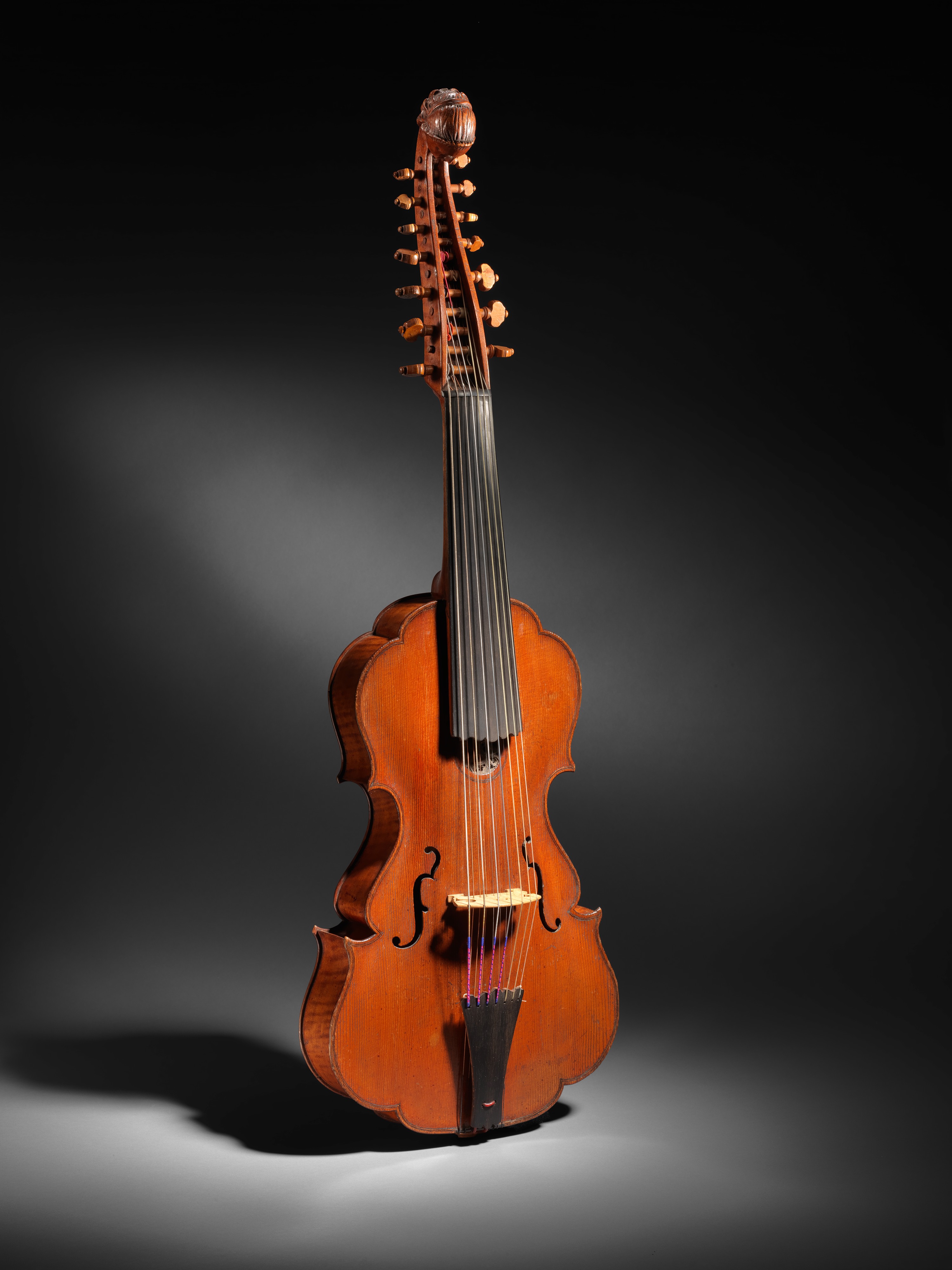
The viola d’amore is a bowed string instrument of the Baroque period with seven (sometimes six) playing strings and a matching set of sympathetic strings — fine wires running under the fingerboard that resonate sympathetically with the bowed strings, lending the instrument a soft, silvery, ringing tone. It sits between the violin family and the viol family in size, in playing position and in design, and it has no single direct modern descendant; it remains today essentially the same instrument it was around 1700.
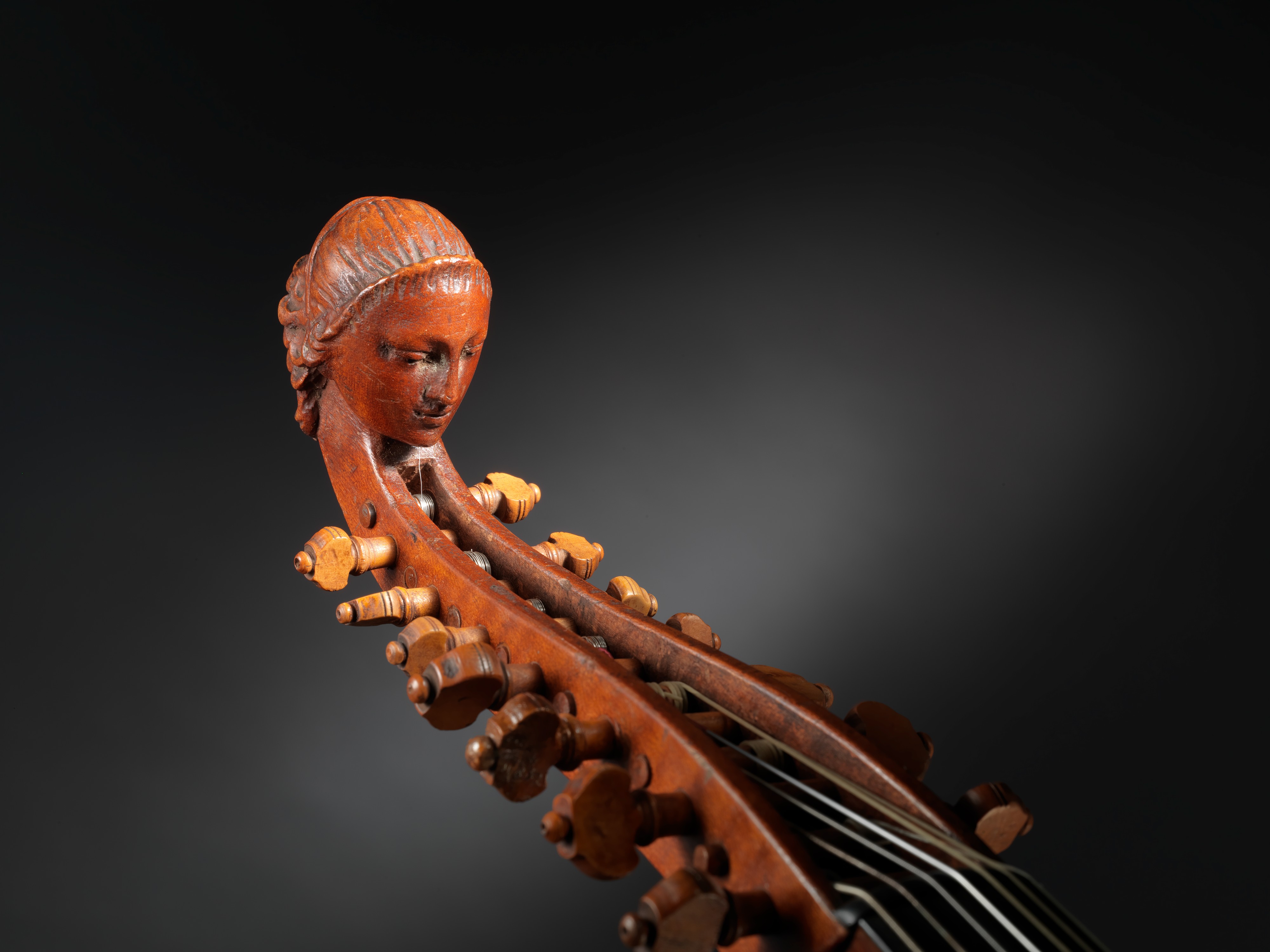
Wikidata classifies the viola d’amore as a Baroque instrument within the viol family. Its name — “love viol” — already appears in print in 1679, and the most common popular etymology connects the amore either to Cupid heads carved on many instruments or to the Moorish origin of the sympathetic-string idea (an etymology now generally rejected).
Origin & History
The viola d’amore took shape in central Europe in the second half of the 17th century, with the earliest documented references in Vienna and the southern German lands in the 1670s and 1680s. The sympathetic-string principle — vibrating wires placed inside or under the body of a bowed instrument — had reached Europe through Indian and Persian instruments such as the sarangi and the dilruba, and it was applied in this period to several European bowed instruments including the viola d’amore, the baryton and the viola bastarda.
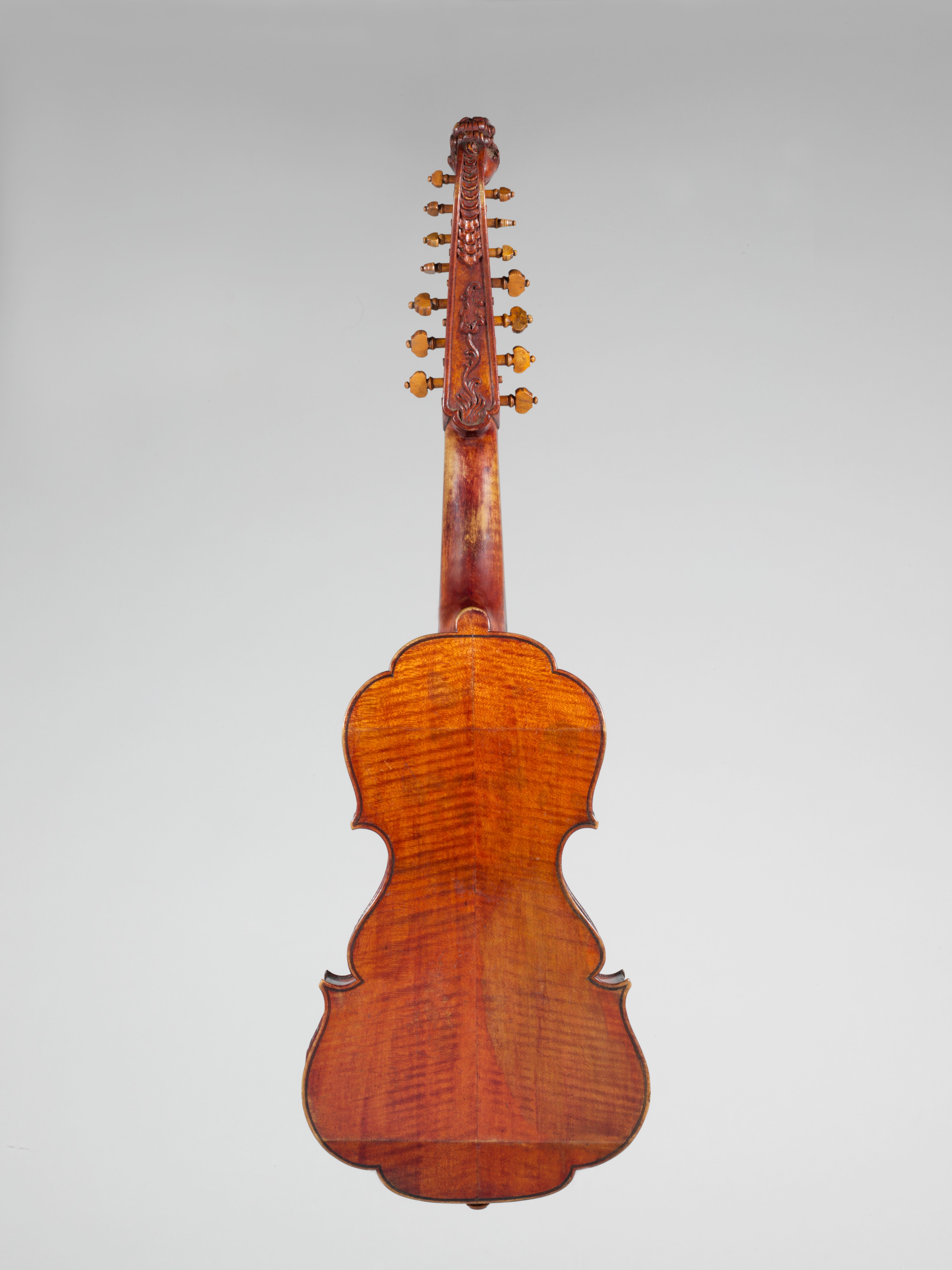
The Metropolitan Museum’s collection holds four viole d’amore that capture the instrument across its peak period. An Italian instrument of 1701 (object 505786), built of spruce, maple, ebony, bone and iron, sits at the start of the eighteenth century. A second Italian instrument from elsewhere in the 18th century (object 504490) and a third Italian instrument of around 1780 (object 503196) bracket the period of the instrument’s main repertoire. Most unusually, an Austrian mute viola d’amore of the mid-18th century (object 505719) — a small wooden instrument with damped strings — represents the rare practice viola d’amore, designed to be playable indoors without disturbing other people.
The viola d’amore had a substantial place in the Baroque concertante repertoire. Bach used it in the St John Passion (Aria Erwäge, wie sein blutgefärbter Rücken) and in two cantatas. Vivaldi wrote eight concertos for the instrument, and Telemann, Caldara, Stamitz, Graupner and Ariosti all composed solo works. After 1800 it fell out of fashion as the violin family became dominant, surviving on the margins through the 19th century in the hands of a few specialists such as Chrétien Urhan and Henri Casadesus.
The 20th century brought a strong revival. Paul Hindemith’s Kammermusik No. 6 (1927) is a major modern concerto for the instrument; Hindemith himself was a viola d’amore player. From the 1960s onward the historical-performance movement returned the instrument to its Baroque repertoire, and players such as Catherine Mackintosh, Karl Stumpf, Marianne Rônez and the Walter Reiter generation have built modern careers on it.
Construction & Materials
A viola d’amore is roughly the size of a viola — body length around 38 cm — but slimmer in profile, with sloping shoulders that recall the viol family. The body is built from spruce (top) and maple (back, ribs, neck) following violin-family conventions, but with a fingerboard that overhangs the body to create a channel for the sympathetic strings to pass under. A second bridge near the tailpiece anchors and tunes the sympathetic strings.
The seven playing strings are typically tuned to the open D major chord (D-A-D-F♯-A-D-F♯), although other open-chord tunings are documented. The seven sympathetic strings, of fine steel wire, are tuned to match the playing strings or to a related diatonic scale.
The MET’s mid-18th-century Austrian instrument (object 505719) is described as a “mute viola d’amore,” a less-common variant in which the bridge is heavily damped or the body is partially blocked, allowing the player to practice without producing significant external sound — the Baroque equivalent of a silent practice instrument.
How It’s Played
The viola d’amore is played in the da braccio (on the arm) position, like a viola, with a violin-style bow. The bow technique is largely that of the viola, but the right hand has to be lighter than on a modern viola because the soft sympathetic-string body produces less projection and rewards a clearer attack.
The seven-string layout requires a more flexible left hand than the four-string violin or viola, and the standard open-chord tuning means that ringing chord textures and arpeggiated figures sit naturally under the fingers. The sympathetic strings need separate periodic tuning and can be muted with a strip of cloth woven through them when a drier sound is wanted.
Cultural Significance
The viola d’amore is one of a small number of instruments to have survived essentially unchanged from the Baroque period through the present day with no significant modern restructuring. Its place in the repertoire is small but distinguished: it has the St John Passion aria, eight Vivaldi concertos, the Hindemith Kammermusik No. 6, and a steady contemporary repertoire by composers such as Toshio Hosokawa, Sofia Gubaidulina and Wolfgang Rihm. Operatic appearances are scattered but striking — Meyerbeer’s Les Huguenots (1836), Janáček’s The Cunning Little Vixen (1924) and Pfitzner’s Palestrina (1917) all use the instrument for distinctive solo moments.
The American Viola d’Amore Society and the Internationale Viola d’Amore Gesellschaft hold biennial congresses that keep the instrument’s small but international community connected.
Notable Examples & Recordings
The MET’s four specimens (objects 505786, 504490, 505719 and 503196) span Italian and Austrian production across eight decades. The Musée de la musique in Paris holds further important Baroque instruments.
For listening:
- Catherine Mackintosh, Bach: St John Passion (Gabrieli Consort) — Erwäge, wie sein blutgefärbter Rücken.
- Rachel Barton Pine, Vivaldi: Concertos for Viola d’Amore — the central Baroque concerto literature.
- Garth Knox, Spectral Viola — modern repertoire including Knox’s own and Hindemith’s writing.
- Marianne Rônez, Music for Viola d’Amore — survey of the historical solo repertoire.
Related Instruments
- – the wider gut-strung bowed family that the viola d’amore historically belongs to.
- Viola – the modern violin-family relative most often played by viola d’amore players.
- Sarangi – the North Indian sympathetic-string bowed instrument that influenced the European sympathetic-string idea.
- Hardanger Fiddle – the Norwegian sympathetic-string folk fiddle, a parallel European development.
- – the bass relative with sympathetic strings that Joseph Haydn wrote 175 trios for.
Where to Hear It
Viola d’amore appearances are scattered across the early-music festival circuit at Utrecht, Bruges, Boston, Berkeley and Innsbruck. Performances of Bach’s St John Passion every Easter — most prominently at the Thomaskirche in Leipzig — bring the instrument onto major concert stages. The biennial Internationale Viola d’Amore Kongress, held in alternating European and American cities, is the central international gathering for the community.
- Wikipedia: Viola d’amore
- The MET: Viola d’Amore, Italian 1701 (object 505786)
- The MET: Viola d’Amore, Italian ca. 1780 (object 503196)
- The MET: Mute Viola d’Amore, Austrian (object 505719)
- Wikimedia Commons: Viola d’amore
Learning Resources
Most viola d’amore players come to the instrument from the violin or viola, often through a Baroque or historical-performance specialism. Conservatory programmes in early music in the Netherlands, Switzerland, the UK, the US and Japan offer the instrument as a secondary study. The American Viola d’Amore Society and the Internationale Viola d’Amore Gesellschaft hold workshops at their biennial congresses. New instruments by leading luthiers run from approximately 8,000 to 25,000 USD; older surviving Baroque instruments occasionally appear at auction at significantly higher prices.
Frequently Asked Questions
What are sympathetic strings?
Sympathetic strings are fine wires placed inside or under the body of a bowed or plucked instrument; they are never struck directly but resonate sympathetically with the bowed or plucked strings, adding a soft ringing halo to the sound. The viola d’amore, the Norwegian Hardanger fiddle and the Indian sarangi all use the principle.
How many strings does a viola d’amore have?
Most modern instruments have seven playing strings and seven sympathetic strings, for a total of fourteen. Six-string variants and other counts are also documented historically.
Did Bach write for the viola d’amore?
Yes. Bach used the instrument in the St John Passion (the aria Erwäge, wie sein blutgefärbter Rücken) and in two cantatas. Vivaldi wrote eight concertos for it.
What is the difference between a viola d’amore and a viola?
The viola d’amore has seven strings instead of four, sympathetic strings under the fingerboard, an open-chord tuning rather than the viola’s perfect-fifths tuning, and a softer, more silvery sound. The two are about the same size.
Are old viole d’amore in museums?
Yes. The Metropolitan Museum holds four: an Italian instrument of 1701 (object 505786), an 18th-century Italian (504490), a mid-18th-century Austrian mute viola d’amore (505719), and an Italian instrument of around 1780 (503196), all in the Musical Instruments department.


