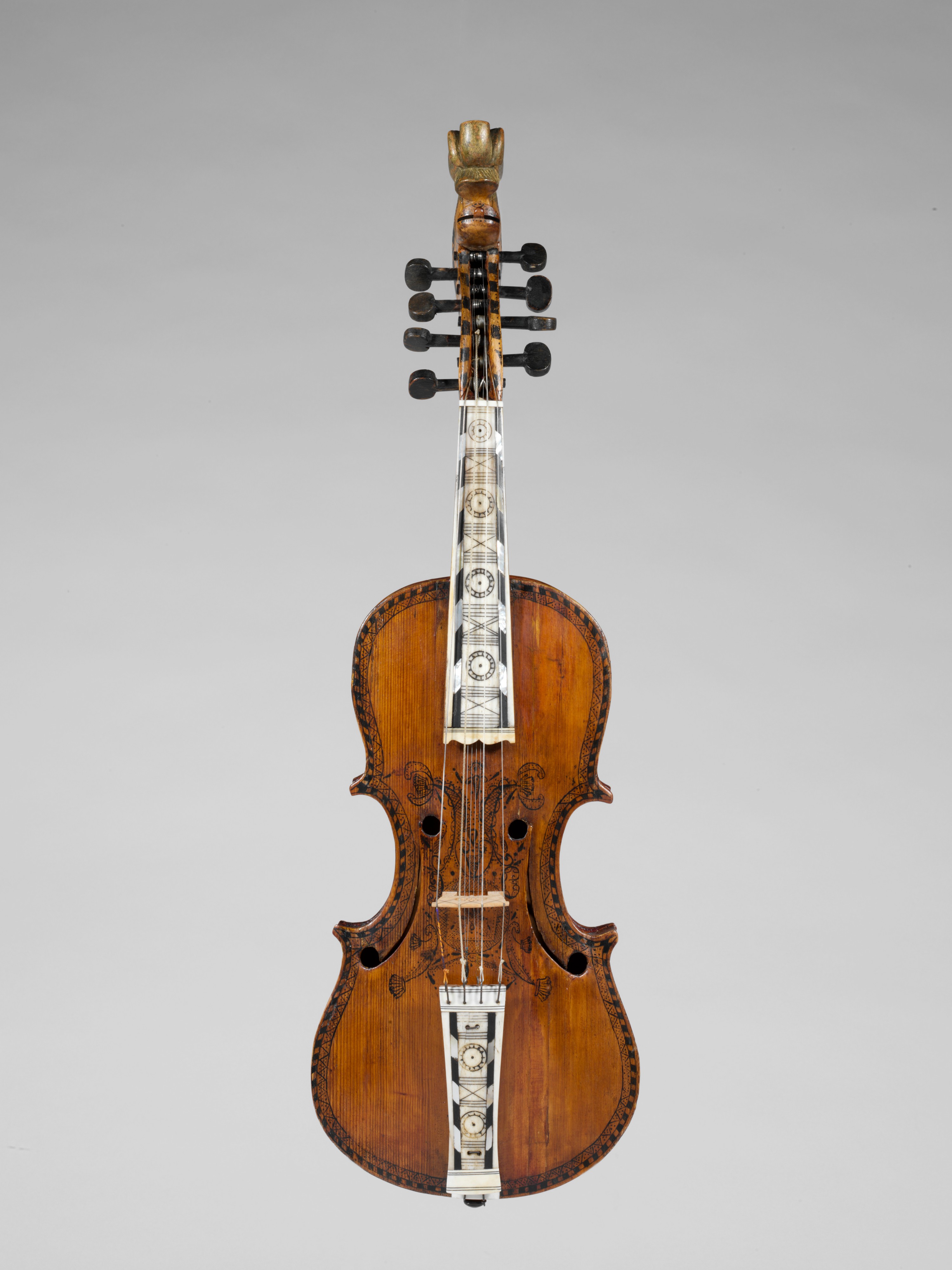
Hardanger Fiddle
hardingfele
| Category | Strings |
|---|---|
| Country of origin | Norway |
| Wikipedia | en.wikipedia.org |
| Wikidata | Q178933 |
Listen
Performance video

Video: Transcordancias & Jugalbandis - East Live Music, Creative Commons (CC BY) / via YouTube
Overview
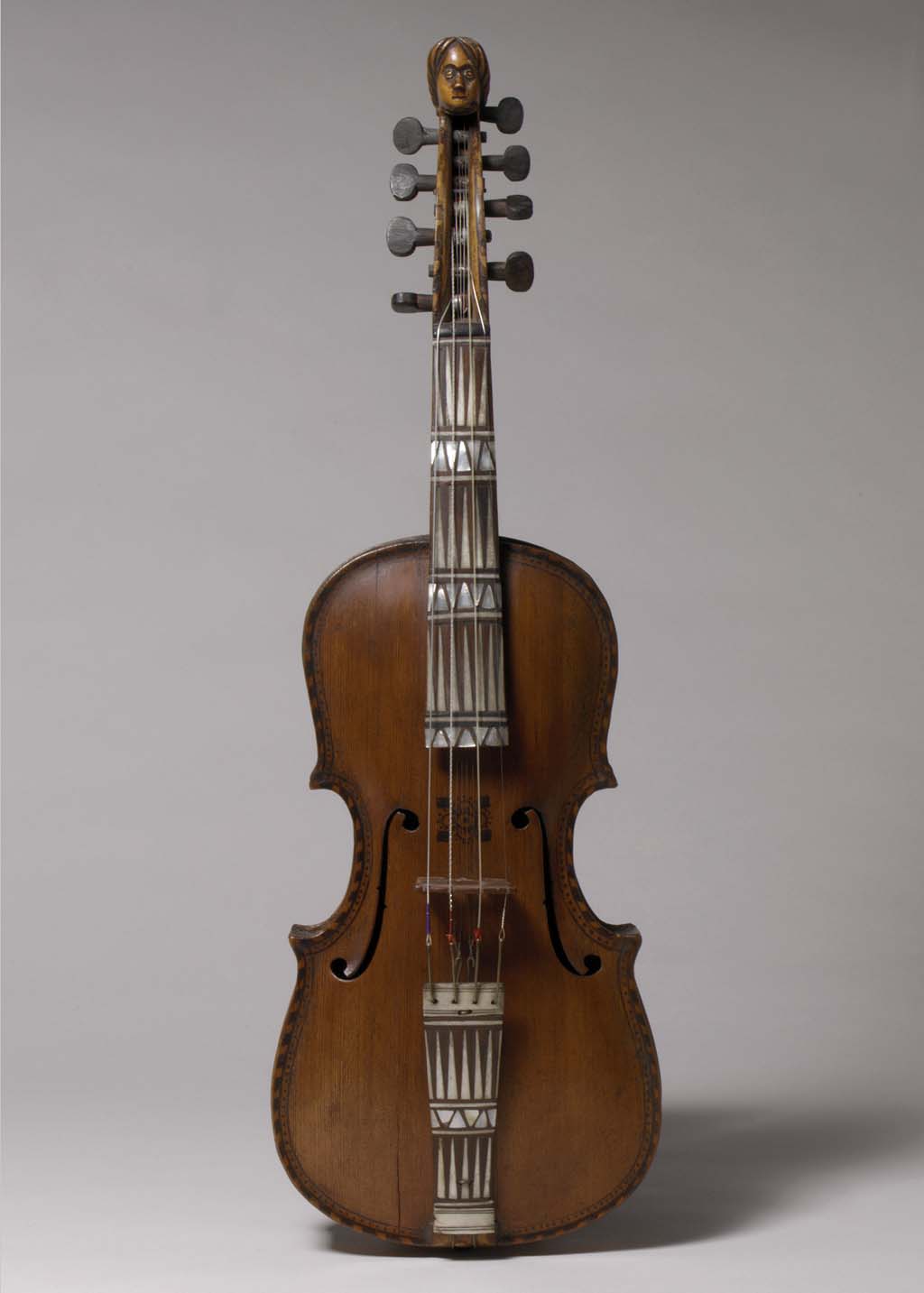
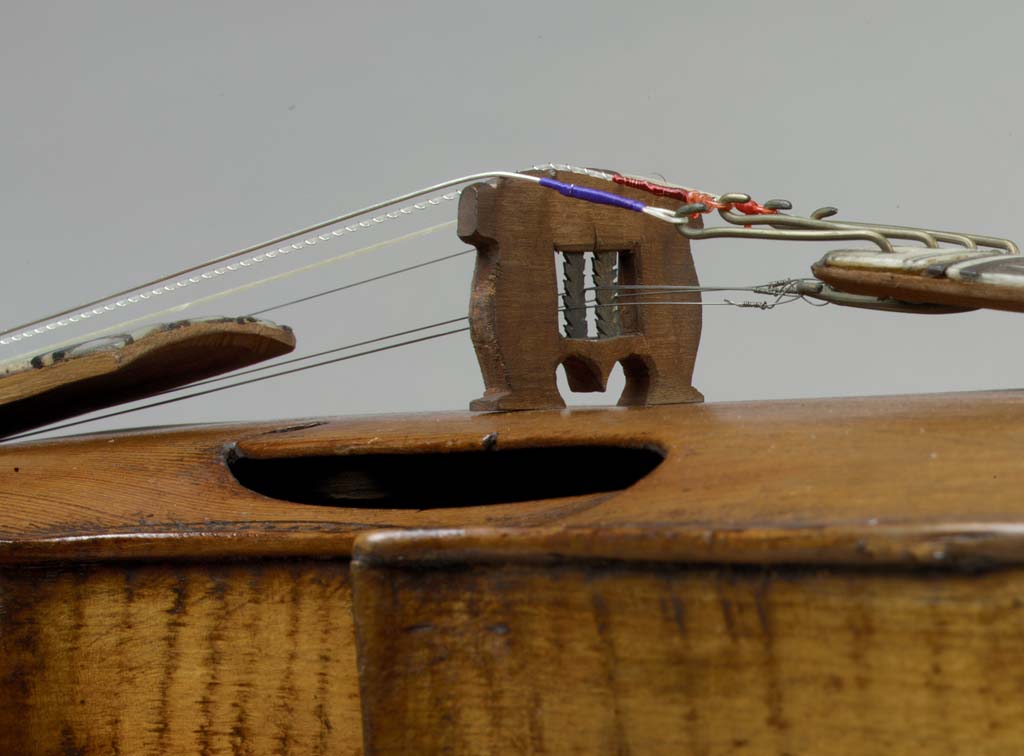
Known in Norwegian as the hardingfele, the Hardanger fiddle is the country’s distinctive folk violin: a bowed string instrument set apart by a bank of sympathetic strings beneath the fingerboard, ornate decoration, and a flatter, more arched bridge that allows multiple strings to be bowed at once. Four melody strings are bowed and stopped much as on an ordinary violin; underneath them sit four or five additional sympathetic strings that vibrate freely whenever the bowed strings sound, lending the instrument its characteristic shimmering, slightly chiming resonance.
The Hornbostel-Sachs system classifies the Hardanger fiddle within the same broad category as the violin (321.322), but every aspect of its sound and use — the sympathetic strings, the flatter bridge, the specific tunings, the ornate carved scrolls and inlays, and the highly regional dance repertoire — sets it apart as a distinct Norwegian folk instrument.
Origin & History
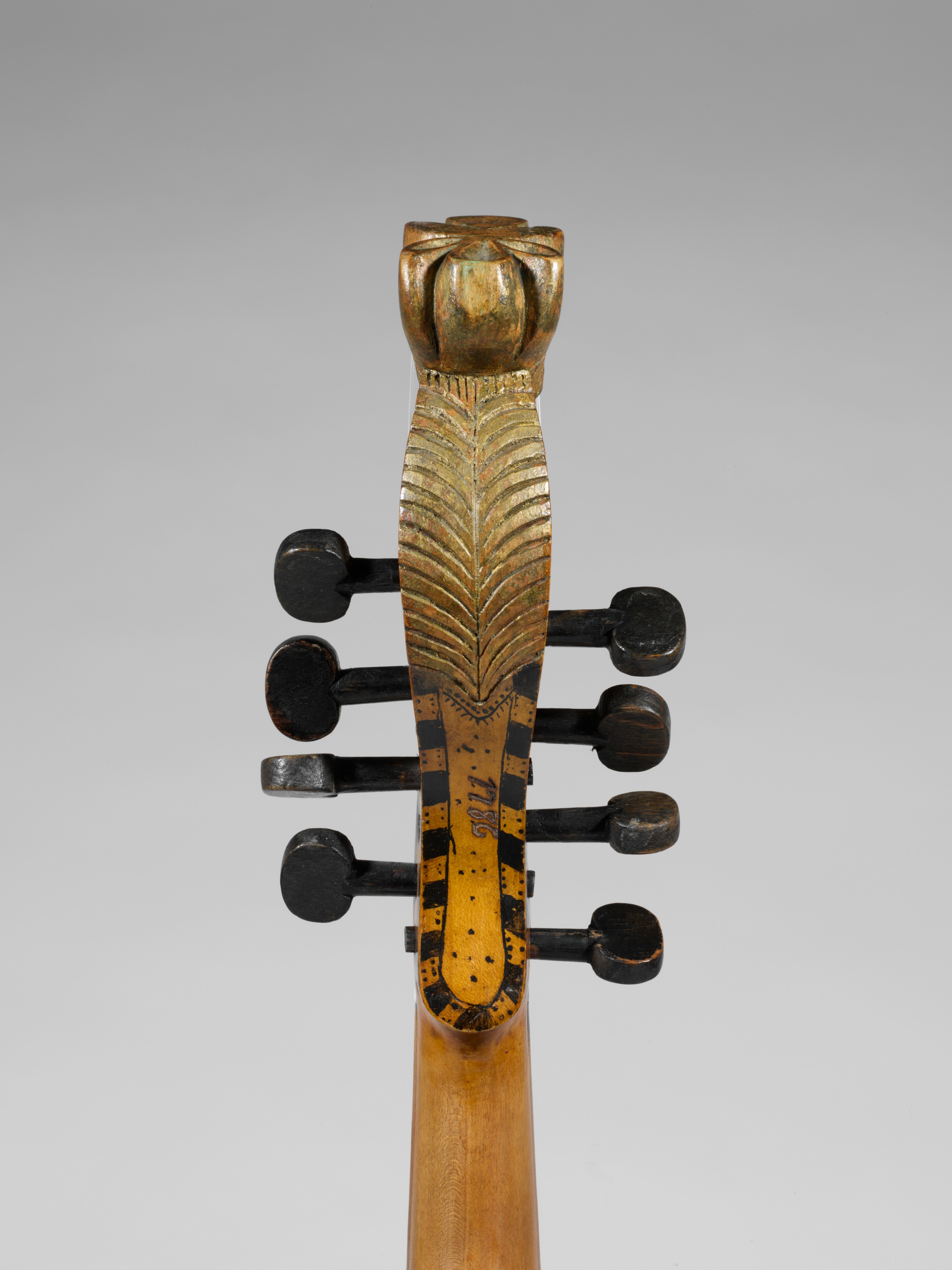
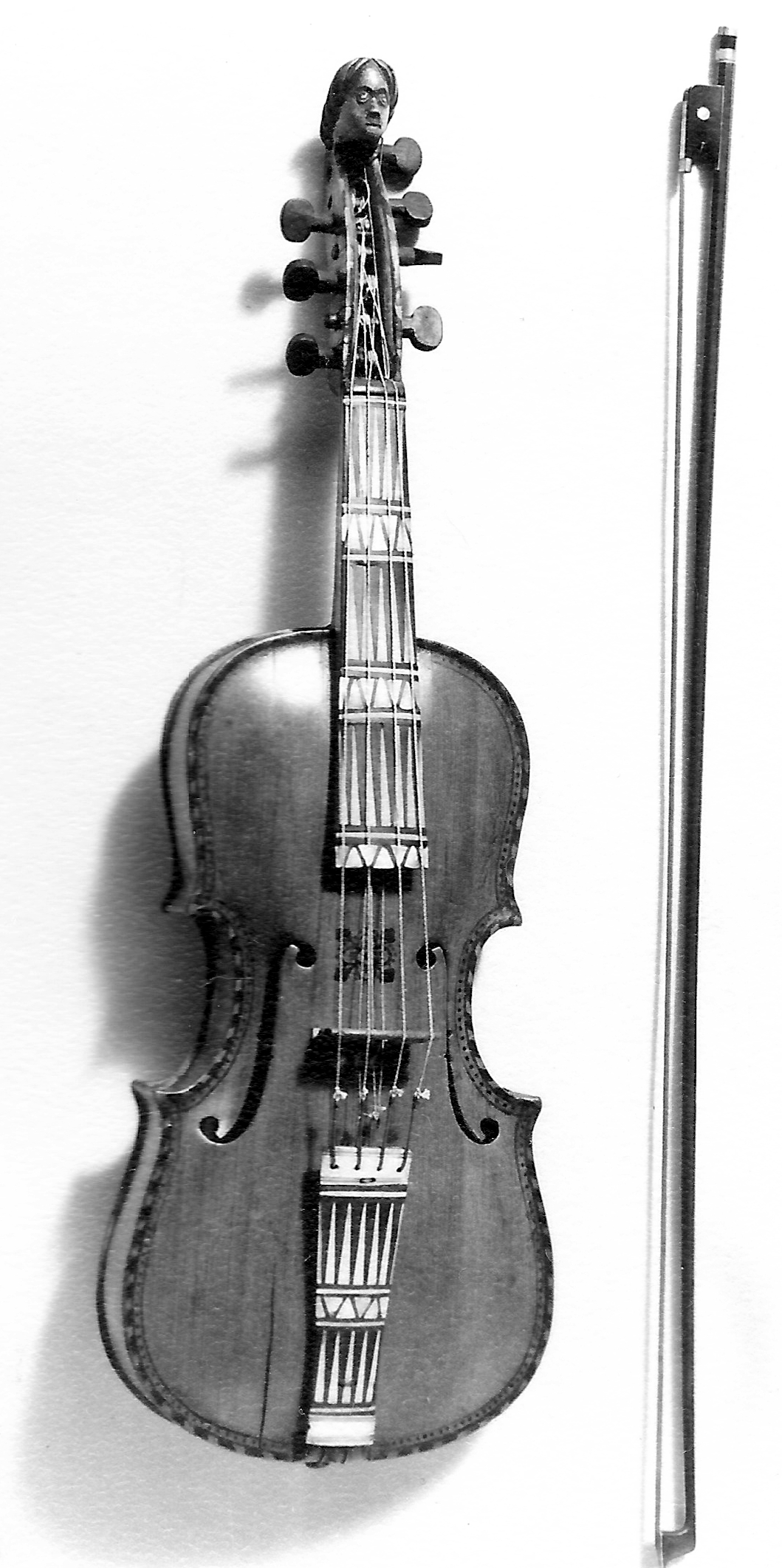
The hardingfele developed in western Norway’s Hardanger region from the mid-seventeenth century onward. The conventional account places its earliest fully developed form in the late 18th century, but the Metropolitan Museum of Art’s two surviving early specimens push that dating back significantly. Object 503795 is a Hardanger fiddle dated 1756, made of pine, birch, and other woods with bone, lignum vitae, and mother-of-pearl inlay; object 505825 is a 1786 example with mother-of-pearl, ebony, and bone fittings. Both predate or coincide with the conventional dating and confirm that the modern Hardanger fiddle was already being built in finished form well before 1800.
By the 19th century the instrument was central to the dance music of much of western, central, and southern Norway. The 19th-century Norwegian national-romantic movement, including composers such as Edvard Grieg, drew heavily on Hardanger fiddle repertoire and helped establish the instrument as a symbol of Norwegian cultural identity.
Construction & Materials
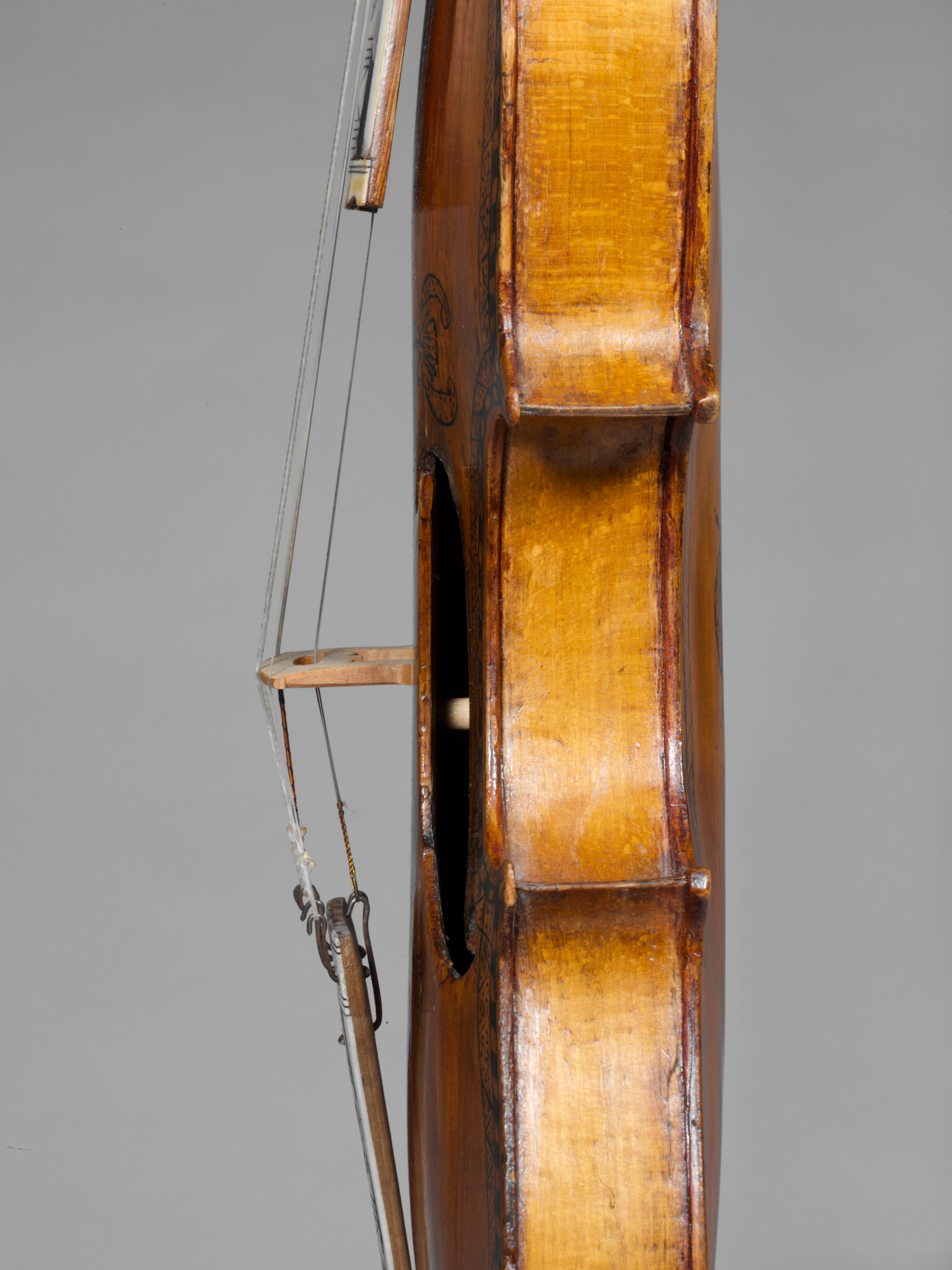
A hardingfele is built like a small violin but with several important differences. The body is somewhat smaller and more arched, the bridge is flatter (allowing two or three melody strings to be bowed simultaneously more easily), and a bank of four or five sympathetic strings is mounted underneath the fingerboard, with their tuning pegs in a separate box behind the main pegbox.
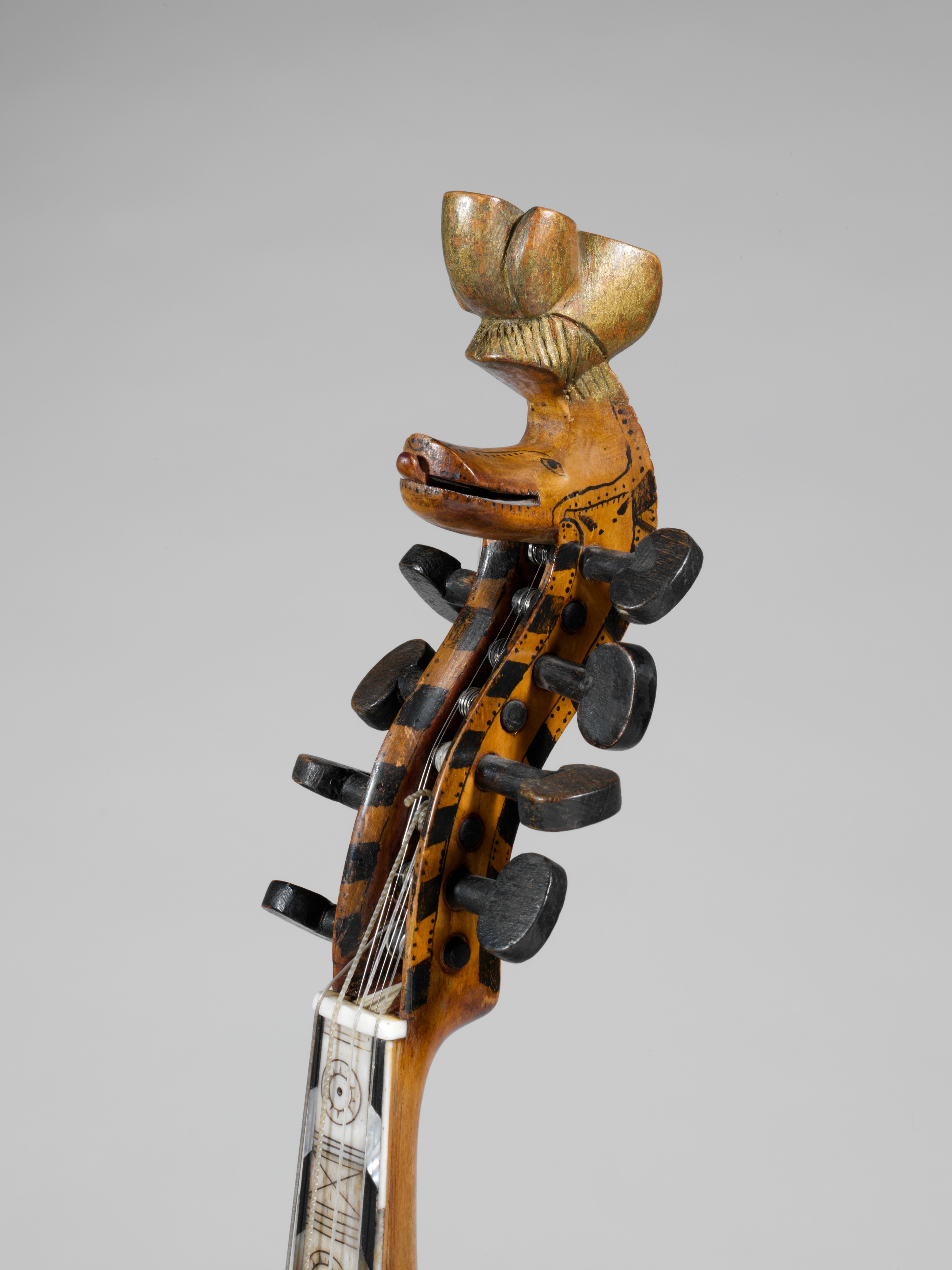
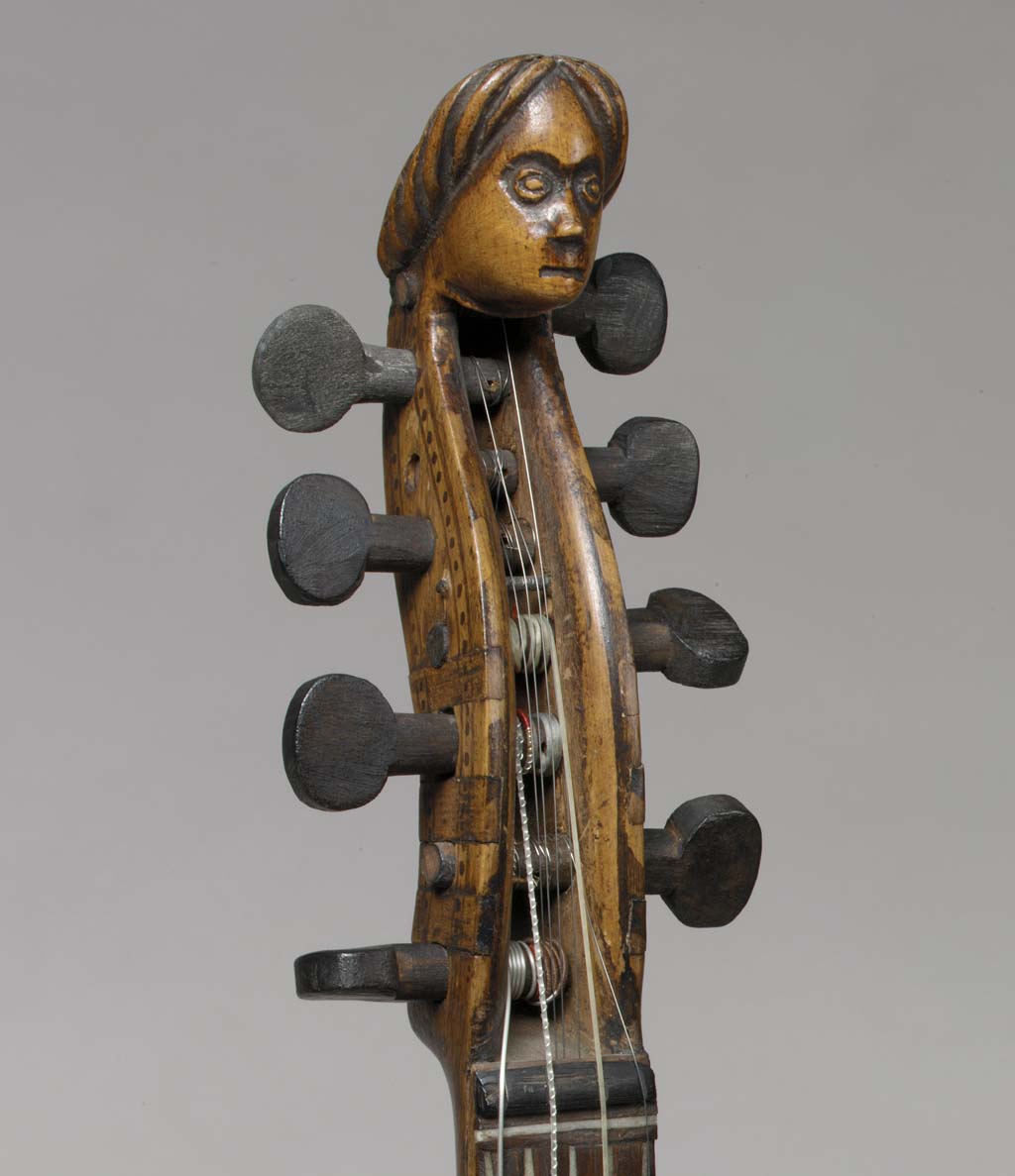
The MET’s 1756 fiddle (object 503795) documents the long-standing use of pine for the soundboard, birch for the back and sides, and decorative woods such as lignum vitae for fittings — together with the inlaid bone and mother-of-pearl that is one of the visual signatures of the instrument. The carved scroll on the peg head is often elaborate, sometimes representing a lion’s or dragon’s head rather than the standard violin scroll.
Strings are traditionally gut and are now most often a mix of synthetic-core melody strings and steel sympathetic strings. Tunings vary widely by region and by piece — the standard vanleg tuning is A-D-A-E (rather than the violin’s G-D-A-E), but more than twenty different skrustilling (scordatura) tunings are used across the traditional repertoire.
How It’s Played
Held under the chin much like an ordinary violin and bowed with a violin-style bow, the hardingfele is nonetheless played in a more grounded, less strictly classical manner, with frequent double- and triple-stops made easier by the flatter bridge. The left hand operates as it would on any standard violin’s four melody strings.
Most traditional repertoire consists of dance tunes — halling, gangar, springar, rull, and other regional forms — typically performed solo to accompany dancing. The pieces often have specific names tied to particular events, places, or people, and many are passed down within particular Norwegian valleys or families. The interaction between the bowed melody and the freely vibrating sympathetic strings gives even unaccompanied dance pieces a layered, polyphonic quality.
Cultural Significance
The Hardanger fiddle is one of the most important traditional instruments in Norway and one of the most internationally recognised symbols of Norwegian folk culture. It was a major influence on Edvard Grieg, who used Hardanger-fiddle inflections throughout his work, and it remains central to the Norwegian kappleik (folk-music competition) tradition.
Today the Hardanger fiddle is taught in the Norwegian conservatory system and through traditional apprenticeship; it is the subject of major scholarly research at institutions including the Hardanger Folk Museum and the Ole Bull Academy in Voss. Internationally recognised players include Annbjørg Lien, Knut Hamre, Nils Økland, and Benedicte Maurseth, whose recordings span both traditional dance repertoire and contemporary composition.
Notable Examples & Recordings
The Metropolitan Museum of Art’s two surviving 18th-century Hardanger fiddles (objects 505825 and 503795) are particularly important because they predate the conventional dating of the fully developed instrument and document its decorative tradition clearly. For listening, recordings by Knut Hamre, Annbjørg Lien, Nils Økland, and Benedicte Maurseth offer a strong introduction to both traditional dance repertoire and the modern composition that has grown up around the instrument.
Related Instruments
- – the generic term for the violin family in folk-music contexts
- Violin – the broader bowed-string family to which the Hardanger fiddle belongs by classification
- Nyckelharpa – the Swedish keyed fiddle, with a related sympathetic-string aesthetic
- – the European chamber viol with sympathetic strings, a more distant cousin
- Sarangi – the Indian bowed lute with sympathetic strings, a still more distant cousin
Where to Hear It
Norwegian folk-music festivals — particularly the Landskappleiken annual competition — are the natural settings for the Hardanger fiddle. The instrument also appears regularly in Norwegian classical and contemporary composition, in cross-cultural projects with Nordic and international musicians, and in film scoring (most famously in Howard Shore’s Lord of the Rings soundtracks).
- Wikipedia: Hardanger fiddle
- The MET: Hardanger Fiddle, 1786 (object 505825)
- The MET: Hardanger Fiddle, 1756 (object 503795)
- Wikimedia Commons: Hardanger fiddle
Learning Resources
Most beginners come to this fiddle after some prior experience on the standard violin, then take on the alternative tunings and bowing styles particular to the Norwegian tradition. The Norwegian conservatory system has well-established Hardanger fiddle programmes (notably the Ole Bull Academy in Voss), and several senior players offer structured online tuition. The traditional repertoire is heavily regional, so most players eventually specialise in the styles of one or two particular Norwegian valleys.
Frequently Asked Questions
How is the Hardanger fiddle different from a violin?
The hardingfele has a bank of four or five sympathetic strings running beneath the fingerboard, a flatter bridge that makes it easier to bow multiple strings at once, characteristic decorative inlay, and a different tuning. It is built smaller and more arched than an ordinary violin and is used primarily for Norwegian traditional dance music.
Where does the Hardanger fiddle come from?
The instrument developed in the western Norwegian region of Hardanger from the mid-17th century onward. The Metropolitan Museum of Art’s surviving Hardanger fiddles dated 1756 and 1786 confirm that the fully developed form was being built well before 1800.
What are the sympathetic strings for?
The four or five sympathetic strings run beneath the fingerboard and are not bowed directly. They vibrate freely in response to the bowed melody strings, adding a shimmering, slightly chiming resonance that gives the Hardanger fiddle its characteristic sound.
Are old Hardanger fiddles displayed in museums?
Yes. New York’s Metropolitan Museum of Art holds two extraordinarily early specimens (objects 503795 from 1756 and 505825 from 1786), among the older surviving examples available to view online.
Is the Hardanger fiddle difficult to learn?
For experienced violinists, the basic bow and fingering technique transfers readily. The harder work is mastering the alternative tunings, the regional bowing styles, and the rhythmic feel of Norwegian dance music — all of which typically take years of structured study within the Norwegian tradition.


