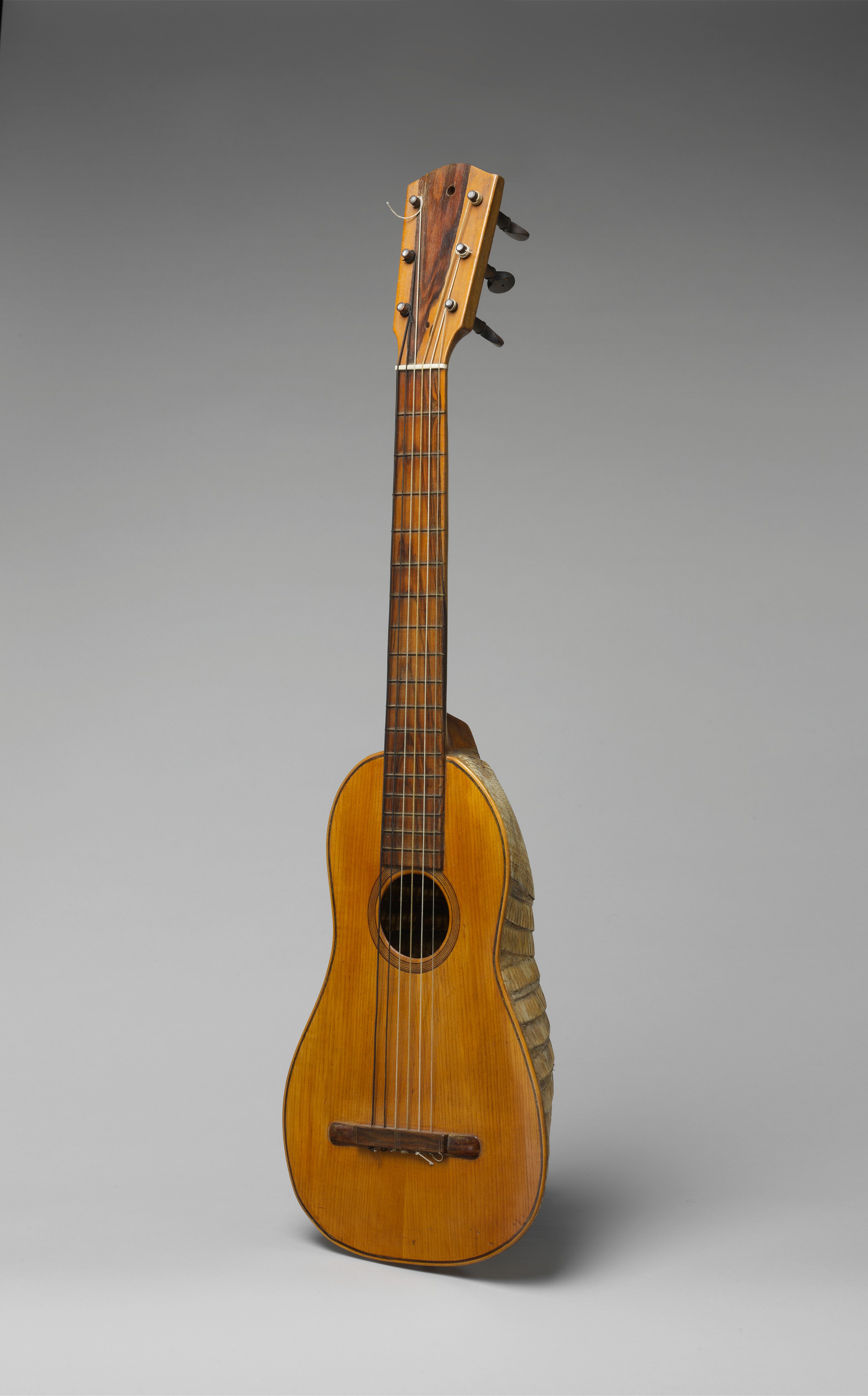
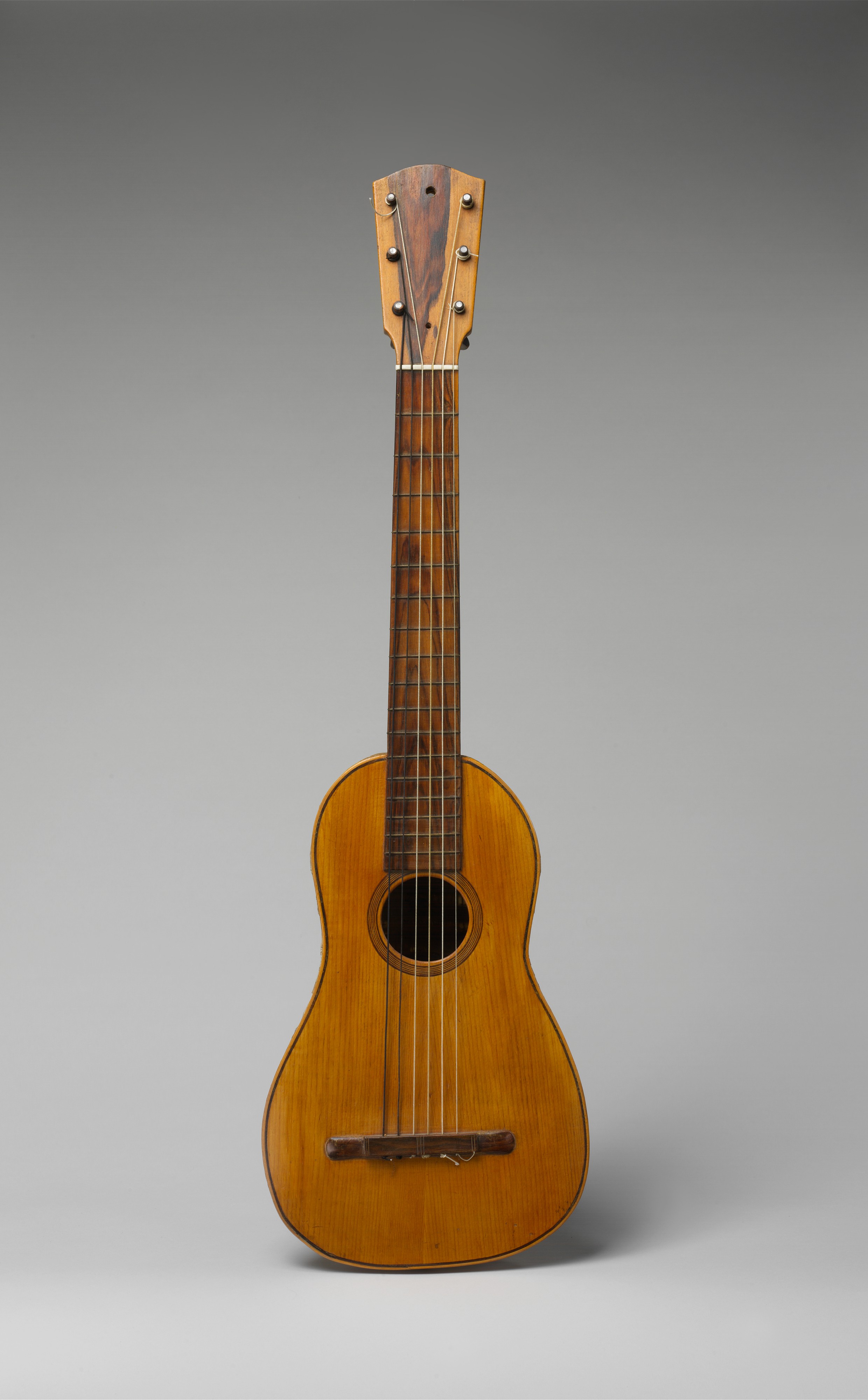
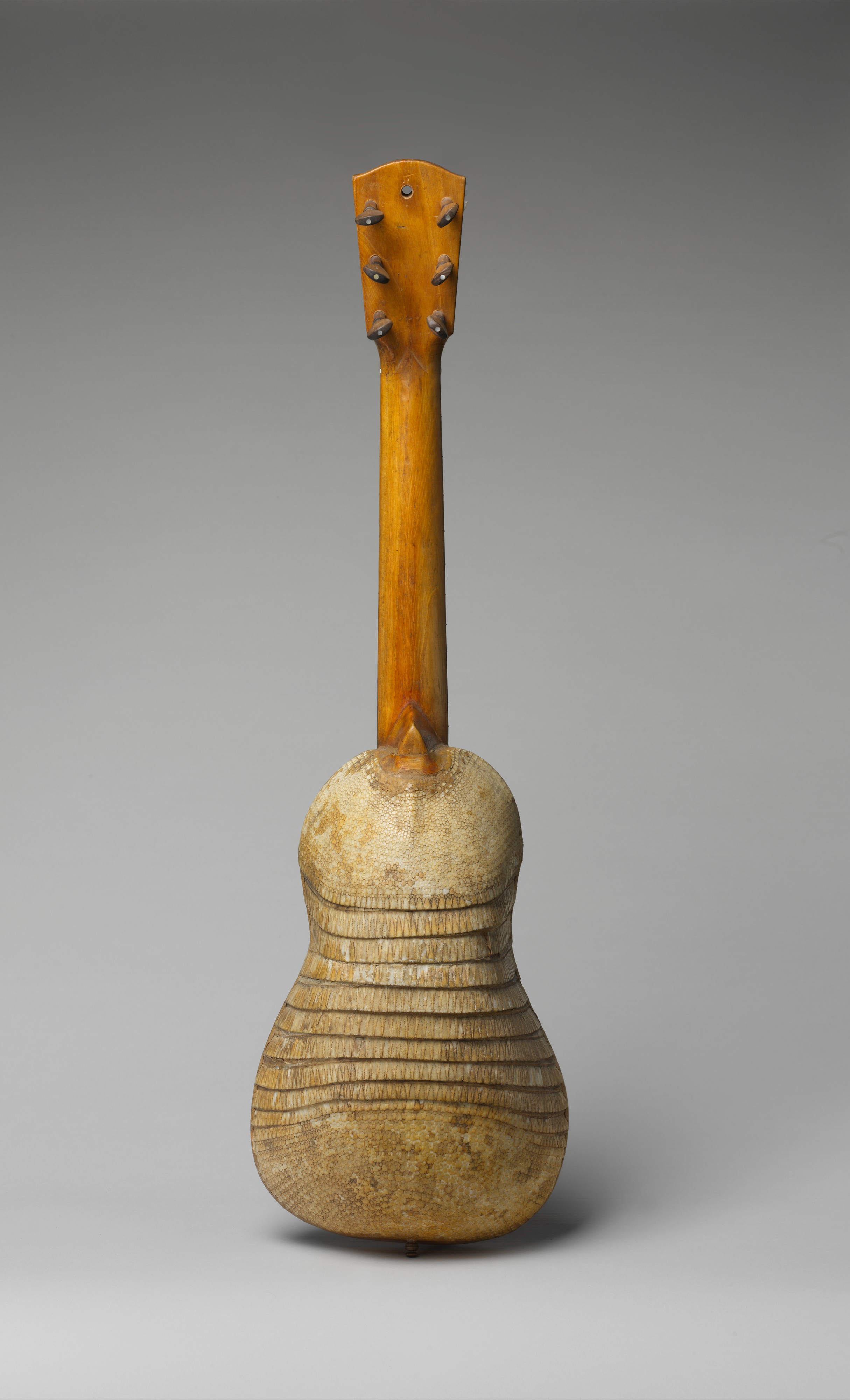
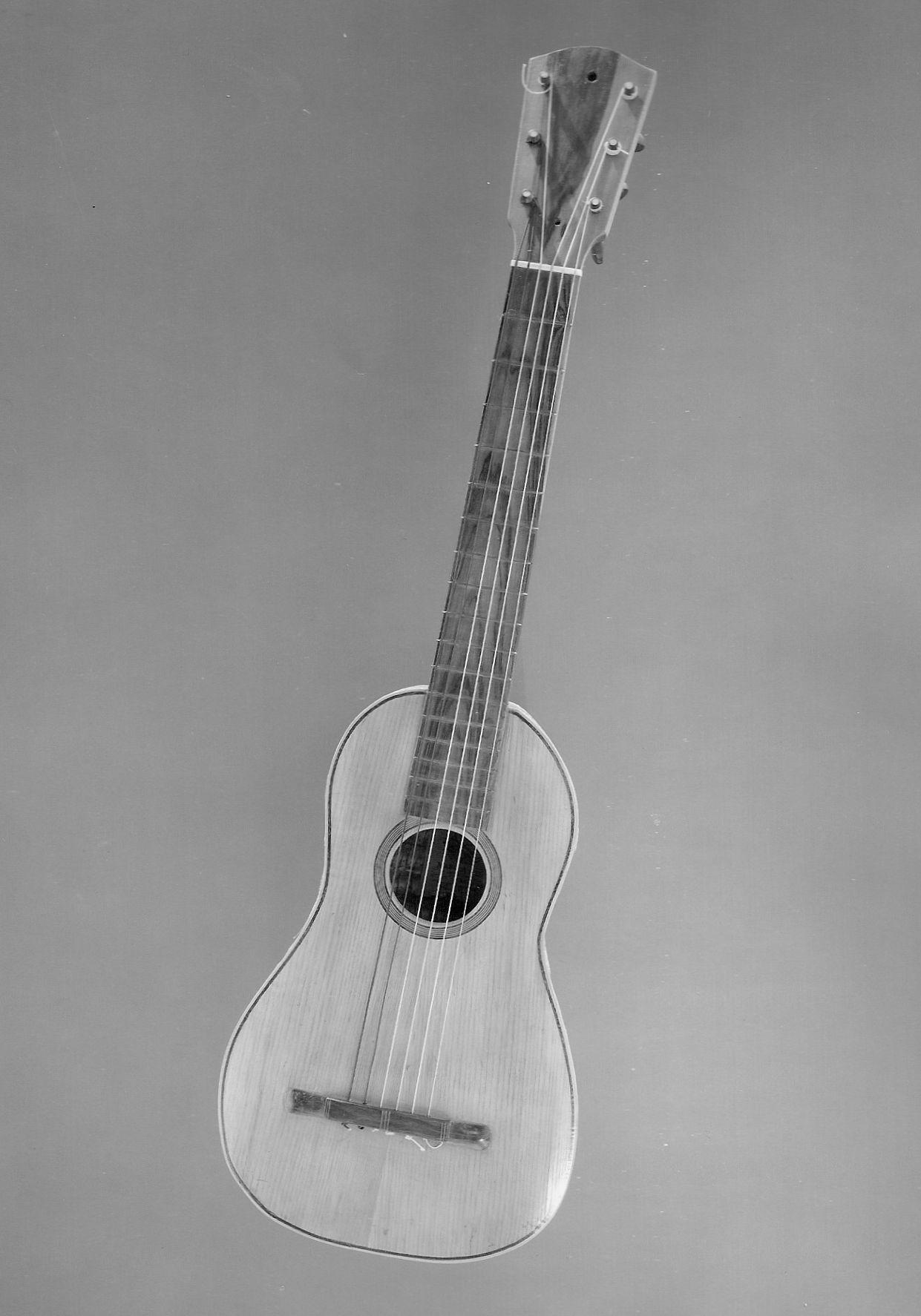

Charango
charango
| Category | Strings |
|---|---|
| Country of origin | Bolivia / Peru / Andean |
| Classification | type of musical instrument |
| Wikipedia | en.wikipedia.org |
| Wikidata | Q468776 |
Listen
Audio: Ferbr1, Public domain / via Wikimedia Commons

Overview
A small Andean plucked string from highland South America, the charango carries five double courses (ten strings in all) tuned in a distinctive reentrant pattern. Its body is built traditionally from a hollowed wooden bowl, from an armadillo (quirquincho) shell, or from a carved gourd, with a flat wooden soundboard fitted across the top. Its bright, jangling tone — the upper strings tuned in octaves rather than unison, giving each chord a built-in shimmer — is one of the most distinctive sounds in Latin American folk music.
The instrument is most strongly tied to the Andean nations — particularly Bolivia and Peru, with significant traditions also in Ecuador, the north of Chile, and the Argentine northwest. Bolivia in particular treats the instrument as a national symbol, and the city of Aiquile in Cochabamba department holds an annual charango festival that draws makers and players from across the region.
Origin & History
The charango developed in the Andean highlands during the colonial period, almost certainly as a local adaptation of the Spanish vihuela and other small plucked string instruments brought by the colonial church and military. The hybridisation involved deliberate use of local materials — most distinctively the armadillo shell, which formed the curved back of the resonator and gave the instrument both its characteristic visual appearance and a portion of its tonal character.
By the 18th and 19th centuries the charango was firmly established as a folk instrument in the Andean highlands, particularly in indigenous Aymara and Quechua communities. The Metropolitan Museum’s collection holds a late-19th-century Charango (MET object 505397) — described as Mexican and built from spruce, mahogany, rosewood and armadillo shell — which sits in the museum’s Musical Instruments department and illustrates the spread of the form beyond its Andean heartland.
The 20th century brought several waves of revival and modernisation. The Bolivian nueva canción movement of the 1960s and 70s — particularly through the work of the group Los Kjarkas and the soloist Ernesto Cavour — brought the charango to international concert audiences and codified much of the modern repertoire. Conservation concerns over the use of armadillo shells (the quirquincho is a protected species in several Andean countries) have led to a widespread shift toward carved wooden backs in modern instrument-making.
Construction & Materials
The Hornbostel-Sachs system places the charango in 321.322 (necked box-lutes, plucked). The body is around 60-65 cm long overall, much smaller than a guitar. The traditional form has a deeply curved back made from a single armadillo shell — the species Chaetophractus nationi (Andean hairy armadillo) most often — covered with a flat spruce or pine soundboard. Modern instruments increasingly use a carved wooden bowl back, both for conservation reasons and because the wooden back is more durable and easier to maintain.
The MET’s late-19th-century specimen (object 505397) uses spruce for the soundboard, mahogany and rosewood for the structural elements, and an armadillo shell for the back — a typical traditional construction.
A standard charango has ten strings, set in five paired courses. The most distinctive feature of the tuning is its reentrant pattern: the middle (third) course holds the highest pitched strings of the instrument, and those strings are tuned in octaves to each other rather than in unison. This gives the instrument its characteristic shimmering, jangling chord sound and is unlike any other Latin American small plucked string instrument.
How It’s Played
The player holds the charango across the body like a small guitar, supporting the bowl back against the chest with the right forearm. The right hand strums or picks the strings with bare fingertips or with a flexible plectrum, often using rapid syncopated rasgueo patterns adapted from the Andean huayno dance. The left hand stops the strings against the fretted neck.
A solo charango player can produce both a continuous rhythmic background and a melodic line at the same time, exploiting the reentrant tuning to bring the melody into the middle of the chord rather than at its top. This makes the instrument unusually self-sufficient as a solo instrument, which is one reason it took root so widely in remote Andean communities where ensemble playing was not always practical.
Cultural Significance
In the Andean highlands the charango is closely tied to the cultural identity of indigenous Aymara and Quechua communities. It is the instrument of choice for traditional huayno dance music, for carnavalitos, and for the elaborate ritual music of community festivals. In some traditional contexts the instrument is also tied to courtship rituals, with specific tunings and tunes associated with particular romantic functions.
The 20th-century nueva canción movement gave the charango a second cultural role, as a symbol of Latin American cultural independence and political resistance. Through performers including Los Kjarkas, Inti-Illimani and the soloist Jaime Torres (Argentinian) the instrument has become recognised internationally as a defining sound of Andean culture.
Notable Examples & Recordings
The MET’s late-19th-century charango (object 505397) documents the traditional armadillo-shell construction. For listening, recordings by Ernesto Cavour (especially his solo virtuoso work) and Eddy Navia provide the foundation of the modern Bolivian repertoire. Los Kjarkas’s Bolivia and Canto a la Mujer de mi Pueblo are touchstones of the nueva canción tradition. Jaime Torres covers the Argentinian Andean tradition, and the contemporary virtuoso Federico Tarazona has extended the instrument into classical concert repertoire.
Related Instruments
- Cuatro – the Venezuelan and Puerto Rican small plucked string from the same broader Latin American family
- Tiple – the small Colombian and Caribbean plucked string with twelve strings
- Vihuela – the Renaissance Spanish ancestor of the colonial Latin American small plucked string instruments
- Ronroco – the larger, lower-tuned Bolivian cousin of the charango
- – the Spanish small plucked string instrument that fed into the colonial Latin American family
Where to Hear It
Live charango performance is part of nearly every Andean traditional music event in Bolivia, Peru, Ecuador and northwestern Argentina. The annual charango festival at Aiquile in Bolivia draws makers, players and audiences from across the region. International concerts by Los Kjarkas, Ernesto Cavour and Jaime Torres bring the instrument to European and North American audiences. The Wikimedia Commons category collects images and audio.
Learning Resources
The charango is one of the more approachable small Latin American string instruments for beginners because of its small size and the fact that its reentrant tuning makes basic chord shapes easy to finger. Method books in Spanish are widely available; English-language instruction is increasingly offered online by Ernesto Cavour and others. The Bolivian National Charango Society and the conservatoires in La Paz and Cochabamba offer formal training. Modern wooden-back instruments are widely exported and avoid the conservation concerns of armadillo-shell builds.
Frequently Asked Questions
What family is the charango in?
It is a necked box-lute, plucked, classed as 321.322 in the Hornbostel-Sachs system.
How many strings does a charango have?
Ten strings, set across five paired courses. The middle course is tuned in octaves to itself rather than in unison, which is what gives the instrument its characteristic shimmering chord sound.
Why is the charango sometimes made from an armadillo shell?
The traditional Andean form fits an armadillo shell as the curved rear of the resonator. This was a colonial-era adaptation of the Spanish vihuela using locally available materials. Conservation concerns now make wooden backs the more common modern choice.
Where did the charango originate?
In the Andean highlands during the Spanish colonial period (16th-18th centuries), as a local hybrid of the Spanish vihuela using Andean materials.
Are old charangos in museums?
Yes. The Metropolitan Museum of Art holds a late-19th-century charango (object 505397) in its Musical Instruments department, with the traditional armadillo-shell back and spruce-and-mahogany construction.
Is the charango difficult to learn?
The basic chord shapes are accessible to beginners because of the small fingerboard. The traditional Andean repertoire — particularly the rapid right-hand rasgueo patterns of huayno dance music — takes longer to develop, as does fluent solo melodic playing across the reentrant tuning.


