Violin
Violin
| Category | Strings |
|---|---|
| Country of origin | Northern Italy (early 16th century) |
| Classification | type of musical instrument |
| Wikipedia | en.wikipedia.org |
| Wikidata | Q8355 |
Listen
Audio: Roger Zenner, CC BY-SA 2.0 de / via Wikimedia Commons
Audio: Endersslay, CC0 / via Wikimedia Commons
Audio: Endersslay, CC0 / via Wikimedia Commons
Overview
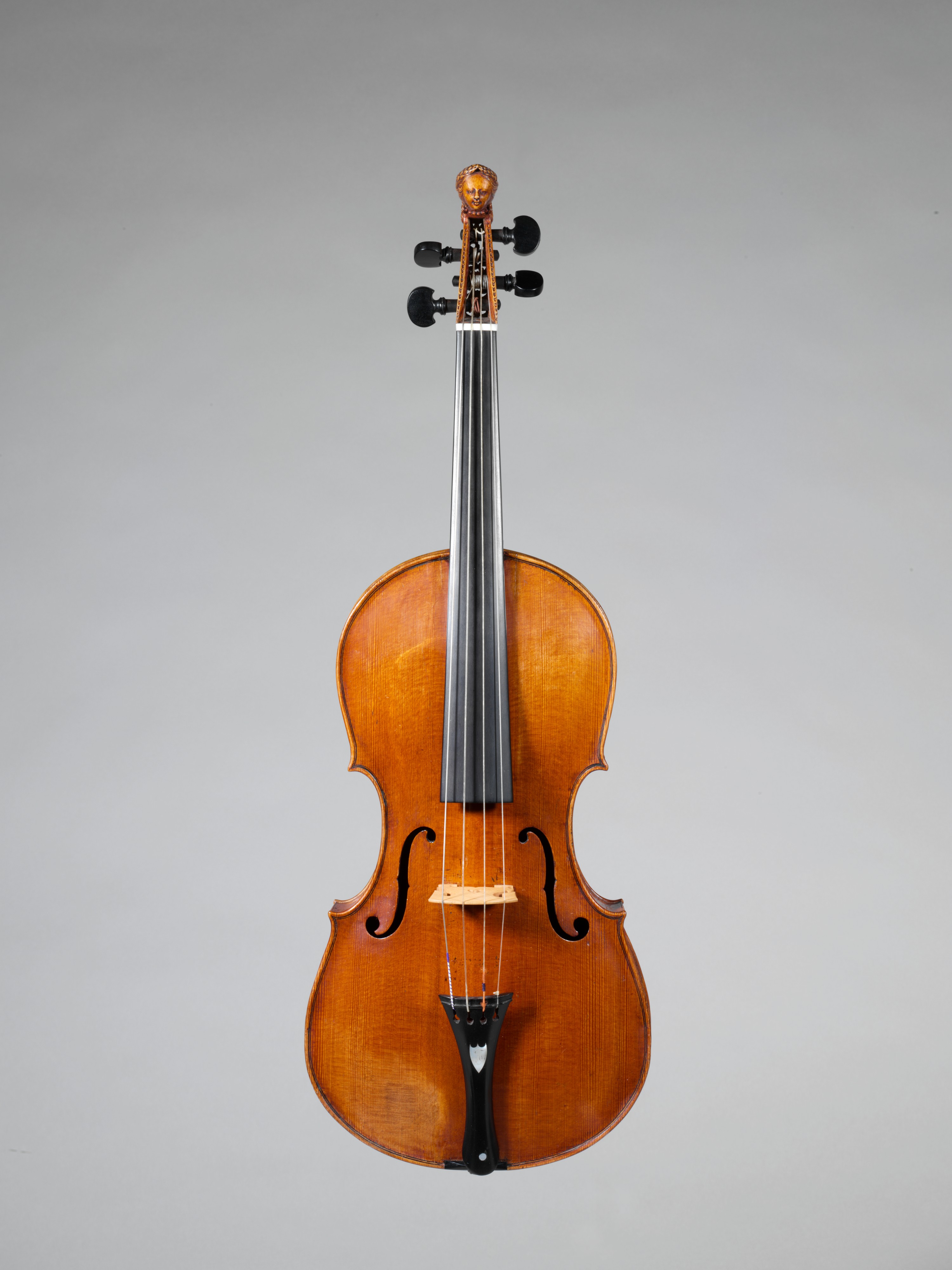
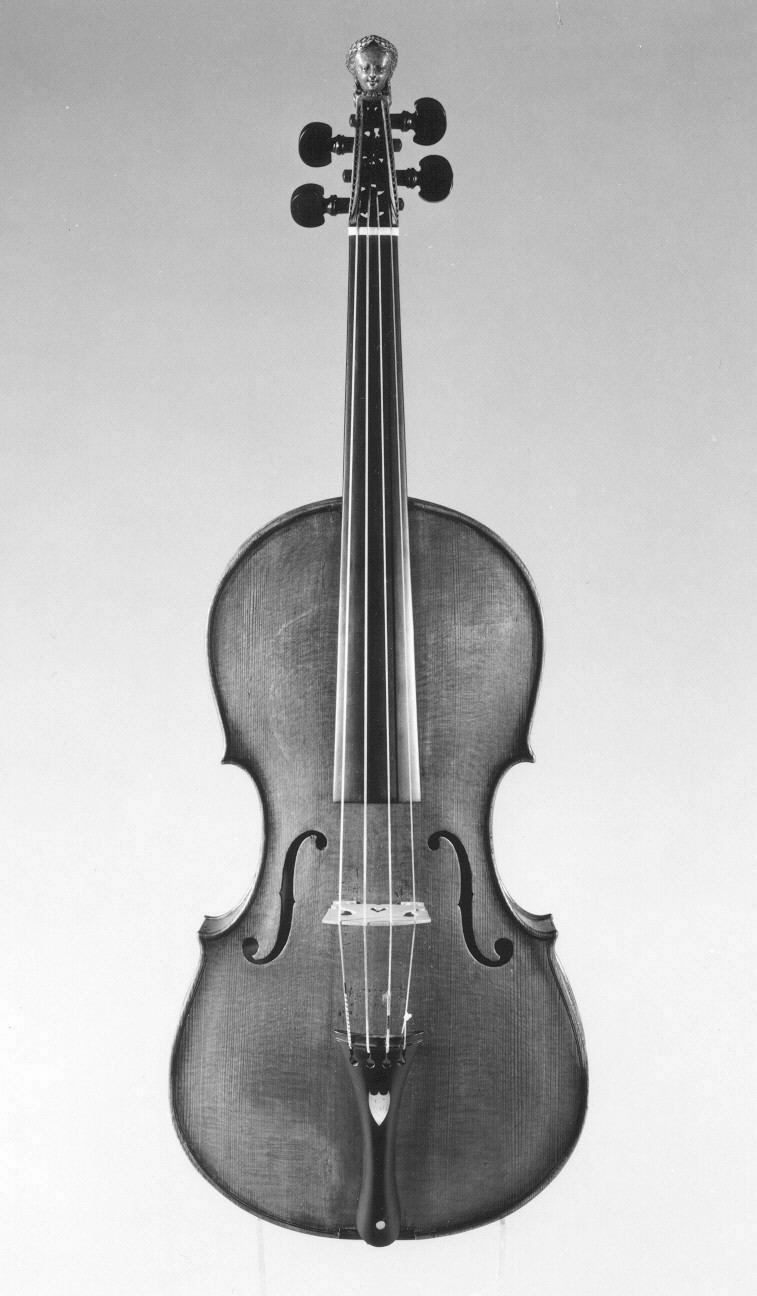
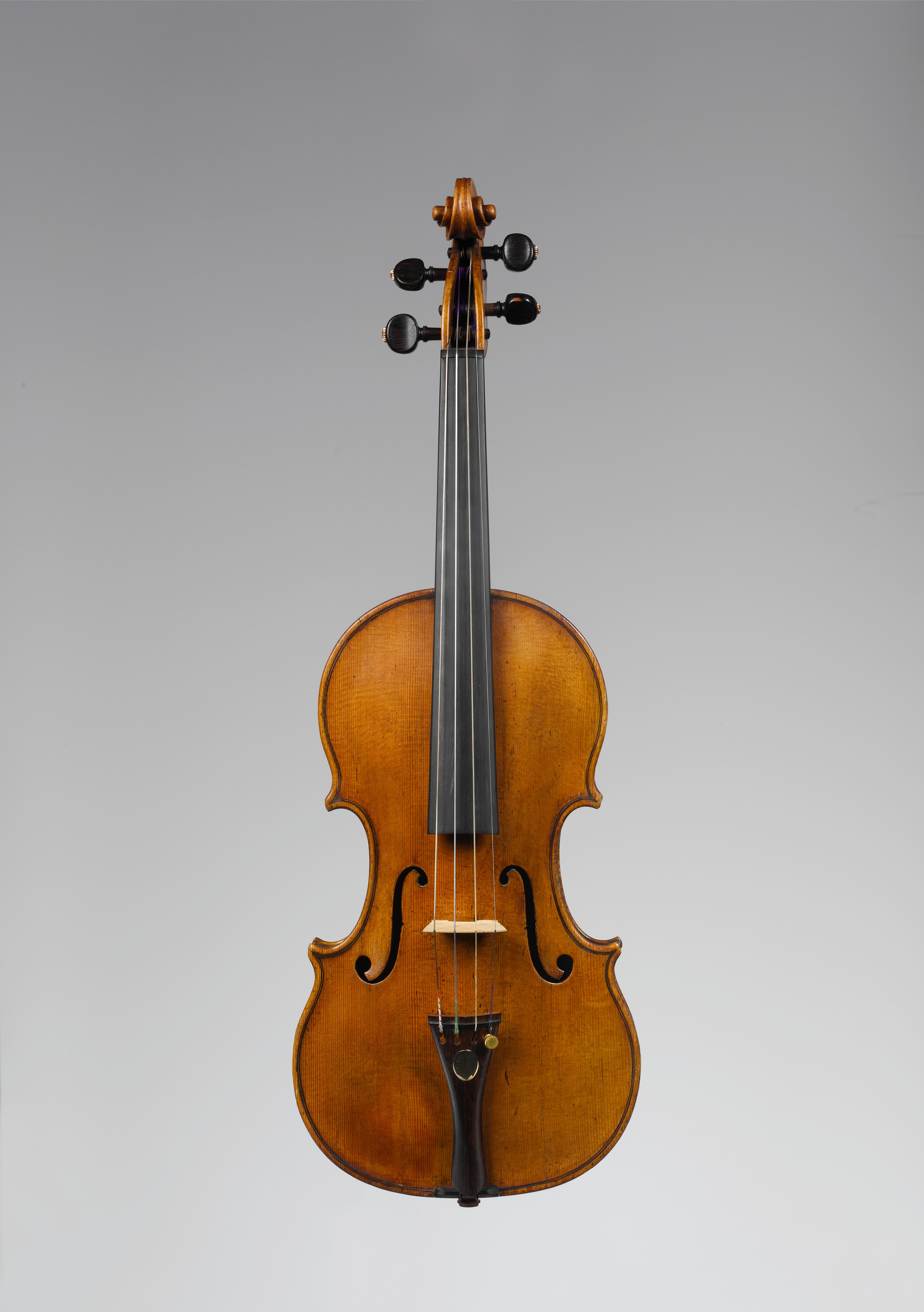
The violin is the soprano voice of the bowed string family, a four-stringed wooden instrument tuned in perfect fifths (G-D-A-E) and played by drawing a horsehair bow across the strings or by plucking them. Wikidata classifies it concisely as a bowed string instrument; DBpedia adds the Hornbostel-Sachs reading 321.322 — a composite chordophone sounded by a bow — and notes its working compass of about 130 semitones from the open G string upward.
What makes the instrument unusual among the world’s chordophones is the combination of an arched, carved spruce-and-maple body, a separate movable bridge that transmits string vibration to the soundboard, and a bow whose hair tension can be adjusted by the player in real time. The result is an instrument that sustains, sings, and shapes a single note across phrases of arbitrary length — characteristics that almost every other string design on the planet has had to choose between.
Origin & History
DBpedia dates the development of the violin to the early 16th century in northern Italy. The first surviving instruments closely resembling the modern form come from the workshops of Andrea Amati in Cremona around the 1550s, with parallel work by Gasparo da Salò in Brescia. Within a generation the violin had displaced the older viol in much serious instrumental writing; by the time of Monteverdi’s L’Orfeo (1607) the instrument is already at the centre of the orchestra.
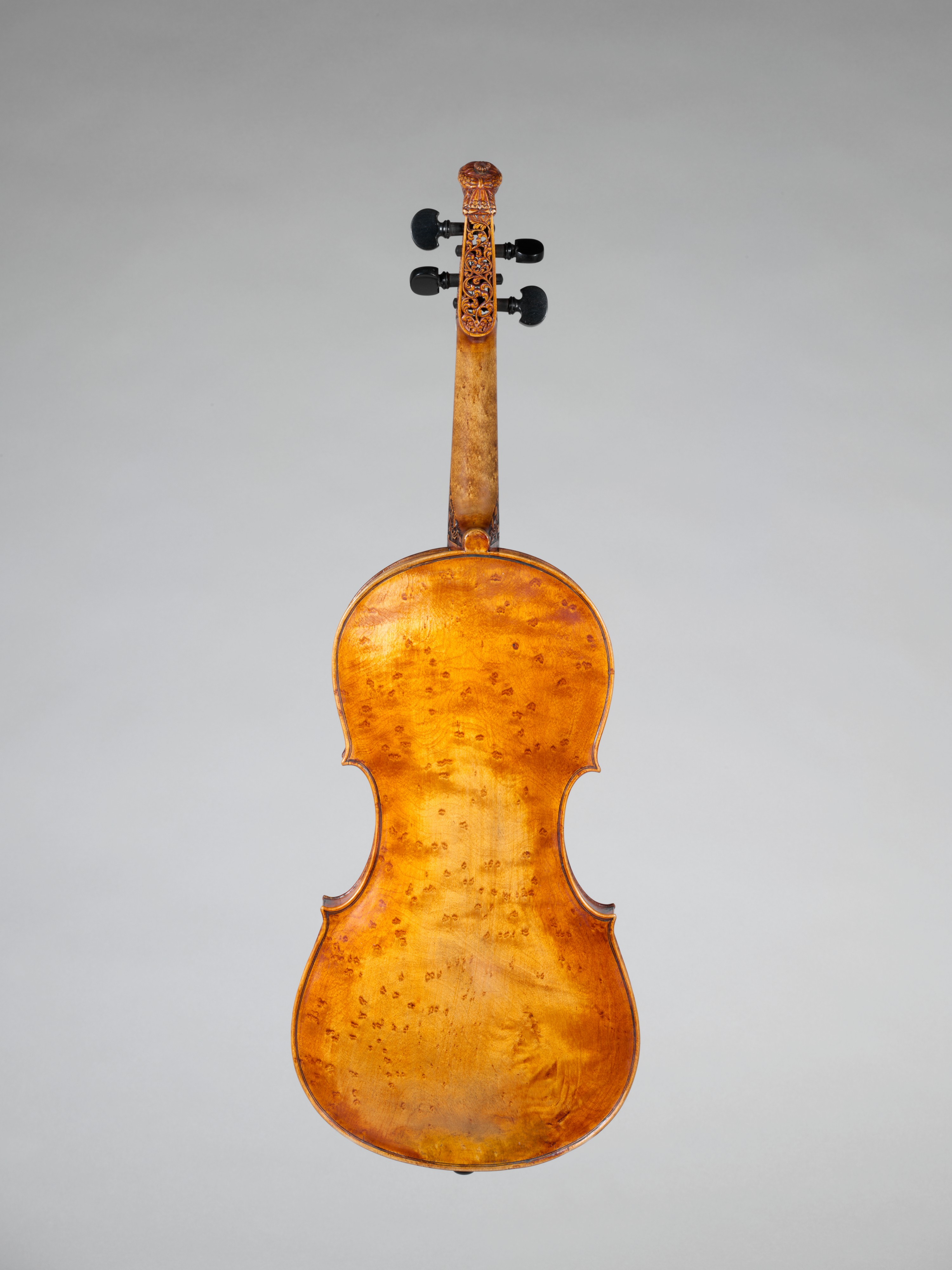
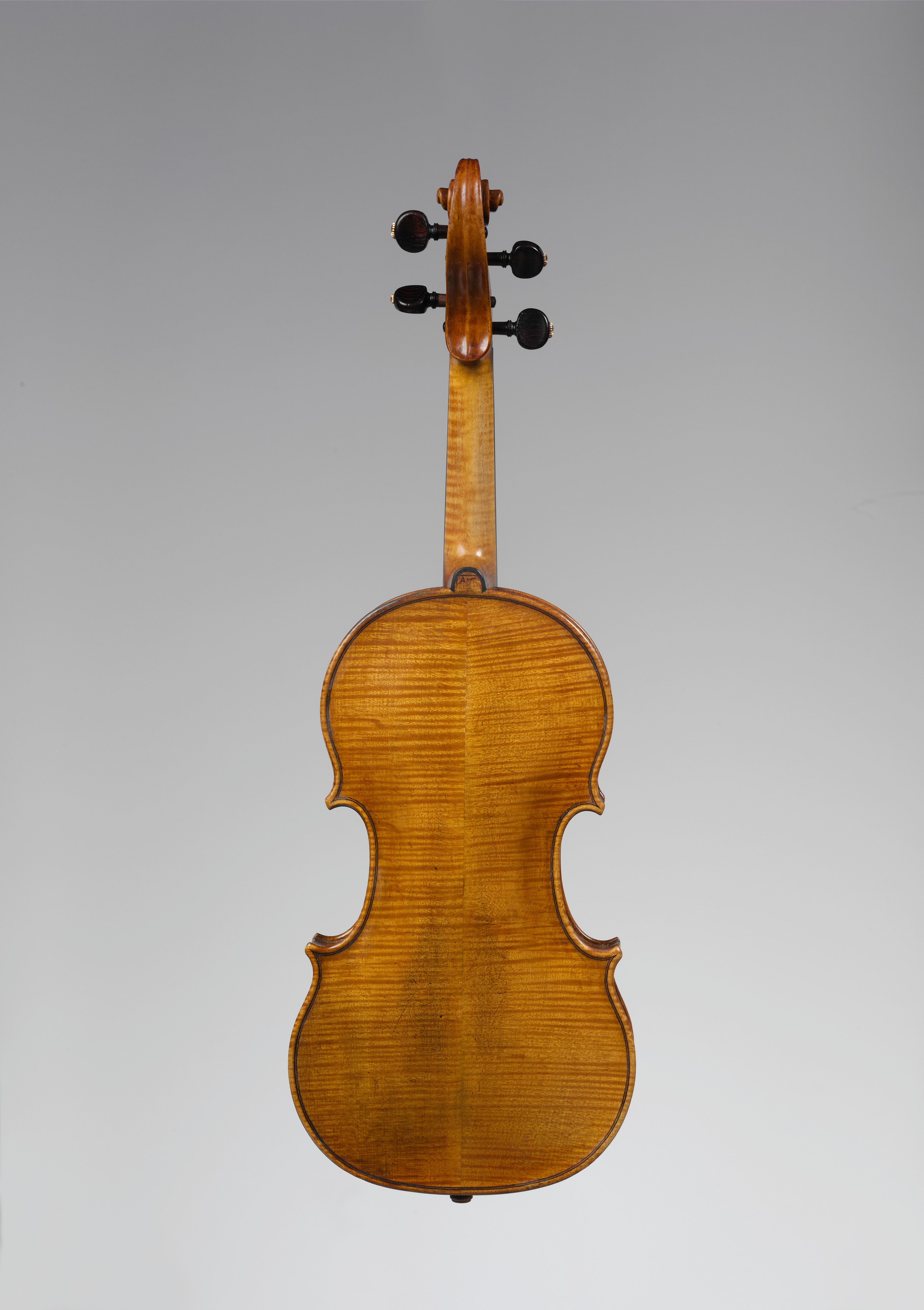
The MET’s collection traces the next three centuries with rare clarity. Object 503057 is a 1669 Cremonese violin from the Amati shop’s late period; object 503443 dates from around 1685 and shows the German adoption of the Italian model; object 500905 is an Italian instrument of 1783 from the late-Stradivari era; object 504514 is a 1737 Italian violin contemporary with Antonio Stradivari’s last decade; and object 506169 is an American violin of 1885 — together they document an unbroken craft lineage from Baroque Italy through Romantic America. (Sources: MET Musical Instruments collection 503057 / 503443 / 500905 / 504514 / 506169.)
The “golden age” of Cremonese making — Stradivari, Guarneri del Gesù, the later Amati generation — concentrated between roughly 1660 and 1750 and remains the reference point for makers and players today. The neck angle and bridge height of these instruments were almost universally adjusted in the early 19th century to handle higher string tension and projection demands, so even the most famous historical violins are, strictly speaking, hybrid objects: 17th-century bodies with later setups.
Construction & Materials
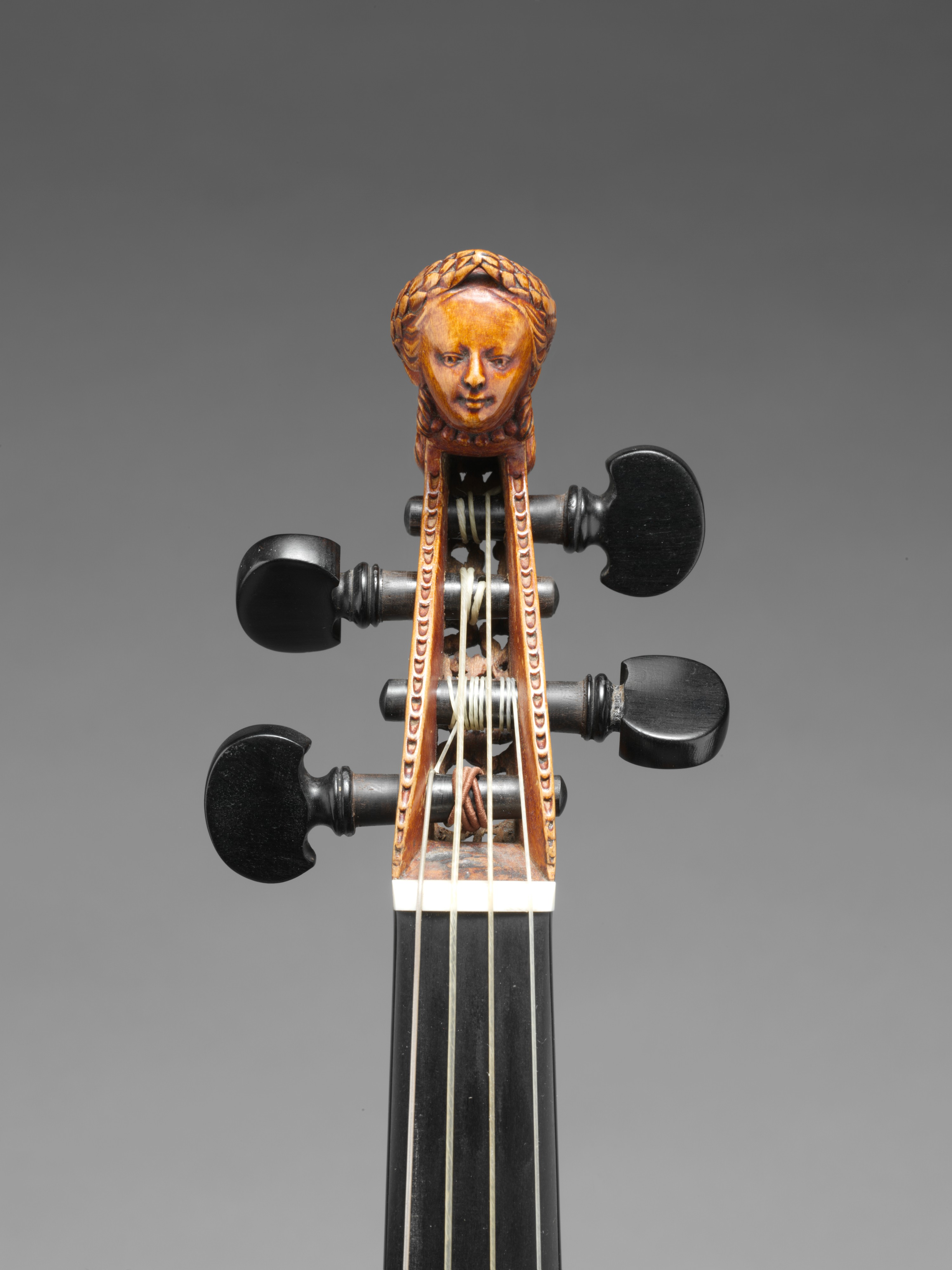
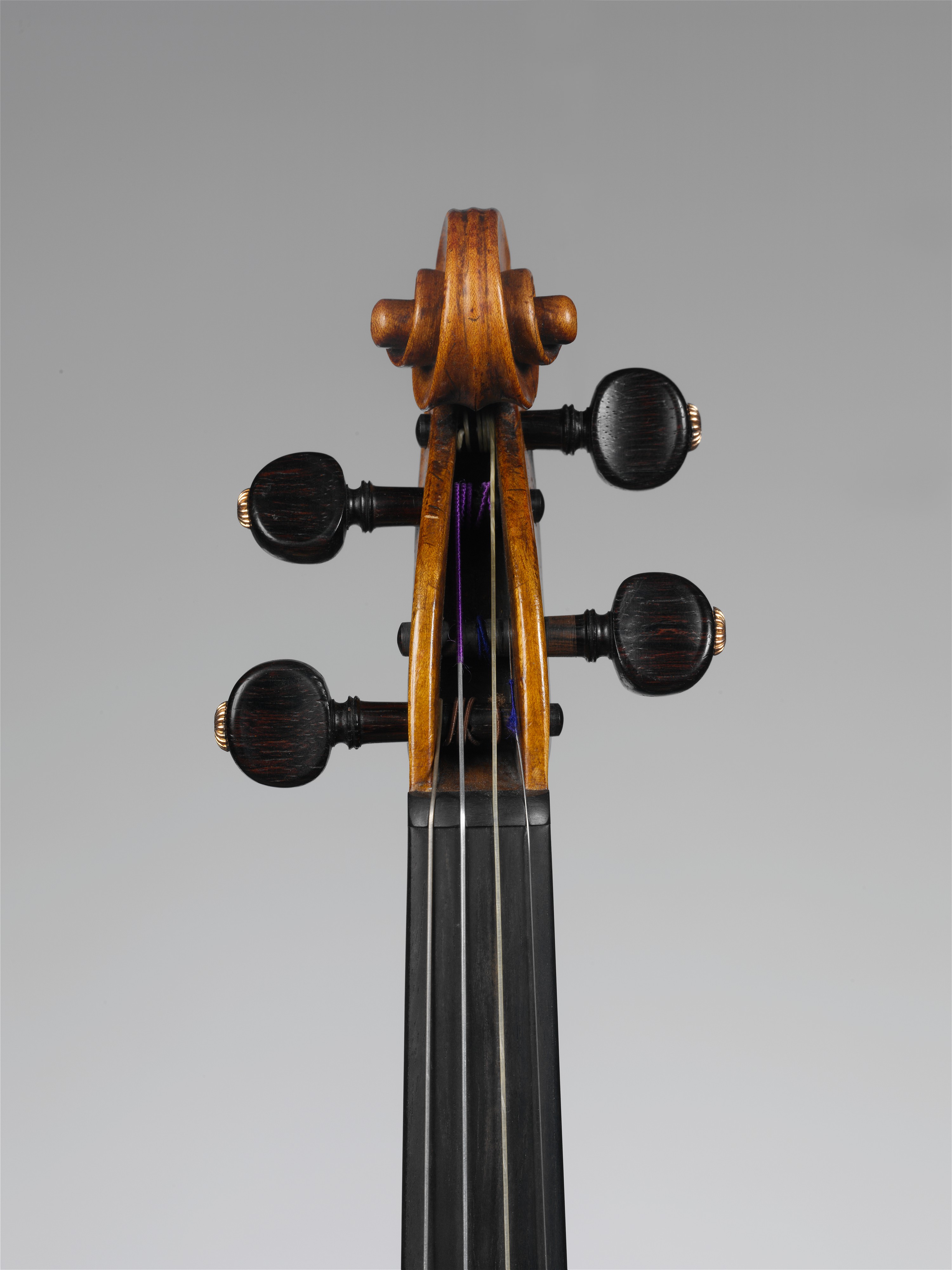
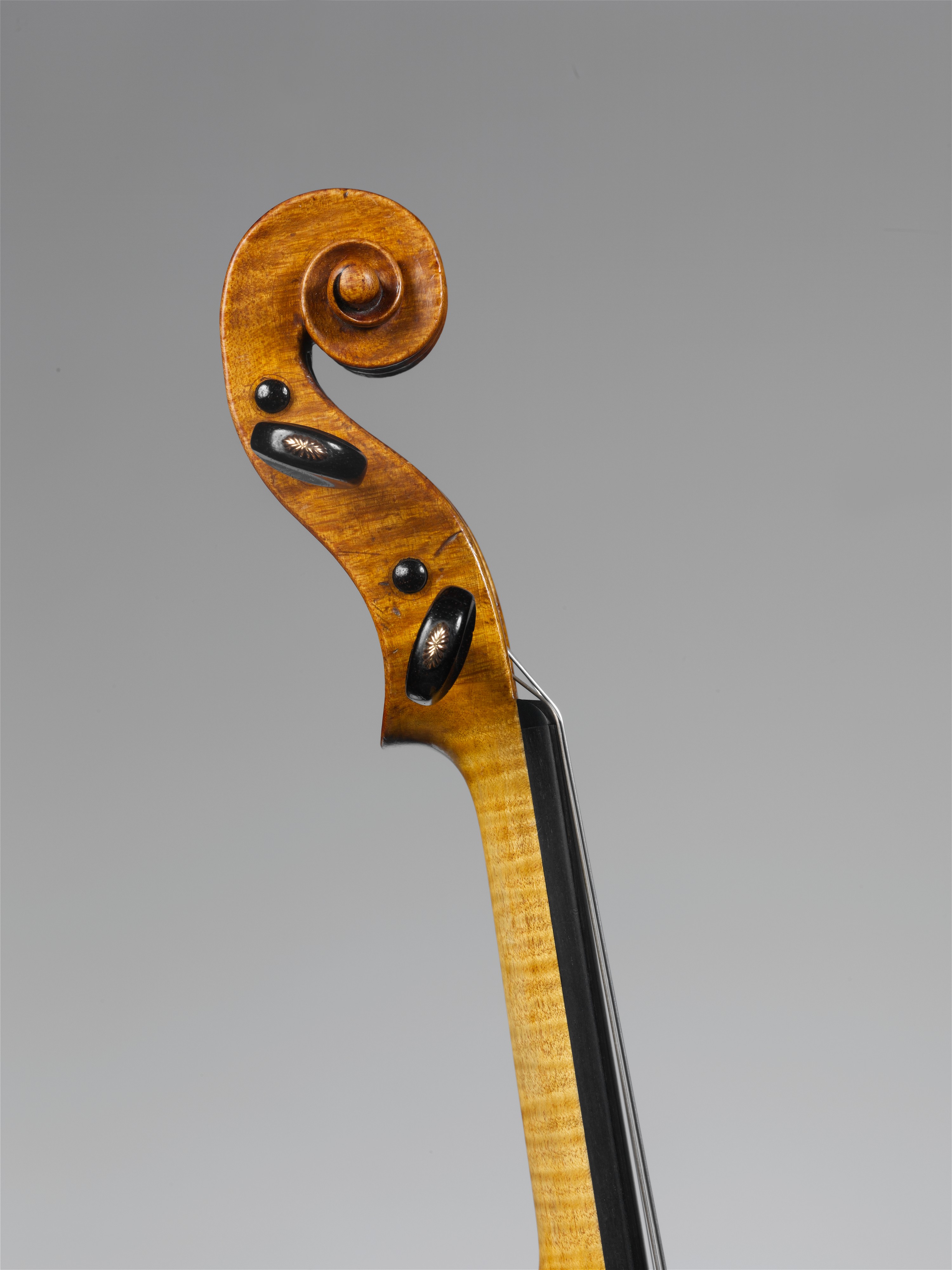
A violin is built from eleven main parts that Wikidata enumerates explicitly: pegbox, sound box, fretboard (fingerboard), bridge, tailpiece, neck, scroll, sound board (top plate), fine tuners, chinrest, and f-holes. The two-piece spruce top and maple back are carved to graduated thicknesses that the maker tunes by tap before assembly. The bridge — a single carved piece of maple about 33 mm tall — stands free between the f-holes and is held in place only by string downforce.
Inside the body, a small spruce sound post wedged between the top and back plates and a bass bar glued under the top complete the acoustic system. Four wound-gut, gut-core synthetic, or steel strings run from the pegbox over the bridge to the tailpiece. The MET specimens consistently identify the wood pairing as spruce and maple, occasionally with ebony fittings. The bow — a separate object with its own makers’ tradition — is typically pernambuco wood with horsehair, weighted to about 60 grams.
How It’s Played
Players hold the instrument between the left jaw and shoulder, supporting the neck with the left hand. The right hand draws the bow across one or two strings at a chosen position between the bridge and the fingerboard; sound point, bow speed, and bow weight together determine tone colour. The left hand stops strings against the unfretted fingerboard, with intonation defined entirely by ear and finger placement.
Standard repertoire technique covers seven positions across the fingerboard, four-finger left-hand patterns, double stops, chords, harmonics, vibrato, spiccato and other articulated bowings, and col legno striking the string with the wood of the bow. Pizzicato — plucking with right or left hand — extends the colour palette further. The instrument’s exposed nature and absence of frets place intonation at the centre of every player’s daily practice routine.
Cultural Significance
The violin sits at the centre of Western art music from the early Baroque to the present. It dominates the symphony orchestra (typically 30 to 36 first and second violins together), defines the standard string quartet, and supplies the headline role in concerto literature from Vivaldi and Bach through Mendelssohn, Brahms, Tchaikovsky, Sibelius, Berg, and Shostakovich.
It is equally central to many folk and traditional musics, often under the name fiddle: Irish and Scottish dance music, Cape Breton style, Appalachian old-time, Cajun, Hungarian and Romani traditions, Norwegian hardingfele (a closely related instrument), Indian Carnatic violin (held vertically with the scroll on the floor), and Arab and Persian classical-music adaptations. The same physical instrument supports radically different bow holds, ornamentation systems, and tuning conventions in each of these traditions.
Notable Examples & Recordings
- The “Messiah” Stradivari (1716, Ashmolean Museum, Oxford) — the most famous unaltered Cremonese instrument.
- The “Cannone” Guarneri del Gesù of Niccolò Paganini (1743, Palazzo Tursi, Genoa) — played in public once a year.
- Recording landmarks: Jascha Heifetz (Brahms, Sibelius), Yehudi Menuhin (Bach Sonatas and Partitas, 1934-36), Itzhak Perlman (Tchaikovsky), Hilary Hahn (Bach 2018), Anne-Sophie Mutter (Mozart concertos), Patricia Kopatchinskaja (Ligeti).
- Folk reference: The Bothy Band (Irish), Stéphane Grappelli (jazz), Mark O’Connor (American), L. Subramaniam (Indian Carnatic).
Related Instruments
- Viola — the alto member of the same family, tuned a perfect fifth lower.
- Cello — the tenor-bass member, played seated and held between the knees.
- Double bass — the lowest standard orchestral string, tuned in fourths and shaped from the older viol family.
- Tenor violin — the historical mid-size member that fell out of regular use in the 18th century.
- Hardanger fiddle — the Norwegian violin variant with sympathetic strings.
- — the medieval bowed ancestor.
- — the medieval European fiddle.
- Erhu — the two-string Chinese spike fiddle that fills a comparable melodic role in its own tradition.
Where to Hear It
Live: every full-time orchestra in the world; chamber-music series such as those at Wigmore Hall (London), the Concertgebouw (Amsterdam), Carnegie Hall (New York), and Suntory Hall (Tokyo). Major festivals include Salzburg, Lucerne, Edinburgh International, Tanglewood, and Aldeburgh. Folk venues — pub sessions in Ireland, fiddle camps in North America, Cape Breton ceilidhs — supply the other half of the listening landscape.
- Wikipedia: Violin
- Wikidata: Violin (Q8355)
- DBpedia: Violin
- MET Object 503057 (Amati 1669)
- MET Object 500905 (Italian 1783)
- Wikimedia Commons: Violins
Learning Resources
A serviceable student violin costs around 300 to 700 USD; a workshop instrument suitable for advanced study runs 3,000 to 10,000 USD; professional contemporary makers ask 20,000 USD upward. Standard method works include the Suzuki series for early study, Wohlfahrt and Kayser for intermediate étude work, Sevcik for technical drill, and Carl Flesch’s Scale System and Art of Violin Playing for the advanced repertoire. Henryk Szeryng’s recorded edition of the Bach Sonatas and Partitas is treated as a reference text by many teachers. The Strad magazine and the Galamian / Delay teaching lineages document modern professional pedagogy.
Frequently Asked Questions
Why are old Italian violins so valuable?
Combination of acoustic quality, scarcity, documented provenance, and a 250-year cultural consensus that places Stradivari and Guarneri at the top of the maker hierarchy. Recent blind-listening studies have shown that experienced players cannot reliably distinguish modern instruments from old ones, which complicates the price story but has not so far moved it.
How long does it take to learn the violin?
Reaching basic ensemble playing typically takes two to three years of regular study; reaching the standard student concerto repertoire (Bach A minor, Mozart 3) usually takes seven to ten years; professional-level playing assumes daily practice from childhood through conservatory training.
What is the difference between a violin and a fiddle?
None physically — the words refer to the same instrument used in different repertoires. “Fiddle” is more often used in folk and traditional contexts; “violin” is more often used in classical contexts. Some folk fiddlers prefer a slightly flatter bridge to make double-stop work easier.
Who invented the modern violin?
There is no single inventor. Andrea Amati in Cremona is the earliest documented maker of the four-string violin in essentially its modern form, around 1550, but the design clearly grew out of a wider 16th-century north-Italian experimentation with bowed instruments.
Are old violins really better than new ones?
Recent controlled studies suggest that the answer is at minimum not obvious. Top contemporary makers in Cremona, the United States, France, and elsewhere produce instruments that experienced soloists rate as comparable to or preferable to old Italian instruments in blind tests.


