Hurdy-Gurdy
vielle à roue
| Category | Strings |
|---|---|
| Country of origin | France / Western Europe |
| Classification | type of musical instrument |
| Wikipedia | en.wikipedia.org |
| Wikidata | Q207821 |
Listen
Audio: EncycloPetey, CC BY-SA 3.0 / via Wikimedia Commons
Audio: EncycloPetey, CC BY-SA 3.0 / via Wikimedia Commons
Audio: No machine-readable author provided. Fenevad assumed (based on copyright claims)., Public domain / via Wikimedia Commons

Overview
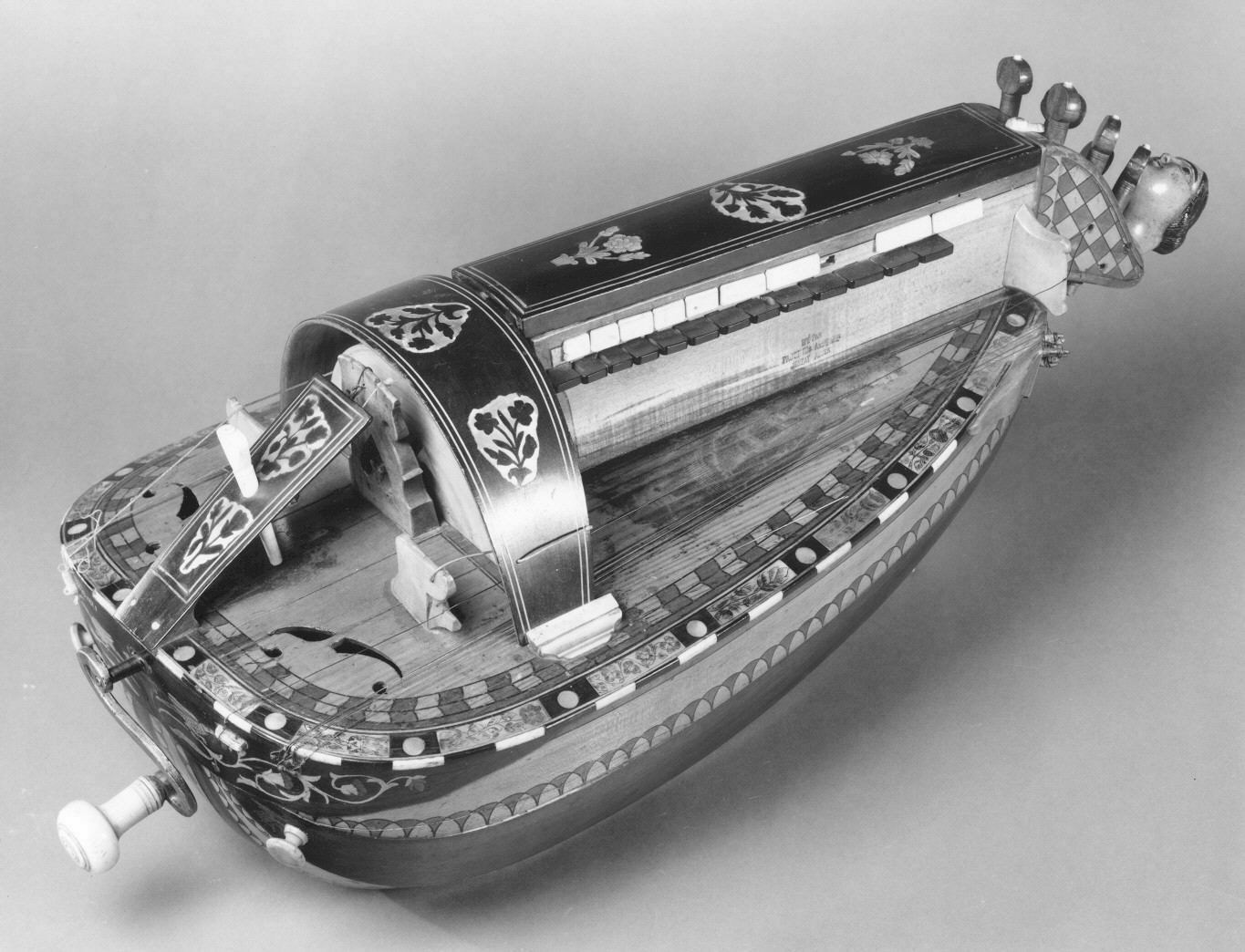
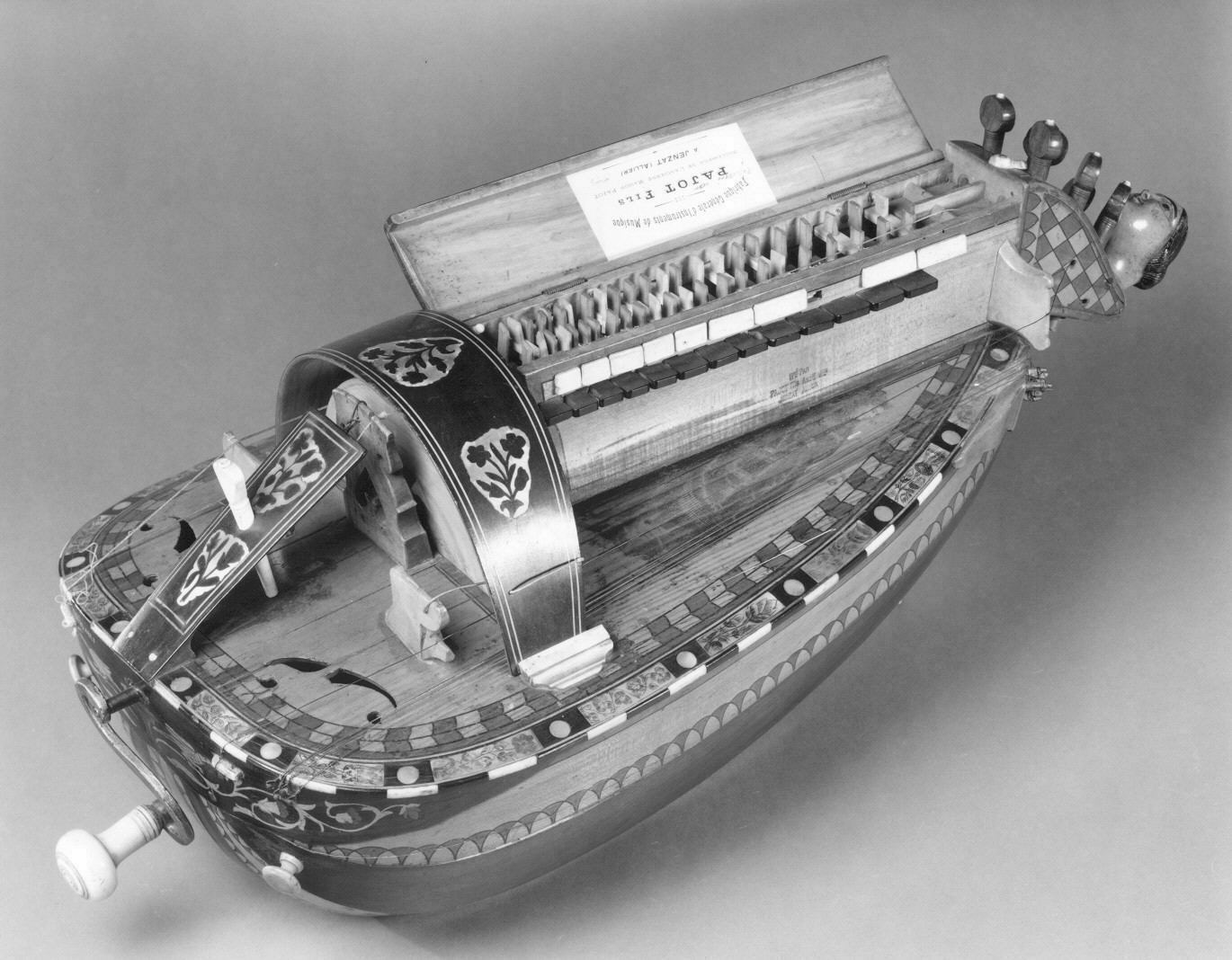
The hurdy-gurdy is a Western European string instrument whose strings are sounded not with a bow but with a rosined wooden wheel turned by a crank in the player’s right hand. The wheel acts effectively as a continuous mechanical bow, allowing all the strings it touches to sound simultaneously and indefinitely as long as the crank is turning. The left hand operates a small keyboard mounted along the side of the instrument, with each key pressing a small wooden tangent against a melody string to change its pitch.
The Hornbostel-Sachs system classifies the hurdy-gurdy as 321.322 — a composite chordophone sounded by a rosined wheel — and it sits alone in that category for most practical purposes. The result is a sound unlike any other instrument in the European tradition: a continuous polyphonic drone, with melody, rhythmic trompette buzz, and sympathetic resonance all sounding together from a single instrument played by a single performer.
Origin & History
The hurdy-gurdy is one of the older surviving European string instruments. Its earliest documented form, the medieval organistrum, dates from at least the 10th century and required two players — one to turn the crank and one to operate the keys. Over the following centuries the instrument shrank from a long two-person organ-like instrument to a smaller portable design that could be played by a single performer.
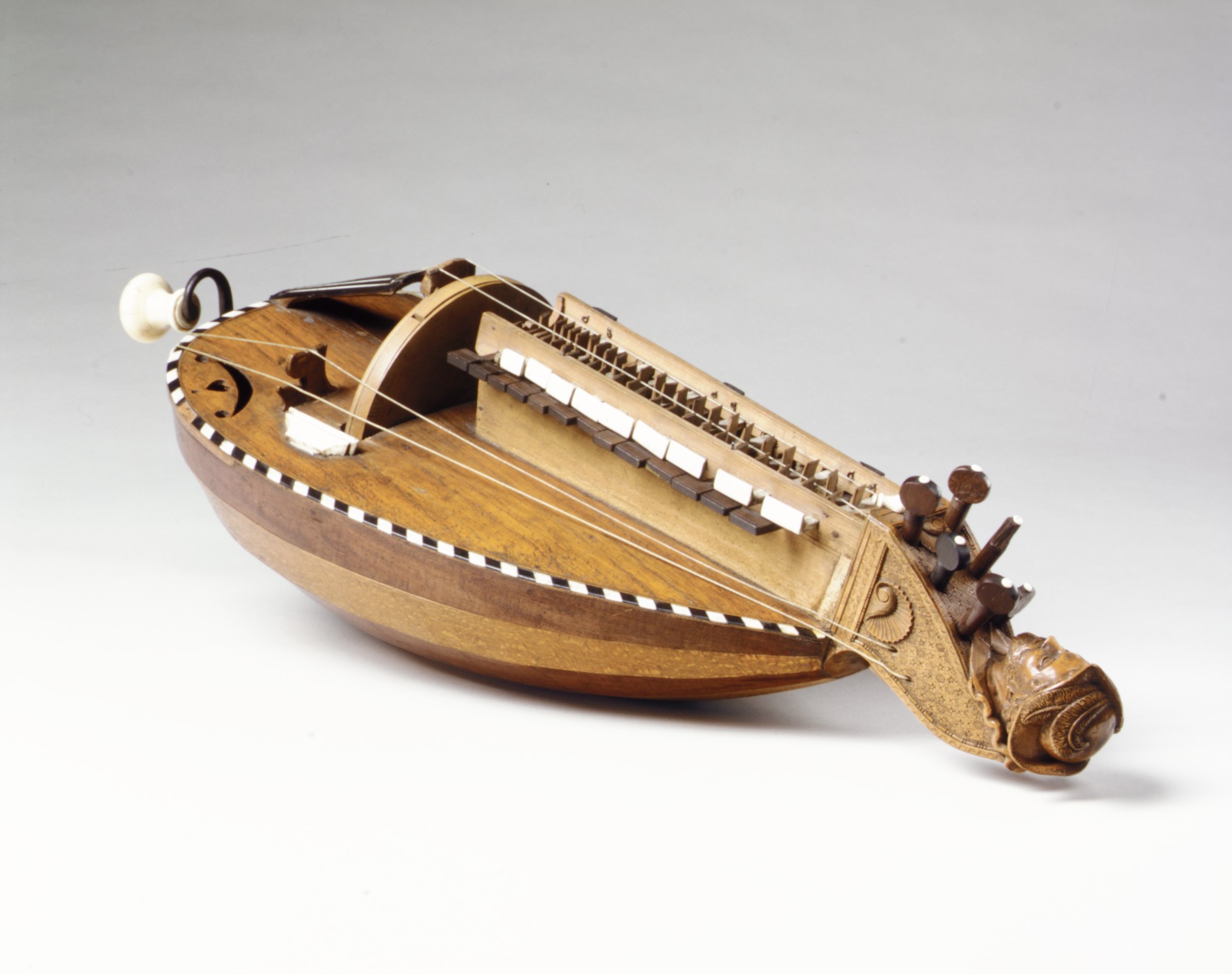
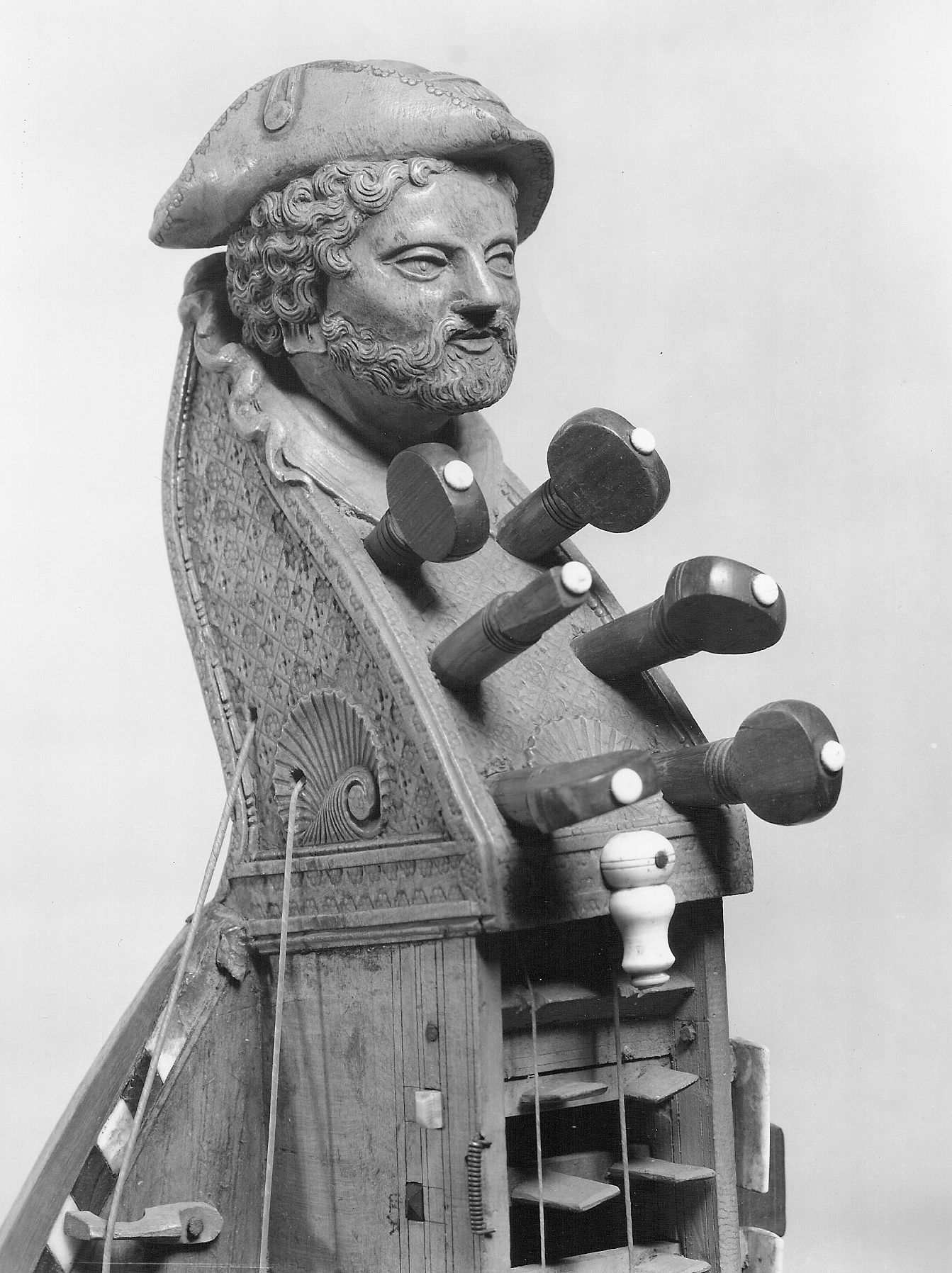
By the 17th and early 18th centuries the hurdy-gurdy occupied two distinct cultural spaces simultaneously: a humble outdoor street and country-music role across much of Europe, and an elite courtly role in France, where the instrument was redesigned with a lute- or guitar-shaped body and decorated to a high standard for use at court. The Metropolitan Museum of Art’s second-half-18th-century French hurdy-gurdy (object 501646), made of wood, ivory, and metal, dates from this courtly tradition.
The instrument went into decline through much of the 19th century but never disappeared in central France, where it remained central to the bourrée dance music of the Berry, Bourbonnais, and Auvergne regions. The MET also holds a c. 1879 French hurdy-gurdy (object 504237) made of wood, bone, ivory, and mother-of-pearl, documenting the survival of high-quality construction even as the instrument was passing largely into the hands of folk musicians. A folk-revival surge from the 1970s onward — supported by makers and players such as Valentin Clastrier, Gilles Chabenat, and Patrick Bouffard — has made the hurdy-gurdy more widely played today than at any time in the past two centuries.
Construction & Materials
A modern hurdy-gurdy is built around a wooden body — most commonly lute-shaped, guitar-shaped, or trapezoidal — with a flat soundboard pierced by sound-roses. A wheel of around fifteen centimetres in diameter, made of hardwood and rubbed with rosin, is mounted at the lower end of the body and is turned by a crank attached to its central axle.
Multiple strings cross the wheel at the same time. Two of these are melody strings (chanterelles), pressed by the small keyboard tangents to produce different pitches. Several others are drones (bourdons), tuned to the tonic and fifth of the instrument’s mode and providing the continuous bagpipe-like background. One or two strings — the trompette and mouche — pass over a small movable bridge called the chien (“dog”), which buzzes against the soundboard when the player accelerates the crank, producing the percussive rhythmic clicking that is the defining feature of French hurdy-gurdy playing.
How It’s Played
The player typically wears the hurdy-gurdy strapped over one shoulder, supported across the lap when seated, and turns the crank with the right hand at a steady rotational speed. The left hand operates the row of keys along the side of the instrument; each key carries a small tangent that, when pressed, lifts to touch the melody string and shorten its sounding length.
The defining technique is the management of the trompette buzz. By accelerating the crank briefly with a small jerk of the wrist, the player makes the chien bridge bounce against the soundboard, producing a sharp percussive click. Patterns of these clicks, woven through the melody, are what give French hurdy-gurdy dance music its characteristic rhythmic drive.
Cultural Significance
The hurdy-gurdy is most strongly associated today with the traditional dance music of central France — the bourrée repertoire of Berry, Bourbonnais, Auvergne, and surrounding regions. It is also the subject of significant 18th-century French baroque chamber repertoire (Boismortier, Chédeville, and others) and has had a steady presence in early-music ensembles since the 1960s.
In recent decades the instrument has also entered new musical contexts: experimental improvisation through players such as Valentin Clastrier, electronic and progressive folk through Patrick Bouffard and Gilles Chabenat, and metal and rock crossover through groups including Eluveitie. This combination of folk, baroque, and contemporary contexts gives the modern hurdy-gurdy an unusually wide cultural reach.
Notable Examples & Recordings
The Metropolitan Museum of Art’s two surviving French hurdy-gurdys (objects 501646 and 504237) usefully document both the 18th-century courtly tradition and the late-19th-century folk-revival craft. For listening, recordings by Valentin Clastrier, Gilles Chabenat, Patrick Bouffard, and the broader French traditional-music scene offer the strongest introduction. The baroque hurdy-gurdy repertoire is well represented in recordings by Matthias Loibner and other historically informed performers.
Related Instruments
- Nyckelharpa – the Swedish keyed fiddle, a related but bowed (not wheeled) cousin
- – the Danish hurdy-gurdy variant
- – the historical French combination of hurdy-gurdy and small organ
- – the Italian equivalent of the vielle organisée
- Bagpipe – not a string instrument, but shares the continuous-drone aesthetic central to hurdy-gurdy music
Where to Hear It
Central French folk dances, early-music concerts of 18th-century baroque chamber music, and the major European traditional-music festivals are the natural settings for the hurdy-gurdy. The instrument also appears regularly in cross-genre projects with metal, electronic, and contemporary composition.
- Wikipedia: Hurdy-gurdy
- The MET: Hurdy-Gurdy, 18th century (object 501646)
- The MET: Hurdy-Gurdy, c. 1879 (object 504237)
- Wikimedia Commons: Hurdy-gurdy
Learning Resources
Beginners typically start by learning to turn the crank smoothly and at a constant speed before adding the keyboard work. The trompette buzz technique is usually introduced after the basic crank-and-key coordination is settled. Several senior French hurdy-gurdy makers and players offer structured tuition, and a growing number of dedicated workshops and festivals (such as Saint-Chartier in central France) host short residential courses.
Frequently Asked Questions
How does a hurdy-gurdy work?
The strings are sounded by a rosined wooden wheel turned by a crank in the player’s right hand, while the left hand presses small keys that lift wooden tangents against the melody strings to change their pitch. Drone strings sound continuously alongside the melody, and a buzzing trompette string adds rhythmic percussion.
Where does the hurdy-gurdy come from?
The instrument is one of the older surviving European string instruments, with its medieval ancestor — the organistrum — documented from at least the 10th century. The modern smaller form took shape over the following centuries and is most strongly associated with central France today.
What is the buzzing sound from a hurdy-gurdy?
That buzz comes from the trompette string, which passes over a small movable bridge called the chien. By accelerating the crank briefly with a wrist movement, the player makes the chien bounce against the soundboard, producing a sharp percussive click. Patterns of these clicks form the rhythmic drive of French hurdy-gurdy dance music.
Are old hurdy-gurdys displayed in museums?
Yes. The Metropolitan Museum of Art in New York holds at least two well-documented French hurdy-gurdys (objects 501646 and 504237), one from the late 18th-century courtly tradition and one from the late 19th-century folk-revival period.
Is the hurdy-gurdy difficult to learn?
Producing a basic continuous tone with the crank and pressing single notes on the keyboard is reasonably approachable. Coordinating the crank, the keyboard, and the trompette buzz technique simultaneously typically takes years of consistent practice.