
Ngoni
ngoni
| Category | Strings |
|---|---|
| Country of origin | West Africa (Mali) |
| Wikipedia | en.wikipedia.org |
| Wikidata | Q1703491 |
Listen
Audio: Audiobraille and Yacouba Diarra, CC BY-SA / via Internet Archive

Overview
The ngoni is a West African plucked lute, with a small canoe-shaped wooden body covered with stretched animal hide and a long unfretted neck carrying three to seven strings. It is one of the central instruments of the Manding griot tradition of Mali, Guinea and surrounding countries, and one of the principal direct ancestors of the African American banjo.
The ngoni is not a single instrument but a small family. The jeli ngoni of the Manding hereditary musician caste is the most familiar form, but the larger and lower-tuned donsó ngoni of the hunter brotherhoods is a distinct instrument with its own ceremonial role, and several other regional variants exist across West Africa.
Origin & History
The ngoni’s roots reach deep into West African musical tradition, with documented references in early Arab travel accounts of the medieval Sahel. The chronicler Ibn Battuta described West African plucked lutes in his 14th-century travels, and the instrument is generally understood to have been part of the Manding cultural complex that developed around the Mali Empire from the 13th century onward.
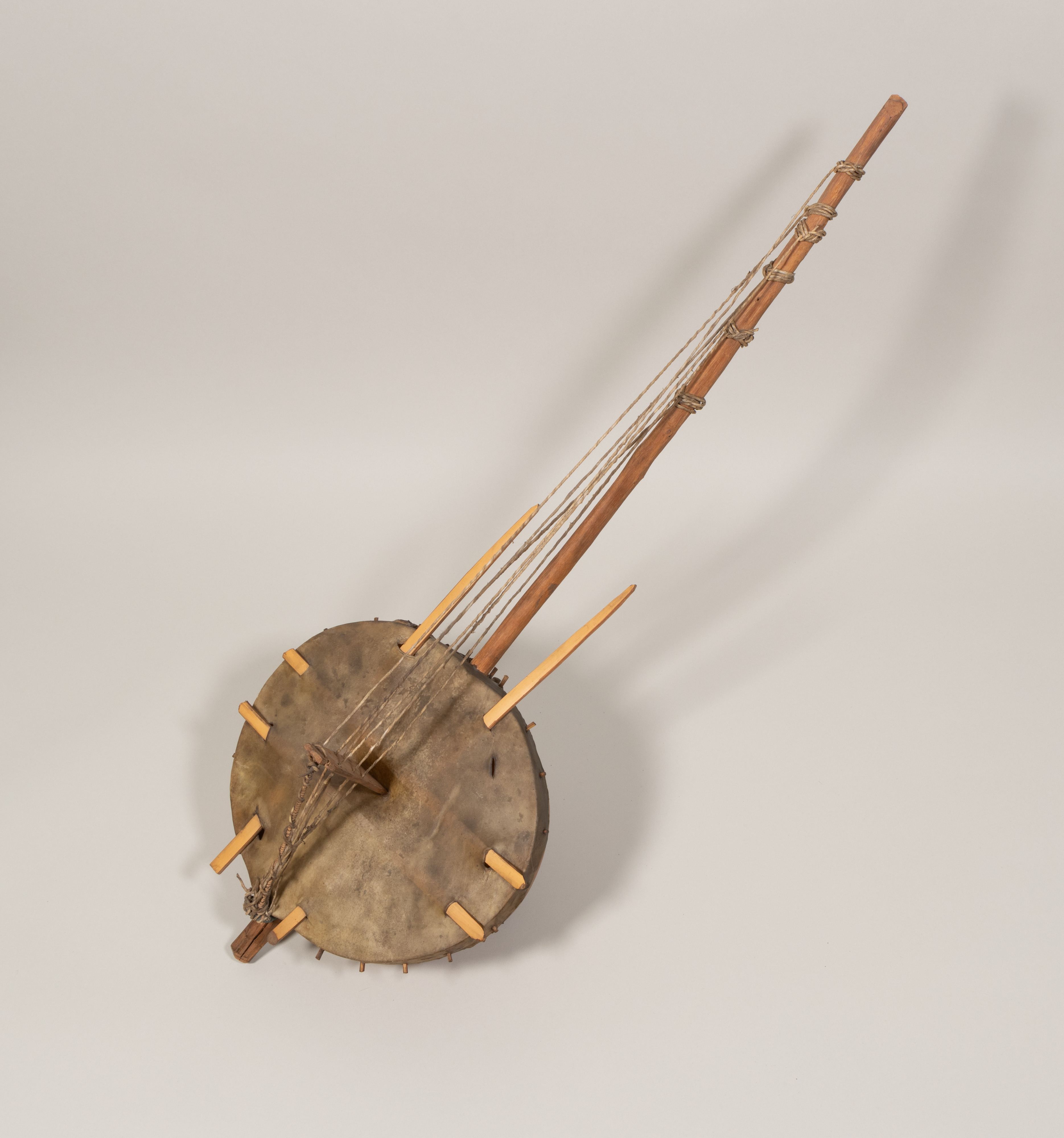
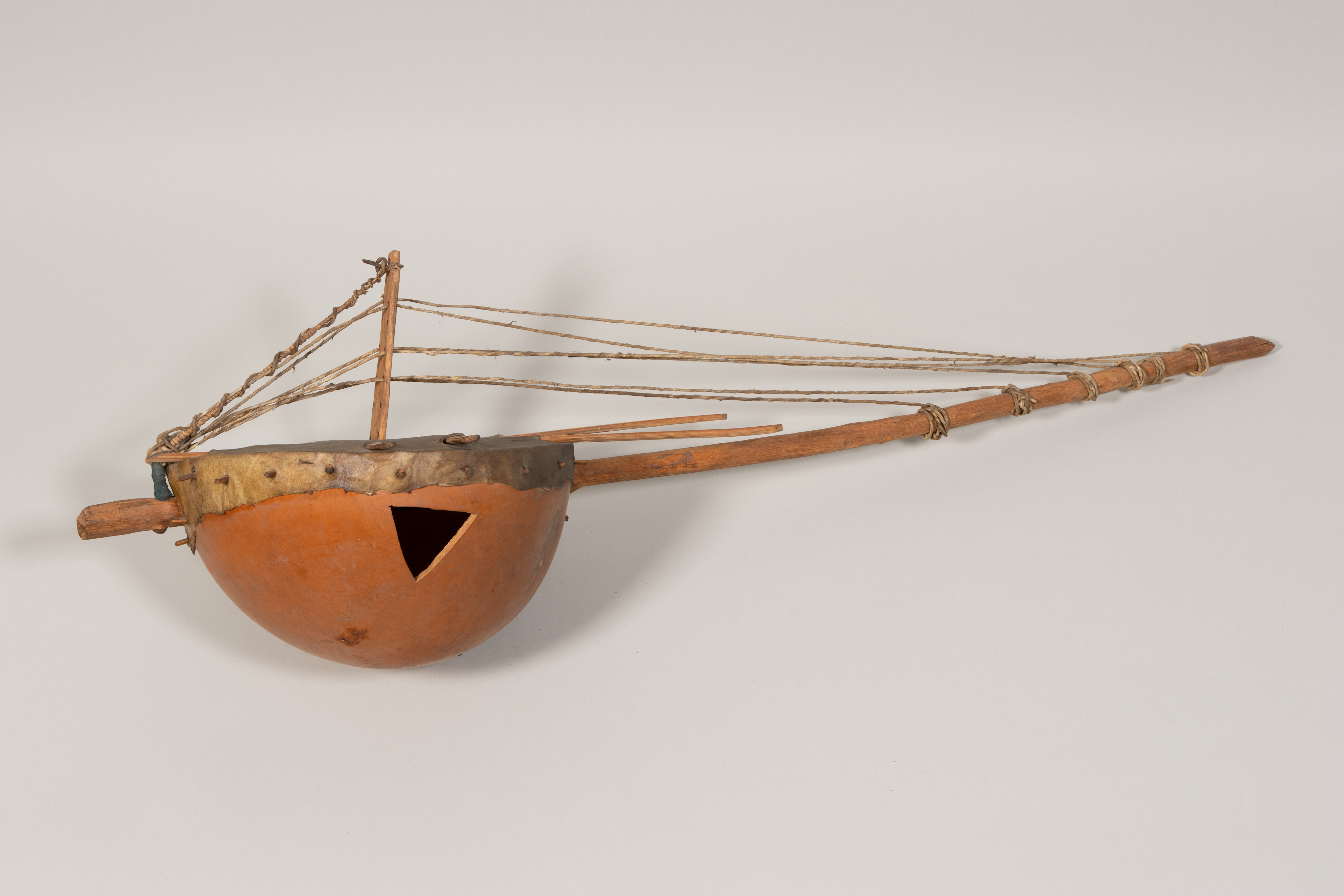
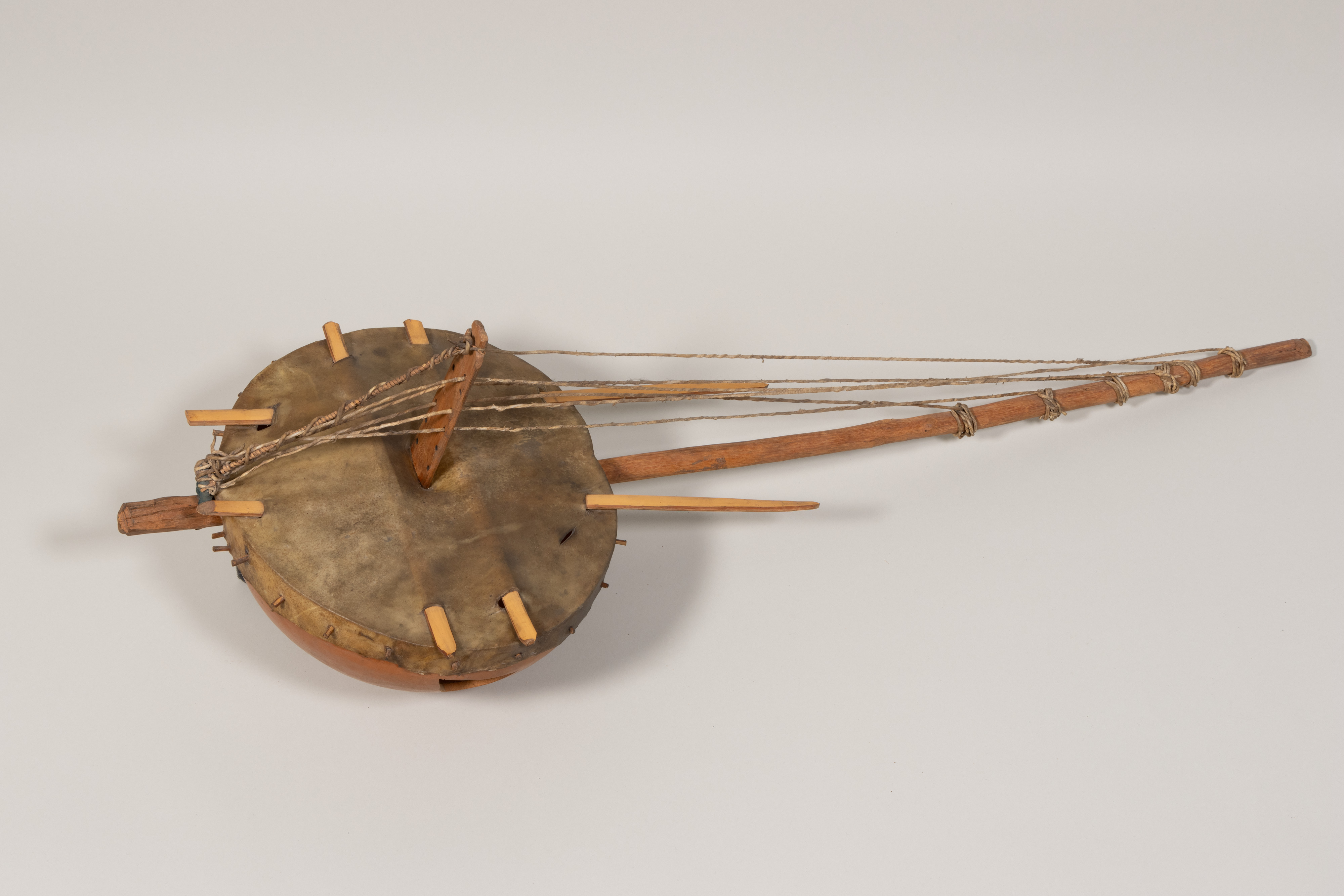
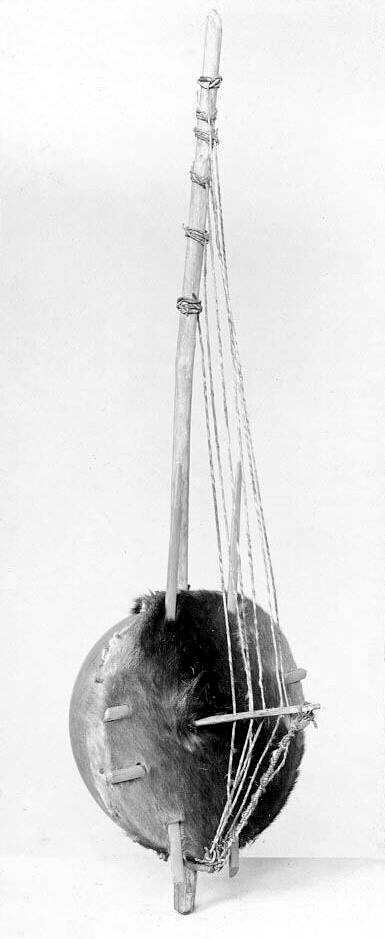
The Metropolitan Museum’s collection holds three specimens that document the family’s range. A 19th-century Wasulu donsó ngoni (MET object 502610), made of wood, skin and metal, represents the larger hunter’s branch of the family. A 19th-century Loma sora ngoni or simbingo (MET 501110), built from gourd, skin, wood and leather, shows a related coastal branch. The same MET department holds a 19th-century Malinke bala (MET 501109) — the West African xylophone — providing context for the broader Manding instrumental ensemble in which the ngoni functions.
The instrument crossed the Atlantic with enslaved West Africans during the 17th and 18th centuries and contributed to the early American banjo lineage. Contemporary players such as Béla Fleck and Bassekou Kouyaté have explicitly traced the connection in collaborative recordings.
Construction & Materials
The Hornbostel-Sachs system places the ngoni in 321.31 (necked spike-lutes — a different subgroup from the European or Middle Eastern lute families). The body is carved from a single piece of light wood, hollowed into a canoe or oval shape, and covered with a stretched animal hide (typically goat or cow) that serves as both soundboard and string anchor at the lower end of the body.
The neck is a single long wooden pole that passes through the entire length of the hide-covered body — the defining feature of a spike lute. Strings are attached to the lower end of this spike and tuned at the upper end with leather rings (in the traditional form) or modern wooden tuning pegs. There is no fingerboard; the strings sit close to the neck and are stopped by pressing them against the wooden pole with the fingertips.
The donsó ngoni in the MET collection (object 502610) and the related Wasulu instruments are larger and lower-tuned, suited to the slow narrative ceremonial repertoire of the hunter brotherhoods. The smaller jeli ngoni used by Manding griots has a brighter, more agile sound suited to the faster repertoire of praise songs and historical narrative.
How It’s Played
The player sits with the ngoni held across the body, the small canoe-shaped resonator resting on the right thigh and the neck angled to the left across the chest. The right hand plucks the strings with thumb and index finger; the left hand stops the strings against the unfretted wooden neck. The technique combines fast melodic playing with rhythmic ostinatos that interlock with the kora and the human voice in the larger jeli ensemble.
Tunings vary widely by player and tradition. Most jeli ngoni tunings are pentatonic; donsó ngoni tunings are heptatonic and lower-pitched. Bassekou Kouyaté’s modern professional ngoni — strung with seven strings rather than the traditional four — has extended the instrument’s harmonic and melodic range significantly.
Cultural Significance
In the Manding griot tradition the ngoni is one of the four sacred instruments of the jeli hereditary musician caste, alongside the kora, the balafon and the human voice. The instrument carries specific repertoire passed down within named family lineages — the Kouyaté and Diabaté families being among the most prominent.
The donsó ngoni of the hunter brotherhoods has a separate but parallel ceremonial role. Hunter associations across the Manding-speaking world maintain distinct musical and ritual traditions, and the donsó ngoni functions within these as a vehicle for chanted narrative about the hunt, the natural world, and the social codes of the brotherhood.
Notable Examples & Recordings
The three MET specimens (objects 502610, 501110 and 501109) document the family in its 19th-century pre-modern form. For listening, recordings by Bassekou Kouyaté and Ngoni Ba (especially I Speak Fula) provide the most influential modern jeli ngoni work. Toumani Diabaté’s collaborations with Bassekou Kouyaté integrate kora and ngoni in their classical Manding configuration. Donsó ngoni recordings from the Wasulu region — particularly by Yoro Sidibé and Issa Bagayogo — show the hunter’s tradition.
Related Instruments
- Kora – the Manding 21-string harp-lute, sister instrument to the ngoni in the jeli ensemble
- Balafon – the Manding wooden xylophone, the third of the four jeli instruments
- Banjo – the African American descendant of the West African plucked-lute family
- Akonting – the Jola (Senegambia) folk lute particularly close to the early banjo
- – the Wolof and Fulani plucked lute from the same broader family
Where to Hear It
Manding music concerts in Bamako, Conakry and Dakar feature the ngoni in nearly every traditional ensemble. International touring by Bassekou Kouyaté and Ngoni Ba has brought the instrument to European, North American and Japanese audiences. Festival sur le Niger in Ségou and Festival au Désert (suspended since the 2012 Mali conflict) are key traditional gathering points. The Wikimedia Commons category collects images and audio.
- Wikipedia: Ngoni
- The MET: Donsó Ngoni (object 502610)
- The MET: Sora Ngoni / Simbingo (object 501110)
- The MET: Bala (object 501109)
- Wikimedia Commons: Ngoni
Learning Resources
Serious ngoni study is most easily pursued in Mali, particularly through the Bassekou Kouyaté workshop in Bamako or through any of the established jeli family lineages. Outside Mali, instruction is offered through African-music programmes at universities (UCLA, SOAS) and through community-based teachers in the West African diaspora in Paris and New York. Method materials are scarce; recordings remain the primary external resource for self-study.
Frequently Asked Questions
What family is the ngoni in?
It is a necked spike-lute, plucked, classed as 321.31 in the Hornbostel-Sachs system.
How many strings does an ngoni have?
Traditional jeli ngoni has four strings; donsó ngoni typically six or seven. Bassekou Kouyaté’s modern professional instrument carries seven strings.
Is the ngoni an ancestor of the banjo?
The ngoni and other West African plucked lutes (including the akonting and the xalam) are widely accepted as direct ancestors of the African American banjo, which developed in the colonial-era Caribbean and southern North America.
What is the difference between a jeli ngoni and a donsó ngoni?
The jeli ngoni is the smaller, brighter-sounding instrument of the Manding griot caste. The donsó ngoni is the larger, lower-tuned instrument of the hunter brotherhoods, with its own separate repertoire and ceremonial role.
Are old ngoni in museums?
Yes. The Metropolitan Museum of Art holds three relevant 19th-century specimens (objects 502610, 501110 and 501109) covering Wasulu, Loma and Malinke branches of the broader Manding tradition.
Is the ngoni difficult to learn?
Basic technique can be picked up in months. Mastering the Manding repertoire and the close coordination with kora, balafon and voice in jeli ensemble takes years of study with a teacher in the tradition.


