Banjo
banjo
| Category | Strings |
|---|---|
| Country of origin | West Africa / United States |
| Classification | type of musical instrument |
| Wikipedia | en.wikipedia.org |
| Wikidata | Q258896 |
Listen
Audio: Poniol60, CC BY-SA 3.0 / via Wikimedia Commons
Audio: Paul Laurence Dunbar, PD / via Internet Archive

Overview
Defined by its circular wooden or metal rim, a stretched skin or synthetic head, and a long fretted neck typically carrying four or five strings, the banjo is one of the most visually distinctive plucked chordophones in popular music. Today it sits at the heart of American folk, old-time, and bluegrass traditions, but its roots reach back to West Africa: the instrument crossed the Atlantic in the holds of slave ships from the seventeenth century onward and was rebuilt on plantations in the Caribbean and the southern United States from whatever materials came to hand.
The Hornbostel-Sachs system classifies the banjo as 321.312 — a composite chordophone with a neck that passes diametrically through the resonator, sounded by plectrum, finger picks, or the bare fingers — which captures one of the instrument’s defining features: the neck runs all the way through the rim and out the back.
Origin & History
Skin-headed gourd lutes from West and West-Central Africa — the akonting, ngoni, and xalam among them — are the banjo’s direct ancestors. Across the 1600s and 1700s, enslaved Africans in the Caribbean and the southern colonies of what would become the United States rebuilt these instruments from whatever local materials were available — gourds, hardwood necks, and tanned animal skins. By the late 18th century, observers including Thomas Jefferson had documented the banjar as a widely played instrument among enslaved African Americans.
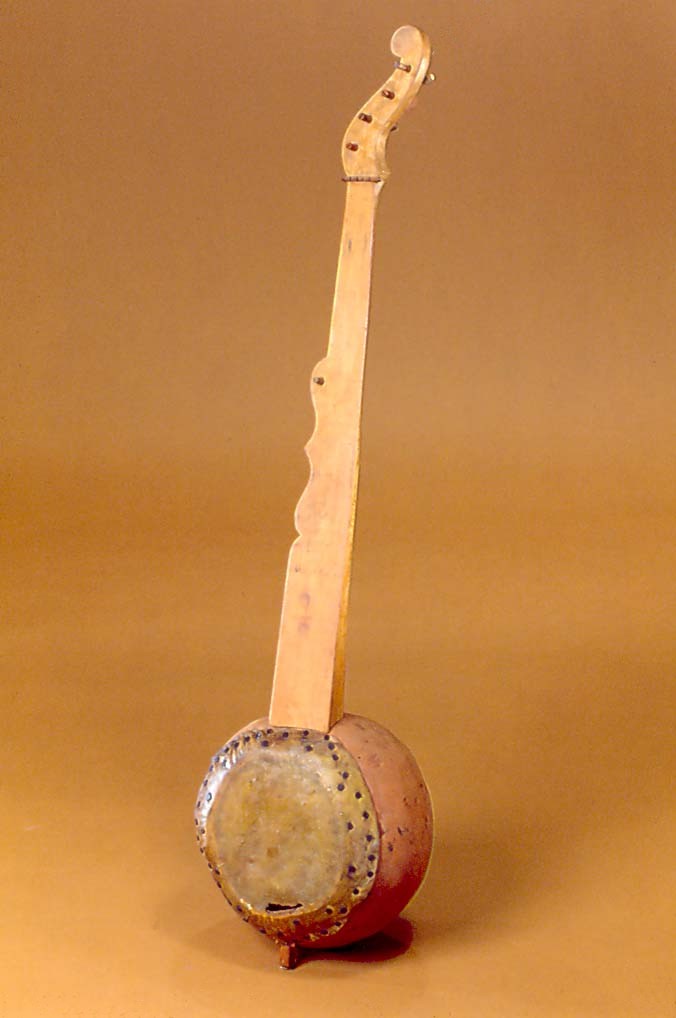
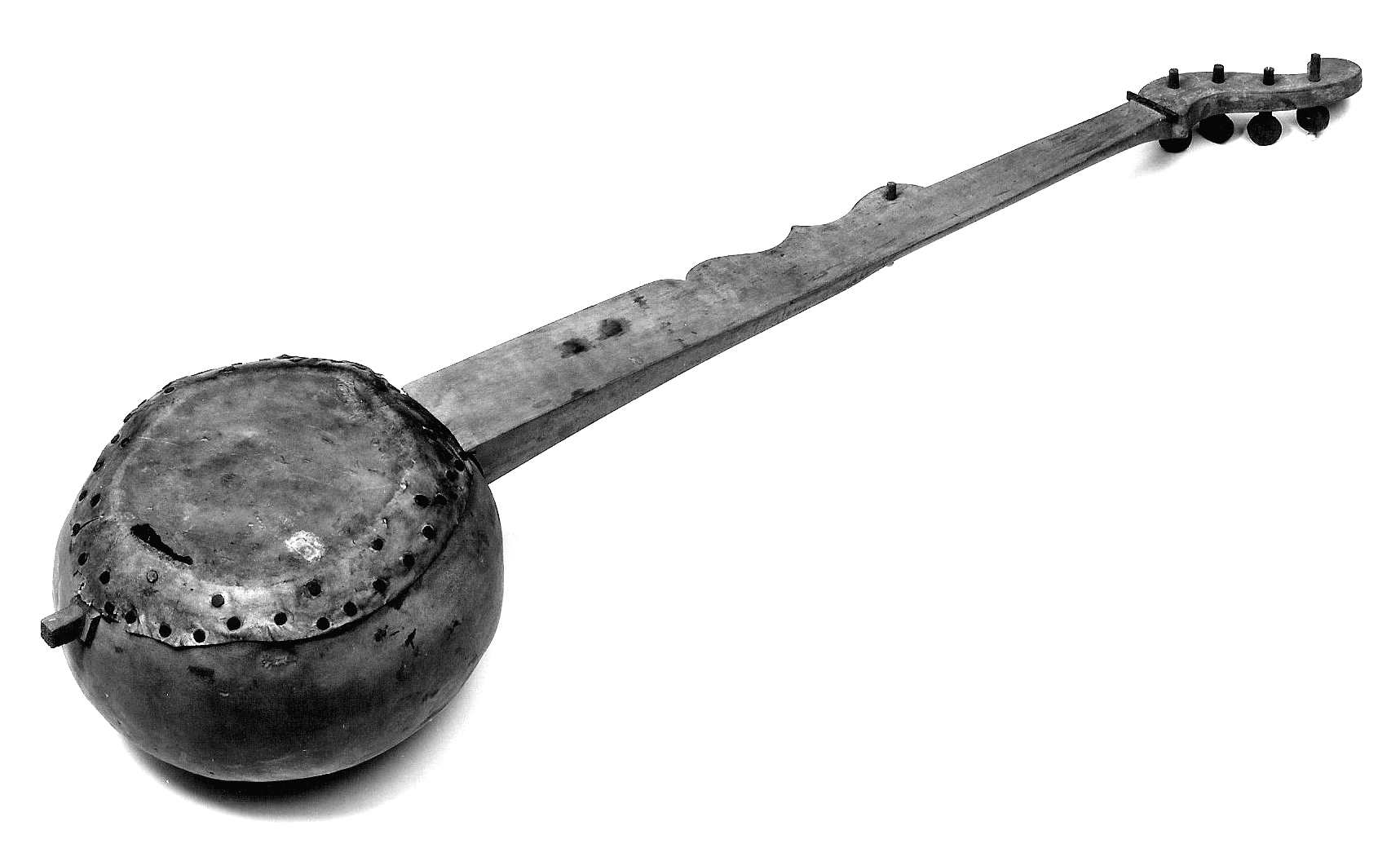
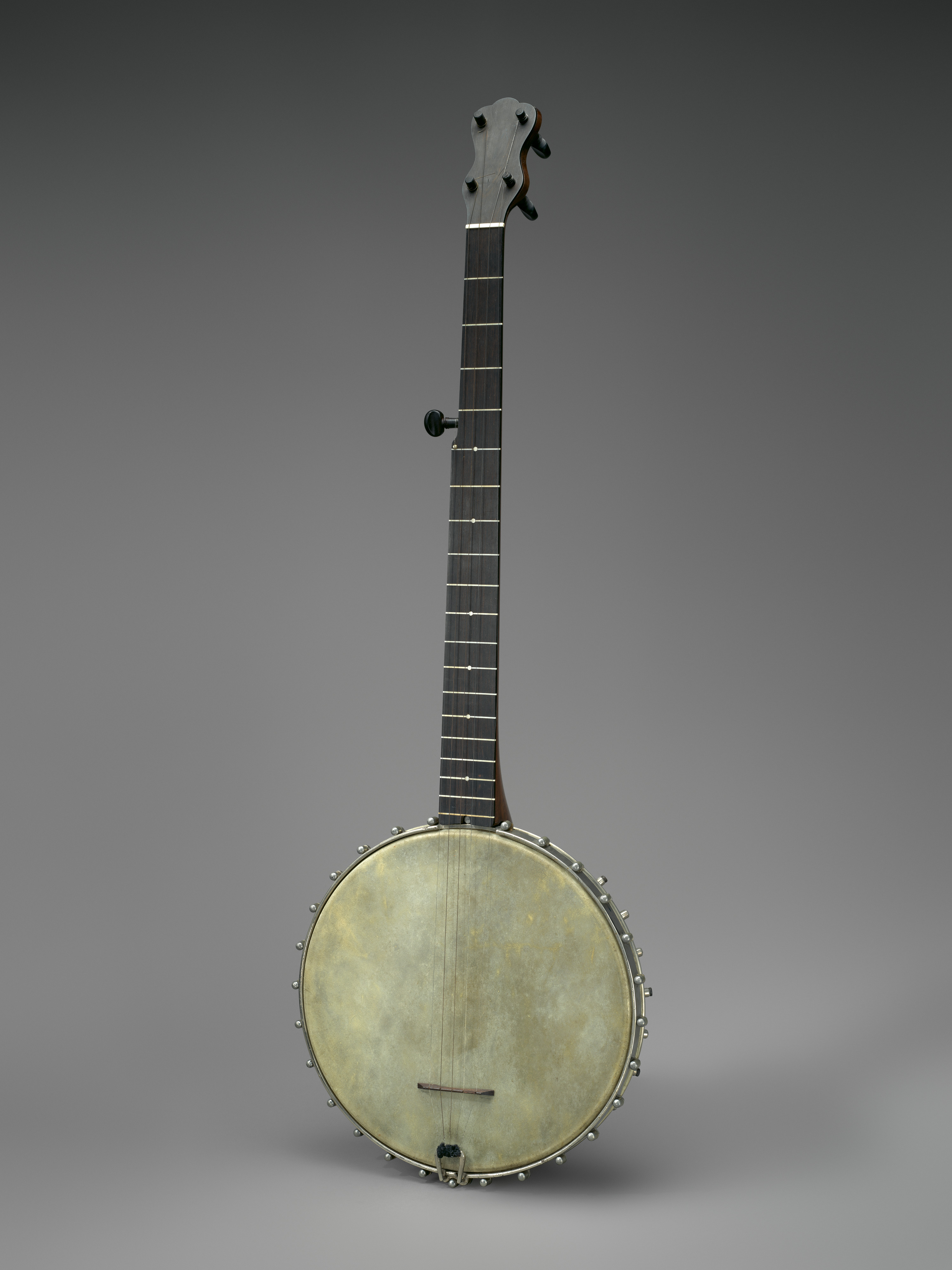
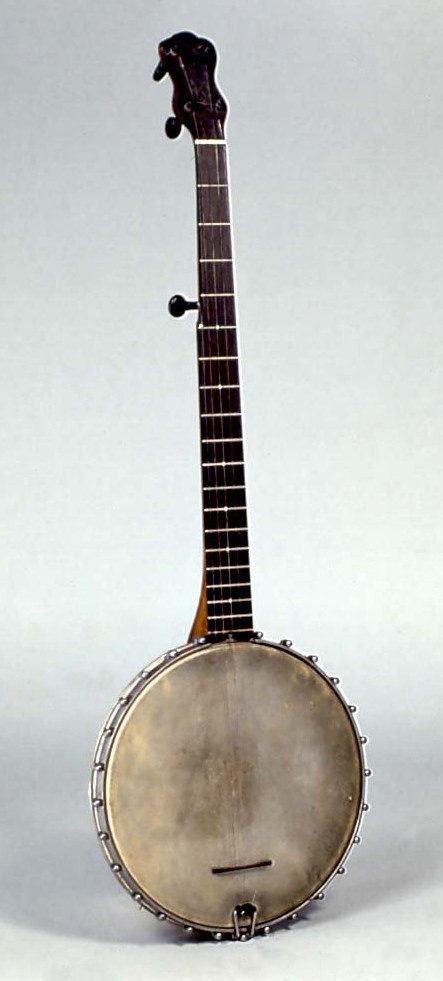
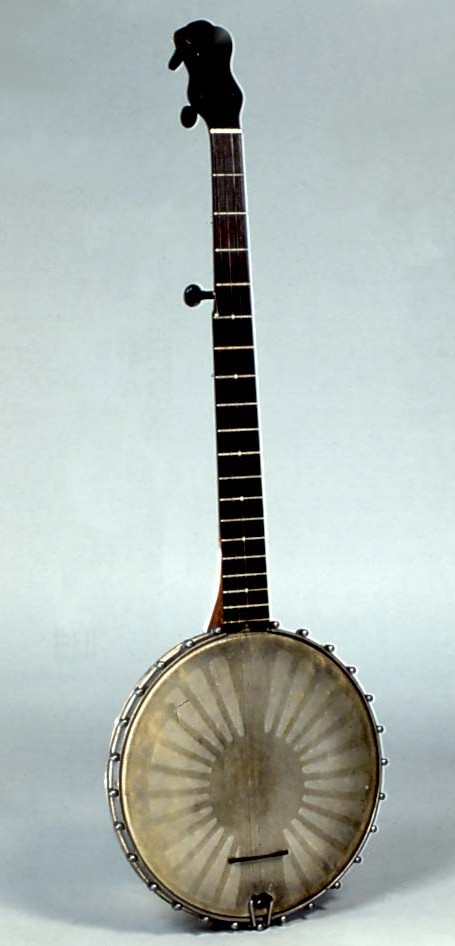
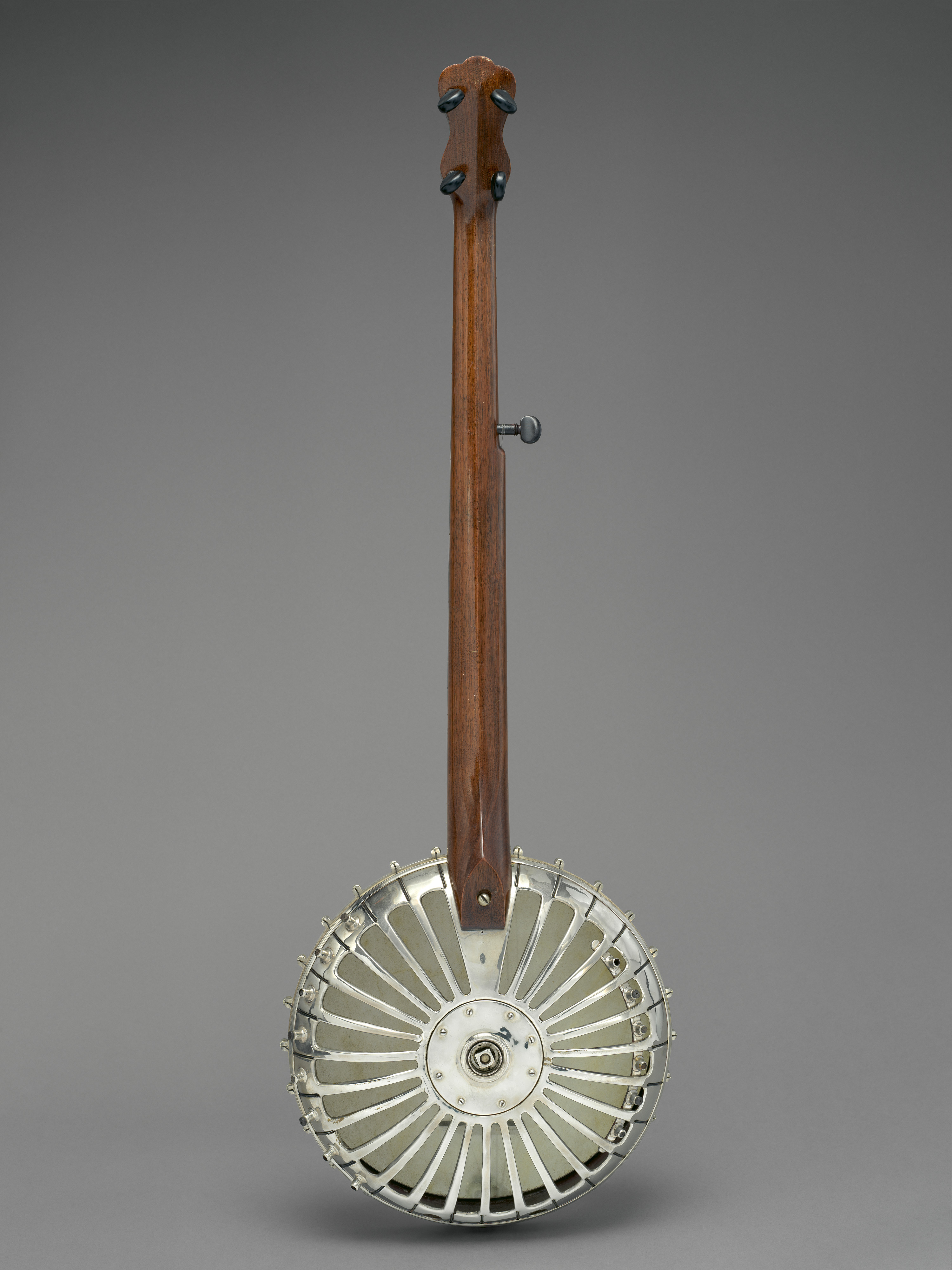
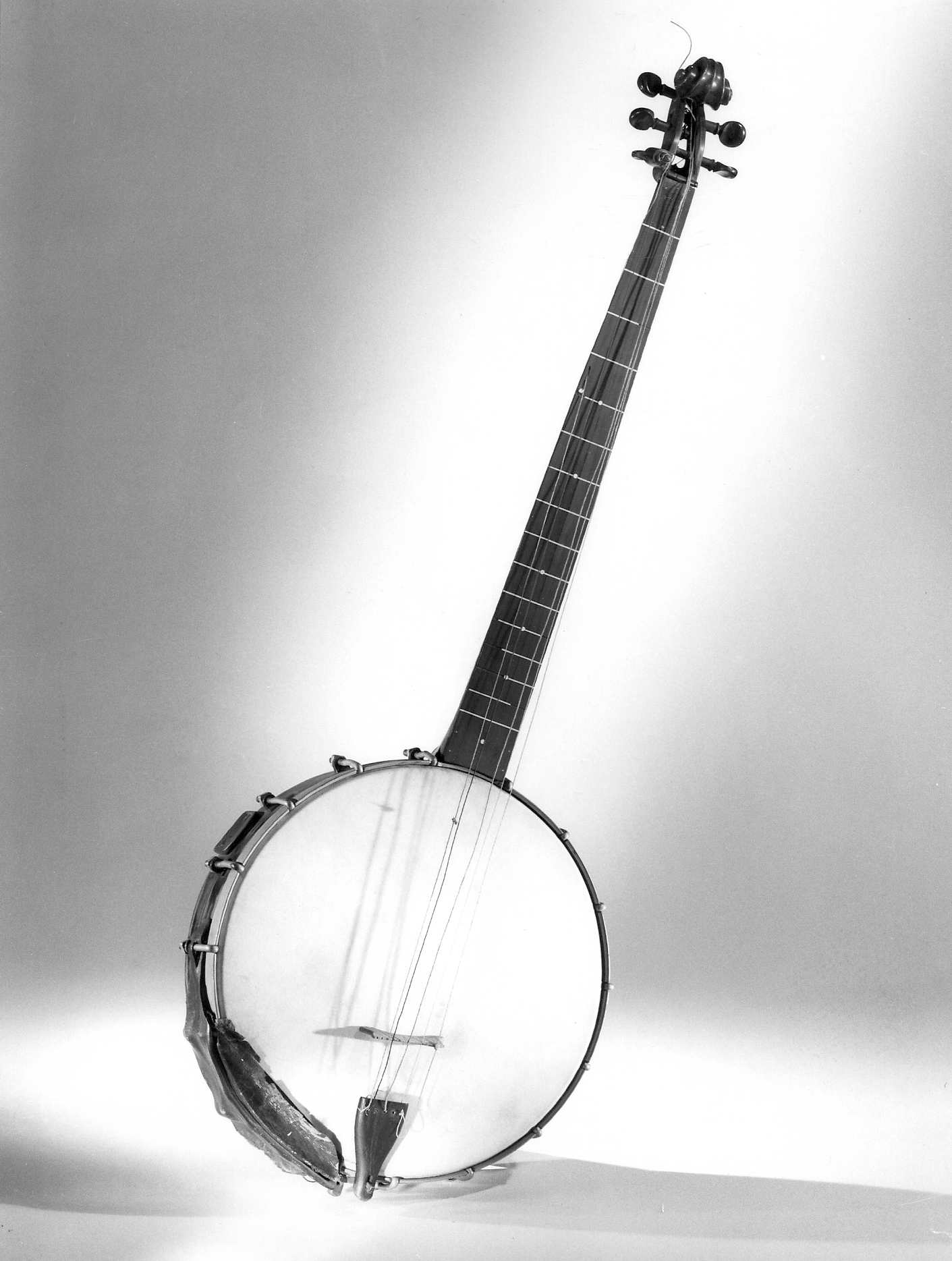
DBpedia places the development of the modern American banjo in the 18th century, but two MET specimens make the rapid mid-19th-century transformation of the instrument especially visible. Object 501214, dated to roughly 1840, is an American banjo whose body is a hollow gourd, capped with a sheepskin head and fitted with a wooden neck — clearly a survival of the older African-derived design. Object 628865, made only about five years later (c. 1845), instead uses a hardwood rim with brass and iron hardware: this is the recognisably industrial five-string banjo design that would soon become the standard.
The two specimens essentially document a single decade in which the instrument shifted from African-derived hand-built construction to industrial American manufacture, in significant part driven by the rise of the blackface minstrel show — a deeply problematic but historically central context in which the banjo entered mainstream white American culture from the 1830s onward.
Construction & Materials
A modern five-string banjo is built around a circular hardwood rim, often capped with a bronze or steel tone ring, and a stretched head — historically calfskin, today usually a synthetic Mylar substitute. The long fretted neck passes through the rim and is bolted to it from the back. Five strings run from a fixed bridge on the head to tuning pegs on the head — four full-length strings to the head of the neck, and a single shorter “fifth string” to a peg mounted partway along the neck on the player’s side.
That short fifth string is the banjo’s most distinctive feature. It functions as a high drone, struck open with the right thumb to provide a continuous high note running through the rhythm. The standard “open G” tuning of today’s five-string is g-D-G-B-D, with the lowercase “g” indicating the high drone string.
Several other variants exist. Without that high fifth-string drone, the four-string tenor banjo is widely used in Irish traditional music and early jazz; a separate four-string plectrum design also turns up frequently in early-jazz contexts; and a six-string variant — essentially a guitar-style neck mounted on the same skin-headed circular body, tuned like a guitar — is used in some folk and country contexts.
How It’s Played
Two main right-hand techniques define five-string banjo playing. Clawhammer (or “frailing”) strikes the strings downward with the back of the index or middle fingernail, with the thumb playing the high fifth-string drone — the older, African-derived style most associated with old-time American music. Three-finger picking (also called Scruggs style after Earl Scruggs, who popularised it in the 1940s) uses metal or plastic finger picks on the thumb, index, and middle fingers to produce the rapid rolling patterns characteristic of bluegrass.
The left hand operates as on most fretted instruments, pressing the strings against the fretboard. Many traditional players use various open tunings besides standard g-D-G-B-D — particularly open D and modal G — to produce specific drone effects suited to particular tunes.
Cultural Significance
The banjo’s history is inseparable from the broader history of African American music. From its African-derived origins through the minstrel-show era, the post-Civil-War rise of African American banjo virtuosi such as Horace Weston, the early-20th-century association with rural white old-time and country music, the post-war development of bluegrass, and the late-20th-century revival of African American banjo playing led by Rhiannon Giddens, the Carolina Chocolate Drops, and others — the instrument has been a meeting point of cultural exchange, appropriation, and rediscovery throughout its American life.
Today the five-string banjo is central to American old-time and bluegrass music, while the four-string tenor banjo is essential to Irish traditional music. The instrument also appears regularly in folk, country, indie, jazz, and contemporary classical contexts.
Notable Examples & Recordings
The Metropolitan Museum of Art’s two surviving mid-19th-century banjos (objects 501214 and 628865) are particularly useful because they bracket the transition from African-derived gourd construction to industrial American manufacture. For listening, recordings by Earl Scruggs (Scruggs-style three-finger), Bill Keith (melodic three-finger), Bela Fleck (modern jazz and global crossover), Rhiannon Giddens (African American banjo revival), and the broader old-time tradition together cover the instrument’s enormous range.
Related Instruments
- Akonting – the West African gourd-bodied lute, one of the banjo’s direct ancestors
- Ngoni – another West African gourd lute related to the banjo’s origins
- – the Senegalese ngoni-family lute related to the banjo
- – the four-string banjo widely used in Irish traditional music and early jazz
- – the broader category of African-derived banjo playing styles
Where to Hear It
American old-time, bluegrass, and folk music festivals — particularly the Galax Old Fiddler’s Convention, Merlefest, and similar events — are the natural settings for the banjo. The instrument also appears regularly in Irish traditional music sessions, in early-jazz revival ensembles, in contemporary American songwriting, and in cross-cultural global projects.
- Wikipedia: Banjo
- The MET: Banjo, c. 1840 (object 501214)
- The MET: Banjo, c. 1845 (object 628865)
- Wikimedia Commons: Banjo
Learning Resources
Beginners typically choose between clawhammer (for old-time American repertoire) and three-finger picking (for bluegrass) and learn one style first before optionally adding the other. The clawhammer style is generally more accessible to absolute beginners; bluegrass three-finger style takes longer to develop the rolling right-hand patterns. Structured online courses, video tutorials, and tablature-based method books are widely available.
Frequently Asked Questions
Where does the banjo come from?
The banjo’s direct ancestors are skin-headed gourd lutes from West and West-Central Africa, including the akonting, ngoni, and xalam. Enslaved Africans in the Caribbean and the southern United States rebuilt these instruments from locally available materials through the 17th and 18th centuries.
What is the short fifth string for?
The short fifth string is a high drone, struck open with the right thumb to provide a continuous high note running through the rhythm. It is the banjo’s most distinctive feature and is the basis for both clawhammer and three-finger right-hand techniques.
What is the difference between clawhammer and bluegrass banjo?
Clawhammer (or “frailing”) strikes the strings downward with the back of the fingernail, with the thumb playing the high drone — the older, African-derived style most associated with old-time American music. Three-finger picking, popularised by Earl Scruggs in the 1940s, uses metal or plastic picks on the thumb, index, and middle fingers to produce the rapid rolling patterns characteristic of bluegrass.
Are old banjos displayed in museums?
Yes. New York’s Metropolitan Museum of Art holds at least two important mid-19th-century American banjos (objects 501214 and 628865), documenting the rapid transition from African-derived gourd construction to industrial American manufacture.
Is the banjo difficult to learn?
The basics of clawhammer playing can be picked up reasonably quickly. Bluegrass three-finger picking is generally regarded as harder to start, with the rolling right-hand patterns typically taking several months to develop and years to refine.