

Harp
harp
| Category | Strings |
|---|---|
| Country of origin | multiple (worldwide family) |
| Classification | family of musical instruments |
| Wikipedia | en.wikipedia.org |
| Wikidata | Q47369 |
Listen
Audio: Daniel Musiklexikon, Public domain / via Wikimedia Commons
Audio: Louise Imogen Guiney, PD / via Internet Archive
Audio: Arthur Elson, PD / via Internet Archive
Overview
The harp is not one instrument but a worldwide family of stringed instruments in which open strings run between a resonating body and a neck, and are sounded by plucking with the fingers. The shape varies enormously — from the small arched harps of East and West Africa to the towering pedal harp of the modern symphony orchestra — yet all share that defining geometry: strings perpendicular to a soundboard, no fingerboard, every note assigned its own dedicated string.
This is one of the oldest of all instrument families. Forms recognisable as harps appear in carved reliefs and grave goods from the third millennium BCE, and the instrument has continued in unbroken practice on at least three continents ever since.
Origin & History
Archaeological evidence places early harps in Mesopotamia and Pharaonic Egypt, with arched and angular forms documented in tomb paintings and surviving fragments. Independent harp traditions also developed across sub-Saharan Africa and along the Atlantic coasts of medieval Europe. Each region produced its own answer to the same design question: how to give every pitch its own string while keeping the body small enough to carry.
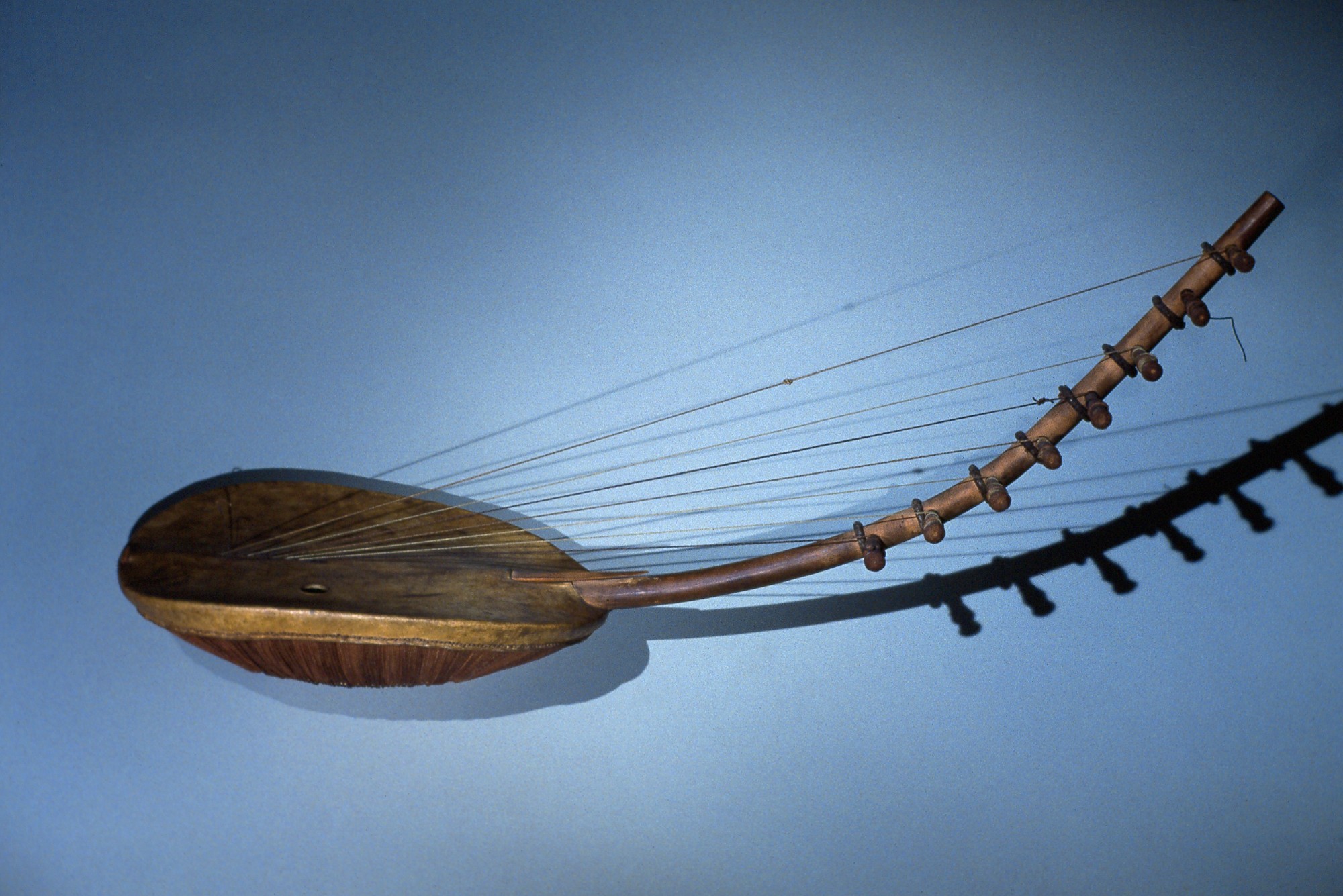
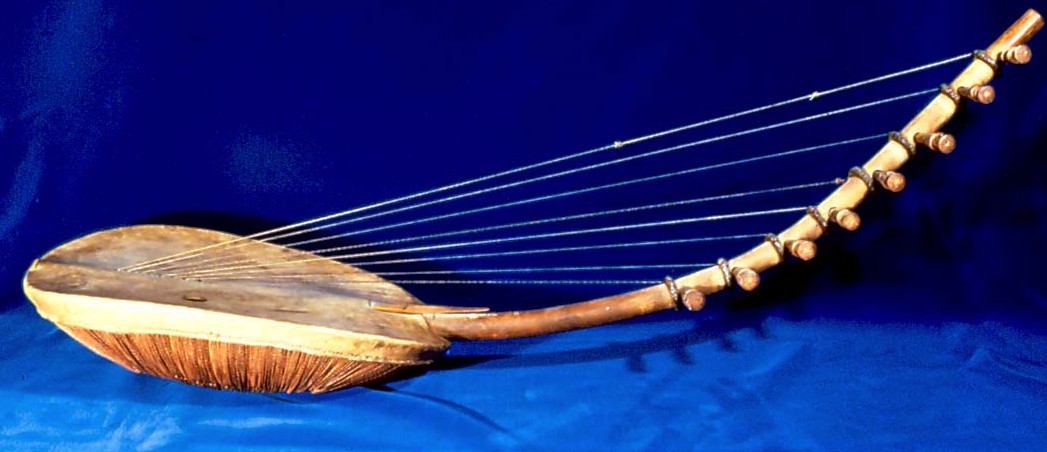
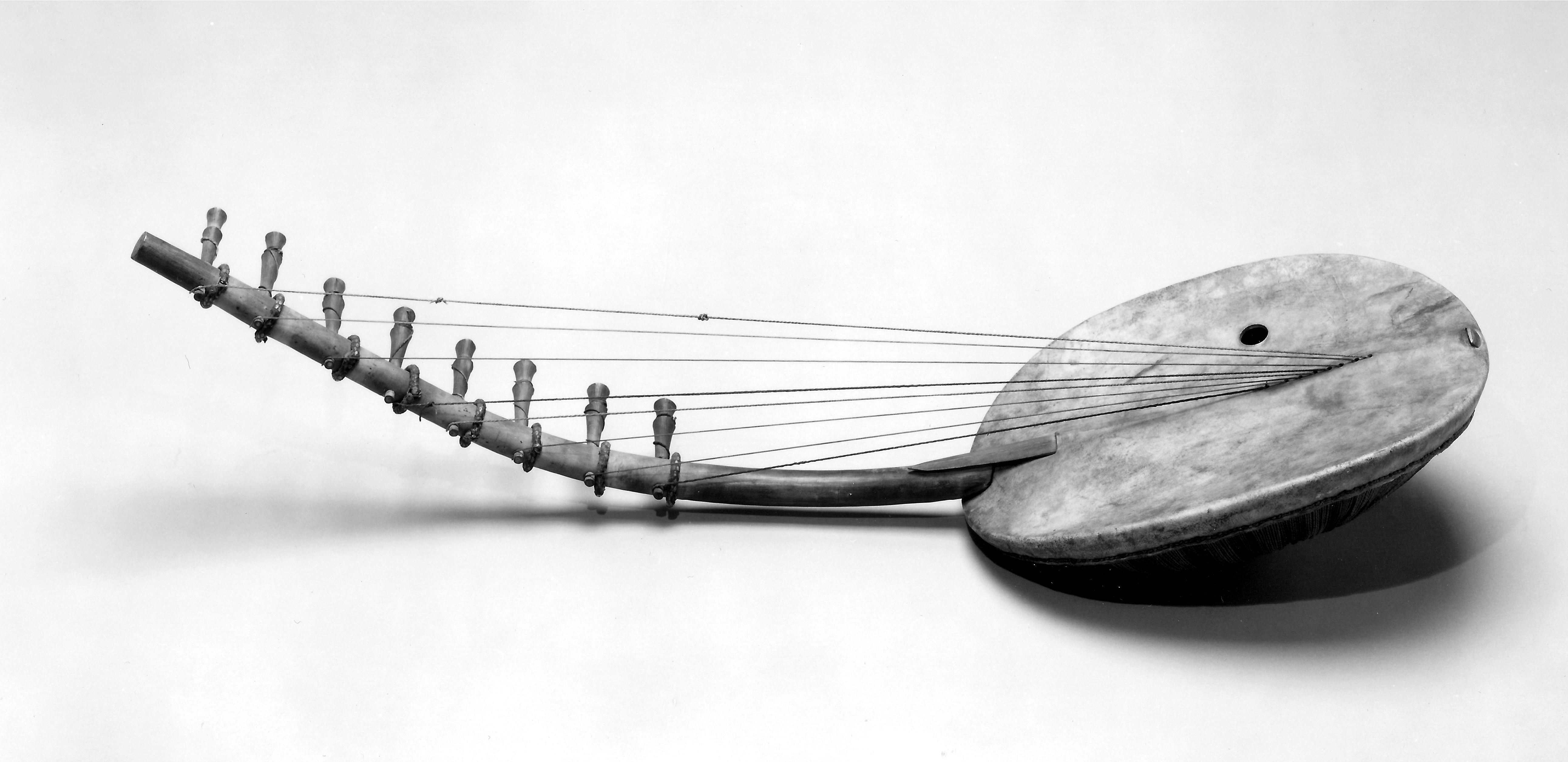
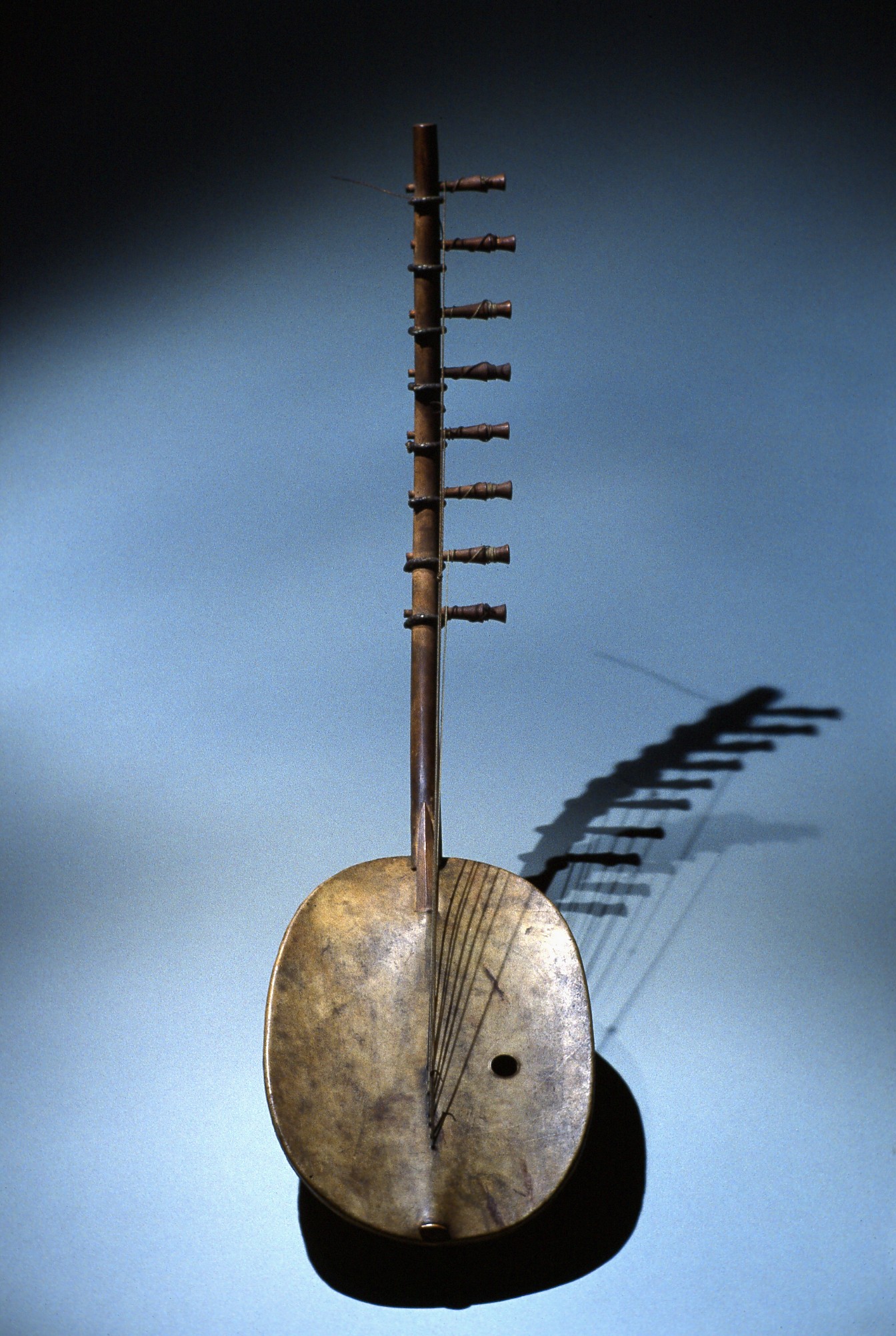
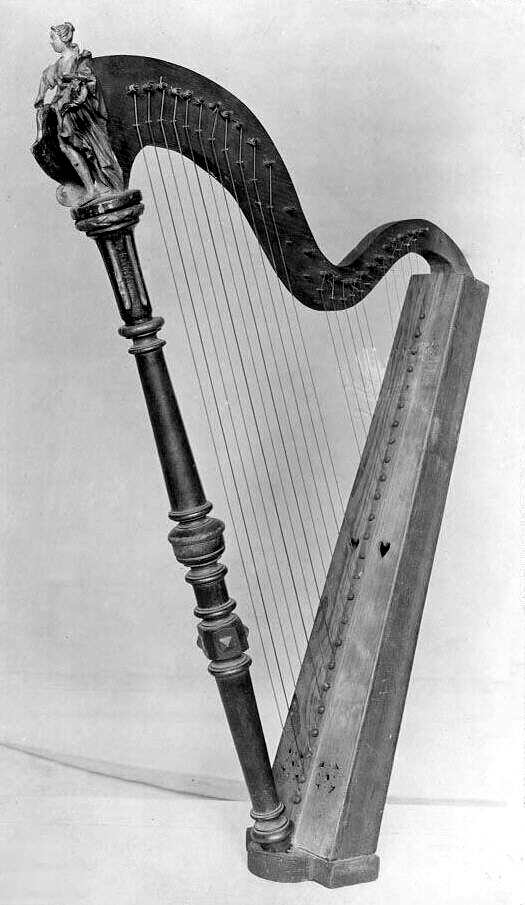
The Metropolitan Museum’s collection captures this geographic spread in two contrasting specimens. A 19th-century ennanga arched harp (MET object 501536), made by the Ganda people of present-day Uganda from wood, vegetal fibre and snake skin, represents the East African branch of the family. Alongside it sits a German concert harp from around 1820 (MET 505522), a wooden instrument from the early decades of the European pedal mechanism. Both are cataloged in the MET’s Musical Instruments department.
The European story moves through the medieval Romanesque harp, the wire-strung Gaelic clarsach, and the Italian triple harp before arriving at the late-18th-century single-action pedal mechanism developed in Bavaria. Sébastien Erard’s double-action pedal harp, patented in Paris in 1810, gave the instrument the full chromatic range it now holds in orchestral writing.
Construction & Materials
Most harps share three structural elements: a resonator (the soundbox), a neck, and either a forepillar (in framed harps) or open arch (in arched and angular harps). The strings — historically gut, silk or horsehair, today a mix of nylon, gut and metal — are anchored at one end to the soundboard and tuned at the other by pegs or pins set into the neck.
Construction varies dramatically by tradition. The Ganda ennanga, like other African arched harps, is built around a hollowed wooden bowl covered with skin, with each string knotted directly to the curving neck. The early-19th-century German harp at the MET, by contrast, uses a tall framed structure with seven pedals at its base — each pedal capable of raising every string of one pitch class by a semitone, then by a further semitone, allowing modulation through all keys.
How It’s Played
Players sit with smaller harps on the lap and larger framed harps tilted against the right shoulder. The fingers pluck individual strings from both sides of the instrument, and on a pedal harp the feet operate the seven pedals to alter pitches mid-piece. African players of the ennanga and similar arched harps usually pluck with the thumbs and index fingers of both hands, often singing or chanting praise poetry in dialogue with the strings.
Technique on the modern concert harp emphasises arpeggios, sustained chords, glissandi across the open strings, and damping with the palm to control resonance. Folk and lever-harp traditions overlap in technique with the pedal harp but use single levers near the tuning pegs in place of pedals.
Cultural Significance
In sub-Saharan Africa, harps such as the ennanga, ngombi and Senegambian kora (technically a harp-lute) have functioned as instruments of court praise, oral history and personal expression for many centuries. In medieval Ireland and Scotland, the wire-strung harp was an aristocratic court instrument and is still the national symbol of Ireland. In Latin America, the diatonic harp travelled with Spanish missionaries and has become deeply embedded in Paraguayan, Mexican and Venezuelan folk music.
The European concert harp, finally, became fully integrated into the symphony orchestra in the 19th century and now appears across opera, ballet, film and chamber music.
Notable Examples & Recordings
Two MET specimens give a useful lens on the family’s range. The Ganda ennanga (MET 501536) shows the East African arched-harp tradition in its 19th-century form. The German pedal harp from around 1820 (MET 505522) sits at the start of the modern double-action era.
For listening, recordings by Yolanda Kondonassis and Marcel Grandjany cover the orchestral repertoire; Alan Stivell and Catrin Finch represent the Celtic tradition; and field recordings from the International Library of African Music document the ennanga and related African harps.
Related Instruments
- Kora – the West African 21-string harp-lute
- Lyre – the ancient framed string instrument with strings parallel to the soundboard
- – a flat box-zither plucked or struck
- Nyckelharpa – a keyed Swedish bowed instrument unrelated by playing technique but often grouped historically
- Lute – the necked plucked string instrument that defined another large family
Where to Hear It
Concert harp recitals are part of the regular programming at most major concert halls and conservatories. Celtic harp festivals — most famously at Edinburgh and in Brittany — feature lever-harp playing in folk and contemporary repertoire. Ugandan and Central African ensembles continue to play the ennanga and related arched harps in court and ceremonial settings. The Wikimedia Commons category for harps holds extensive photo and audio material across these traditions.
- Wikipedia: Harp
- The MET: Ennanga (object 501536)
- The MET: Harp (object 505522)
- Wikimedia Commons: Harps
Learning Resources
Beginners commonly start on a small lever harp (often called a Celtic or folk harp) before progressing to a pedal harp, since the lever harp is lighter, less expensive and forgiving for early technique work. Method books by Sylvia Woods are widely used for lever harp; for pedal harp, the Grossi and Lawrence-Salzedo methods remain standard. For the African arched-harp tradition, study with a community-based teacher remains essential and is increasingly supported by recordings.
Frequently Asked Questions
What family of instruments does the harp belong to?
The harp is a chordophone in which open strings run perpendicular to the soundboard. The Hornbostel-Sachs system places framed harps and arched harps in different sub-categories of group 322.
How many strings does a modern pedal harp have?
A standard concert pedal harp has 47 strings, spanning just over six and a half octaves.
What is the difference between a pedal harp and a Celtic harp?
The pedal harp uses seven foot pedals to alter pitches by semitones, allowing full chromatic playing. The Celtic or lever harp uses small hand-operated levers near the tuning pegs, which are quicker for diatonic music but less fluent for rapid modulation.
Are old harps displayed in museums?
Yes. The Metropolitan Museum of Art holds both an early-19th-century German pedal harp (object 505522) and a 19th-century Ganda ennanga arched harp (object 501536), both in its Musical Instruments department.
Where did the harp originate?
Harps appear independently in several ancient cultures, with documented examples from Mesopotamia and Pharaonic Egypt around 3000 BCE, and equally old traditions across sub-Saharan Africa.
Is the harp difficult to learn?
It is approachable in the early stages — a beginner can produce a pleasing sound within the first lesson — but the pedal mechanism, hand independence, and large repertoire make professional mastery a long undertaking.


