
Sarangi
सारंगी
| Category | Strings |
|---|---|
| Country of origin | India |
| Wikipedia | en.wikipedia.org |
| Wikidata | Q608650 |
Listen
Audio: www.VintageSense.com, CC BY / via Internet Archive
Audio: www.VintageSense.com, CC BY / via Internet Archive
Audio: www.VintageSense.com, CC BY / via Internet Archive
Overview
The sarangi is a short-necked bowed string instrument of north India, carved from a single block of wood with three thick gut playing strings and as many as thirty-five thin metal sympathetic strings underneath. Its playing technique is unusual — the strings are stopped not against a fingerboard but against the cuticles of the left-hand fingernails — and the resulting sound is one of the closest instrumental imitations of the human voice in any musical tradition.
For most of its history the sarangi was the standard accompanying instrument for Hindustani vocal music. That role has weakened in the late 20th century with the rise of the harmonium, but the instrument’s solo concert profile has correspondingly grown.
Origin & History
The sarangi developed in north India out of older folk fiddles, with its modern form broadly settled by the 17th or 18th century. The instrument was, by the 19th century, fully established as the accompaniment of choice for vocal performance in the Hindustani classical tradition — particularly for khyal and thumri — because of its ability to follow the voice closely through ornament, microtonal inflection and improvised melodic line.
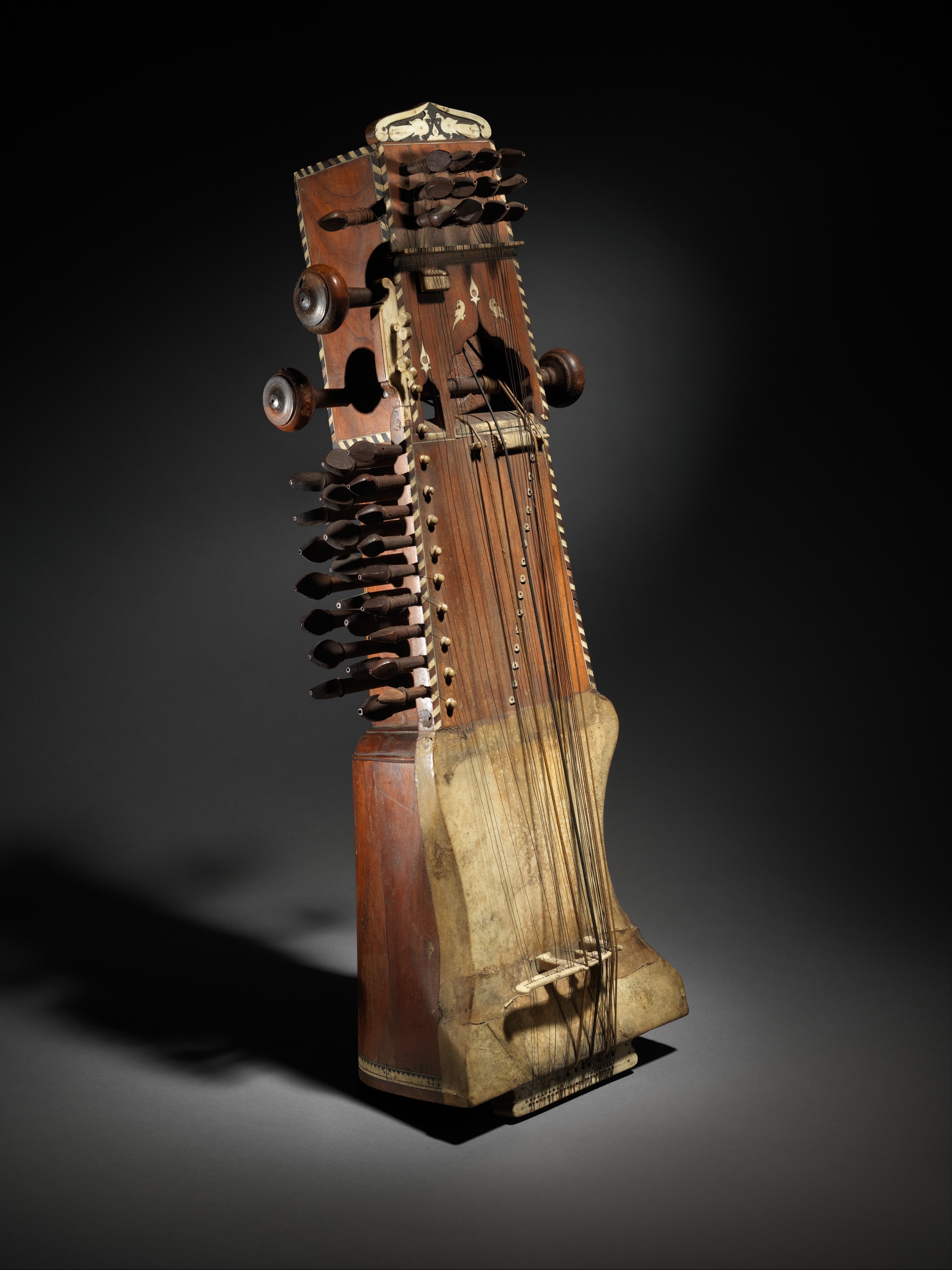
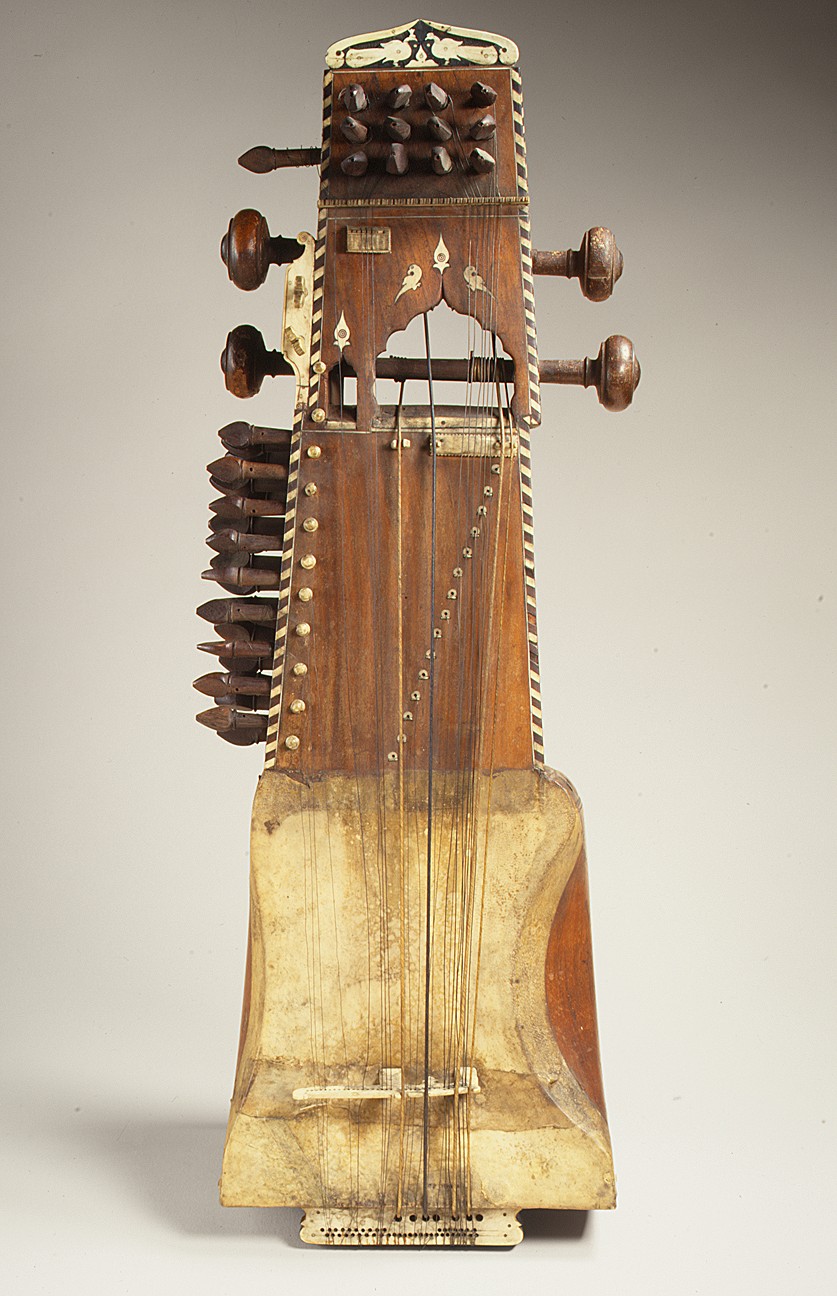
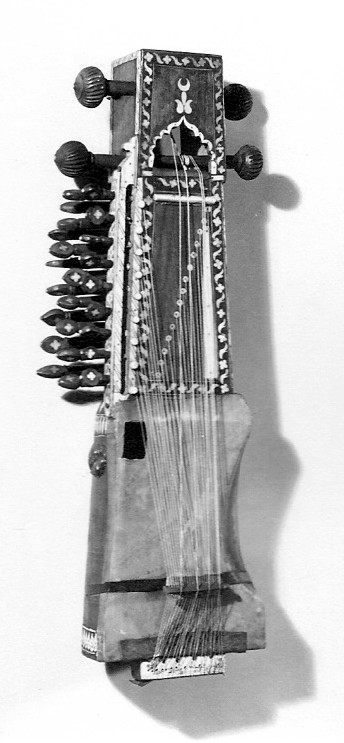
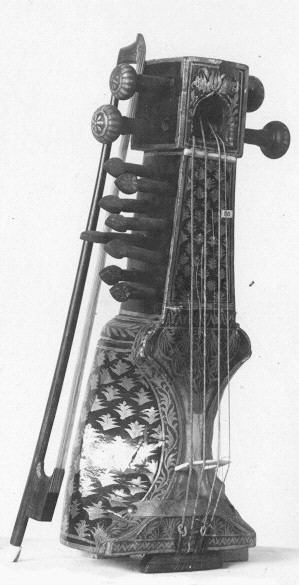
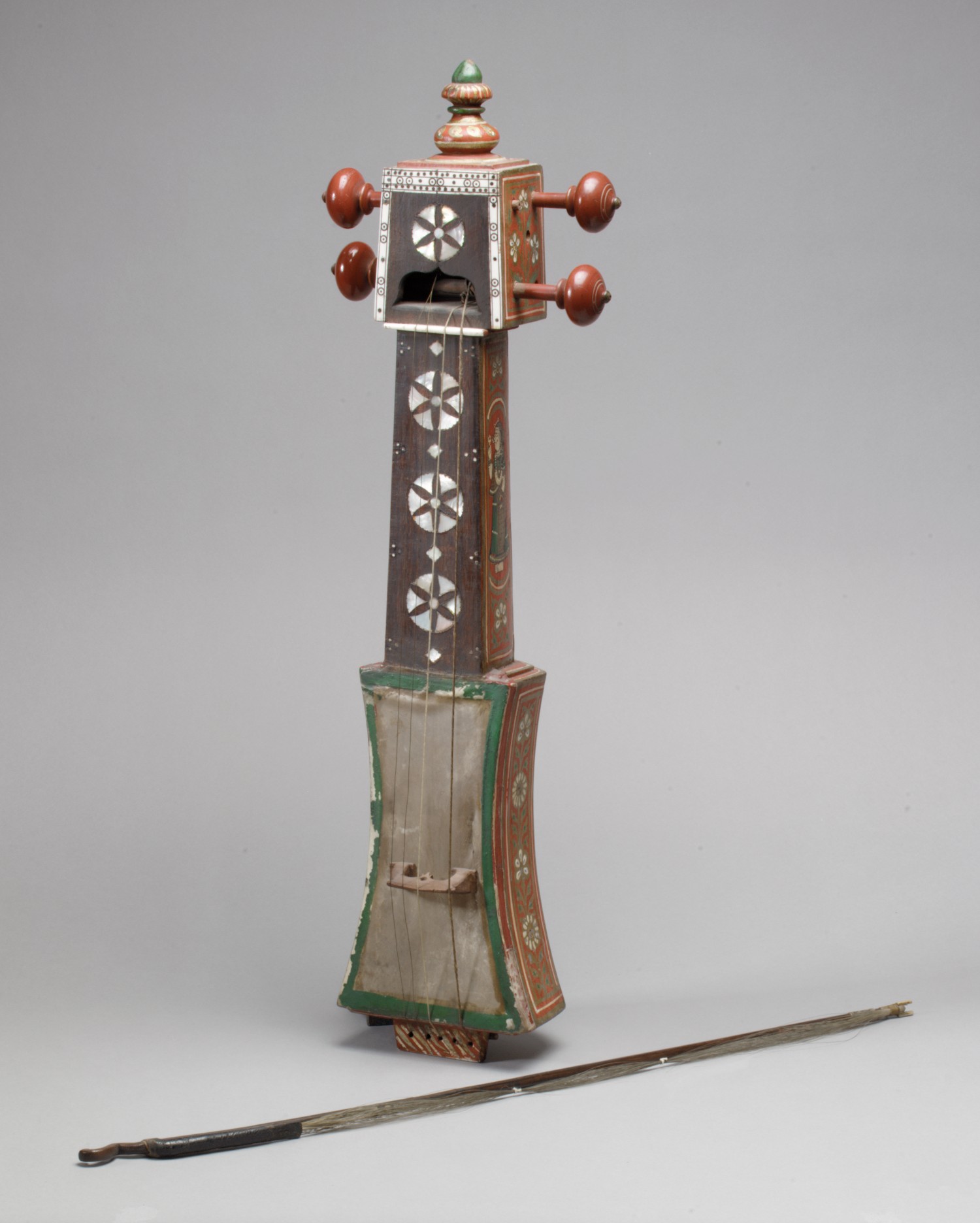
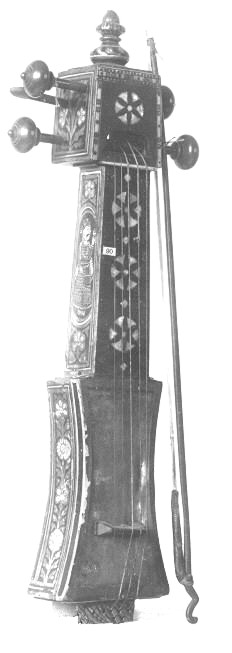
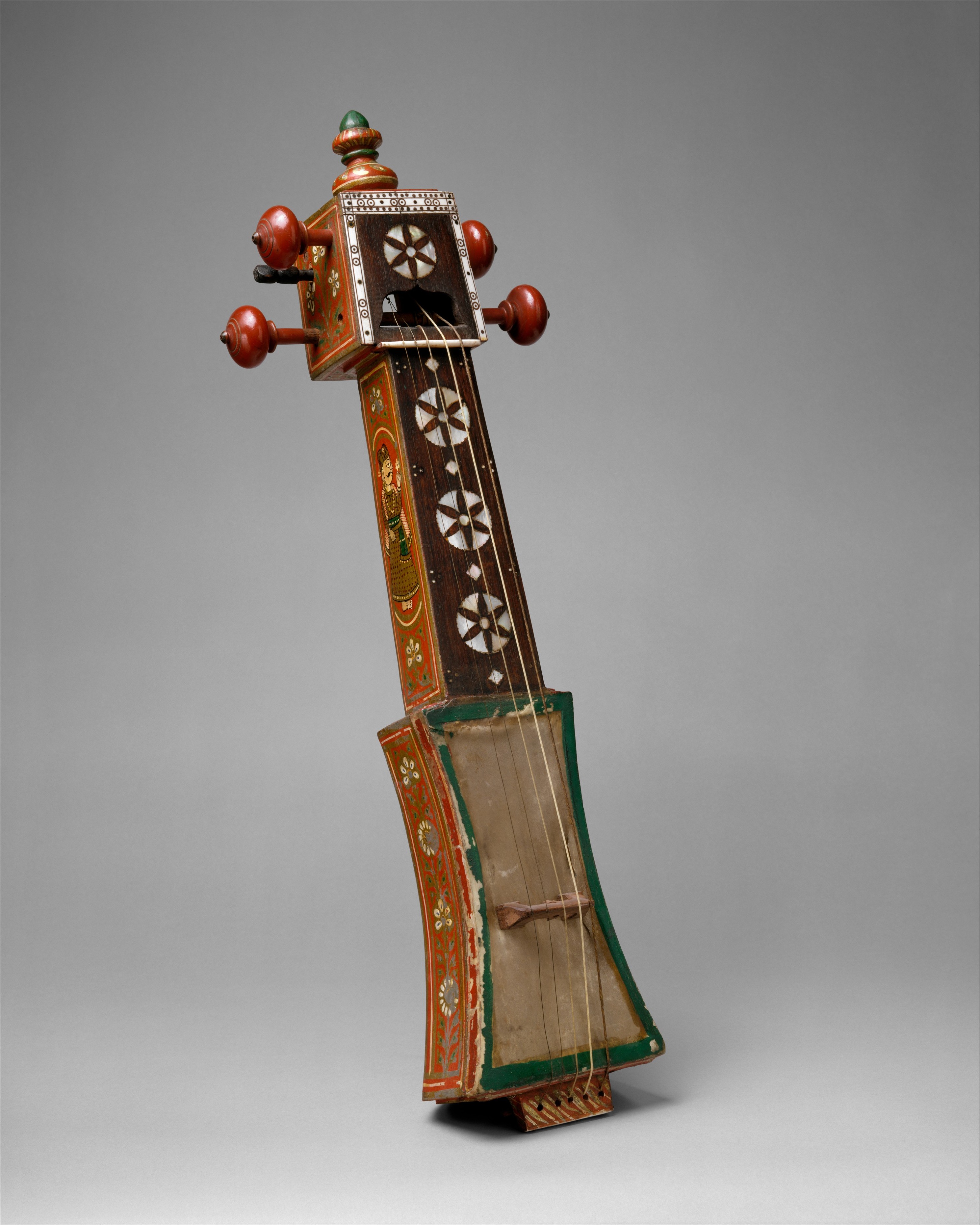
The Metropolitan Museum’s collection holds three sarangi specimens that document the instrument across the late 19th century. The earliest, from around 1865, is built from wood, parchment, ivory, gut and metal (MET object 503554). A second instrument from around 1885 (MET 500752) is plain wood. A third, from around 1900 (MET 503204), uses wood, ivory, parchment and metal — typical of the higher-grade workshop production of the period. All three sit in the museum’s Musical Instruments department.
The 20th century brought a difficult transition. Harmonium arrived from Europe in the late 19th century and by the 1950s had largely replaced sarangi as vocal accompaniment, partly because harmonium is far easier to learn and partly because of complex social shifts within the world of Hindustani music. By the 1970s the sarangi had become a solo concert instrument almost as much as an accompanying one, with players such as Ram Narayan and Sultan Khan establishing the modern solo repertoire.
Construction & Materials
The Hornbostel-Sachs system places the sarangi in 321.321 (composite chordophones, bowed). The body is shaped from one block of tun or cedar wood, hollowed out internally and covered across the front with a thin parchment soundboard. The neck is short and wide, with no fingerboard — the strings simply pass over the open hollow.
The three playing strings are gut, tuned in fourths and fifths. Beneath them run two banks of sympathetic strings (tarafdar), typically 35-37 thin metal wires that vibrate freely when the playing strings are sounded. These sympathetic strings give the sarangi its characteristic resonant halo and account for much of the instrument’s continuous, voice-like sustain.
The MET specimens illustrate the material range. The 1865 instrument’s combination of wood, parchment, ivory, gut and metal is typical of fine workshop production. The plainer 1885 example shows the working-instrument tradition. The ca. 1900 instrument with ivory inlay represents the high end of late-Victorian Indian craftsmanship.
How It’s Played
The player sits cross-legged on the floor with the sarangi held vertically against the chest, neck pointing upward. The right hand draws a heavy curved bow across the strings; the left hand is the technical centre of the playing. Because the sarangi has no fingerboard, the player stops the strings against the cuticles of the index, middle and ring fingers — pressing the string sideways with the nail rather than down with the fingertip.
This nail-cuticle technique is responsible for the instrument’s vocal quality. It allows microtonal slides between every pitch, deep portamento on long notes, and the kind of continuously varying ornamentation that characterises vocal raga performance. It is also extremely demanding: serious sarangi players have permanently grooved cuticles from decades of playing.
Cultural Significance
The sarangi has occupied a complicated place in the social world of Hindustani music. Through the 19th and early 20th centuries it was strongly associated with the kothas — the salon performance houses of north Indian cities, where courtesan singers were accompanied by sarangi players. The reputational shadow of that association contributed to the harmonium’s eventual displacement of the sarangi for vocal accompaniment in middle-class concert settings.
Despite this, the sarangi has remained the deepest single source of melodic vocabulary for Hindustani musicians, and many leading vocalists explicitly study sarangi technique to refine their vocal ornament. The late-20th-century elevation of the instrument as a solo concert form — by Ram Narayan above all — has finally given it the institutional standing its musical importance always merited.
Notable Examples & Recordings
The three MET specimens (objects 503554, 500752 and 503204) document the instrument across the late-19th-century period of its peak use as vocal accompaniment. For listening, recordings by Ram Narayan and Sultan Khan provide the foundation of the modern solo repertoire. Younger players including Dhruba Ghosh and Murad Ali Khan have continued the tradition into the 21st century. Vocal recordings by Bhimsen Joshi and Kishori Amonkar with sarangi accompaniment document the instrument’s older role.
Related Instruments
- – the related folk fiddle of north India and Bangladesh
- – the bowed lute that combines sarangi-like resonance with sitar-like fretting
- – the closely related Sikh-tradition bowed instrument
- Erhu – the Chinese two-string fiddle from a different tradition but with comparable vocal expressiveness
- Rabab – the broader Asian fiddle family the sarangi belongs to historically
Where to Hear It
Hindustani classical concerts in India, particularly the major festivals in Pune, Kolkata and Mumbai, programme the sarangi both as solo instrument and as vocal accompaniment. International concert tours by Murad Ali Khan and other leading players bring the instrument to Europe and North America. The Wikimedia Commons category collects images and audio.
- Wikipedia: Sarangi
- The MET: Sarangi ca. 1900 (object 503204)
- The MET: Sarangi ca. 1865 (object 503554)
- The MET: Sarangi ca. 1885 (object 500752)
- Wikimedia Commons: Sarangi
Learning Resources
The sarangi is widely considered one of the most difficult Indian instruments to learn, both because of the cuticle-stopping technique and because the instrument carries no frets to guide intonation. Serious study is almost always one-on-one in the guru-shishya relationship. The sarangi schools at the ITC Sangeet Research Academy in Kolkata and at the Ali Akbar College of Music in California offer structured training. Instructional materials in English are scarce; recordings remain the primary external resource.
Frequently Asked Questions
What family of instruments is the sarangi in?
It is a composite chordophone, bowed, classed as 321.321 in the Hornbostel-Sachs system.
How many strings does a sarangi have?
Three thick gut playing strings and 35 to 37 thin metal sympathetic strings (tarafdar) underneath.
Why is the sarangi considered hard to play?
The strings are stopped against the fingernail cuticles rather than the fingertips, which is unusual and physically demanding. There is also no fingerboard to guide intonation, and the instrument’s repertoire requires sophisticated vocal-style ornamentation.
Are old sarangis preserved in museums?
Yes. The Metropolitan Museum of Art holds three 19th-century sarangis (objects 503554, 500752 and 503204) in its Musical Instruments department.
Where did the sarangi originate?
It developed in north India out of older folk fiddles, with its modern form broadly settled by the 17th or 18th century.
What role does the sarangi play in Hindustani music?
Historically it was the leading instrument for vocal accompaniment in the Hindustani classical tradition. Since the late 20th century it has also become a major solo concert instrument.


