.jpg)
.jpg)
.jpg)
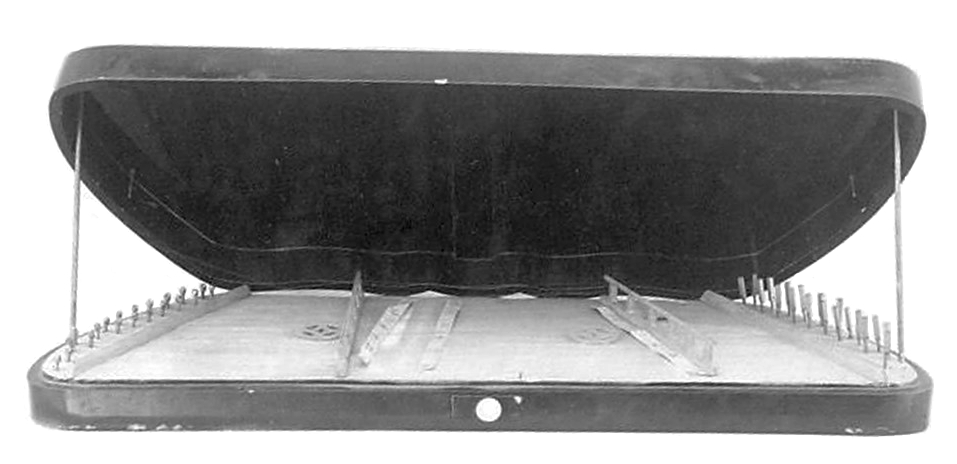
Yangqin
揚琴
| Category | Strings |
|---|---|
| Country of origin | China |
| Classification | type of musical instrument |
| Wikipedia | en.wikipedia.org |
| Wikidata | Q877239 |
Listen
Audio: CC BY-SA 3.0 / via ccmixter

Overview
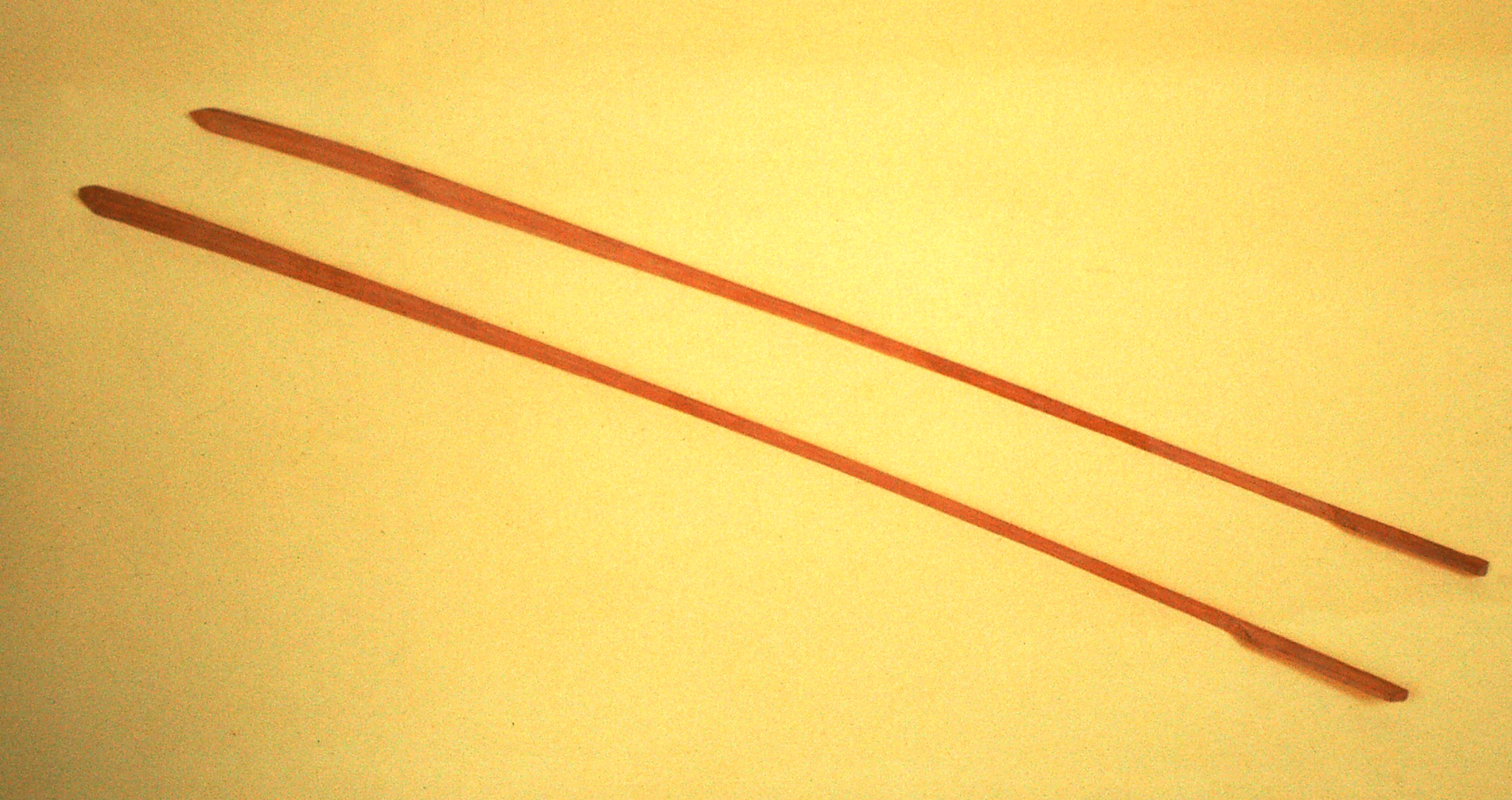
The yangqin is a Chinese trapezoidal hammered dulcimer with strings stretched in courses across two or more wooden bridges and struck with two slim flexible bamboo hammers. It is a member of the same Eurasian struck-zither family as the Persian santur, the Hungarian cimbalom and the American hammered dulcimer, but its repertoire and playing technique have been thoroughly absorbed into Chinese musical practice over four centuries.
The instrument’s name carries its history. The character 揚 in yangqin originally meant “foreign” or “overseas” — a reference to the instrument’s arrival in coastal China by sea. In modern usage that meaning has faded, and the more poetic character 洋 (“ocean”) is sometimes substituted, but the original etymology marks the yangqin as one of the few major Chinese traditional instruments with a documented foreign origin.
Origin & History
The yangqin reached China in the late Ming or early Qing dynasty (around the 17th century), brought by sea traders to the southern coastal province of Guangdong. The most likely route is Persian or Arab merchants carrying the santur through Indian Ocean trade networks. Within a generation the instrument had been adapted to Chinese tunings, repertoire and ensemble practice.
By the 19th century the yangqin was well established in Cantonese music, in Sichuan opera ensembles, and in chamber traditions throughout south and central China. The instrument also found a permanent place in the larger orchestrated regional opera traditions, where its rapid arpeggios and ringing sustain provided the textural background for both vocal and instrumental sections.
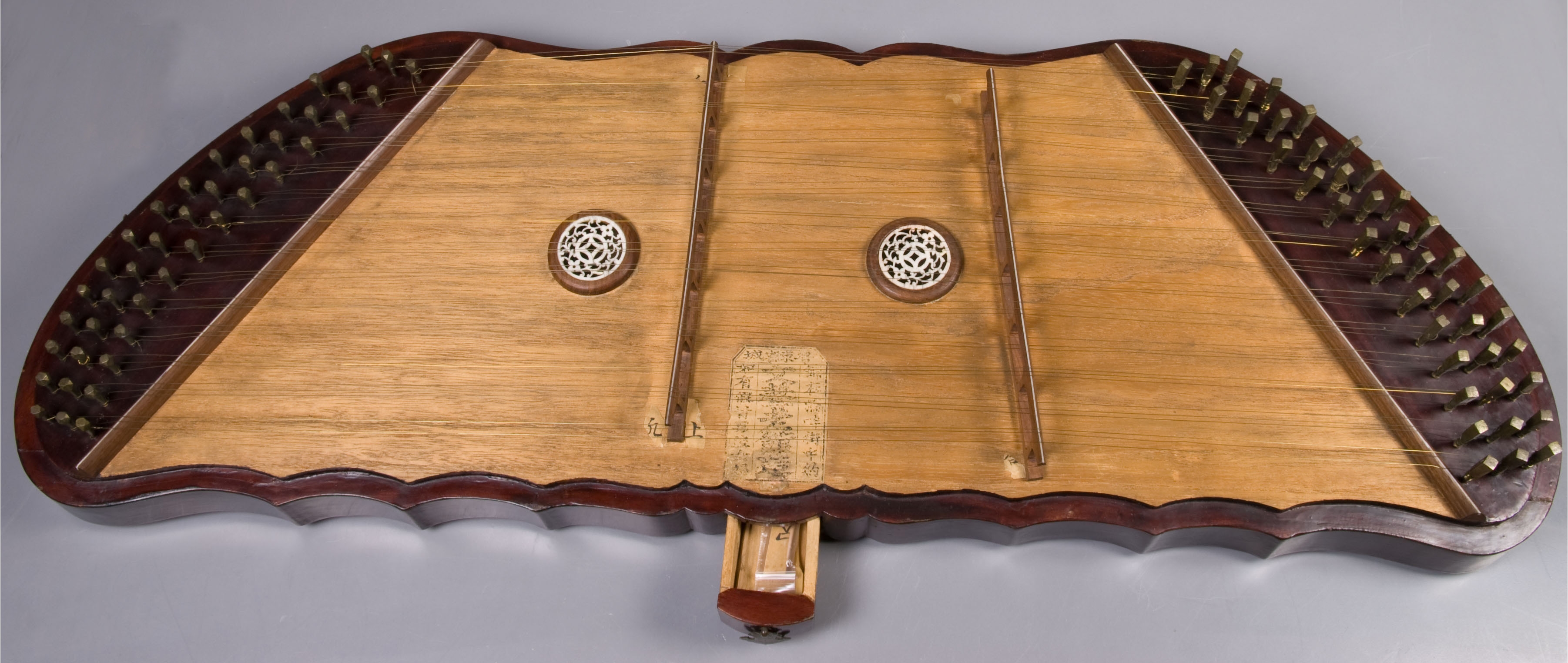
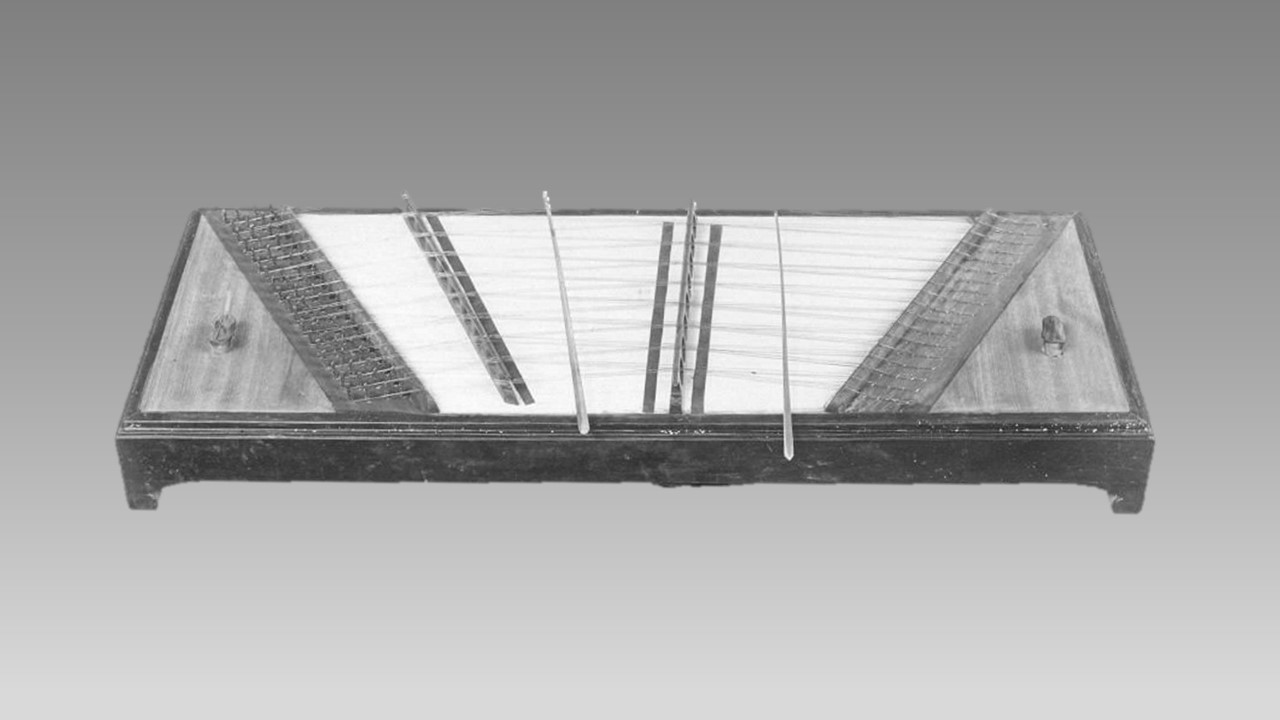
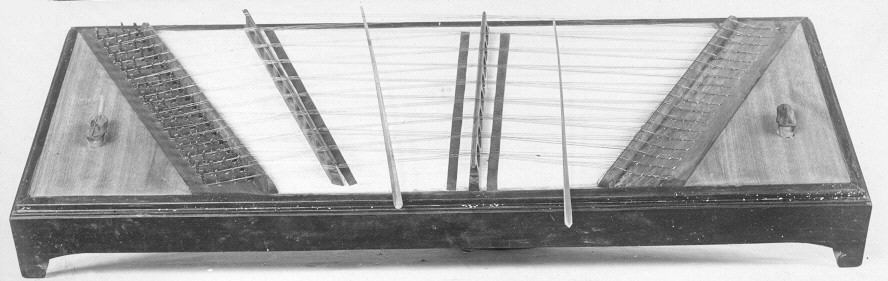
The Metropolitan Museum’s collection holds three 19th-century Chinese yangqin (MET objects 500574, 500595 and 500596) — all in wood with brass hardware, all classed in the museum’s Musical Instruments department. Together they document the instrument as it was being played in the late Qing period before the 20th-century enlargement of the design.
The 20th century brought significant modernisation. Early-20th-century instruments had two bridges and around 14 courses; the modern professional yangqin has four bridges and over 140 strings, giving it a chromatic range of more than four octaves. This expansion mirrors the parallel modernisation of the Hungarian cimbalom in the late 19th century.
Construction & Materials
The Hornbostel-Sachs system places the yangqin in 314.122 (struck box zithers). The body is a flat trapezoidal wooden box, with the soundboard usually made of paulownia and the back and frame of a harder wood. Strings are arranged in courses of three to five wires per pitch, passing diagonally over the bridges so that one string sounds two distinct pitches depending on which side of the bridge is struck.
The MET’s three specimens (objects 500574, 500595 and 500596) all show the smaller two-bridge late-Qing form. The hammers (qin zhu) are slim flexible strips of bamboo, often with a small leather pad on one face for a softer attack. Modern instruments retain this hammer design with little change.
How It’s Played
The performer sits behind the instrument, holding one bamboo hammer in each hand. The hammers are bounced rather than driven against the strings — the flexibility of the bamboo gives them a natural rebound, which makes possible the very rapid alternating-hand patterns at the heart of yangqin technique. Tremolo on a single course is the instrument’s most characteristic effect.
The two-pitch-per-string layout means that a fluent player must memorise not a sequence of physical positions but a topology of notes that depends on which side of the bridge each pitch sits on. Damping is done by hand or by lifting the previous note before striking the next.
Cultural Significance
The yangqin is one of the central instruments in modern Chinese ensemble music and is taught at every Chinese conservatoire. In Cantonese music it is part of the fundamental ensemble alongside the gaohu (high-pitched fiddle) and pipa. In Sichuan opera and Yueju (Cantonese opera) it serves both melodic and accompanimental roles. In the modernised Chinese orchestra developed since the 1950s, the yangqin functions almost as a piano-equivalent, providing both melodic lead and harmonic support.
The instrument has also acquired an international concert profile through performers such as Yu Hongmei and through the Chinese diaspora communities in Southeast Asia, North America and Europe. The Hong Kong Chinese Orchestra and the Singapore Chinese Orchestra both employ professional yangqin sections.
Notable Examples & Recordings
The three MET specimens (objects 500574, 500595 and 500596) document the instrument before its 20th-century expansion. For listening, recordings by Yu Hongmei cover both traditional and contemporary repertoire. The Hong Kong Chinese Orchestra and the Central Conservatory of Music in Beijing have released extensive ensemble recordings featuring yangqin. Cantonese music recordings by Wong Yu-pang represent the southern regional tradition.
Related Instruments
- Santur – the Persian struck zither that is the yangqin’s likely direct ancestor
- Hammered Dulcimer – the broader Eurasian family the yangqin belongs to
- Cimbalom – the Hungarian concert form
- – the Korean cousin
- Guzheng – the Chinese long zither, plucked rather than struck
Where to Hear It
Chinese ensemble concerts worldwide regularly feature the yangqin as a central voice. Cantonese opera performances in Hong Kong, Guangzhou and the wider diaspora retain the instrument in its traditional ensemble role. Modern Chinese orchestral concerts in Beijing, Shanghai and Singapore programme it routinely. The Wikimedia Commons category collects images and audio.
- Wikipedia: Yangqin
- The MET: Yangqin (object 500595)
- The MET: Yangqin (object 500596)
- The MET: Yangqin (object 500574)
- Wikimedia Commons: Yangqin
Learning Resources
Beginners normally start on a 402 yangqin (the modern four-bridge concert form) because the larger range supports both traditional and modern repertoire. Method books are widely published in Chinese; the Yu Hongmei method materials are most commonly used in conservatory programmes. International instruction is available through Chinese cultural centres and an increasing number of online lesson platforms run by professional players.
Frequently Asked Questions
What family is the yangqin in?
It is a struck box zither, classed as 314.122 in the Hornbostel-Sachs system — in the same family as the Persian santur and the Hungarian cimbalom.
Where did the yangqin come from?
It arrived in coastal Guangdong province in the late Ming or early Qing dynasty (around the 17th century), brought by sea traders along Indian Ocean routes from Persia or the Arab world.
What does the name mean?
The character 揚 in yangqin originally meant “foreign” or “overseas,” referring to the instrument’s imported origin. The character 琴 (qin) is a generic term for stringed instrument.
Are old yangqin in museums?
Yes. The Metropolitan Museum of Art holds three 19th-century Chinese yangqin (objects 500574, 500595 and 500596) in its Musical Instruments department.
How is the yangqin different from the Persian santur?
The yangqin uses lightweight flexible bamboo hammers and is normally larger; the santur uses hardwood hammers and is normally smaller, with a different bridge layout suited to Persian classical modes.
Is the yangqin difficult to learn?
Basic two-handed technique can be acquired in a few months because the layout is visible. Mastering rapid tremolo and the modern professional repertoire takes years of conservatory-level study.


