
Cittern
cittern
| Category | Strings |
|---|---|
| Country of origin | Renaissance Europe |
| Classification | type of musical instrument |
| Wikipedia | en.wikipedia.org |
| Wikidata | Q1093290 |
Overview
The cittern is a wire-strung, fretted, plucked lute of European origin, with a flat back, a pear- or lozenge-shaped body, and four to seven courses of metal strings. It was developed in the Renaissance as a more durable and easier-to-tune relative of the gut-strung lute, and its bright, ringing sound made it a household and tavern instrument across Europe for more than two centuries.
Wikidata classifies the cittern as a “plucked string instrument” within the necked-lute family. The instrument’s modern descendants — the Irish bouzouki, the citole-influenced octave mandolin, and the Portuguese guitarra — preserve much of its sound and several of its tuning conventions.
Origin & History
The cittern emerged in the late 15th and early 16th centuries from the medieval citole, a flat-backed, wire-strung instrument depicted in carvings from Iberia, France and England. By the 1530s the cittern was well established in Italy, and through the second half of the 16th century it spread to France, Germany, the Low Countries and England.
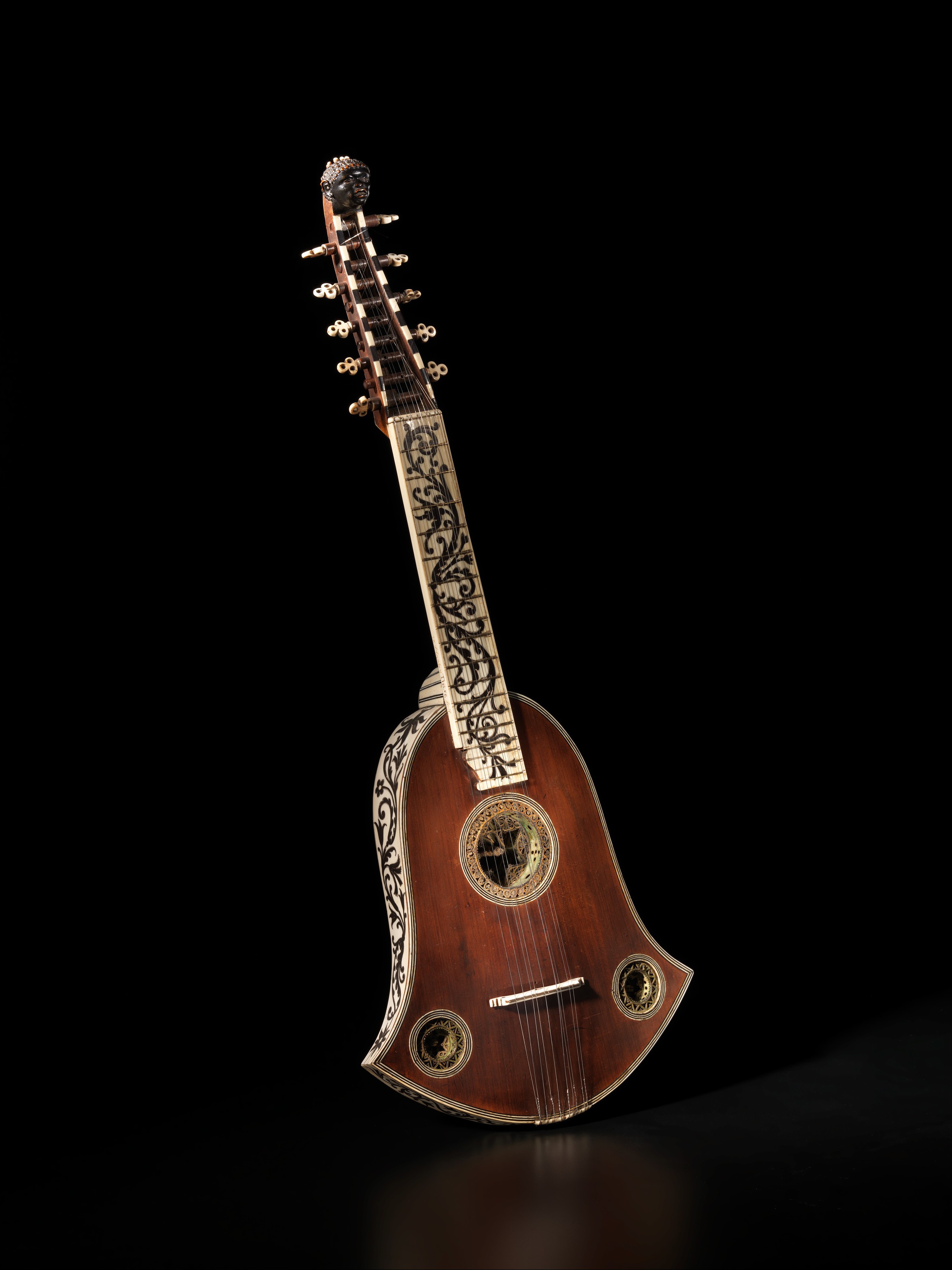
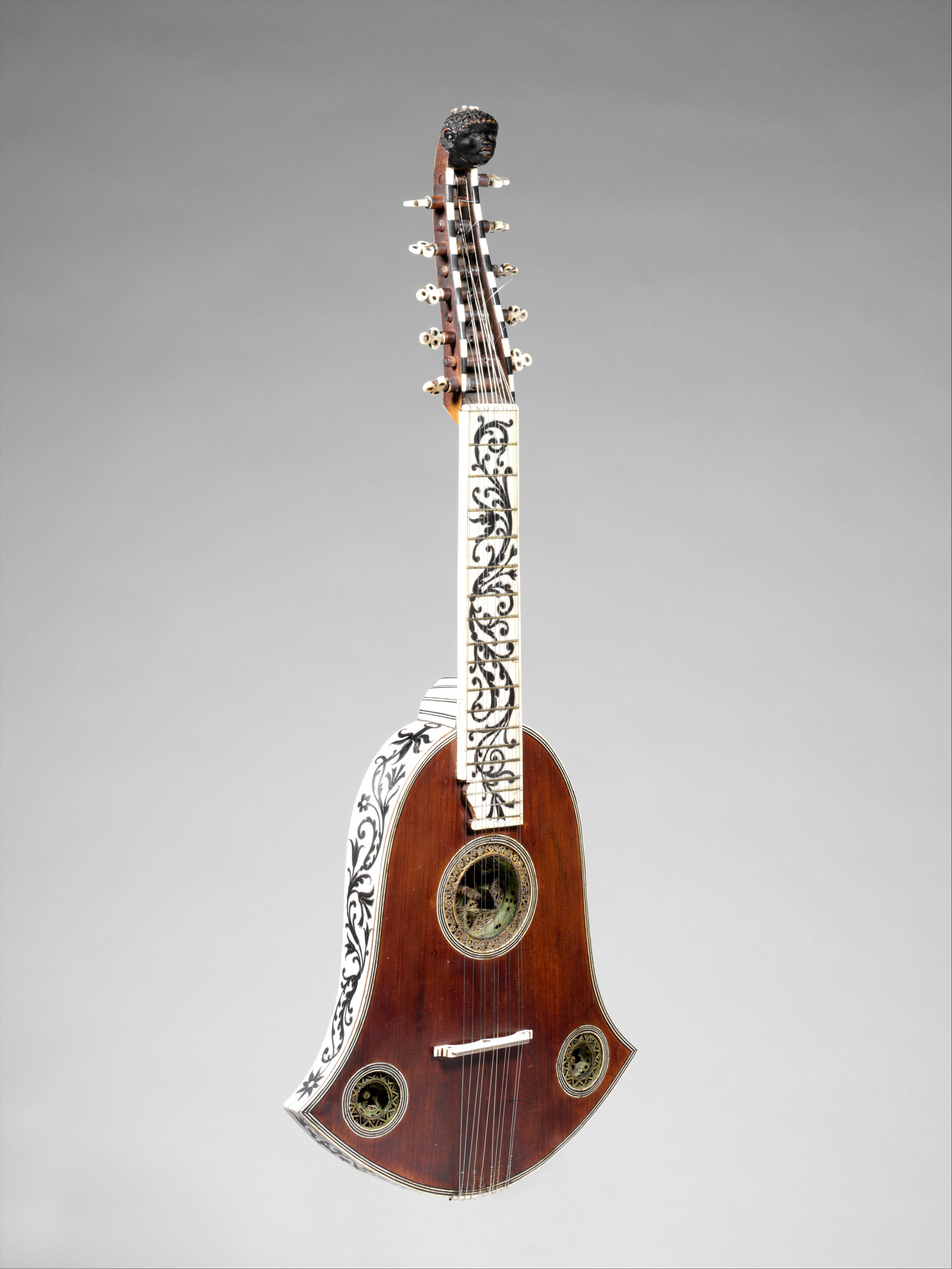
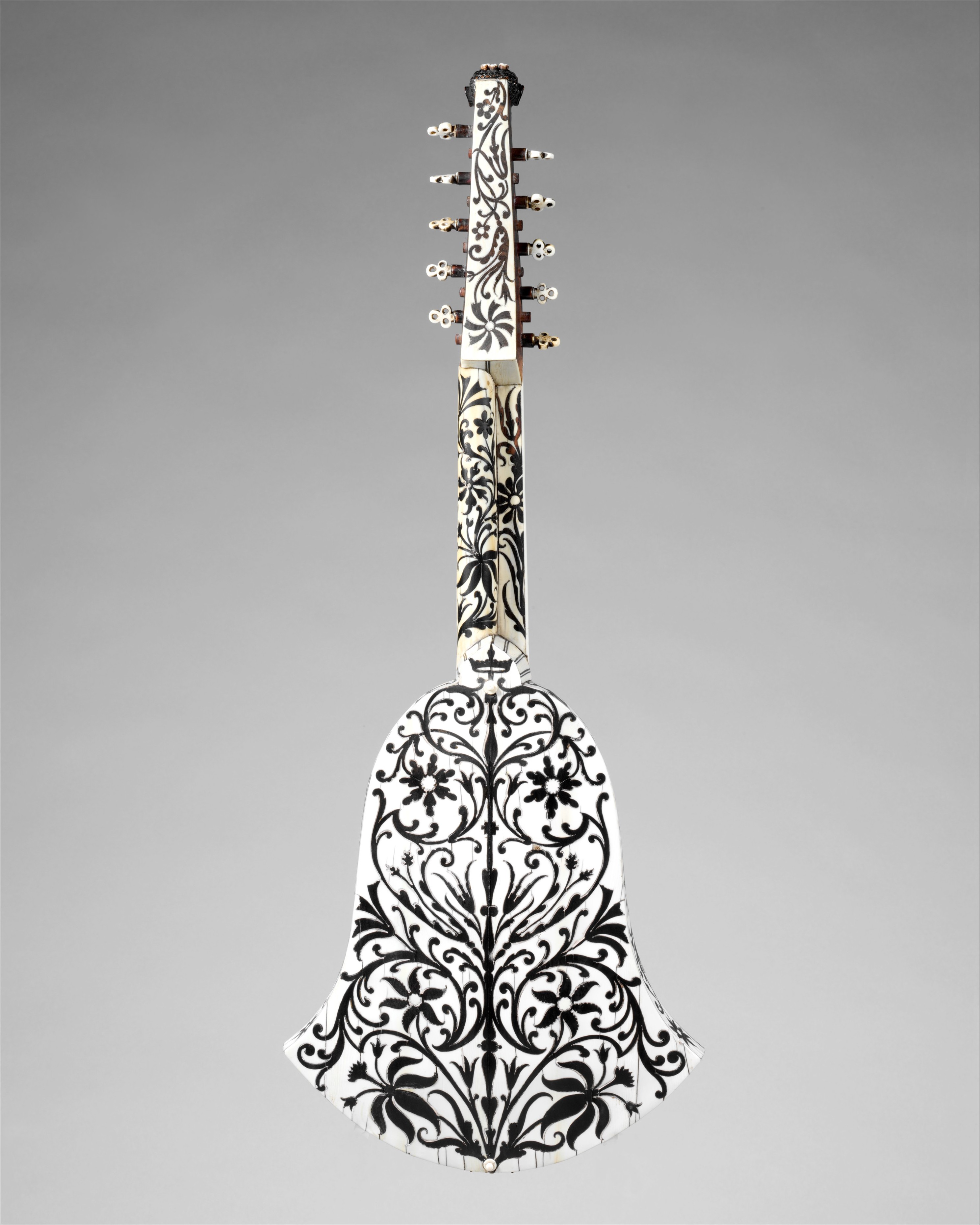
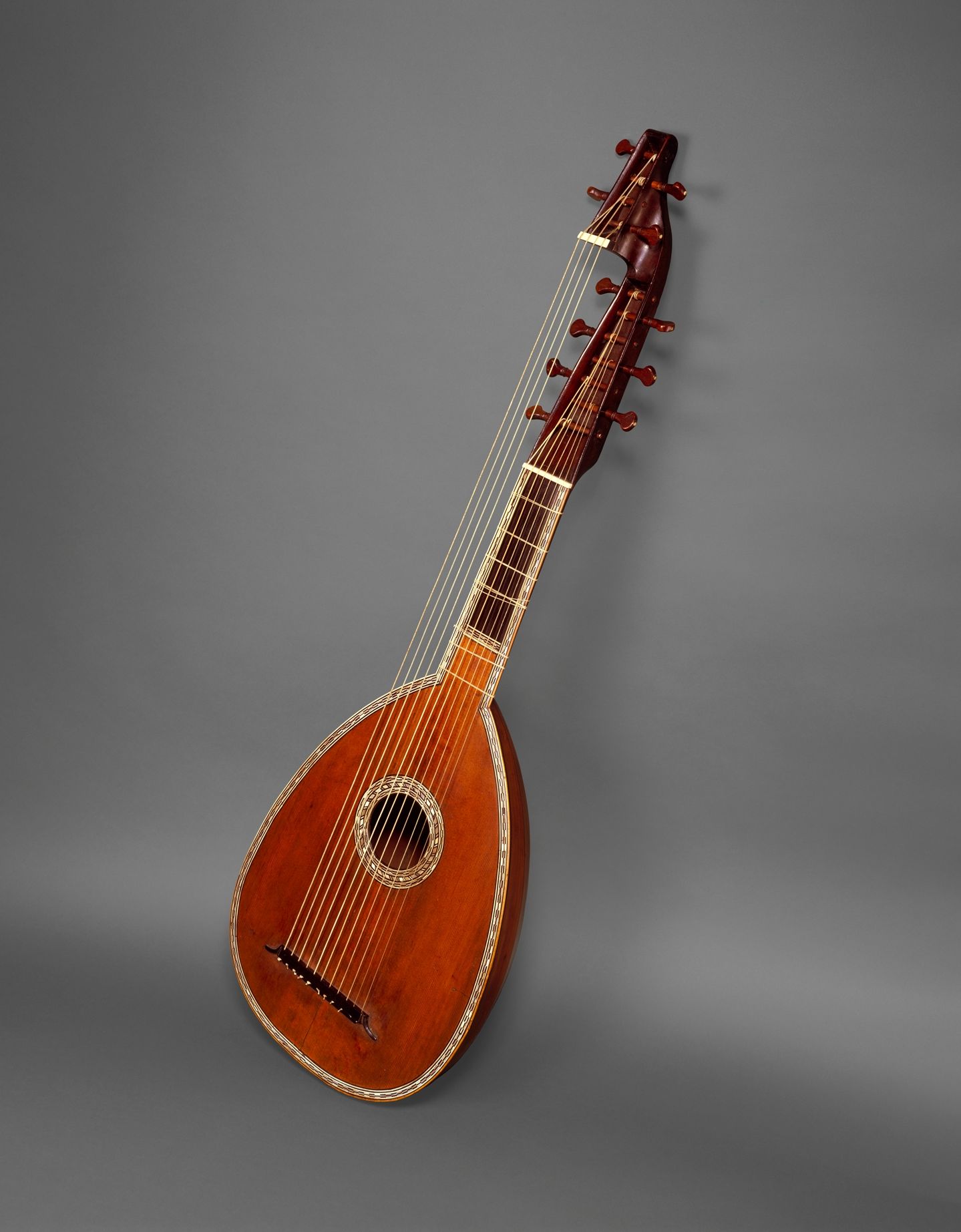
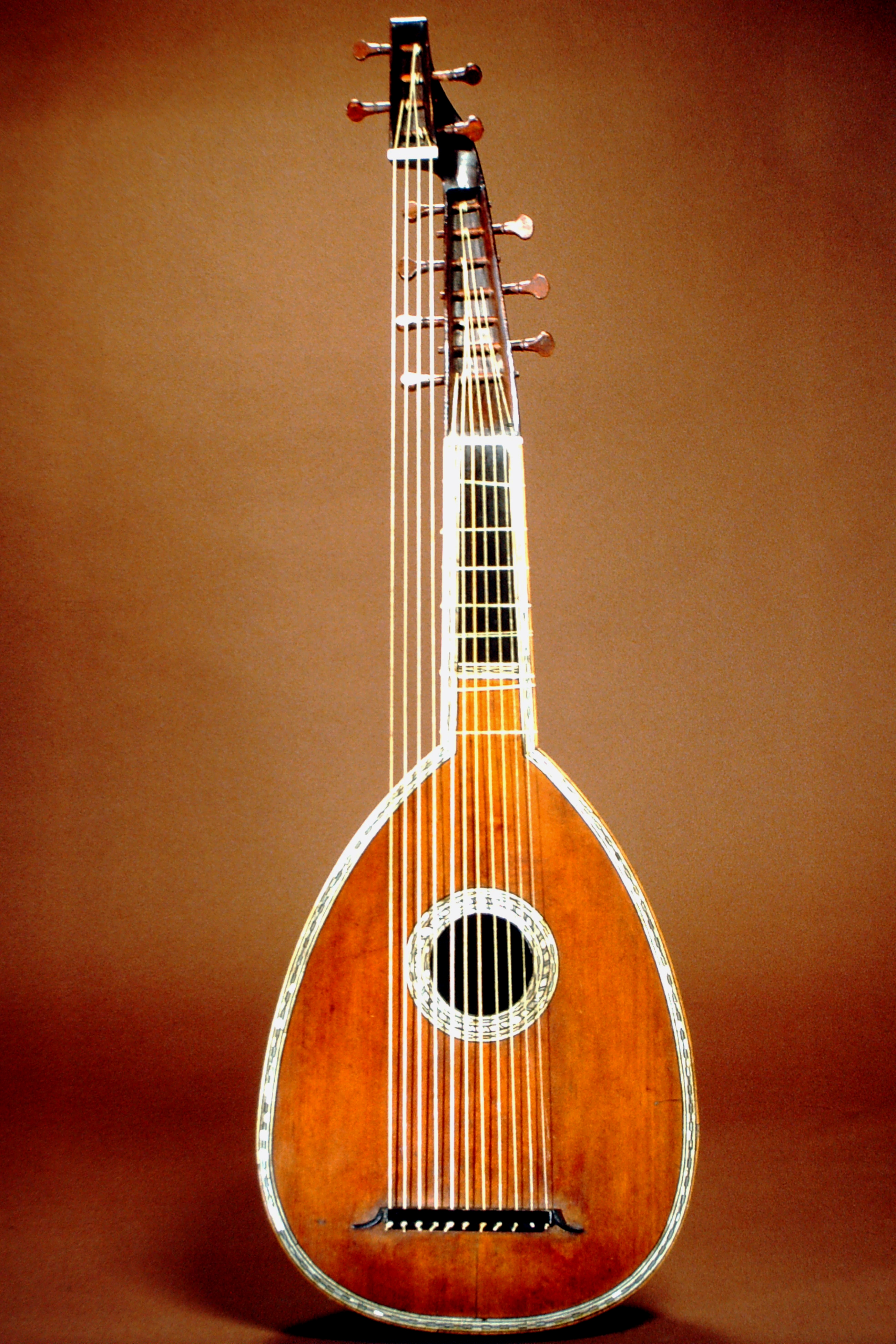
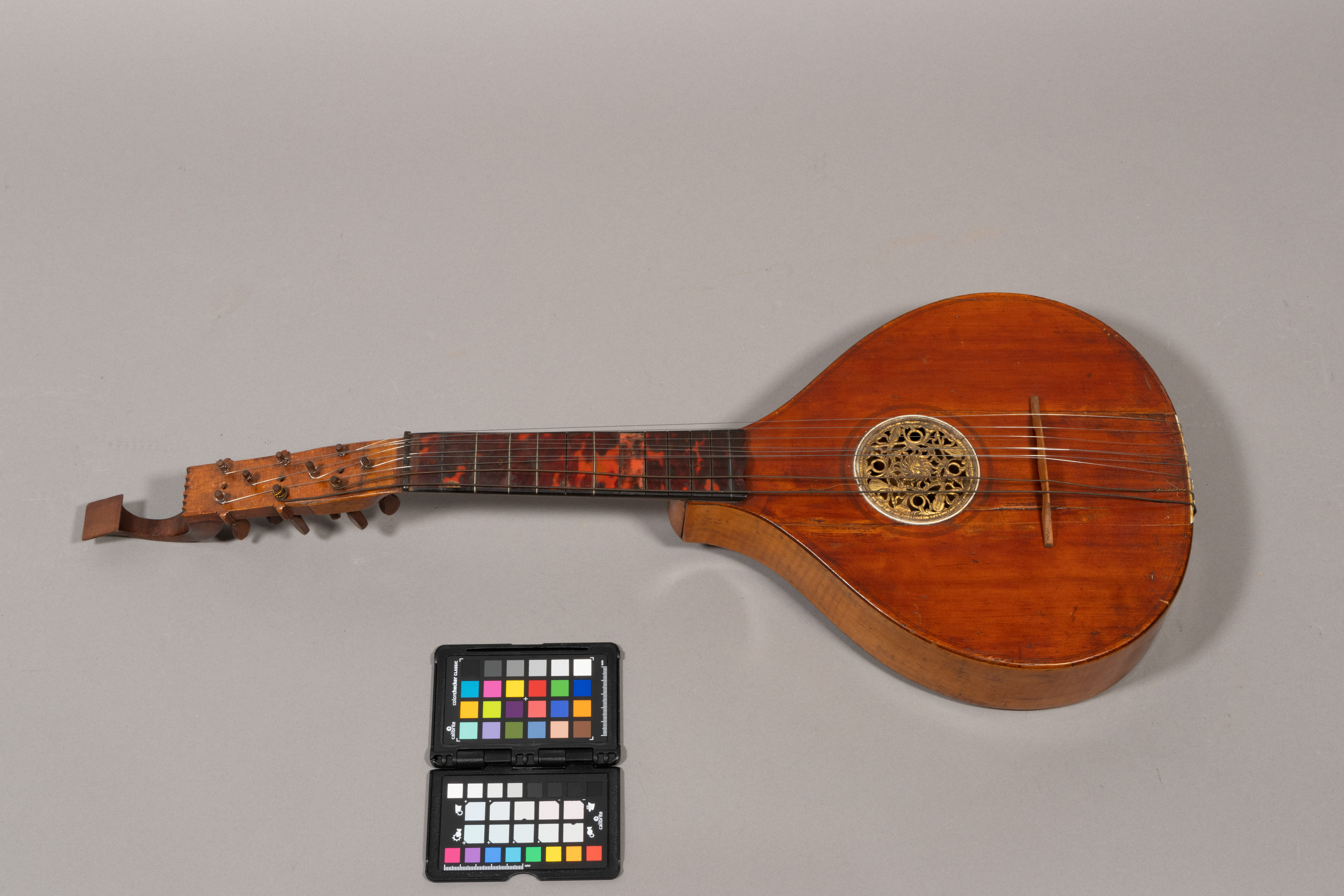
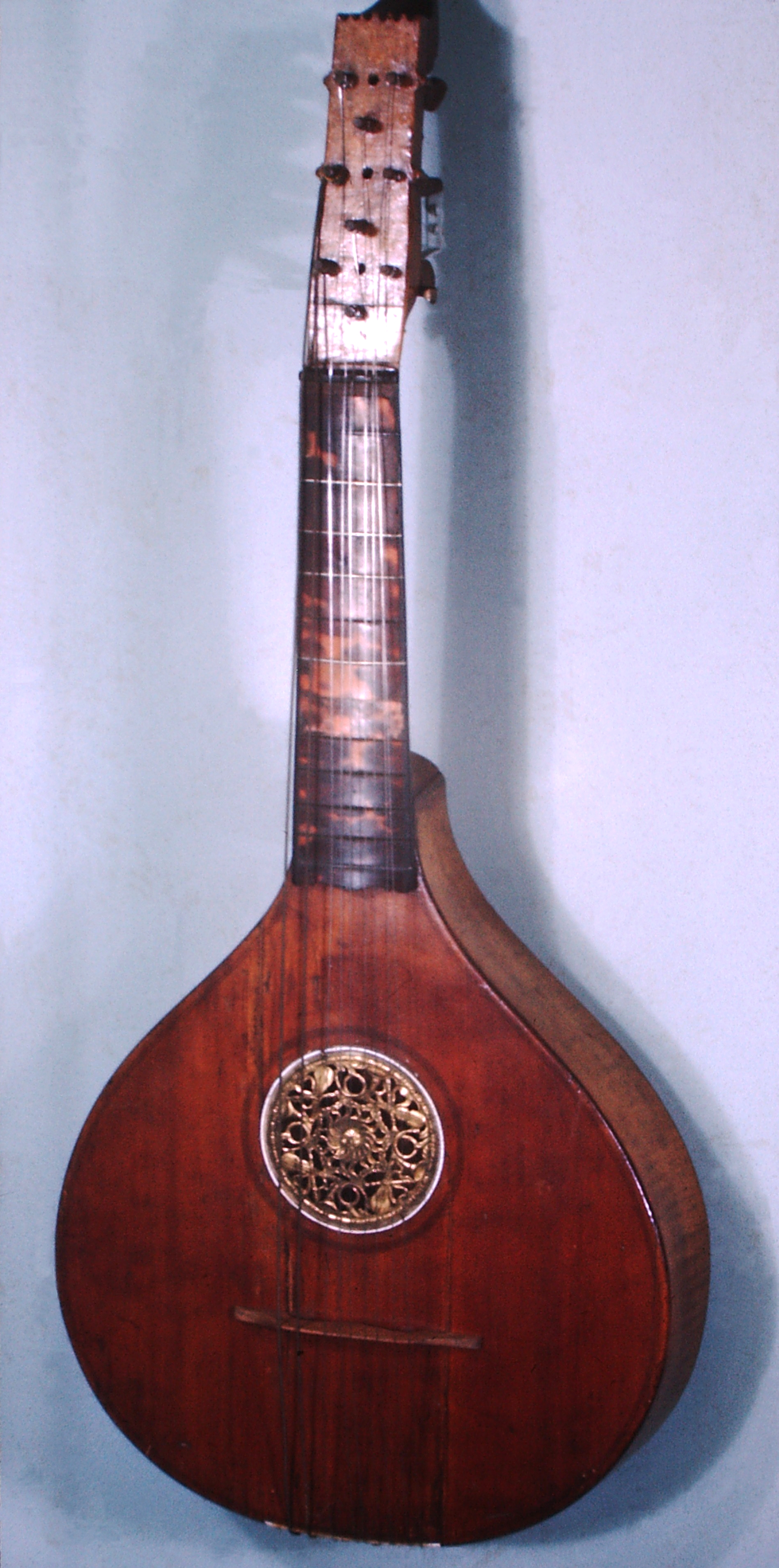
The Metropolitan Museum’s collection holds four citterns that bracket nearly the whole of the instrument’s mainstream period. A German cittern of around 1685 (object 504210) — cypress, ivory, ebony, parchment and brass — represents the late Baroque continuation of the Renaissance design. From France come two related instruments: a cittern of 1772 (object 504251), built of maple, spruce, ebony, ivory, mother-of-pearl and brass, and an arch cittern of 1782 (object 504616) of wood and ivory. From Britain comes a cittern of around 1780–95 (object 500563), donated by Joseph W. Drexel in 1889. Together they trace the instrument from Baroque Germany to the late-18th-century French and English drawing room.
The 1750s saw a sudden English vogue for the cittern under the name “English guittar,” helped by makers such as Christian Claus and John Preston. Tens of thousands of these instruments were sold to amateur players, and method books in this period rival those of the early piano in number. By around 1810 the new Spanish six-string guitar had taken over English domestic music, and the cittern receded to the folk repertoire of Britain, Iberia and Corsica, where wire-strung instruments in this family — the Portuguese guitarra of Coimbra, the Corsican cetera, the German Waldzither — survived continuously into the 20th century.
The 1960s revival of British and Irish folk music brought the cittern back to wider attention, mainly in the form of the Irish bouzouki and the closely related modern cittern, both adapted from the Greek bouzouki by makers such as Stefan Sobell from the late 1960s onward.
Construction & Materials
A cittern body is shallow and pear-shaped, built with a flat soundboard and a flat back joined by ribs — quite different from the deeply rounded back of the gut-strung lute. The MET’s German specimen of around 1685 uses cypress for the body, ebony for the fingerboard, and ivory and brass for fittings, all materials chosen for stability under metal-string tension. The strings, originally of brass and iron, are arranged in courses of two — historically four to seven courses — and tuned to re-entrant patterns that vary by region.
The fretboard is fully fretted with brass or, on later instruments, ivory frets, and the bridge is glued to the soundboard rather than mounted floating. The arch cittern (MET 504616) adds an extension of additional bass strings running off the side of the fretboard, in the manner of a small theorbo.
How It’s Played
The cittern is plucked either with the fingers or with a quill or plectrum held in the right hand. The Renaissance and Baroque repertoire treated it as a chordal instrument for accompaniment of song and as a melody-and-divisions instrument in mixed consort music — most famously the Morley Consort Lessons of 1599 and Philip Rosseter’s Lessons for Consort of 1609. The English guittar of the 1760s and 70s was used almost exclusively for amateur song accompaniment.
Modern cittern playing in the Irish folk tradition uses long, ringing chord progressions punctuated by single-string melodic runs, and the instrument is most often played with a flat plectrum.
Cultural Significance
In the Renaissance the cittern was the everyday plucked instrument of the European city — durable enough to live in a barber-shop or tavern, cheap enough for ordinary tradespeople, and tuned in a way that made elementary playing easy. Period sources frequently mention the barber-shop cittern as something a customer might pick up while waiting for a haircut, in a way that prefigures the role the guitar took on three centuries later.
In modern folk music, the family of wire-strung citterns — Portuguese guitarra, Corsican cetera, German Waldzither, English guittar revival, Irish bouzouki and modern cittern — represents one of the most active continuities between Renaissance and contemporary practice. The Coimbra fado tradition in particular has carried the Portuguese guitarra through unbroken professional use since the early 18th century.
Notable Examples & Recordings
The four MET specimens (objects 504210, 504251, 504616, 500563) span Baroque Germany, mid-18th-century France and Georgian Britain. The Russell Collection in Edinburgh holds further important early citterns, and the Museu da Música in Lisbon maintains a deep collection of Portuguese guitarras.
For listening:
- The Consort of Musicke, Morley: First Booke of Consort Lessons — Renaissance cittern in mixed consort.
- Carlos Paredes, Guitarra Portuguesa — Portuguese guitarra in the Coimbra fado tradition.
- Andy Irvine, Andy Irvine, Paul Brady — modern Irish bouzouki and cittern in folk songs and tunes.
- Stefan Sobell demonstration recordings — modern luthier-built citterns in solo and ensemble use.
Related Instruments
- Lute – the gut-strung instrument with which the cittern shared the Renaissance plucked-string repertoire.
- Mandolin – the wire-strung Italian descendant that survived where the cittern lapsed.
- Bouzouki – the Greek instrument that, transplanted to Ireland in the 1960s, supplied the body of modern cittern revival design.
- – the closely related larger mandolin used interchangeably with the modern cittern in folk music.
- – the Portuguese descendant in continuous professional use.
Where to Hear It
Renaissance and Baroque cittern playing appears regularly on the early-music festival circuit at Utrecht, Bruges, Boston and Tokyo. Modern cittern playing is heard at folk festivals across the British Isles — Cambridge, Cropredy, Sidmouth, Whitby, Tønder. The Coimbra fado scene runs continuously in the city’s cafés and concert halls and is a living centre for the Portuguese guitarra branch of the family.
- Wikipedia: Cittern
- The MET: Cittern, German ca. 1685 (object 504210)
- The MET: Cittern, French 1772 (object 504251)
- The MET: Cittern, British ca. 1780-95 (object 500563)
- The MET: Arch Cittern, French 1782 (object 504616)
- Wikimedia Commons: Cittern
Learning Resources
Most modern cittern players come to the instrument from the mandolin family or from folk guitar; the playing position and right-hand technique are similar to those of the octave mandolin. Method books for the modern instrument include those by Roger Landes and Niall Hanna; for Renaissance and Baroque cittern the modern editions of the Holmes Lute Book, the Mulliner Book and the Morley Consort Lessons form the core repertoire. Modern instruments by Stefan Sobell, Roger Bucknall and other luthiers run from roughly 1,500 to 5,000 USD; entry-level wire-strung citterns and bouzoukis are available from roughly 400 USD.
Frequently Asked Questions
What is the difference between a cittern and a lute?
The cittern is wire-strung, flat-backed and fully fretted with metal frets; the Renaissance lute is gut-strung, deeply round-backed and tied with movable gut frets. The cittern’s tone is bright and ringing; the lute’s is warm and quickly decaying.
How many strings does a cittern have?
Renaissance citterns most often had four courses (eight strings); 18th-century English guittars had six courses; modern Irish citterns have four or five courses, usually paired in unison or octave doublings.
Where did the cittern come from?
It emerged in the late 15th and early 16th centuries in Italy, growing out of the medieval citole, and spread across Europe over the next century.
What is an English guittar?
The English guittar is a six-course wire-strung cittern that became hugely popular in 18th-century English domestic music between roughly 1750 and 1810, after which the Spanish six-string guitar replaced it.
Are old citterns in museums?
Yes. The Metropolitan Museum holds four citterns: a German cittern of around 1685 (object 504210), a French cittern of 1772 (object 504251), a French arch cittern of 1782 (object 504616), and a British cittern of around 1780-95 (object 500563), all in the Musical Instruments department.