.jpg)


Hammered Dulcimer
hammered dulcimer
| Category | Strings |
|---|---|
| Country of origin | multiple (Eurasia) |
| Wikipedia | en.wikipedia.org |
| Wikidata | Q1588017 |
Listen

Overview
The hammered dulcimer is a trapezoidal box-zither whose strings, stretched across two or more bridges, are struck with light wooden hammers held in each hand. The same basic design is found from Iran to Korea to the Appalachian Mountains under many different names — santur, yangqin, cimbalom, yanggum, salterio — and forms one of the most widely distributed string-instrument families on earth.
What links these instruments is not their language or repertoire but their geometry: dozens of strings, each one passing diagonally over alternating bridges so that one string sounds two distinct pitches depending on where it is struck. This is the design’s signature efficiency.
Origin & History
The earliest documented hammered dulcimers appear in the Middle East as the Persian santur. From there the design spread along trade routes east into China, where it became the yangqin, and west across the Mediterranean and into central Europe, where Hungarian and Romanian players developed the larger concert cimbalom. The Korean yanggum arrived from China in the eighteenth century and became part of court ensembles.
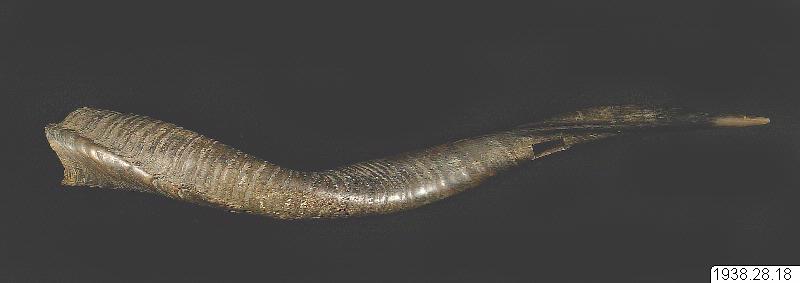
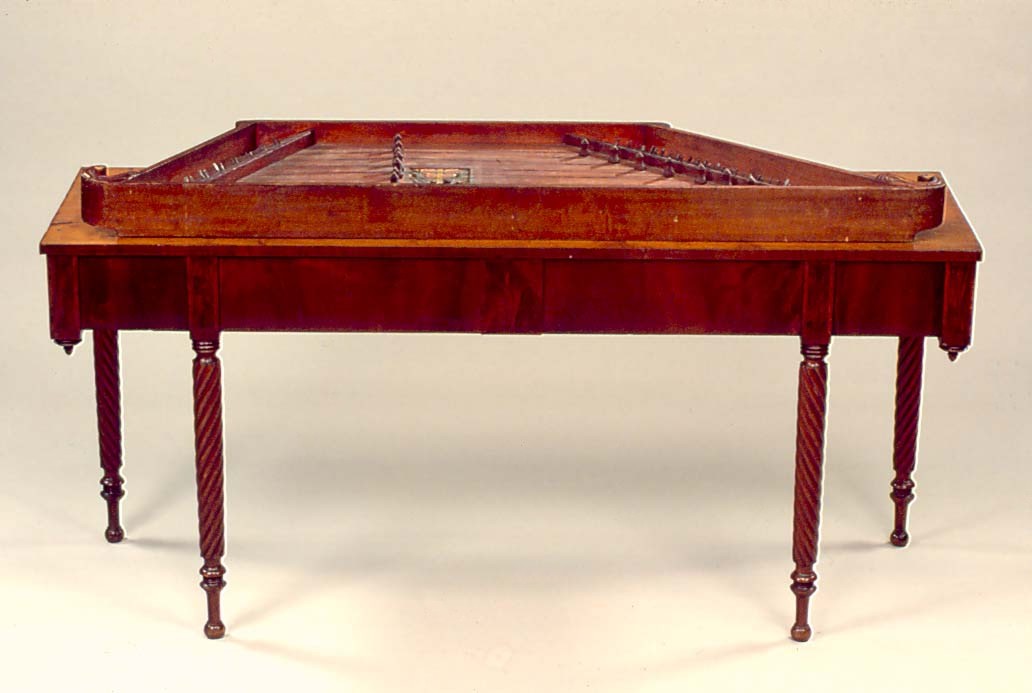
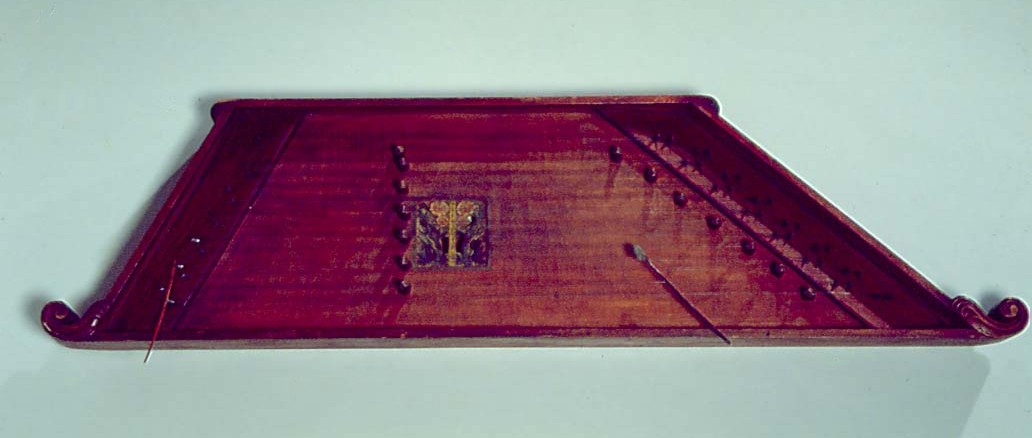
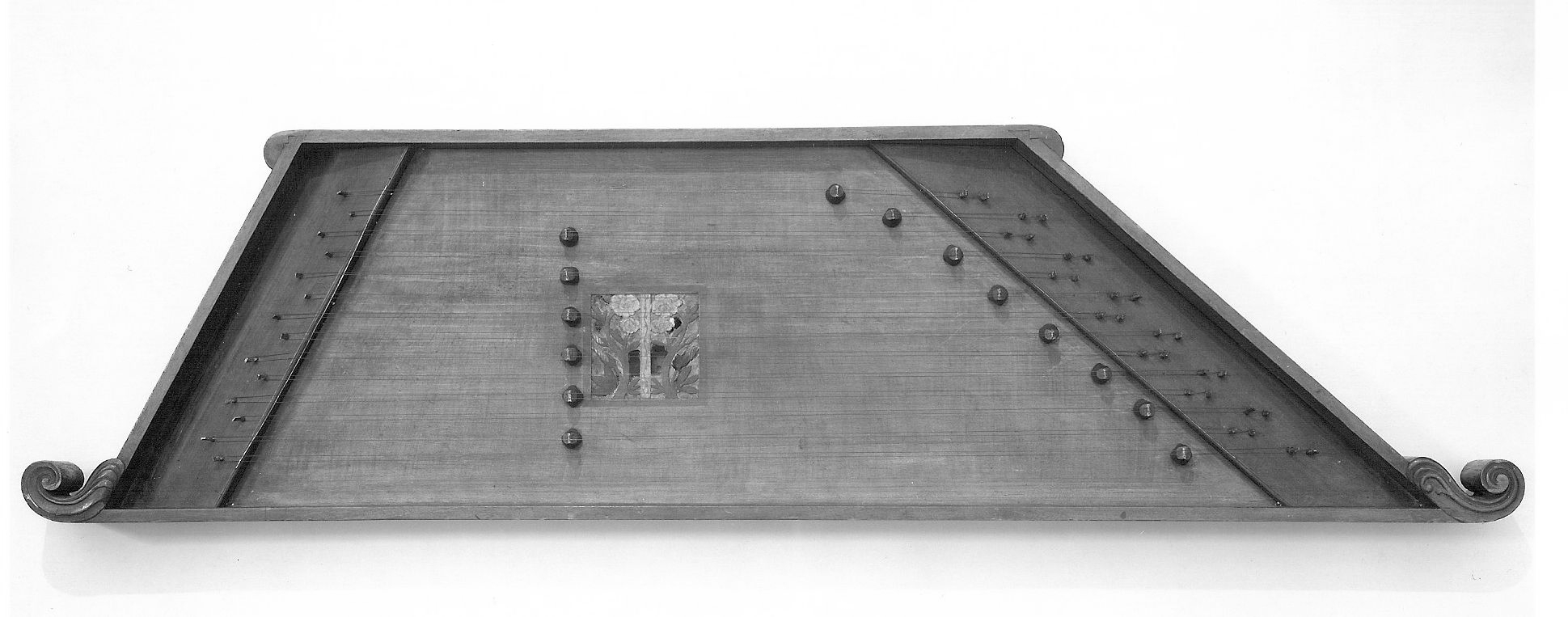
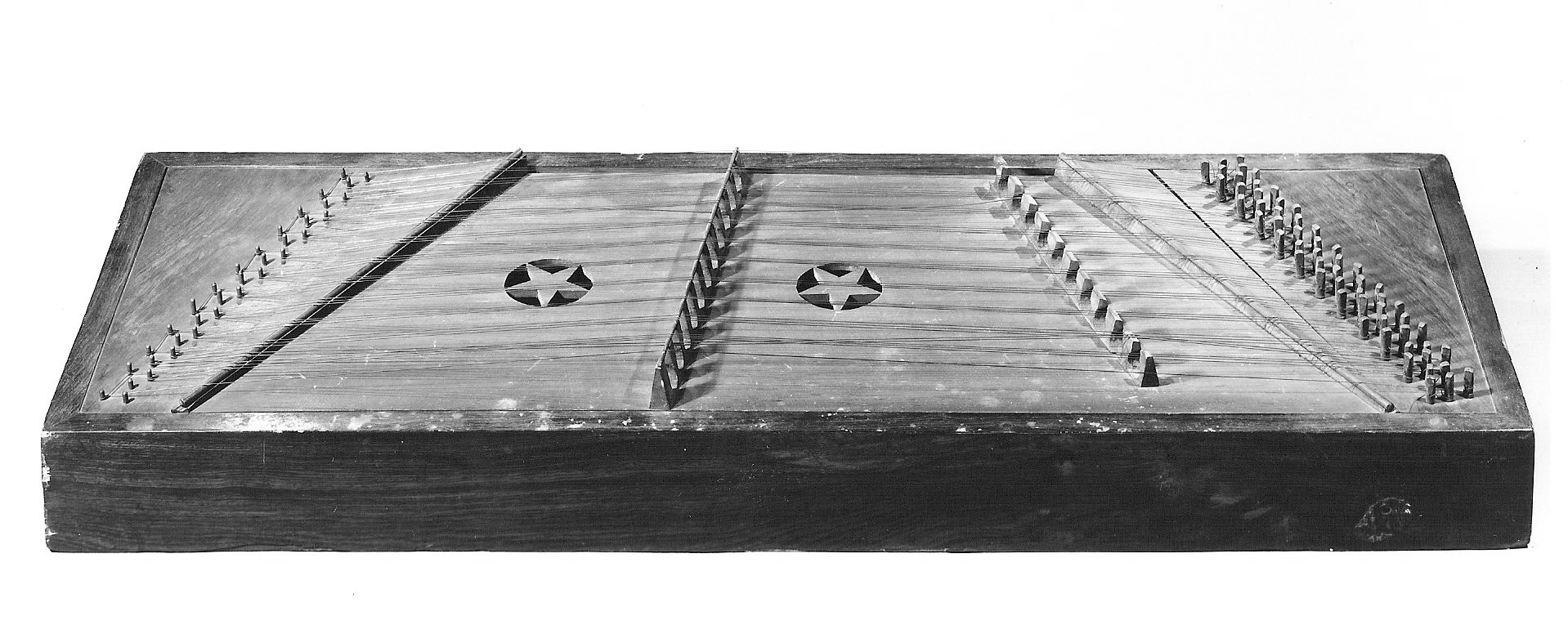
The Metropolitan Museum’s Musical Instruments department holds three specimens that document this geographic spread within the 19th century alone. An early-19th-century American hammered dulcimer (MET object 504662), made of wood, paper, yarn, paint and horn around 1815, shows the form taken in New England rural music. A mid-19th-century American instrument (MET 504623) in wood and metal demonstrates the move toward steel strings during the same period. A 19th-century Korean yanggum (MET 503170), in wood, wire and metal, sits beside both as a parallel — the same design, refined separately by court luthiers half a world away.
European art-music interest peaked in the late 19th century when Liszt and Stravinsky wrote for the Hungarian cimbalom. American folk-revival interest in the dulcimer accelerated from the 1960s onward.
Construction & Materials
The Hornbostel-Sachs system places the hammered dulcimer in group 314 (board zithers) and more specifically in 314.122 (struck box zithers). The body is a flat, hollow trapezoid; the strings — usually four to five per course — pass over two or three wooden bridges that divide them into segments at simple ratios. This bridging is what allows a single string to sound multiple pitches.
The MET specimens illustrate the family’s material range. The early-19th-century American instrument uses traditional wood with paper and yarn elements likely for hammer cushioning. The mid-19th-century American example moves to metal strings — the technology shift that made the late-19th-century cimbalom possible. The Korean yanggum’s wire strings sit closer to the Chinese yangqin tradition. Number of strings varies enormously: from about 30 on a small folk dulcimer to over 100 on a concert cimbalom.
How It’s Played
The performer sits or stands behind the instrument, holding a small wooden hammer in each hand. The hammer face is often padded with cloth or leather on one side and left bare on the other, allowing a quick switch between mellow and bright tones simply by flipping the hammer over. Both hands play independently, alternating rapidly across the bridges to create the characteristic ringing arpeggios.
Tuning varies by tradition. Western hammered dulcimers usually sit in a circle of fifths layout that puts related keys close together. The Persian santur is tuned chromatically across its bridges; the Chinese yangqin uses a pentatonic-friendly arrangement adapted from regional opera practice. Damping is done by hand or, on the cimbalom, by a foot pedal.
Cultural Significance
In Iran the santur sits at the heart of the classical radif repertoire and is one of the four core melodic instruments of Persian art music. In China the yangqin is essential to Cantonese and Sichuan opera and most regional ensemble music. In Hungary, Romania and Moldova the cimbalom is a fixture of both Roma music and the concert tradition that grew from it. In American Appalachian and New England traditions the hammered dulcimer is a fiddle-tune instrument with strong revivalist communities.
The instrument’s geographical reach makes it a useful case study in how a single design idea — strings struck with hammers over a bridged box — can be adopted, renamed and reshaped to suit very different musical languages.
Notable Examples & Recordings
The three MET specimens (504662, 504623 and 503170) provide a compact cross-section of the family in the 19th century. For listening, the Persian santur recordings of Faramarz Payvar and Parviz Meshkatian are foundational; the yangqin recordings of the Chinese Music Ensemble of New York are widely available; cimbalom listeners should start with the Hungarian recordings of Aladár Rácz; and Walt Michael represents the American hammered-dulcimer revival.
Related Instruments
- Santur – the Persian and Iraqi member of the family
- Yangqin – the Chinese branch
- Cimbalom – the Hungarian concert form with damper pedal
- – the medieval European cousin, plucked rather than struck
- – the Appalachian fretted plucked dulcimer (a different instrument despite the shared name)
Where to Hear It
Persian classical concerts, Chinese opera performances, Hungarian Roma ensembles, and American old-time music festivals all feature the family in living tradition. The Walnut Valley Festival in Kansas and the festivals of the Hammered Dulcimer Society are key gathering points for the American community. The Wikimedia Commons category collects images and audio across all branches.
- Wikipedia: Hammered dulcimer
- The MET: Hammered Dulcimer ca. 1815 (object 504662)
- The MET: Hammered Dulcimer mid-19th c. (object 504623)
- The MET: Yanggum (object 503170)
- Wikimedia Commons: Hammered dulcimers
Learning Resources
Beginners often start with a small 12/11 American dulcimer — the numbers refer to the count of bridge crossings on the treble and bass sides — because the simpler string layout makes the tuning logic easier to internalise. Method books by Madeline MacNeil are widely used in the American tradition. For Persian santur, study with a teacher in the radif tradition is essential and is now offered online as well as in person.
Frequently Asked Questions
What family of instruments is the hammered dulcimer in?
It is a struck box zither, classed as 314.122 in the Hornbostel-Sachs system.
How many strings does a hammered dulcimer have?
A small American dulcimer has about 50 strings (in courses of two or three); a concert cimbalom can have over 120.
Are old hammered dulcimers in museums?
Yes. The Metropolitan Museum of Art holds three relevant 19th-century specimens (objects 504662, 504623 and 503170) covering both American and Korean branches of the family.
Where did the hammered dulcimer originate?
The Persian santur is the earliest well-documented form. The design then spread east into China and Korea and west across Europe along medieval trade routes.
Is the hammered dulcimer the same as the mountain dulcimer?
No. They share a name but are different instruments. The mountain dulcimer is a fretted plucked zither played in the lap.
Is the hammered dulcimer difficult to learn?
Basic technique can be acquired quickly because the layout is visual: the player can see every note. Hand independence and tune memorisation are the main longer-term challenges.