.jpg)

Sanxian
三弦
| Category | Strings |
|---|---|
| Country of origin | China |
| Classification | type of musical instrument |
| Wikipedia | en.wikipedia.org |
| Wikidata | Q1860805 |
Overview
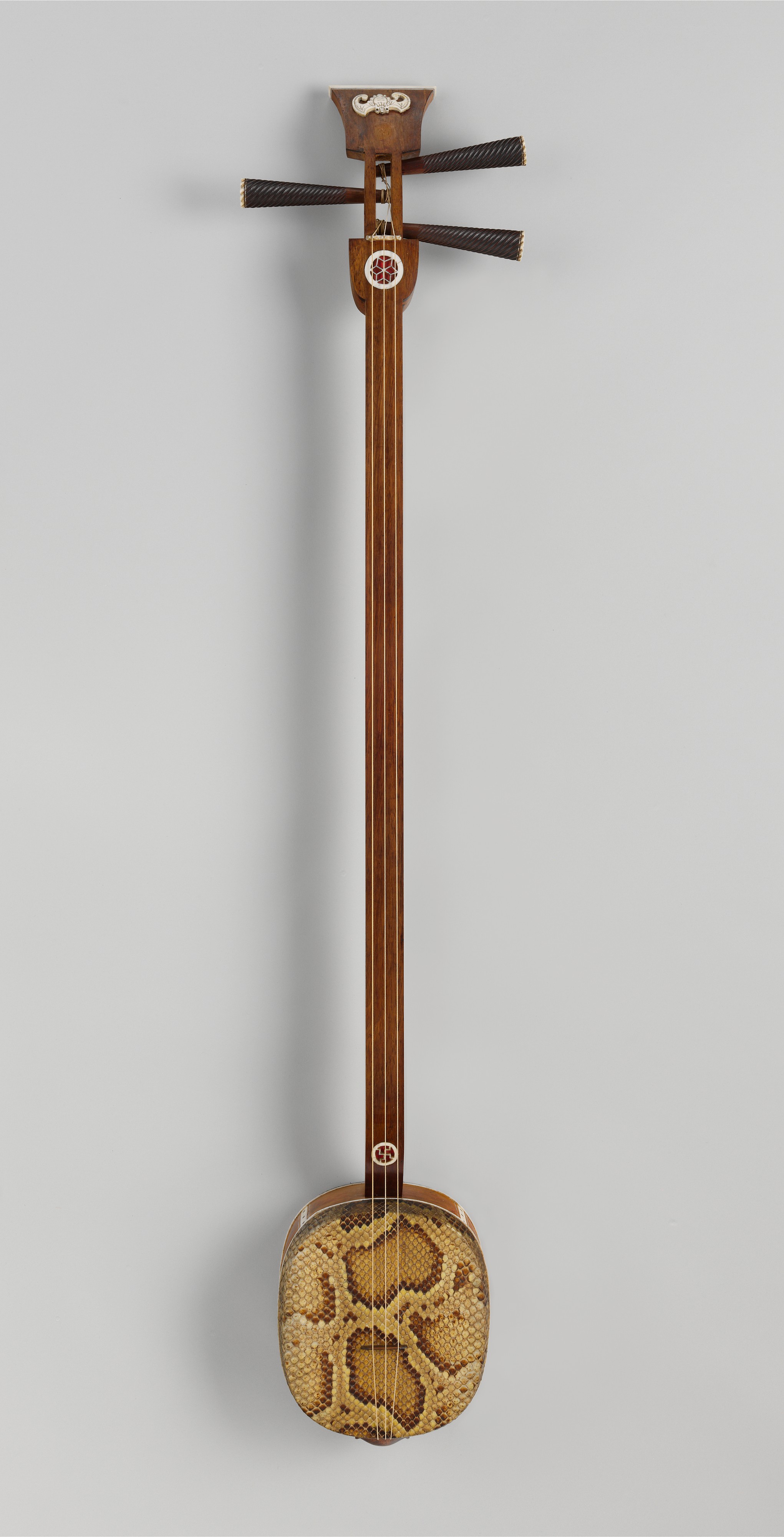
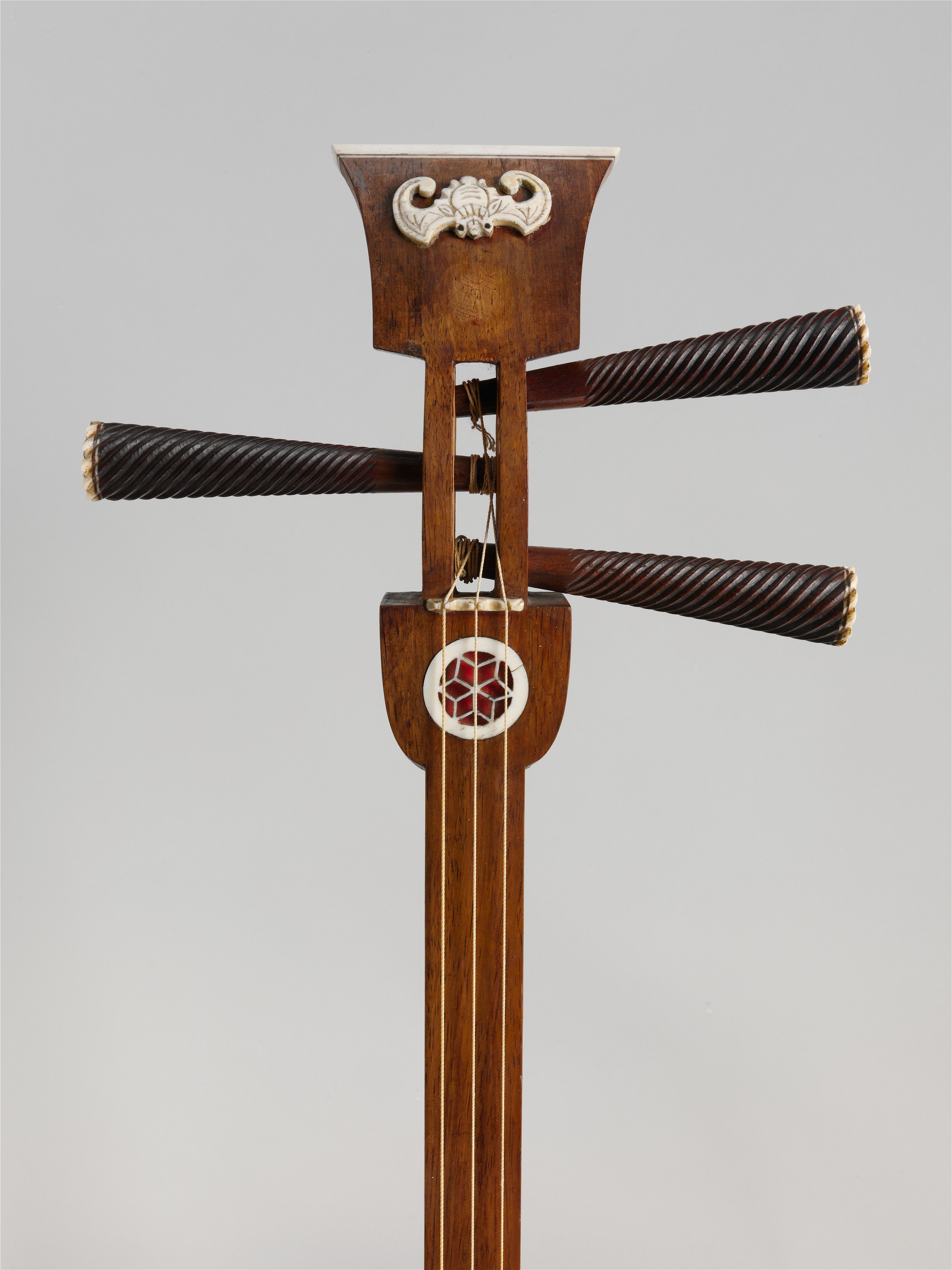
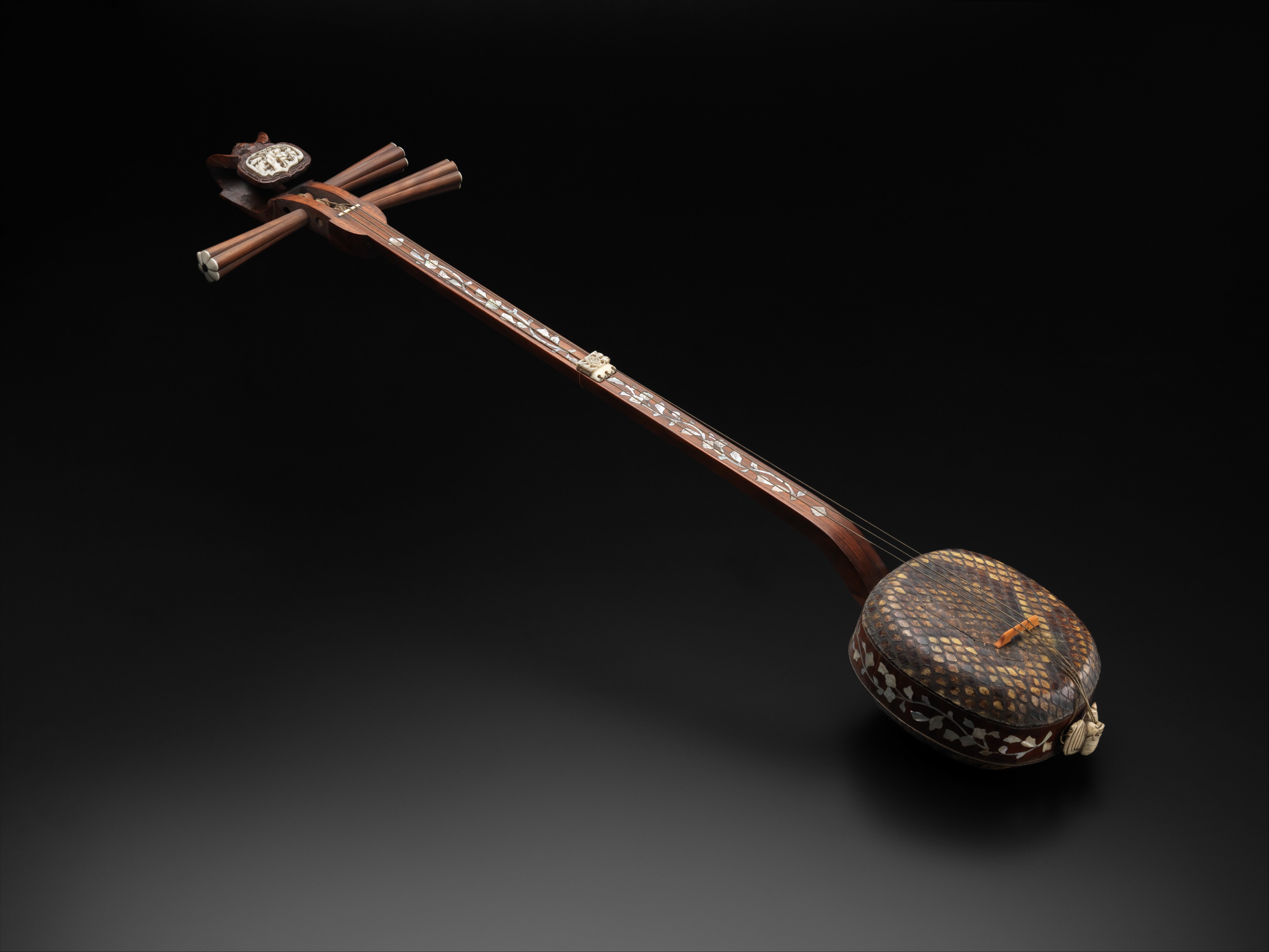
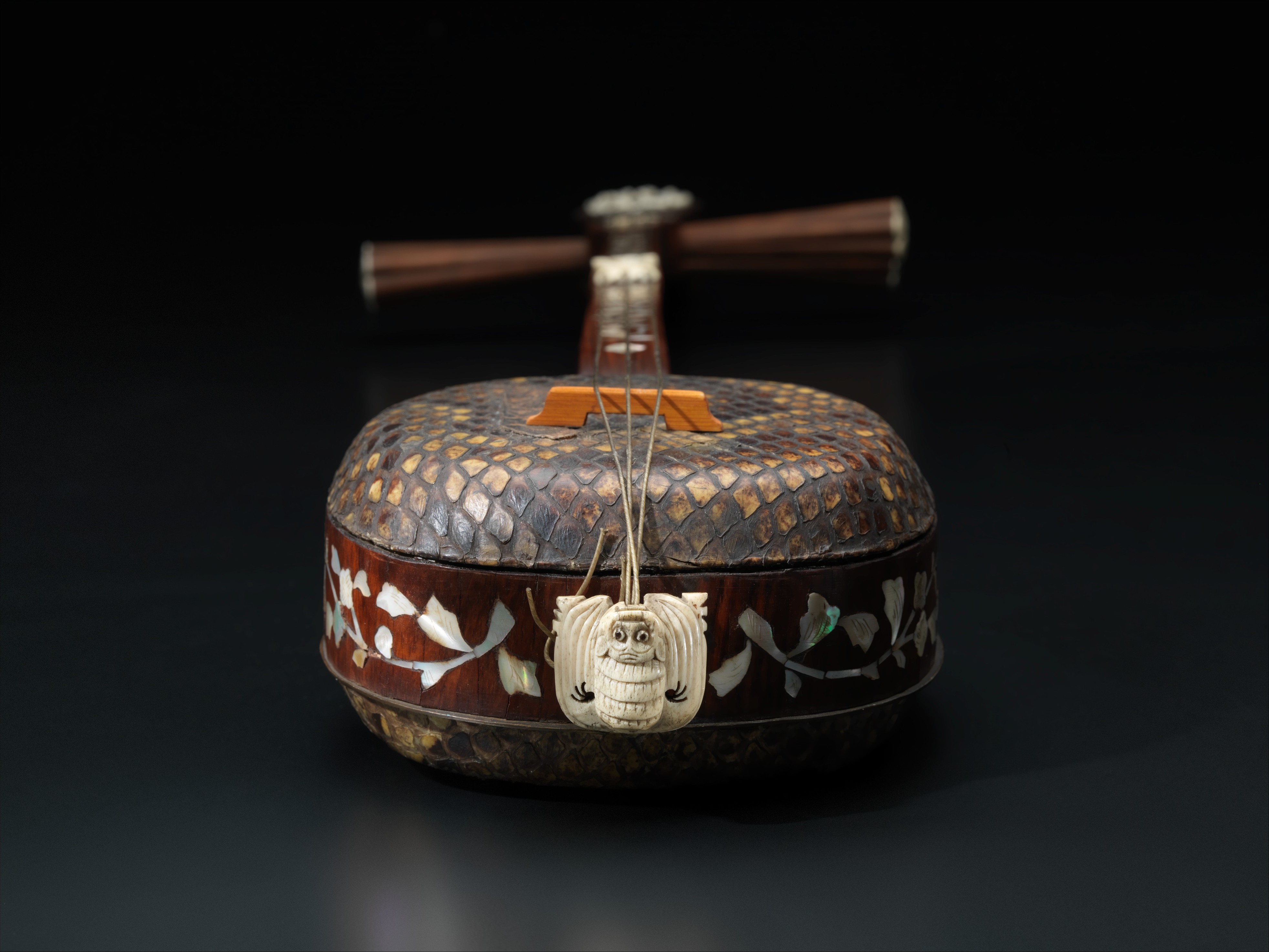
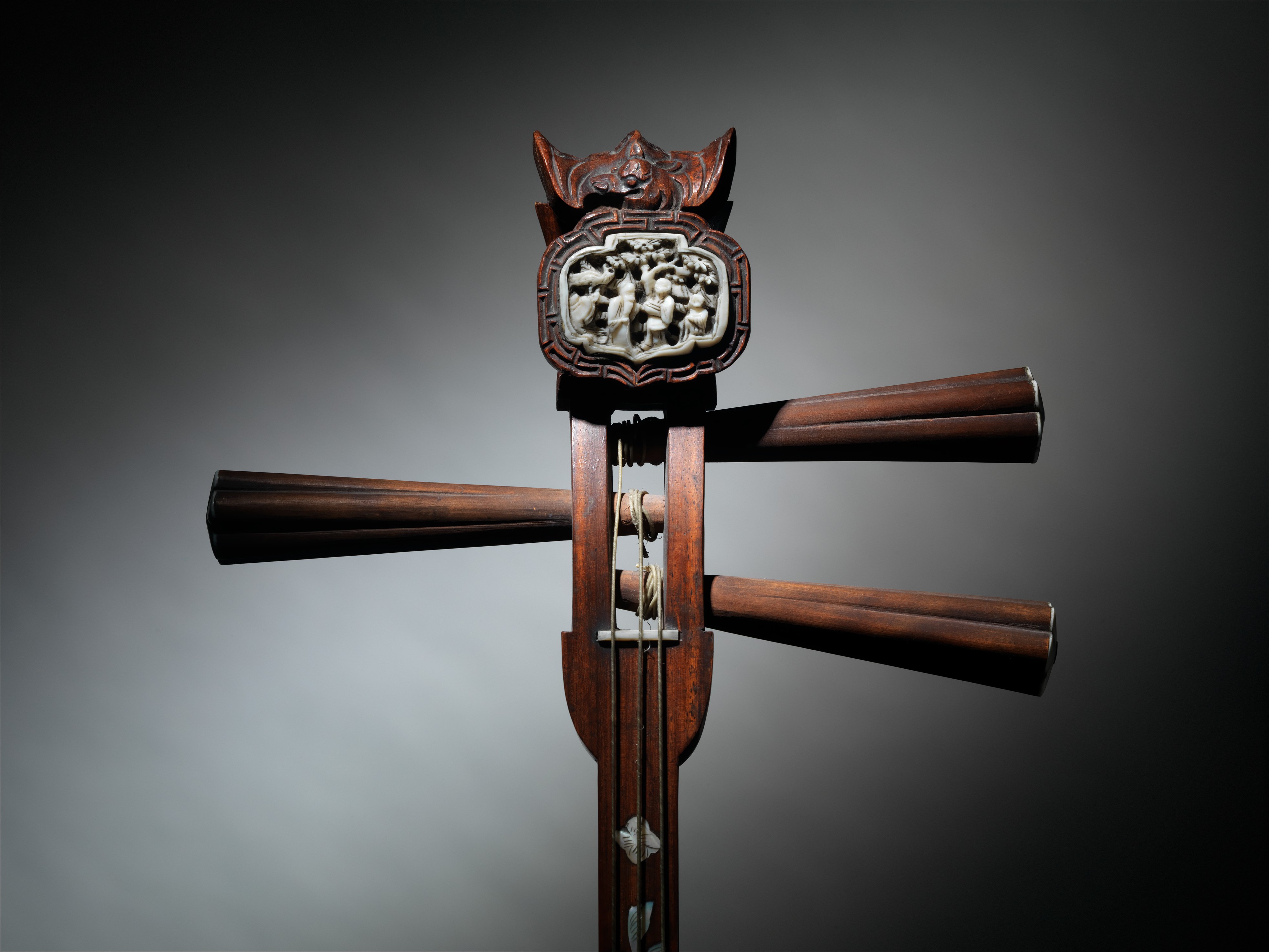
The sanxian (三弦, “three strings”) is a long-necked, fretless, snake-skin-covered Chinese plucked lute. Its name describes its defining feature directly: three strings stretched over a small box body covered with python skin, supported by a long unfretted neck. The body covering, the long neck and the absence of frets together produce a dry, percussive, rhythmically articulate sound that is unlike any other instrument in the Chinese plucked-string family.
Wikidata classifies the sanxian as a “Chinese three-stringed lute” within the spike-box-lute family. The MET catalogues all three of its Chinese sanxian as Chordophone-Lute-plucked-unfretted, in the same series as the Japanese shamisen — a categorisation that captures the close historical relationship between the two instruments.
Origin & History
The sanxian is one of the older surviving Chinese plucked instruments, with documented antecedents in the Yuan dynasty (1271–1368) and probable earlier roots in central Asian long-necked lutes. From the Ming and Qing dynasties onward it became central to two distinct musical worlds: in northern China, to shuoshu and guci narrative singing genres in which a single performer accompanies their own storytelling on the sanxian; and in southern China and the Cantonese regions, to silk-and-bamboo ensembles and to the operatic accompaniment of the major regional theatre traditions.
The Metropolitan Museum’s collection holds three Chinese sanxian and one related Japanese shamisen. Two of the Chinese instruments (objects 500615 and 500571) date to the 19th century and are built of wood and reptile skin; both entered the museum’s collection in 1889, one through the Crosby Brown Collection and one through the Joseph W. Drexel gift. A third sanxian (object 505692) from around 1900 is built of rosewood, mother-of-pearl, snake skin and ivory, and was donated through the Estate of Mrs. Alexander Glass in 1944. The Japanese shamisen (object 503799), a 19th-century instrument of wood, cloth and skin, sits alongside them in the same MET catalogue series.
This catalogue placement matters historically. The Japanese shamisen developed in the 16th century from the Ryūkyū sanshin, which itself developed from the Chinese sanxian transmitted through the Ryūkyū Kingdom (modern Okinawa) in the Ming era. All three instruments — sanxian, sanshin and shamisen — share the same defining structure: three strings, fretless long neck, skin-covered body.
Construction & Materials
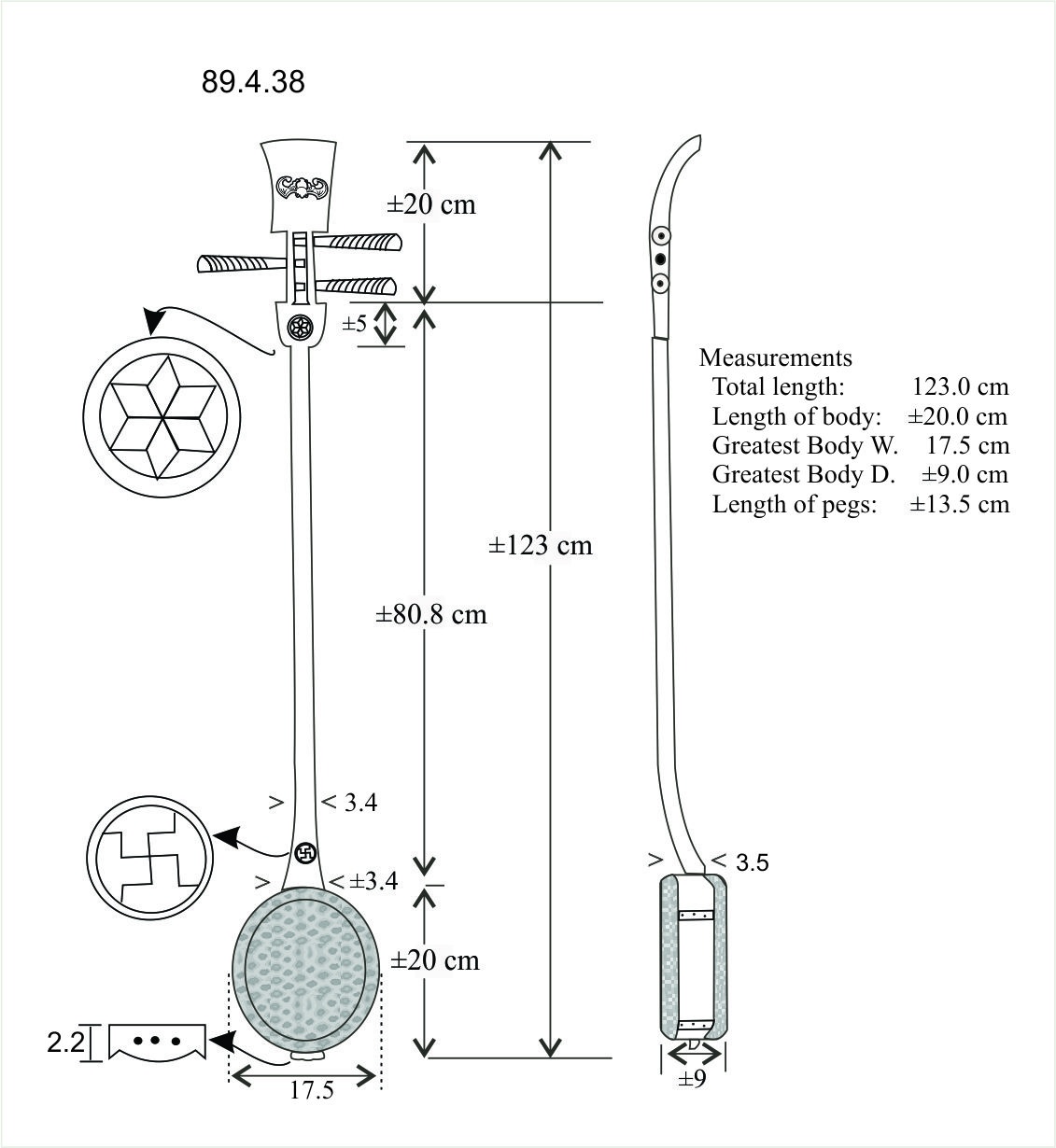
A standard northern sanxian is around 122 centimetres long; the southern variant is shorter, around 95 centimetres. The small rectangular or rounded box body, around 20 centimetres long and ten centimetres deep, is covered front and back with python skin stretched over a hardwood frame (rosewood, sandalwood or, for finer instruments, padauk). The long neck has no frets — pitches are produced entirely by left-hand finger placement against the bare wood — and a small bridge sits on top of the python-skin face.
The three strings, historically of silk and now of nylon-wound steel, are tuned in fourths or fifths depending on the regional tradition. Standard northern tuning is G-d-g; the southern variant tunes lower at C-G-c.
The MET specimens reflect the high end of late-Qing construction: the 1900 instrument’s combination of rosewood, mother-of-pearl inlay and ivory points to an instrument made for a literate or merchant household rather than a working accompanist.
How It’s Played
The player sits with the body of the sanxian on the right thigh and the long neck angled upward to the left. The right hand plucks the strings either with a small plectrum (held between the thumb and index finger, common in classical and ensemble use) or with the fingertips wearing a single finger-pick on the index finger (common in narrative-song accompaniment). The left hand stops the strings against the bare neck.
The fretless neck means that pitch is entirely a function of finger position, and skilled players use sliding, bending and vibrato to produce ornaments and glissandi that no fretted instrument can match. The percussive snap of the plectrum against the python skin gives the sanxian a rhythmic, almost banjo-like attack that punctuates the rhythm of narrative singing.
Cultural Significance
The northern sanxian is the principal accompaniment instrument for Beijing dagu drum-songs, Shandong qinshu lute-songs, Henan qudz tunes and many other northern Chinese narrative-song traditions, in which a single performer simultaneously sings and accompanies. This solo song-and-accompaniment tradition has been continuous since the Ming and Qing dynasties and remains a significant performance genre in northern Chinese cities today.
The southern sanxian functions in mixed silk-and-bamboo ensembles in the lower Yangtze region and in regional theatre traditions. The instrument is also the direct ancestor of the Japanese shamisen, the central instrument of bunraku puppet theatre and kabuki theatre — making the sanxian one of the few instruments whose direct descendants underpin the classical theatre of two separate East Asian cultures.
Notable Examples & Recordings
The MET’s three Chinese sanxian (objects 500615, 505692, 500571) and the related Japanese shamisen (object 503799) document the instrument and its East Asian descendants in one collection. The Music Research Institute in Beijing and the Shanghai Conservatory hold further important historical instruments.
For listening:
- Liu Dehai (large pipa specialist who also recorded sanxian) — Chinese Plucked Strings.
- Zhao Taisheng, sanxian recital recordings — leading northern Chinese sanxian player and teacher at the Central Conservatory.
- Tan Longjian — strong representation of the southern silk-and-bamboo style.
- Beijing Opera archival recordings — sanxian in regional theatre accompaniment.
Related Instruments
- Shamisen – the Japanese descendant transmitted through the Ryūkyū Islands in the 16th century.
- Sanshin – the Okinawan three-string lute that mediated between the sanxian and the shamisen.
- Pipa – the pear-shaped Chinese lute that shares the broader Chinese plucked-string repertoire.
- – the Mongolian and Tuvan three-string lutes in related families.
- Banjo – the African-American skin-covered plucked lute that, while developed independently from West African ancestors, shares the same percussive skin-face construction.
Where to Hear It
The Tianqiao district of Beijing, the historical home of northern Chinese narrative-song theatre, continues to host regular sanxian-accompanied storytelling sessions in venues such as the Lao She Teahouse. The Shanghai jiangnan sizhu (silk-and-bamboo) ensembles meet weekly in venues across the lower Yangtze region. Conservatory recitals at the Central Conservatory of Music in Beijing and the Shanghai Conservatory feature the sanxian as a principal solo instrument.
- Wikipedia: Sanxian
- The MET: Sanxian, 19th c. (object 500615)
- The MET: Sanxian, ca. 1900 (object 505692)
- The MET: Sanxian, 19th c. (object 500571)
- The MET: Japanese Shamisen (object 503799)
- Wikimedia Commons: Sanxian
Learning Resources
The Central Conservatory of Music in Beijing and the Shanghai Conservatory offer sanxian as a principal study to the doctoral level, and provide the central pedagogical resources for the instrument. Standard tutors include the Sanxian Jiaocheng by Xiao Jianqing and the conservatory graded examination materials. Outside China the instrument is taught at music institutes in Hong Kong, Singapore and Taipei, and through occasional masterclasses in Western conservatories. New concert-grade instruments by Beijing makers run from approximately 800 to 4,000 USD; student instruments are available from around 200 USD.
Frequently Asked Questions
What is the body of a sanxian made of?
The body of a sanxian is a small box of hardwood — usually rosewood, sandalwood or padauk — covered front and back with python skin. The skin gives the instrument its characteristic dry, percussive attack.
Why does the sanxian have only three strings?
The three-string layout is ancient and reflects the instrument’s central Asian long-necked-lute origins. The same three-string design is preserved in all the East Asian descendants — the Ryūkyū sanshin and the Japanese shamisen.
Is the sanxian related to the Japanese shamisen?
Yes. The shamisen developed in 16th-century Japan from the Ryūkyū sanshin, which itself developed from the Chinese sanxian transmitted through Okinawa. The MET catalogues all three instruments in the same plucked-unfretted lute series.
How many sizes of sanxian are there?
The two main sizes are the northern sanxian (around 122 cm long, used for narrative-song accompaniment) and the southern sanxian (around 95 cm long, used in silk-and-bamboo ensembles and southern theatre).
Are old sanxian in museums?
Yes. The Metropolitan Museum holds three Chinese sanxian: a 19th-century instrument (object 500615), a ca. 1900 example with mother-of-pearl inlay (object 505692) and a second 19th-century instrument (object 500571), all in the Musical Instruments department.
What music is the sanxian used for today?
In China the sanxian remains central to northern narrative-song traditions, southern silk-and-bamboo ensembles and the orchestras of several regional theatre traditions. It also has a small but stable solo concert repertoire and increasing use in modern crossover music.


