Pipa
琵琶
| Category | Strings |
|---|---|
| Country of origin | China |
| Classification | type of musical instrument |
| Wikipedia | en.wikipedia.org |
| Wikidata | Q6685124 |
Listen
Audio: Francesc Fort, CC BY-SA 4.0 / via Wikimedia Commons
Audio: PerlssDj, CC BY-SA / via Internet Archive
Audio: CC BY-SA 3.0 / via ccmixter

Overview
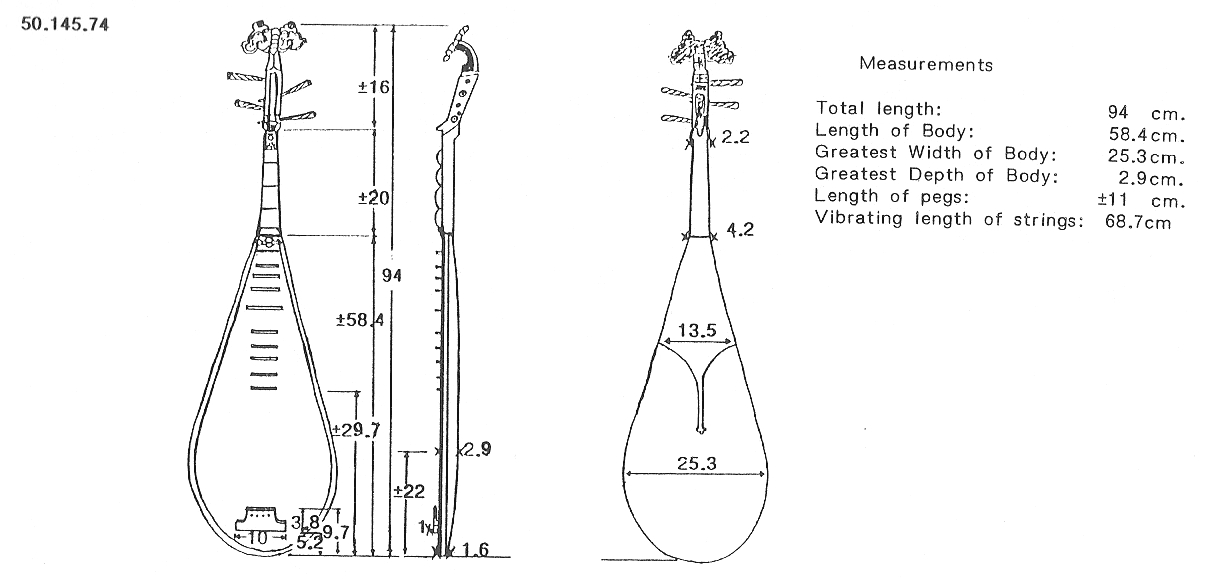
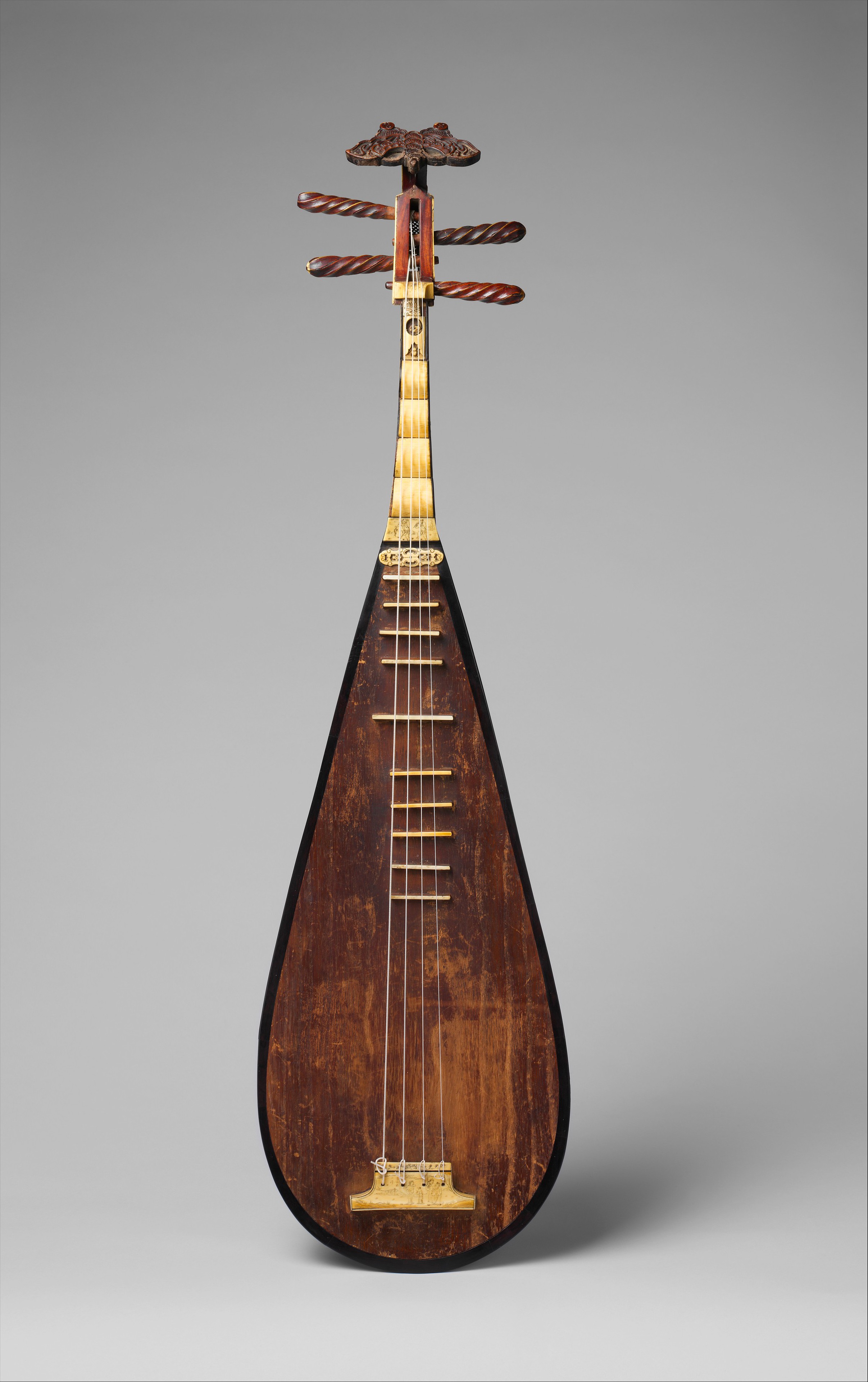
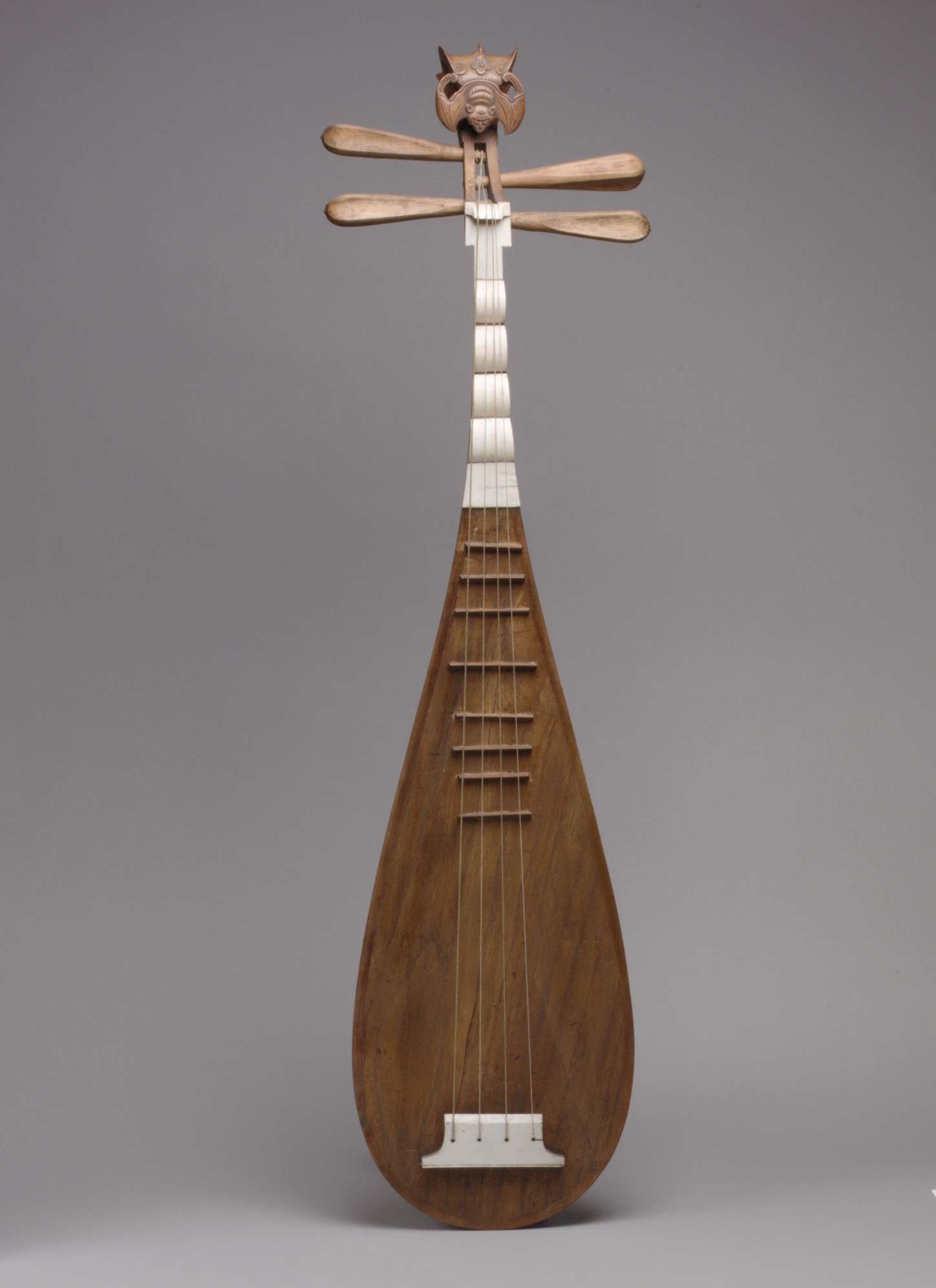
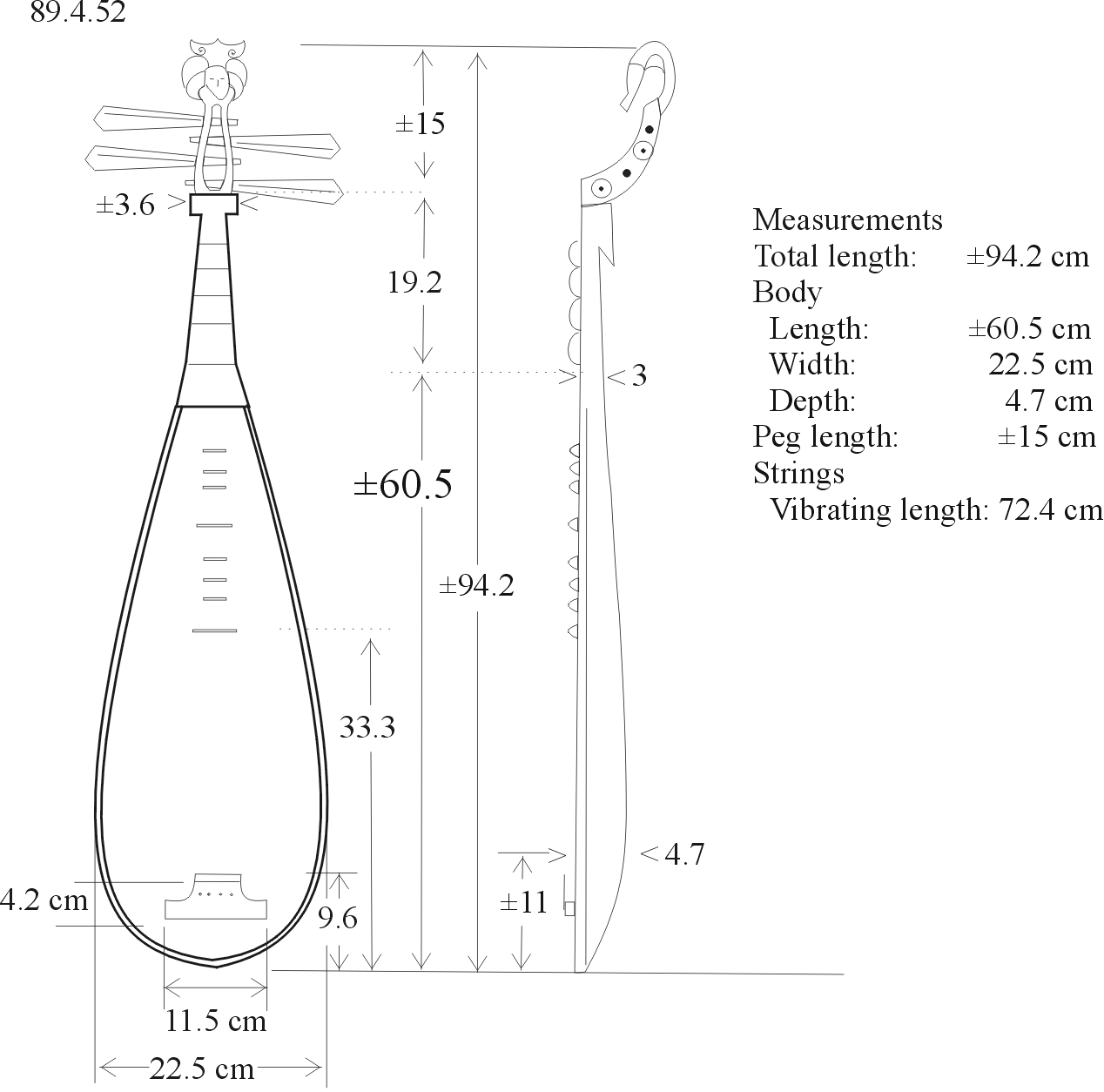
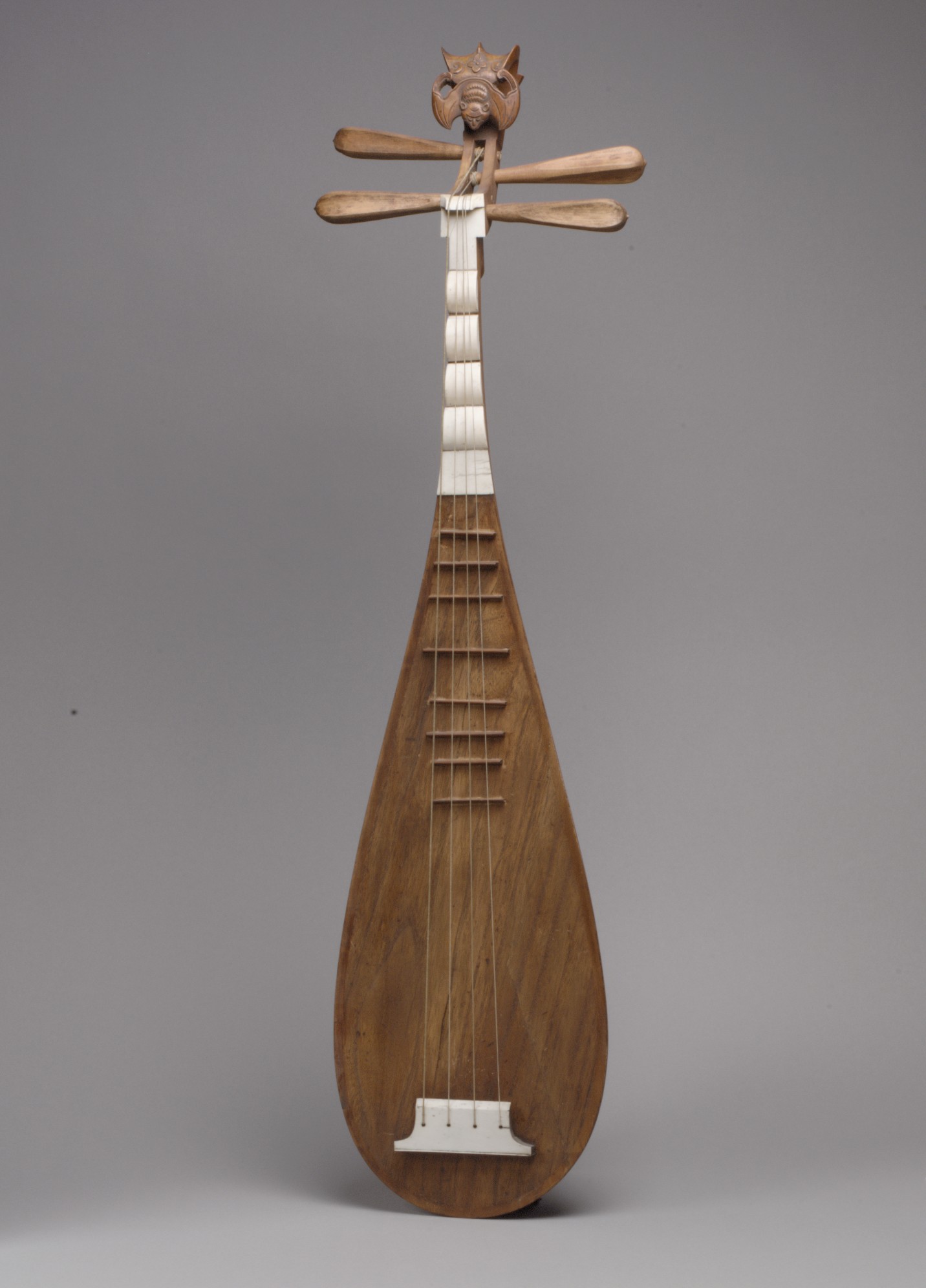
Among Chinese melodic instruments, few enjoy the standing of the pipa: a four-stringed plucked lute carved from a single block of hardwood into a flat-backed pear shape, fitted with a tall ladder of frets that step from the body up over a bent peg head. Picks worn on the right-hand fingers allow the player to move easily between delicate, fingertip-soft passages and rapid, percussive tremolos.
Outside China, the pipa is sometimes lumped together with other Asian lutes as a generic exotic colour. Inside China, it has been a serious solo and chamber instrument for well over a thousand years, with a written repertoire, named schools, and a programme music tradition (the famous “pipa programmatic pieces”) that few other plucked instruments can match.
Origin & History
The pipa entered the Chinese musical tradition along the Silk Road, with ancestors in the lute families of Central and Western Asia. By the Tang dynasty (7th–10th centuries) it was already a fully established court and chamber instrument, depicted in cave paintings, ceramic figures, and surviving paintings of court musicians. The earlier Tang-style pipa was held more horizontally and played with a large plectrum; over the following centuries it gradually shifted to its modern vertical playing position with finger picks.
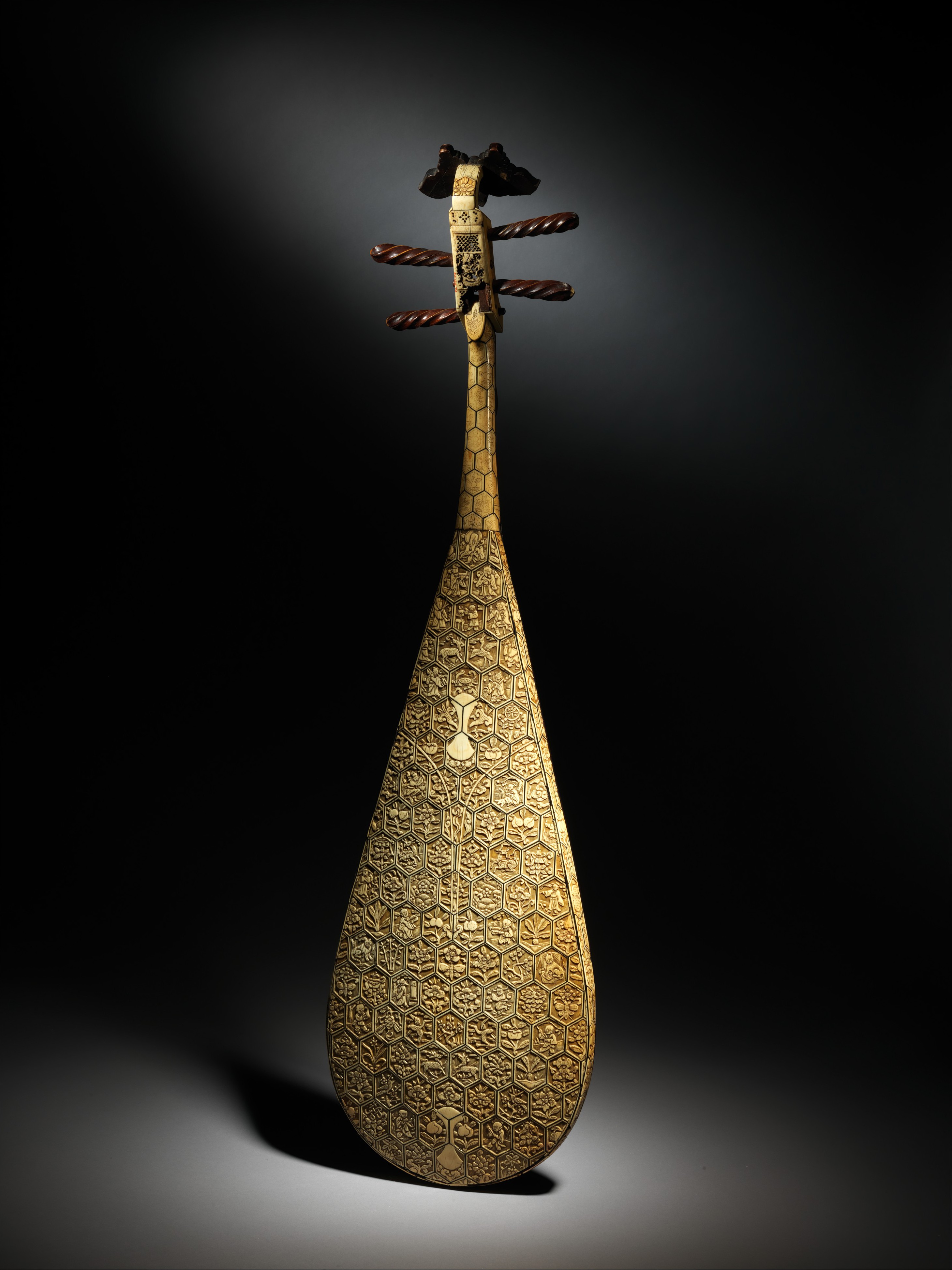
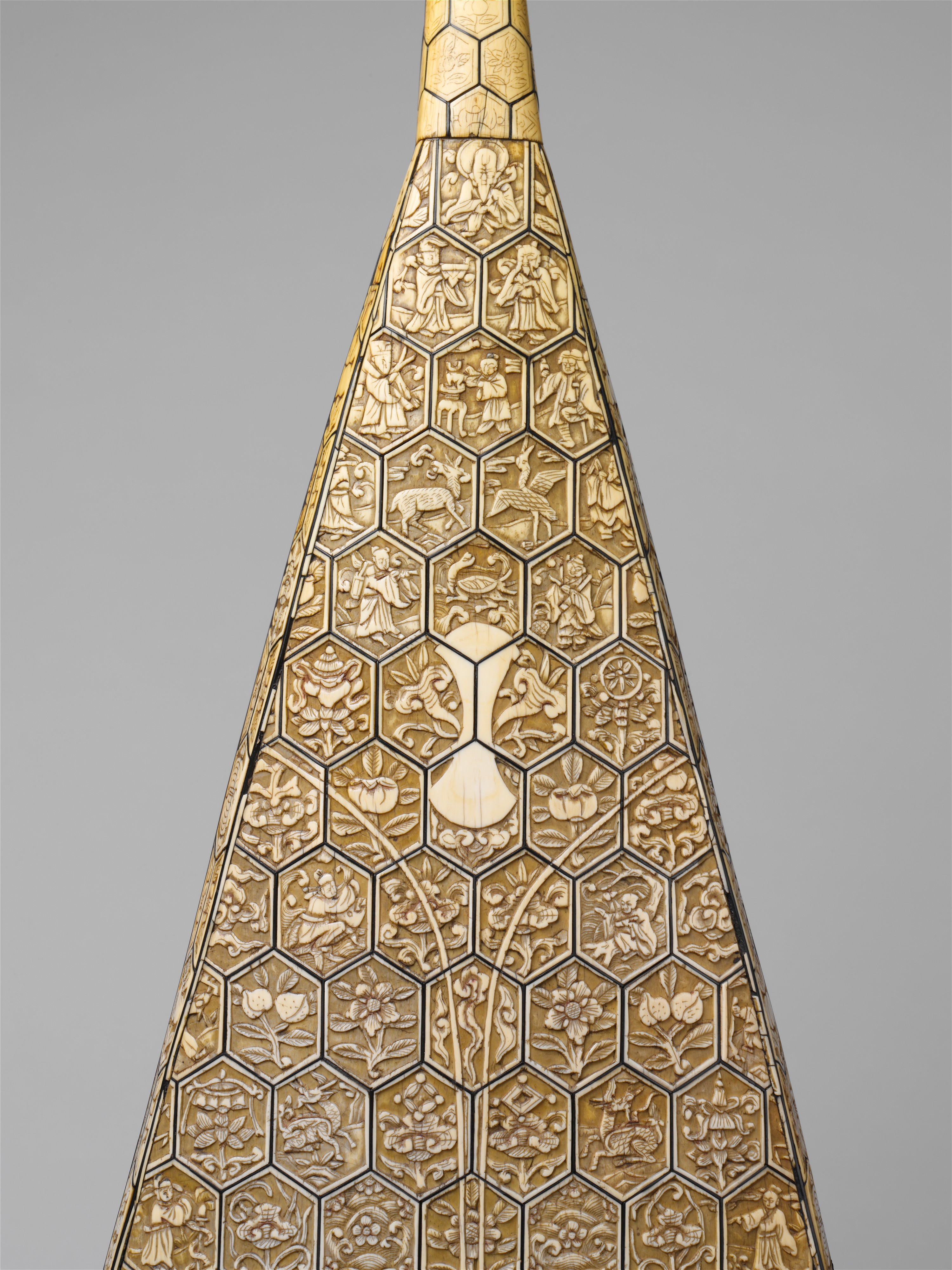
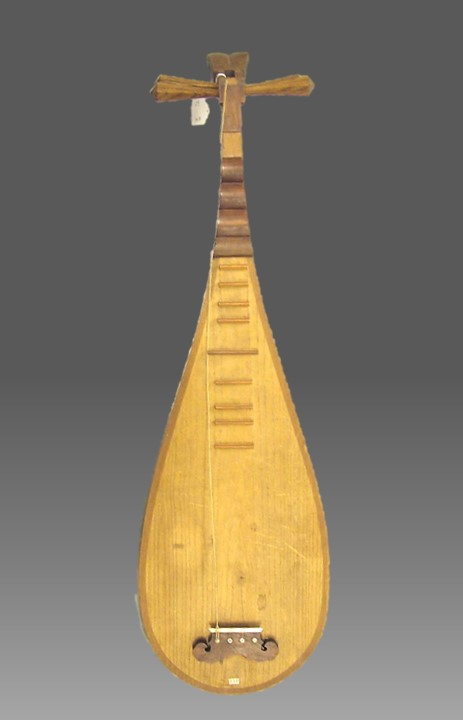
Holdings at the Metropolitan Museum of Art make the long continuity of the design unusually visible. One MET pipa is dated between the closing decades of the 1500s and the opening years of the 1600s (object 503651), built from wood, ivory, bone, and silk strings; a separate nineteenth-century example (object 500625) carries much the same materials, with gut substituted for silk. Three or four hundred years apart, the two instruments would still be recognisable to a modern player.
Construction & Materials
A pipa is carved from a single piece of dense hardwood (commonly red sandalwood, zitan, or hong mu) and topped with a softwood front of paulownia or similar resonant timber. Frets are typically made of bamboo or ivory in older instruments, with around six high “phases” (xiang) at the top of the neck and a longer ladder of smaller frets (pin) running down onto the body. The MET’s earlier pipa documents the long use of ivory and bone for fittings and inlay.
Modern pipas use steel or steel-wound nylon strings, but historical instruments — including the MET specimens — were typically strung with twisted silk. The change to steel in the 20th century is one of the few major shifts in pipa design and is the reason modern recordings can sound noticeably brighter and more sustained than older silk-string performances.
How It’s Played
The player holds the pipa nearly upright on the lap, with the body resting against the abdomen and the long neck angled up to the left shoulder. Five small picks — one taped or glued to each finger and the thumb of the picking hand — produce the pipa’s defining vocabulary of techniques: rolling tremolo (lunzhi), the quick alternating tan-tiao, the percussive sao and fu sweeps, and many more.
The left hand presses the strings against the high frets, often with bends that exploit the relatively soft resistance of silk- or nylon-wound strings. Skilled players can imitate horse hooves, the sounds of battle, falling rain, or birdsong — a tradition that gave rise to the famous programmatic pieces such as Ambush from Ten Sides (Shimian Maifu).
Cultural Significance
The pipa’s standing in Chinese music is comparable to that of the violin in the European classical tradition: it is a serious solo instrument with a long written repertoire, named regional schools (the Pinghu, Pudong, and Wuxi schools, among others), and a tradition of formal conservatory training. It is also a central instrument in Chinese silk-and-bamboo (sizhu) chamber ensembles and in many forms of regional opera.
Internationally, the pipa rose to renewed prominence through the work of players such as Liu Fang, Wu Man, and Zhao Cong, who have brought the instrument into Western contemporary music, film scoring, and cross-cultural collaborations with composers including Tan Dun and the Kronos Quartet.
Notable Examples & Recordings
Together, the MET’s two pipas — the older instrument from the late-Ming/early-Qing transition (object 503651) and the nineteenth-century example (object 500625) — provide an unusually clear window onto how stable the pipa’s design has been. For listening, recordings by Wu Man, Liu Fang, Zhao Cong, and the late Lin Shicheng are useful starting points. Wu Man’s collaborations with the Silk Road Ensemble are also a good entry for listeners coming from a Western art-music background.
Related Instruments
- Liuqin – a smaller, higher-pitched cousin in the Chinese plucked-lute family
- Yueqin – the round-bodied “moon lute” used in opera and chamber music
- Sanxian – a fretless three-string Chinese lute used in narrative singing
- Biwa – the Japanese pear-shaped lute that descends from the same Silk-Road family
- Đàn tỳ bà – Vietnam’s pear-shaped lute, likewise descended from the historical pipa
Where to Hear It
Chinese conservatory concerts and sizhu chamber music are the natural settings for the pipa, and many performances are now livestreamed by Chinese music institutions. The instrument also appears regularly in Chinese film scoring, in cross-cultural projects with Western ensembles, and in solo recital albums.
- Wikipedia: Pipa
- The MET: Pipa, Ming/Qing transition (object 503651)
- The MET: Pipa, 19th century (object 500625)
- Wikimedia Commons: Pipa
Learning Resources
Beginners typically start by learning to attach finger picks securely and to produce a clean tan-tiao alternation on the open strings before moving on to fingering. Modern conservatory teaching in China is highly systematised, with graded technical exercises, etudes, and a small canon of traditional pieces such as Yangchun Baixue and Shimian Maifu. Outside China, structured online courses and method books in English and Chinese are available, and several Chinese conservatories offer remote tuition.
Frequently Asked Questions
What family of instruments is the pipa?
The pipa is a plucked lute, classified within the broader necked bowl-lute group. Its closest relatives include the Japanese biwa and Vietnam’s đàn tỳ bà; all three descend from a common Silk-Road ancestor.
How old is the pipa?
The instrument was already well established by the Tang dynasty (7th–10th centuries) and clearly shown in surviving art and texts of that period. Its design has changed only gradually since then, as museum specimens from across the past several centuries make clear.
How many strings does a pipa have?
A modern pipa has four strings. They are usually tuned to A-D-E-A, although tunings vary between schools and pieces.
What are the picks on a pipa player’s fingers?
Five small picks — one for the thumb plus one for each finger of the picking hand — are taped or glued to the fingertips. They are responsible for the pipa’s tremolo, rapid alternation, and percussive sweeping techniques.
Are old pipas displayed in museums?
Yes. New York’s Metropolitan Museum of Art holds at least two historical pipas (objects 503651 and 500625), spanning roughly three centuries of construction.
Is the pipa difficult to learn?
The basic right-hand strokes can be picked up in a few months, but the full technical vocabulary — particularly the rolling tremolo lunzhi — and the traditional repertoire generally take many years of study to master.


