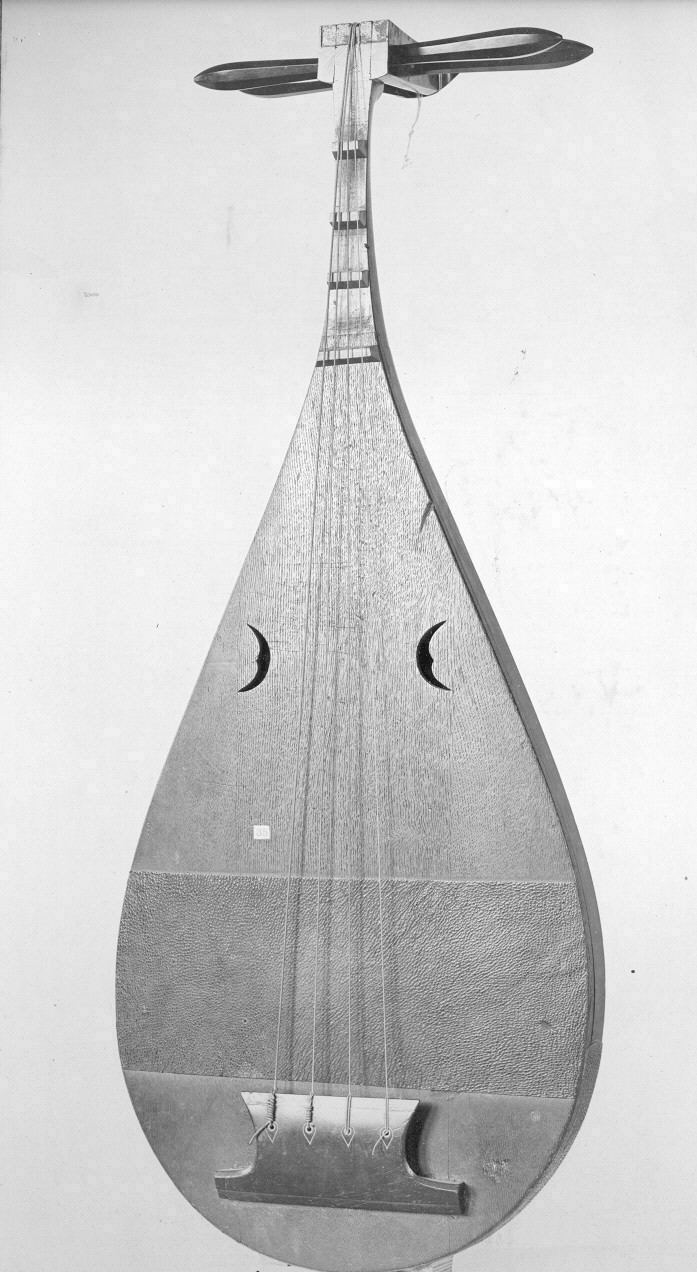


Biwa
琵琶
| Category | Strings |
|---|---|
| Country of origin | Japan |
| Classification | type of musical instrument |
| Wikipedia | en.wikipedia.org |
| Wikidata | Q829729 |
Listen
Audio: Jeuwre, CC BY-SA 4.0 / via Wikimedia Commons
Audio: Various, PD / via Internet Archive
Audio: Greg Peterson, CC BY-SA / via Internet Archive
Overview
The biwa is a Japanese pear-shaped plucked lute with four or five silk strings and four to six high frets, struck with a large wedge-shaped plectrum called a bachi. It is most strongly associated with the recitation of historical narratives — above all the Heike Monogatari, the medieval tale of the Genpei War — but it has functioned across many roles in Japanese musical life over more than a thousand years.
There is no single biwa. The instrument splits into several distinct traditions, each with its own size, tuning, plectrum and repertoire: gaku-biwa (court music), Heike biwa (narrative), Mōsō biwa (ritual blind-monk music), Satsuma biwa (samurai narrative) and Chikuzen biwa (modern narrative). Treating them as a single instrument is convenient but flattens out important differences.
Origin & History
The biwa entered Japan from China during the Nara period (8th century), descended from the Tang-dynasty pipa. The earliest examples are preserved in the Shōsōin treasury at Nara — exquisite gaku-biwa instruments inlaid with mother-of-pearl that have survived more than twelve centuries. From the court the instrument moved into Buddhist liturgical use, particularly among the Mōsō (blind monks) of Kyushu, and then into the secular narrative tradition that became its most famous role.
The Heike biwa tradition arose during the Kamakura period (12th-14th centuries) to accompany sung performance of the Heike Monogatari. By the late medieval period the Satsuma biwa had developed in southern Kyushu as the instrument of samurai narrative recitation, and from there the modernised Chikuzen biwa emerged in the late 19th century.
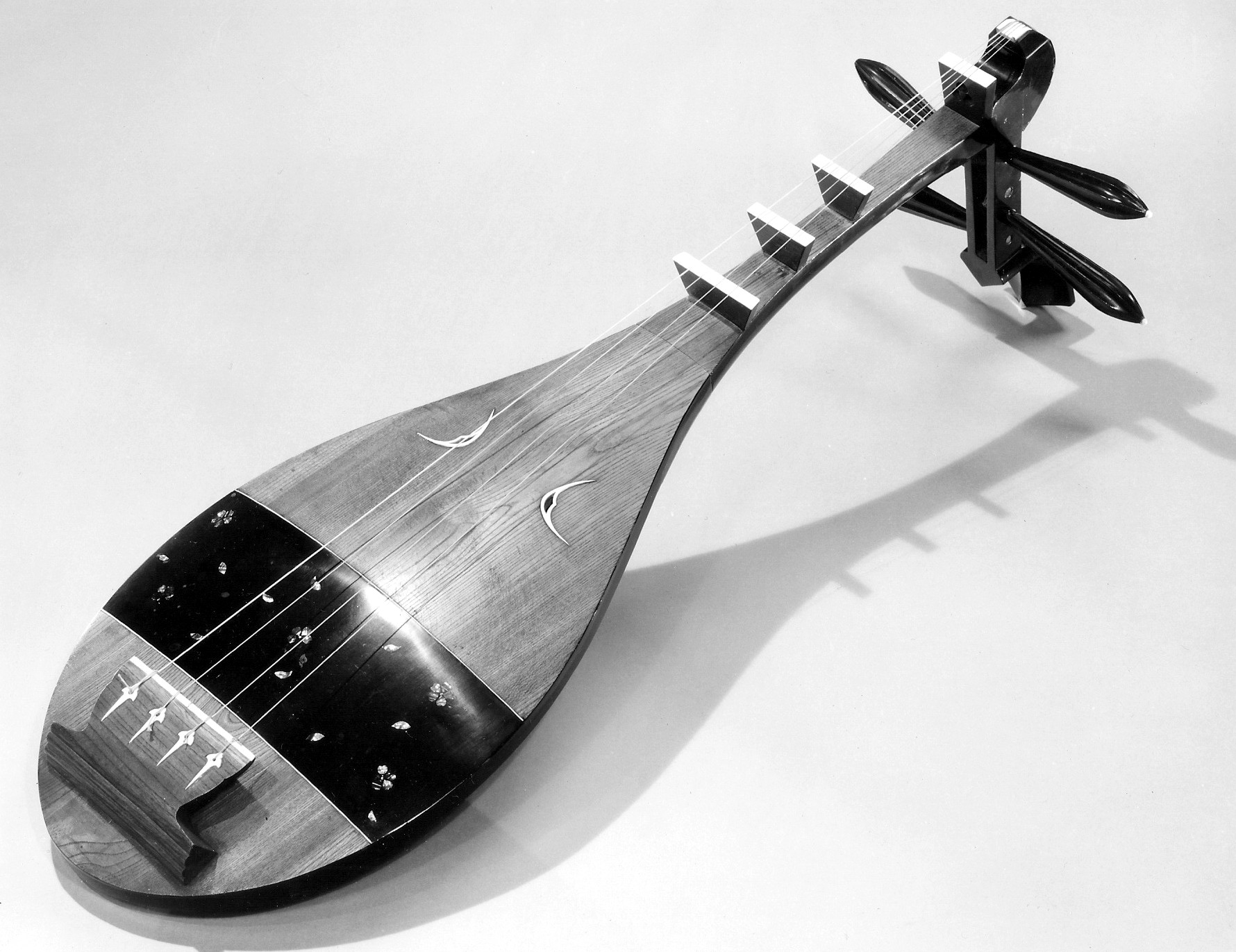
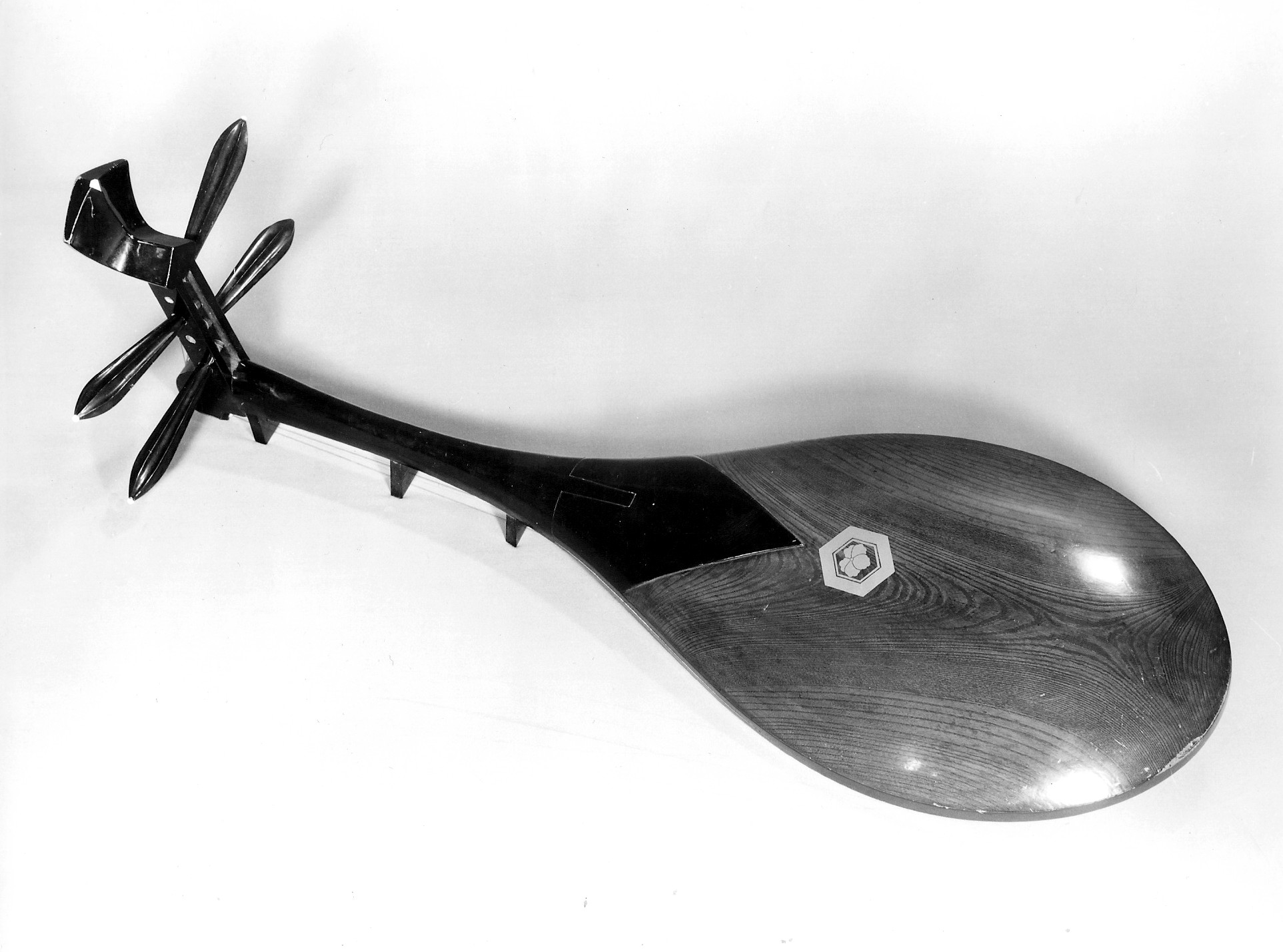
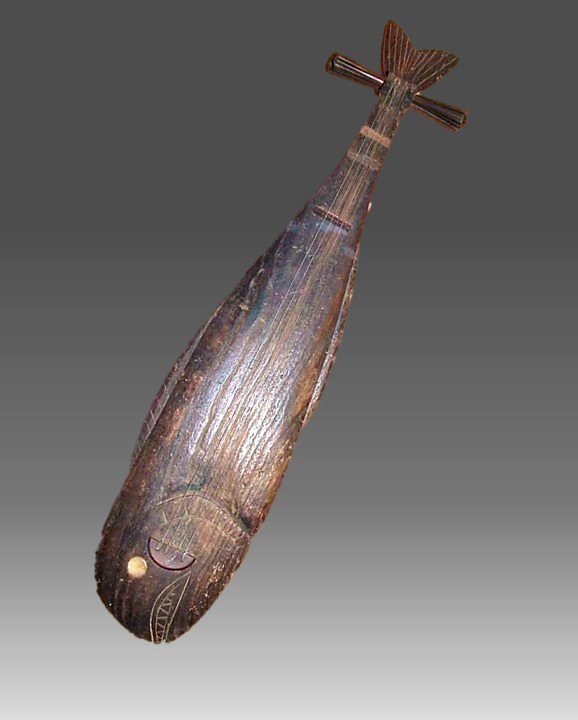
The Metropolitan Museum’s collection holds three biwa from this later period that present several of these traditions side by side. A Satsuma biwa of around 1800 (MET object 503051) is built from wood with mother-of-pearl and ivory inlay. A Heike biwa of around 1835 (MET 500681) is more austere, in wood and leather. A 19th-century Mōsō biwa (MET 502655) in wood and silk represents the older Buddhist liturgical tradition. All three sit in the museum’s Musical Instruments department.
Construction & Materials
The Hornbostel-Sachs system classifies the biwa as a composite chordophone (321.321) — the same broad family as the lute and the sitar. The body is carved from a single piece of mulberry, paulownia or zelkova wood and is shallower than the Chinese pipa, with a heavier, blunter shape. The neck carries a small number of very tall frets — usually four on a Heike biwa, four or five on a Satsuma biwa — placed at intervals that produce the characteristic biwa scale.
The MET specimens illustrate the material range. The Satsuma biwa (object 503051) shows the high decorative finish of the southern Kyushu tradition. The Heike biwa (500681) is plainer in wood and leather, consistent with the narrative tradition’s emphasis on the voice rather than visual display. The Mōsō biwa (502655) in wood and silk reflects the simpler ritual origins of that branch.
Strings are silk in the historical tradition, with some modern players using nylon for stability. The bachi plectrum, held in the right hand, is unusually large — sometimes 25 cm across — and is used both to strike single strings and to brush across all of them at once.
How It’s Played
The player kneels in seiza posture or sits on a low chair, with the biwa held vertically against the chest, neck pointing upward and slightly to the right. The right hand strikes the strings with the heavy bachi, often producing a percussive, clattering attack that is part of the instrument’s expressive vocabulary — not an accidental side-effect of the technique. The left hand presses the strings sideways above the frets, in a technique unique to the biwa: pressing harder bends the pitch upward by as much as a fourth, allowing the long ornamental glides at the heart of biwa repertoire.
In narrative biwa traditions the player also sings, alternating spoken declamation, sustained singing tones, and instrumental punctuation between vocal phrases. The biwa is often silent during the most intense vocal passages, then commenting between them.
Cultural Significance
The Heike Monogatari recitation tradition gives the biwa its most famous cultural weight. Generations of itinerant performers — most of them blind, organised into guilds with formal ranks — carried the tale of the Genpei War throughout medieval Japan. The opening lines of the Heike, with their image of the temple bell and the impermanence of all things, are among the most recognised passages in classical Japanese literature, and they have been sung to biwa accompaniment for some eight centuries.
The Satsuma biwa was, by tradition, the instrument of the warrior class in southern Kyushu, used in the recitation of historical and martial narratives. The Mōsō biwa carried Buddhist sutra recitation by blind monks. Each tradition continues today, though as living arts they have shrunk considerably from their historical scale.
Notable Examples & Recordings
The three MET specimens (objects 503051, 500681 and 502655) cover Satsuma, Heike and Mōsō traditions in the same collection, providing a useful visual cross-section. For listening, the Satsuma biwa recordings of Junko Ueda and the Heike biwa recordings of Yumiko Tanaka are now widely available through international labels. Tōru Takemitsu’s 1967 November Steps, written for biwa and shakuhachi soloists with Western orchestra, brought the instrument to the attention of international concert audiences.
Related Instruments
- Pipa – the Chinese pear-shaped lute that is the biwa’s direct ancestor
- Shamisen – the three-string Japanese lute developed several centuries later
- Koto – the long Japanese zither, often paired with biwa in modern ensembles
- Đàn Tỳ Bà – the Vietnamese descendant of the same Chinese pipa lineage
- Lute – the parallel European tradition
Where to Hear It
Recitals dedicated to the biwa are held regularly in Tokyo, Kyoto and Fukuoka. The annual Heike Monogatari recitation events at temples associated with the Genpei War — including Itsukushima and Akama Jingū — feature live biwa performance. International performances by Junko Ueda, Yukio Tanaka and others occur in Europe and North America. The Wikimedia Commons category for biwa includes images and audio across the major traditions.
- Wikipedia: Biwa
- The MET: Satsuma Biwa (object 503051)
- The MET: Heike Biwa (object 500681)
- The MET: Mōsō Biwa (object 502655)
- Wikimedia Commons: Biwa
Learning Resources
Serious study of the biwa proceeds within one of the named traditions and almost always under the guidance of a senior teacher in that lineage. The Nihon Biwa Gakkai (Japanese Biwa Association) coordinates classes and recitals. Outside Japan, occasional residencies and workshops are organised by Junko Ueda and other touring artists. Method books are scarce in any language other than Japanese; recordings and live observation remain the primary route into the repertoire.
Frequently Asked Questions
What family of instruments is the biwa in?
It is a composite chordophone in the necked bowl-lute group, classed as 321.321 in the Hornbostel-Sachs system.
How many strings does a biwa have?
A Heike biwa has four strings; a Satsuma biwa typically four or five; a Chikuzen biwa five. All are tuned in pentatonic patterns specific to their tradition.
Are old biwa preserved in museums?
Yes. The Shōsōin at Nara preserves Tang-period gaku-biwa from the 8th century. The Metropolitan Museum of Art holds three 19th-century biwa (objects 503051, 500681 and 502655) covering Satsuma, Heike and Mōsō traditions.
Where did the biwa originate?
The instrument entered Japan from Tang-dynasty China during the 8th century, descended from the Chinese pipa. Distinct Japanese traditions then developed over the following thousand years.
What is the Heike biwa associated with?
The Heike biwa accompanies sung recitation of the Heike Monogatari, a 13th-century narrative of the Genpei War that is one of the central works of Japanese classical literature.
Is the biwa difficult to learn?
Yes. The vertical playing position, the heavy bachi plectrum, the unusual sideways fret technique and the close pairing with sung narrative all demand long study. Most serious students are also trained singers within the tradition they pursue.