Water drum
Water drum
| Category | Link-debt |
|---|---|
| Country of origin | Multi-regional (Indigenous Americas, Africa, South America) |
| Classification | percussion instrument |
| Wikipedia | en.wikipedia.org |
| Wikidata | Q2551648 |
Overview
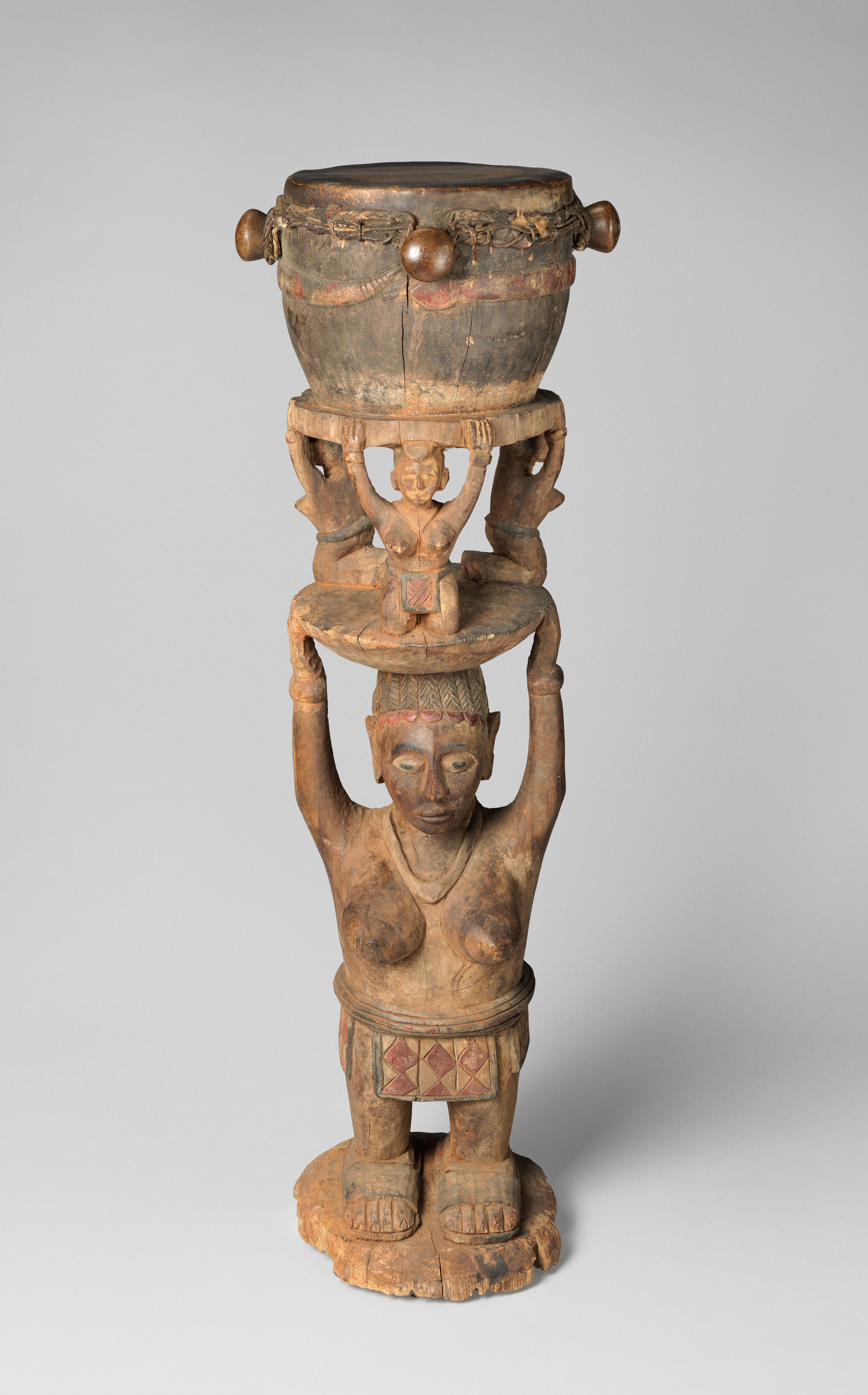
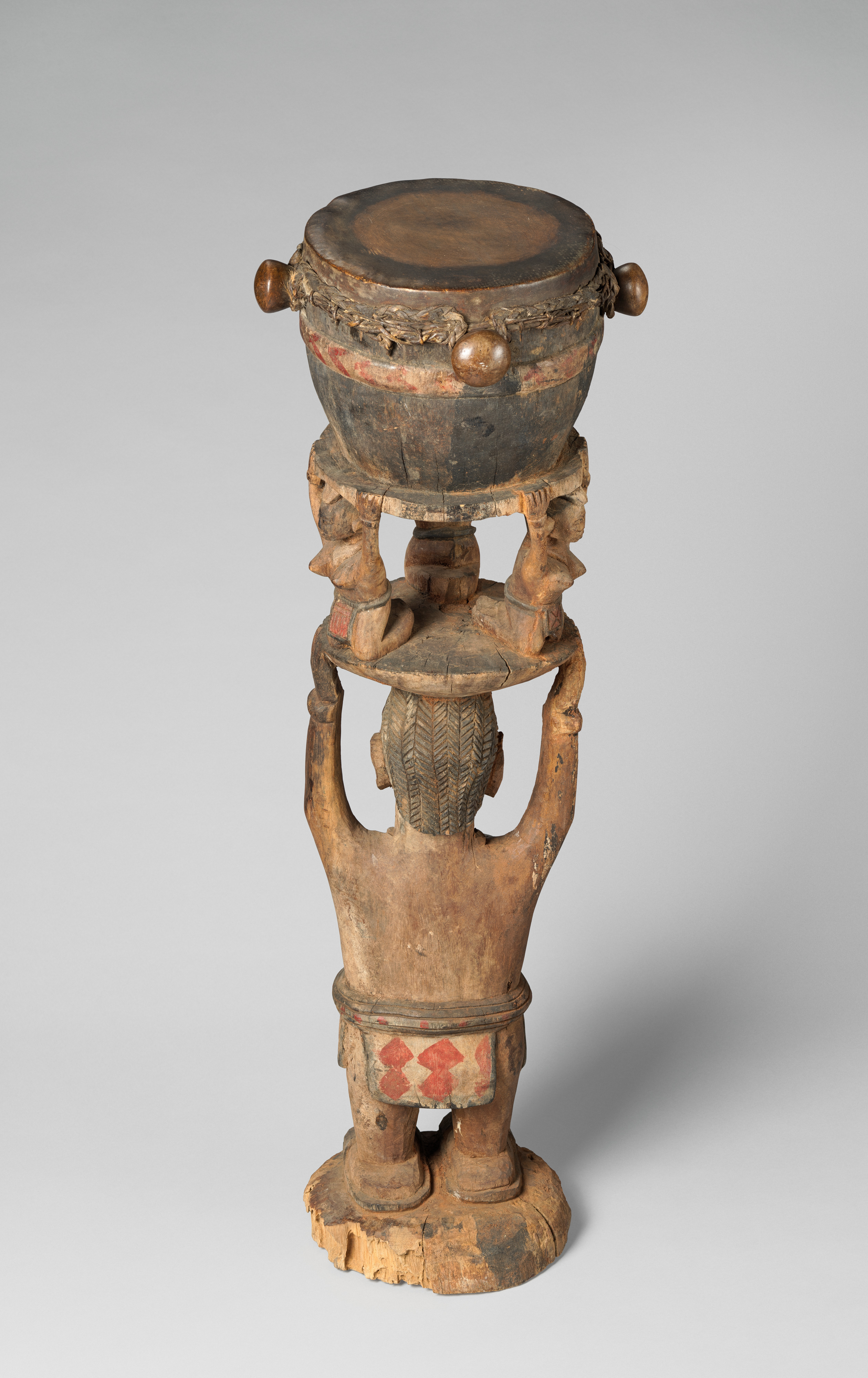
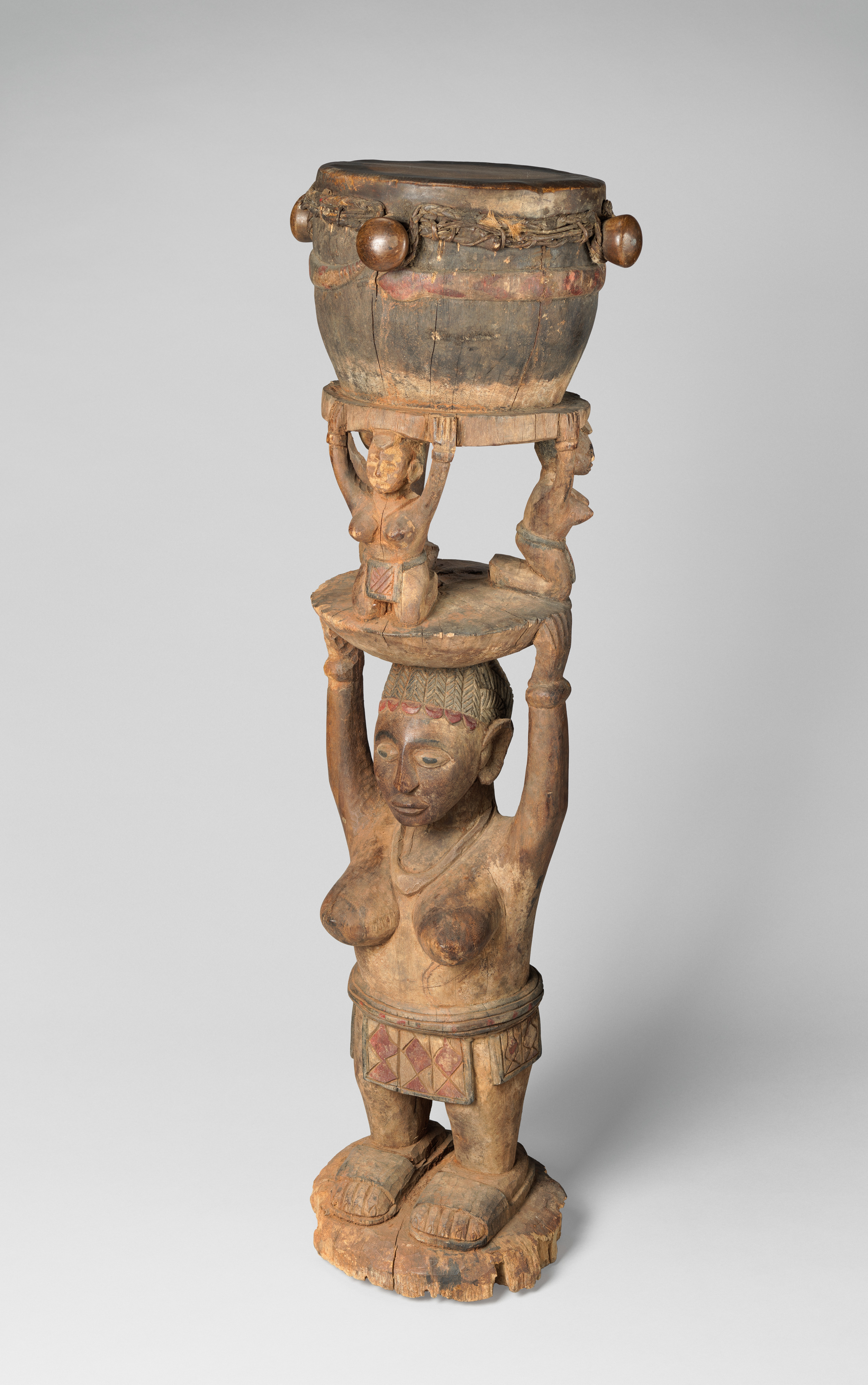
The water drum is a category of membranophone characterised by the presence of water inside the drum chamber. The water dampens the membrane’s vibration in a controlled way, lowers the fundamental pitch, and adds a soft, sustained, slightly liquid resonance that no dry drum produces. Water drums are found across the world but are most strongly associated with the the Indigenous musical traditions of North America (Iroquois, Yaqui, Native American Church traditions) and with West and Central African ceremonial drumming.
A separate but related practice — water drumming proper — involves striking the surface of an actual body of water (a river or pool) with the hands; this is performed by the Baka people of Central Africa as liquindi and by the descendants of formerly enslaved African communities in South America as tambor de agua (Spanish for “water drum”) or bungo.
Origin & History
The membranophone form of the water drum has independent traditions on at least three continents. In Indigenous North America the form is documented well before European contact and is central to several distinct ceremonial traditions: the Iroquois water drum used in Longhouse ceremonies, the Yaqui baatachi used in deer-dance ceremonies in Sonora and Arizona, the Apache water drum used in Crown Dance ceremonies, and the Native American Church (peyote-meeting) water drum that emerged in the late 19th century and crosses tribal boundaries. Each tradition has its own physical drum design and its own musical vocabulary.
In Africa the form appears across the West and Central African forest belt, with documented traditions among the Yoruba of Nigeria, the Fang of Gabon, and the broader Pygmy musical complex. In South America water drumming as a hand-on-water practice is a documented tradition among the Afro-descendant communities of Venezuela, Colombia, and Brazil, where it is identified by the Spanish phrase tambor de agua and the Bantu loan-word bungo; the technique was carried across the Atlantic with the West and Central African slave trade.
Construction & Materials
A typical Indigenous North American water drum is a small wooden or pottery vessel — most commonly hollowed from a single piece of basswood, or formed in clay — about 15 to 25 cm tall, with a tightly stretched wet animal-skin head (deer, groundhog, sometimes elk). A precise quantity of water (typically a third to half the chamber volume) is added before the head is tightened in place; the wet skin and the water inside together produce the characteristic deep, resonant tone.
In the Native American Church tradition the head is held in place with a tied cord rather than nailed or laced, allowing the drum to be opened, the water adjusted or replaced, and the head re-tensioned during long ceremony. The tied-head construction is itself an important ceremonial object and is sometimes interpreted as symbolic of the four sacred directions, the earth, and the cosmos.
African water drums vary widely; many are gourd-bodied with a stretched-skin head, others are wooden with both heads stretched, others use a half-gourd floating in a larger water-filled basin (the kpanlogo-related water-bowl drums of West Africa).
How It’s Played
Indigenous North American water drums are played with a single small stick or beater, struck on the head while the player tilts and rotates the drum to redistribute the water inside. The water motion changes the head’s effective tension and the drum’s resonance throughout the performance; experienced players exploit this for dynamic and pitch variation that no dry drum can produce.
In African and Afro-American water-on-water practice (liquindi, bungo), the player stands or sits in shallow water and strikes the surface with cupped or flat hands; rapid alternating strokes between hands and across multiple players produce complex polyrhythmic textures.
Cultural Significance
In Indigenous North American ceremony the water drum carries significant spiritual weight. The Iroquois Longhouse tradition uses the water drum as the central percussion instrument for the cycle of seasonal ceremonies that organise the agricultural and spiritual calendar. The Native American Church tradition — a 19th-century pan-tribal religion centred on the sacramental use of peyote — uses the water drum as the central rhythmic instrument of its overnight ceremonies, with the drum and gourd rattle accompanying continuous sung prayer.
Yaqui ceremonial use centres on the deer dance, where the water drum (struck on a half-gourd floating in a larger water-filled basin) accompanies the dancer who represents the deer spirit in a ceremony documented in Mexican and US Yaqui communities since the 17th century.
In the African and Afro-South American water-on-water traditions, the practice is associated with women’s group music-making, with bathing, with celebration, and increasingly with cultural-revival and heritage performance contexts.
Notable Examples & Recordings
- The Native American Church water-drum tradition is well-documented in scholarly recording archives (the Folkways collection, the Library of Congress field recordings, the American Indian Records project).
- Iroquois Longhouse water-drum recordings are held at the Smithsonian Folkways archive and at New York State Museum collections.
- The Baka liquindi water-drumming tradition appears in commercial releases by ethnomusicologist Louis Sarno and is widely sampled in world-music compilations.
Related Instruments
- Slit drum — the unrelated but conceptually parallel African and Mesoamerican log instrument.
- Frame drum — a different construction principle, with no water.
- Conga — a different Afro-Caribbean drum tradition.
- Singing bowl — a different contemplative-tradition resonant idiophone.
- Steel tongue drum — another contemplative-tradition adoption with global reach.
- — the Congolese log slit drum.
- Conch — another non-Western ceremonial instrument with multi-cultural distribution.
Where to Hear It
Live recordings of the Indigenous North American traditions are accessible primarily through community-controlled events; recorded archives exist at the Smithsonian Folkways, the Library of Congress, and the American Folklife Center. African and Afro-South American water-drumming appears in commercial world-music releases and increasingly at folk and roots festivals across the Caribbean and Latin America.
- Wikipedia: Water drum
- Wikidata: Water drum (Q2551648)
- DBpedia: Water drum
- Wikimedia Commons: Water drums
Learning Resources
Indigenous North American water drums are made within the relevant communities and are not generally sold to outsiders; access to learning the traditions is normally through community membership and apprenticeship. African-style water drums for general use are made by a small number of specialist makers and cost from approximately 100 to 500 USD. The published ethnomusicological literature (Bruno Nettl, Charlotte Frisbie, Susan McAllester on Native American traditions; Simha Arom on Central African Pygmy music) is the central scholarly resource.
Frequently Asked Questions
Is there really water inside the drum?
Yes. The water (typically a third to half the chamber volume) is the defining feature of the instrument category. It dampens the head’s vibration in a controlled way, lowers the fundamental pitch, and adds the characteristic liquid sustain.
Why use water?
Acoustic effect (deeper, more resonant tone, with sustained rather than abrupt decay) and ceremonial symbolism (water as life, as origin, as connection to earth and weather). In the Indigenous traditions both reasons are inseparable.
Are water drums sacred?
In the Indigenous North American traditions, yes — the drum is a ceremonial object with significant spiritual associations and is treated accordingly. African water drums vary in spiritual weight by community.
Can a non-Indigenous person own a Native American Church water drum?
The drums are made within the Native American Church community for use in NAC ceremonies and are not generally sold to outsiders. The instrument’s spiritual associations make commercial sale to non-members ethically and culturally problematic in most circumstances.
What is “water drumming” without a drum?
The Baka liquindi tradition (Central Africa) and the Afro-South American bungo / tambor de agua tradition involve striking the surface of an actual body of water — a river, a pool, the bath — with the hands. The technique produces complex polyrhythmic textures and is generally a women’s group practice.