.jpg)
.jpg)
.jpg)

Frame Drum
Frame drum (general category)
| Category | Percussion |
|---|---|
| Country of origin | Worldwide (ancient origin) |
| Classification | family of musical instruments |
| Wikipedia | en.wikipedia.org |
| Wikidata | Q1283177 |
Listen
Audio: Hinnerk R Hinnerk Rümenapf, CC BY-SA 3.0 / via Wikimedia Commons
Audio: Swietliste, CC0 / via Wikimedia Commons
Overview
The frame drum is a category-name for any drum in which the depth of the shell is less than the diameter of the head. The Hornbostel-Sachs system files frame drums at 211.3, and Wikipedia treats the term as the wider class that includes the Middle Eastern riq, bendir, tar and daf; the Mediterranean tamburello; the Brazilian and Iberian pandeiro; the Irish bodhrán; the Native American hand drum and shaman drum traditions across both Americas; the Sami runebomme of northern Scandinavia; and many other regional types.
The frame drum is the oldest documented drum family in the archaeological record. Frame drums of broadly the same construction appear in artistic depictions from ancient Egypt, the Levant, Mesopotamia, the pre-Columbian Americas, ancient China and across the wider ancient world.
Origin & History
Frame drums appear in the earliest documented musical iconography. Egyptian wall paintings from the Middle Kingdom (around 2000 BCE) depict women playing round and rectangular frame drums in temple processions; Mesopotamian terracotta plaques of the early second millennium BCE show women playing similar instruments. The wider Mediterranean ancient world — Greece, Rome, the Etruscan civilization — used frame drums in religious cults, particularly in the cult of the goddess Cybele where the tympanon frame drum was a primary instrument.
In the medieval Islamic world the frame drum became a refined art-music instrument through the Arab daff tradition (the ancestor of the modern daf, riq and tar) and a religious instrument in Sufi practice. In medieval Christian Europe the frame drum survived in Iberian-Mediterranean folk and religious music as the tambourine. In the Americas the frame drum is documented archaeologically across both continents and remains a central instrument of indigenous ceremonial music from the Inuit and Sami of the far north through the Plains, Great Basin and Southwest Native American traditions to the Andean and Amazonian indigenous music traditions.
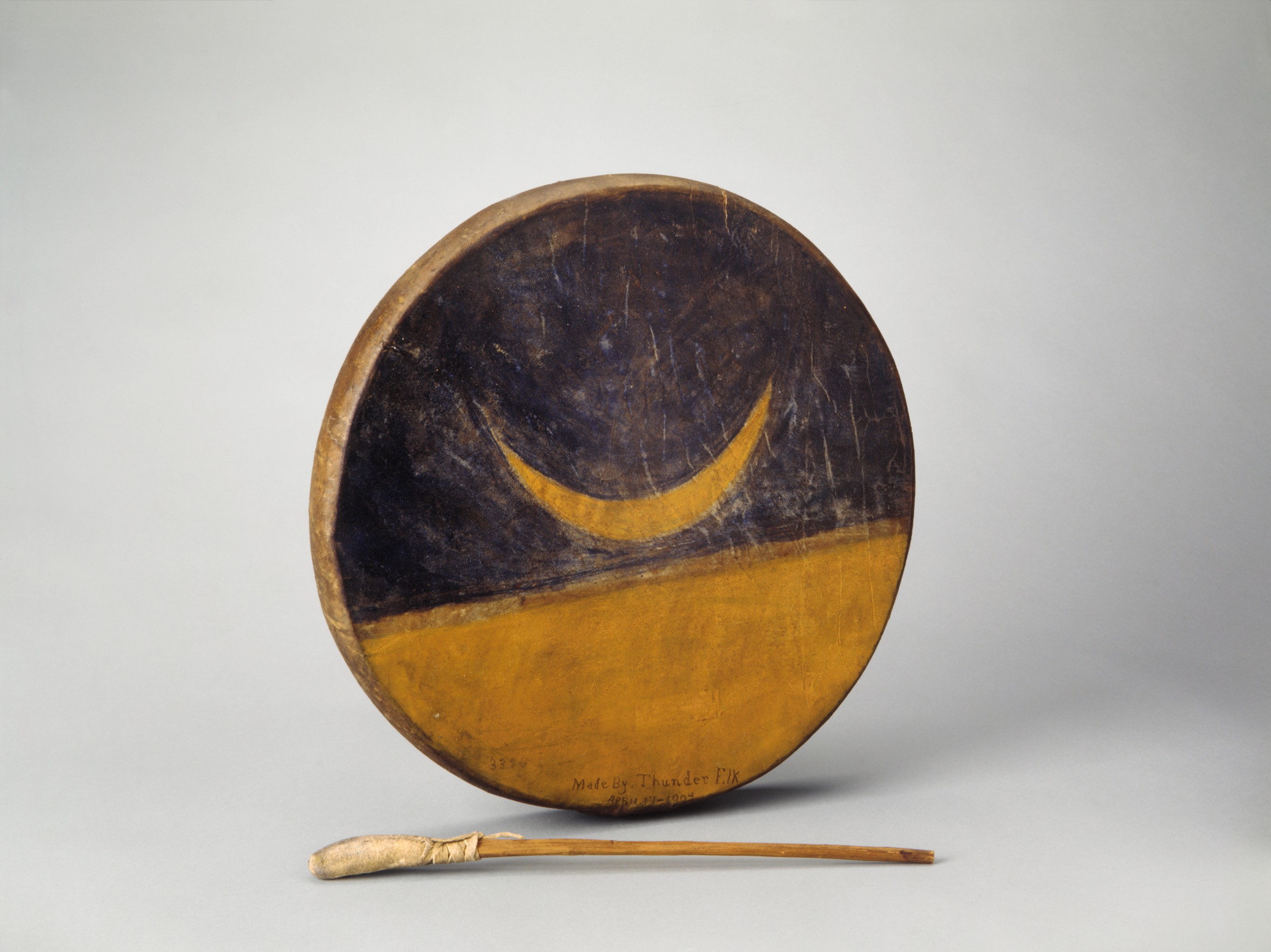
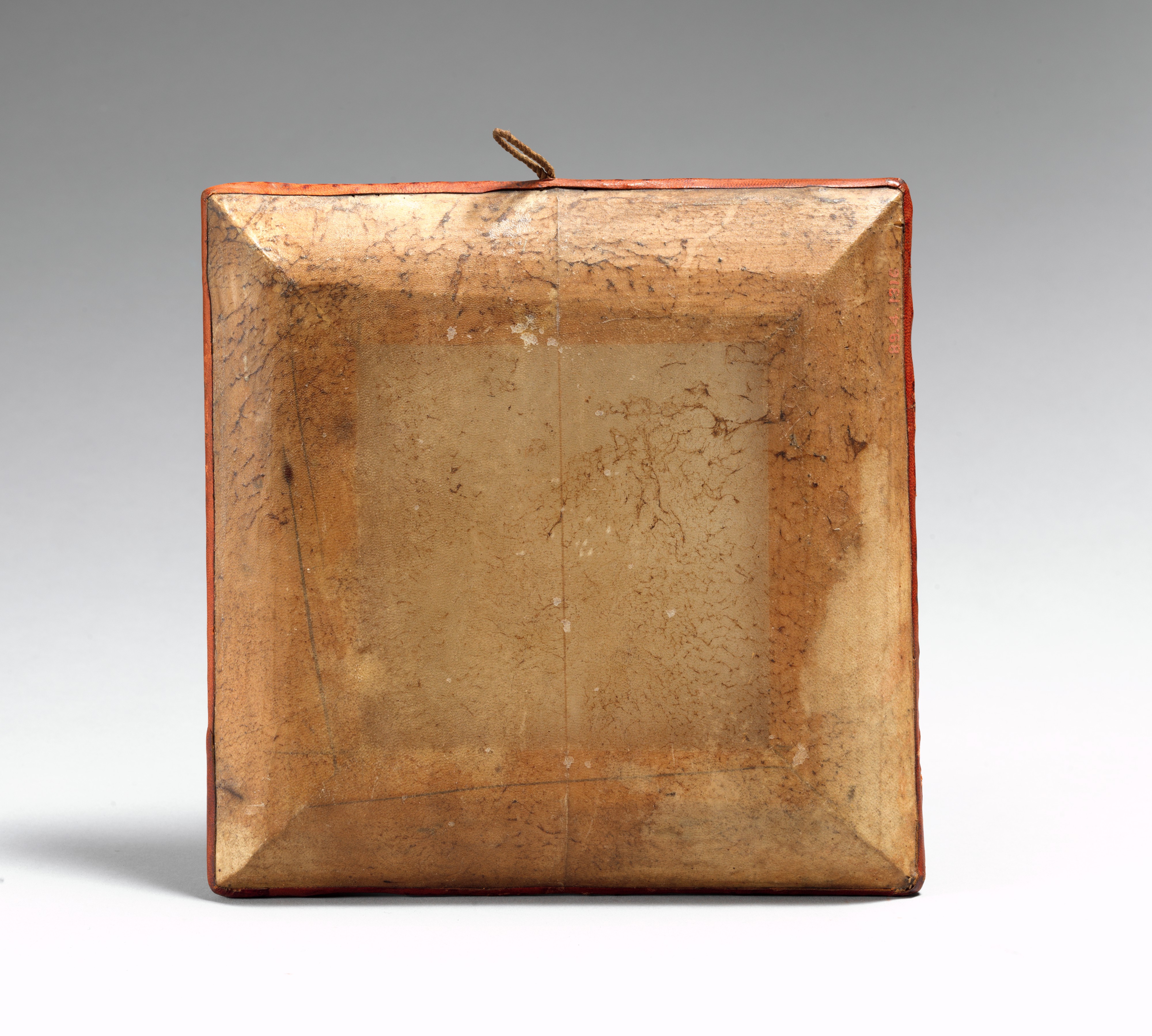
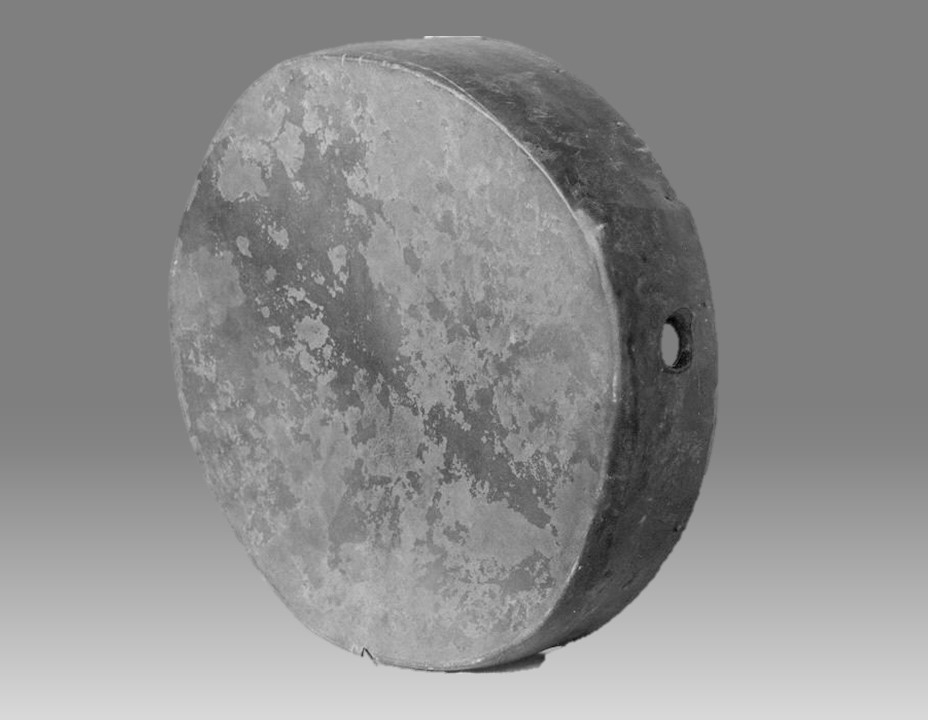
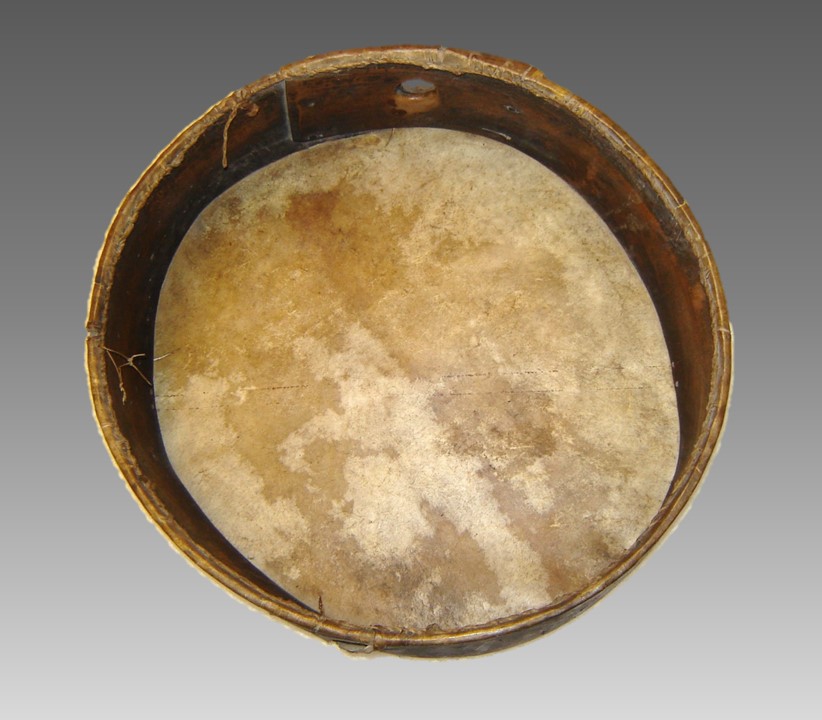
The MET’s collection includes three frame drums that together document the global range of the family. Object 502895 is a Native American (Sioux) frame drum from around 1887, made of wood, leather, sinew and metal wire with pigment decoration. Object 501882 is a 19th-century Algerian deff, made of wood, skin and wire. Object 501886 is a late-19th-century Moroccan bendir frame drum, made of wood and parchment. The three together offer a direct visual comparison of the same fundamental design as expressed in three very different cultural settings.
The 20th century brought a major revival of frame drum playing through teachers including Glen Velez, Layne Redmond, Zohar Fresco and the Indian master G. Harishankar (cited in DBpedia as a leading frame drum musician). These teachers have built an international concert and pedagogical tradition around frame drum playing that includes elements of the Middle Eastern, Mediterranean and Indian traditions and has produced a new body of contemporary repertoire.
Construction & Materials
A frame drum consists of a circular wooden frame (the shell), typically 25 to 50 centimetres in diameter and 4 to 10 centimetres deep, with a single skin head stretched over one or both faces. The shell is constructed either from a single piece of wood bent and joined (a steam-bent shell) or from a series of laminated wood layers. Traditional frame drums use natural-skin heads — goat, deer, calf, horse — tacked, laced or glued onto the shell rim; modern instruments increasingly use synthetic film heads (Mylar, Pellestrina) for tuning stability across temperature and humidity changes.
Many frame drum traditions add ancillary sound-making elements. Tambourines and pandeiros add metal jingles set into the shell. The Algerian deff (MET 501882) uses metal wire in the construction, likely as snare wires across the underside of the head, producing the buzzing snare-tone characteristic of North African frame drums. The Moroccan bendir (MET 501886) similarly uses snare wires for its buzzing overtone. Brazilian shamanic frame drums (illustrated in Wikimedia Commons) often use no jingles and rely on the drum-tone alone.
How It’s Played
Frame drum technique varies across regional traditions but shares some fundamental approaches. The drum is held in one hand by gripping the shell, by inserting the thumb through a hole or strap in the back of the shell (the bodhrán-style grip), or by holding the drum vertically against the body. The other hand strikes the head — with bare fingers and palm in most Middle Eastern and Mediterranean styles, with a small wooden beater (tipper or cipín) in the Irish bodhrán style, with two padded sticks in many Native American traditions, and with bare hands or sticks in the various world traditions.
Stroke technique typically distinguishes between bass tones (open strikes near the centre of the head), treble or slap tones (strikes near the rim), dampened tones (one hand pressing on the head while the other strikes), and brushed or shaken tones (lateral motion of the holding hand activating jingles or snares). Glen Velez’s modern frame-drum pedagogy synthesises stroke types from across multiple traditions and has produced a unified contemporary technique.
Cultural Significance
The frame drum carries different cultural weight in each of its regional traditions. In the Middle Eastern and Mediterranean Sufi tradition, frame drums are central to religious meditation and trance practice. In Native American ceremonial life across both Americas, frame drums (often called hand drums in English) are essential to song, prayer and healing ceremony. In Irish folk music since the 1960s the bodhrán has become one of the canonical national instruments. In Brazilian music the pandeiro is a national rhythmic instrument.
The frame drum’s deep antiquity and its association with women’s religious practice in the ancient Mediterranean world have given it a particular significance in late-20th-century scholarship of women in music. Layne Redmond’s book When the Drummers Were Women (1997) brought the historical frame-drum-and-women connection to a wide audience and contributed to a substantial growth of women’s frame drum playing communities internationally.
Notable Examples & Recordings
- Glen Velez, Internal Combustion — definitive modern concert frame drum recording.
- Layne Redmond, Since the Beginning — frame drum in women’s-history and contemporary contexts.
- Zohar Fresco, recordings with the Israeli ensemble Bustan Abraham and as soloist.
- G. Harishankar, classical Indian kanjira (small frame drum) master recordings.
- Pierre Bensusan and Donal Lunny, Irish bodhrán in folk-music ensemble settings.
- The MET’s three specimens (502895 Native American, 501882 Algerian, 501886 Moroccan) document the global range of the family.
Related Instruments
- – the Western frame drum with metal jingles.
- – the Irish frame drum played with a tipper.
- Pandeiro – the Brazilian frame drum.
- Bendir – the North African Sufi frame drum.
- Daf – the Persian frame drum with metal rings inside.
- – the South Indian small frame drum.
Where to Hear It
Frame drum performance is so widely distributed that any major world-music festival features the instrument in some form. The annual Frame Drum Festival in New York (Glen Velez’s tradition) and the Maine Frame Drum Festival are dedicated frame-drum events. Native American frame-drum traditions are heard at powwows across North America. Sufi zikr circles across the Middle East and the Sufi diaspora feature the daf and bendir. Recordings appear extensively on Smithsonian Folkways, Music of the World, World Music Network, ECM, Real World and Lyrichord.
- Wikipedia: Frame drum
- Wikidata: Frame drum (Q1283177)
- The MET: Frame Drum (object 502895)
- The MET: Deff (object 501882)
- Wikimedia Commons: Frame drums
Learning Resources
Glen Velez’s annual frame-drum residencies (NYC, Mendocino, Maine) are the principal contemporary teaching events. Layne Redmond’s recorded video courses cover the women’s-history tradition. The Indian kanjira tradition is taught at the Karnataka College of Percussion in Bangalore and at South Indian classical-music institutions across India. The Irish bodhrán has its own dedicated pedagogy through the Comhaltas Ceoltóirí Éireann network. Method books include Glen Velez’s Hand Drumming: Frame Drums, Layne Redmond’s When the Drummers Were Women and N. Scott Robinson’s Hand Drum Solo. A serviceable frame drum from a major workshop (Cooperman, Black Swamp, REMO) costs 100 to 400 USD depending on size and head type; concert-grade artisan instruments by named makers run from 500 to 1,500 USD.
Frequently Asked Questions
What is a frame drum?
A drum in which the depth of the shell is less than the diameter of the head — typically a circular wooden hoop with a single skin head stretched across one face.
Are tambourines frame drums?
Yes — the tambourine is one of many frame drum forms, distinguished by the addition of metal jingles set into the shell. The pandeiro, the riq and the bodhrán with optional rim-jingles are all frame-drum-with-jingles forms.
How old is the frame drum?
Very old. Egyptian wall paintings from around 2000 BCE depict round and rectangular frame drums in temple processions, and Mesopotamian terracotta plaques of similar antiquity show women playing comparable instruments.
Where in the world is the frame drum played?
On every populated continent. Major regional traditions include the Middle Eastern (riq, bendir, daf), the Mediterranean (tamburello, pandeiro, pandereta), the Native American (Plains, Great Basin, Inuit), the South American (shamanic and ceremonial), the Northern European (Sami runebomme, Irish bodhrán), the Indian (kanjira, daf), the Central Asian (Persian and Turkic frame drums), and the East Asian (Korean buk and Chinese frame drums).
Who are the most famous contemporary frame drummers?
Glen Velez, Layne Redmond, Zohar Fresco, the Indian kanjira master G. Harishankar, and the Irish bodhrán players Tommy Hayes, Mel Mercier and Junior Davey are among the most internationally visible figures.


