
Bendir
بندير
| Category | Percussion |
|---|---|
| Country of origin | North Africa (Maghreb) |
| Classification | musical instrument |
| Wikipedia | en.wikipedia.org |
| Wikidata | Q816793 |
Listen
Audio: marcel coenders, CC BY-SA 3.0 / via Wikimedia Commons
Audio: marcel coenders, CC BY-SA 3.0 / via Wikimedia Commons
Overview
The bendir is a wooden frame drum from North Africa and the wider Maghreb region, with a single goatskin head stretched over a circular wooden frame around 35 to 50 centimetres in diameter. Its defining structural feature is the snare — two or three thin gut or nylon strands stretched across the underside of the head, behind the playing surface, which buzz against the skin every time it is struck. This buzzing “snare drum” sound is unique among the major Middle Eastern and North African frame drums and gives the bendir an instantly recognisable timbre.
Wikidata describes the bendir as a wooden Maghrebi and West-Asian frame drum, classed within the membranophone family. The MET catalogues its specimen as Membranophone-single-headed / frame drum.
Origin & History
The bendir is part of the ancient frame-drum family of the Mediterranean and Middle Eastern world, with structural ancestors documented in Egyptian and Mesopotamian iconography from the third millennium BCE. The modern North African bendir is documented in continuous use from at least the medieval period and has been a central instrument of Berber, Arab and Sufi musical practice across Morocco, Algeria, Tunisia and Libya for many centuries.
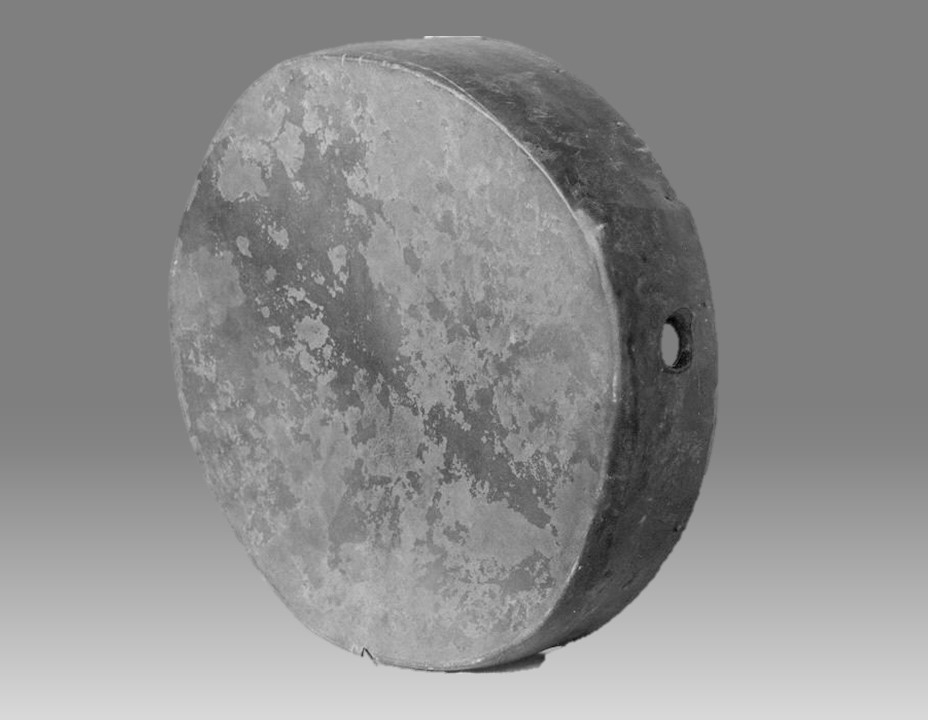
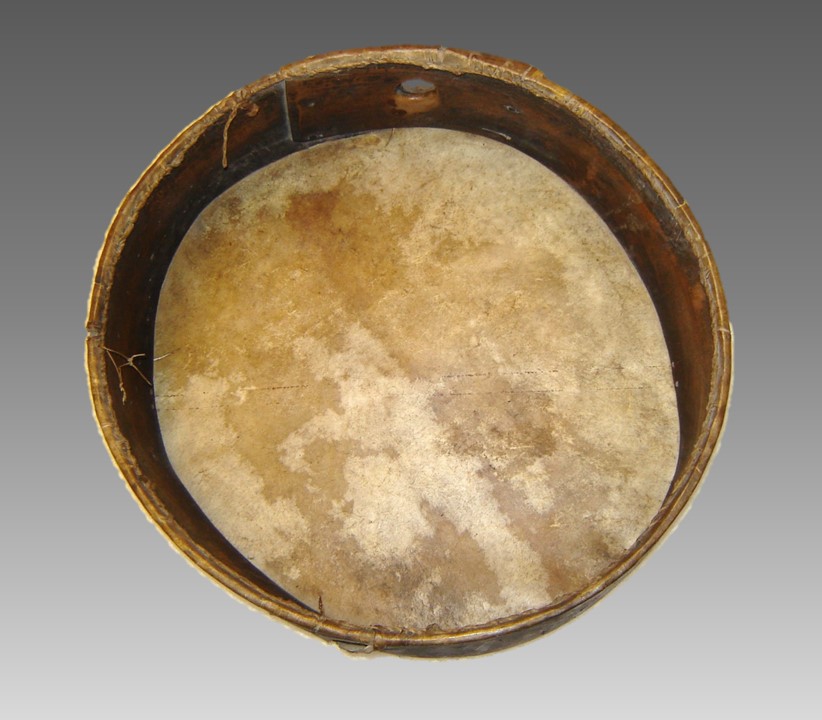
The Metropolitan Museum holds a Moroccan bendir of the late 19th century (object 501886), built of wood and parchment, donated through the Crosby Brown Collection in 1889 and held in the Musical Instruments department. It is catalogued as Membranophone-single-headed / frame drum and represents standard Moroccan late-19th-century construction.
The bendir is particularly closely associated with Sufi religious music. In the Moroccan gnawa tradition (the Sufi brotherhood originally founded by enslaved sub-Saharan Africans in Morocco), the bendir joins the guembri three-string lute and the metal qraqab hand-cymbals as the central rhythmic instrument of the lila all-night ceremony. In Berber traditions across the Atlas Mountains and the Sahara, the bendir is the principal accompaniment drum for ahidous and ahwash group dances. In modern Algerian and Tunisian music it appears widely in gnawa, malouf and chaabi genres.
In the late 20th and early 21st century the bendir has entered international world-music ensembles and contemporary classical composition, with players such as Rhani Krija (longtime collaborator with Sting and others) carrying the instrument into the major international concert circuit.
Construction & Materials
A standard bendir frame is a circular wooden hoop, around 35 to 50 centimetres in diameter and 4 to 6 cm deep, made from steam-bent walnut, beech or olive wood. The single playing head — traditionally goatskin — is stretched over the hoop and held in place either by tacks (older instruments and the MET specimen) or by a tunable lacing system (most modern instruments).
The defining structural feature is the snare system. Two or three thin gut or nylon strands are stretched across the underside of the head, behind the playing surface, attached at fixed points on opposite sides of the inner hoop. When the head is struck the snares vibrate and buzz against the skin, producing the characteristic continuous buzz that surrounds every direct stroke. The number, tension and material of the snares vary by region and by maker.
The MET’s Moroccan specimen, with its parchment head and standard Maghrebi wood frame, represents typical late-19th-century construction.
How It’s Played
The player holds the bendir vertically in the left hand, with the thumb hooked into the inside of the frame and the fingers supporting the back of the head. The right hand strikes the head with the fingertips, the palm and the heel of the hand, producing a small vocabulary of named strokes — dum (a deep bass stroke at the centre), tak (a sharp treble stroke at the rim), and various intermediate combinations.
The snares vibrate continuously as long as the head is being played, adding a buzzing overtone to every stroke. The player can also shake the drum slightly between strokes to produce a continuous buzz when no direct stroke is being delivered. In gnawa practice the bendir typically plays a slow steady rhythm under the guembri melody and the qraqab metal castanet pattern; in Berber group dance it plays much faster patterns coordinated with the dancers’ steps.
Cultural Significance
The bendir is one of the central rhythmic instruments of Maghrebi musical culture and is particularly closely associated with Sufi religious practice across the region. In Moroccan gnawa the instrument joins the guembri and qraqab in supporting the lila — the all-night healing and trance ceremony that is one of the most important religious-musical practices of North Africa. In Berber dance traditions the bendir is the principal accompaniment drum, and most Berber wedding and seasonal-festival music involves bendir playing.
The Moroccan annual Festival Gnaoua et Musiques du Monde in Essaouira, founded in 1998, has brought gnawa music — and the bendir — to international audiences and has been a major driver of the genre’s contemporary international visibility. The instrument has also gained wider exposure through collaborations between gnawa musicians and Western jazz and rock players.
Notable Examples & Recordings
The MET’s late-19th-century Moroccan specimen (object 501886) is a useful reference for traditional construction.
For listening:
- Mahmoud Guinia, Colours of the Night — recordings of the leading 20th-century Moroccan gnawa master with bendir accompaniment.
- Hassan Hakmoun, Trance — Moroccan gnawa and bendir in international fusion contexts.
- Rhani Krija, drumming on Sting albums (Brand New Day, Sacred Love) — modern bendir in international rock and pop.
- Nass Marrakech, Bouderbala — Marrakech gnawa ensemble recordings.
Related Instruments
- Riq – the Arab tambourine with brass cymbals around the frame.
- Daf – the Persian/Kurdish frame drum with metal rings inside the frame.
- Tar – the related North African frame drum without snares (not to be confused with the Iranian long-necked lute of the same name).
- – the larger Egyptian frame drum used in Sufi hadra ceremony.
- – the Irish frame drum, in the same wider global family but without snares.
Where to Hear It
The annual Festival Gnaoua et Musiques du Monde in Essaouira every June is the largest international showcase of gnawa music and features extensive bendir playing. The Fes Festival of World Sacred Music every June, the Marrakech Festival of Popular Arts every July, and the regular gnawa sessions at Casablanca’s House of Hassan and Marrakech’s Place Jemaa el-Fna provide constant performance opportunities. International tours of leading Moroccan gnawa masters bring the bendir to audiences across Europe and North America.
Learning Resources
Bendir study traditionally takes place through long apprenticeship within a gnawa lineage or within a Berber village musical tradition. Modern conservatory instruction is available at the Conservatoire National de Musique in Rabat and the Bait al-Oud institute in Cairo. Outside North Africa, the World Music Centre at Mount Holyoke College, the Berlin University of the Arts and the Conservatoire de Marseille offer occasional bendir workshops. Online instruction by leading players such as Rhani Krija is increasingly available. New professional-grade bendirs by Moroccan makers run from approximately 80 to 250 USD; high-end instruments by leading Marrakech and Essaouira makers can reach 400 USD.
Frequently Asked Questions
What is the difference between a bendir and a riq?
The bendir is a single-headed frame drum (around 35-50 cm diameter) with two or three snares stretched across the underside of the head, producing a buzzing overtone. The riq is a smaller tambourine (around 20 cm diameter) with five pairs of brass cymbals set into the frame, producing a metallic jingling sound.
Why does the bendir have snares?
The snares — two or three thin gut or nylon strands stretched across the underside of the head — vibrate continuously when the head is struck, producing the characteristic buzzing overtone that defines the bendir’s sound. This snare arrangement is unique among the major North African and Middle Eastern frame drums.
What is gnawa music?
Gnawa is the Sufi religious-musical tradition of Morocco, originally developed by enslaved sub-Saharan Africans brought to Morocco from the 16th century onward. The central lila ceremony is an all-night trance-and-healing ritual in which the guembri lute, the qraqab hand-cymbals and the bendir are the principal instruments.
Are old bendir in museums?
Yes. The Metropolitan Museum holds a late-19th-century Moroccan bendir (object 501886) in its Musical Instruments department.
Where is the bendir played?
The bendir is played across the Maghreb region — Morocco, Algeria, Tunisia, Libya — and increasingly in the Maghrebi diaspora communities of France, Belgium, Spain and the Netherlands. It also appears widely in international world-music ensembles and in collaborations with Western jazz and rock musicians.
What is the head of a bendir made of?
Traditionally goatskin, stretched over the wooden frame and held in place by tacks (older instruments) or by adjustable lacing (modern instruments). Synthetic heads are increasingly used on modern factory instruments for greater stability across temperature and humidity changes.


