.jpg)
.jpg)
Tar (frame drum)
Tar / طار
| Category | Percussion |
|---|---|
| Country of origin | North Africa and Middle East |
| Wikipedia | en.wikipedia.org |
| Wikidata | Q203861 |
Overview
The tar (Arabic طار) is a single-headed frame drum used across North Africa, Egypt, the Levant, and the wider Arab world. Wikidata classifies it as a single-headed frame drum and gives the Hornbostel-Sachs reading 211.311 — the frame-drum subcategory.
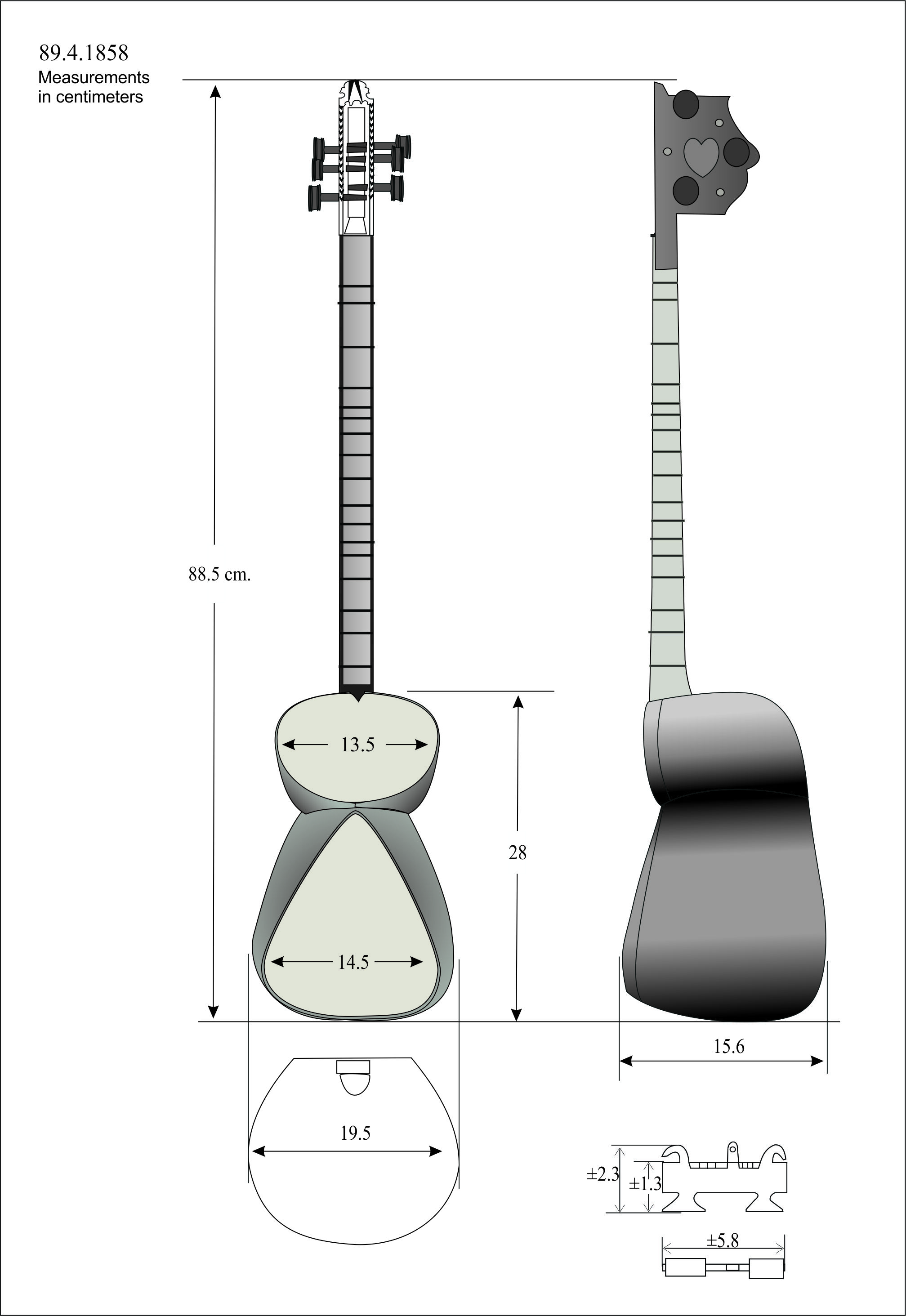
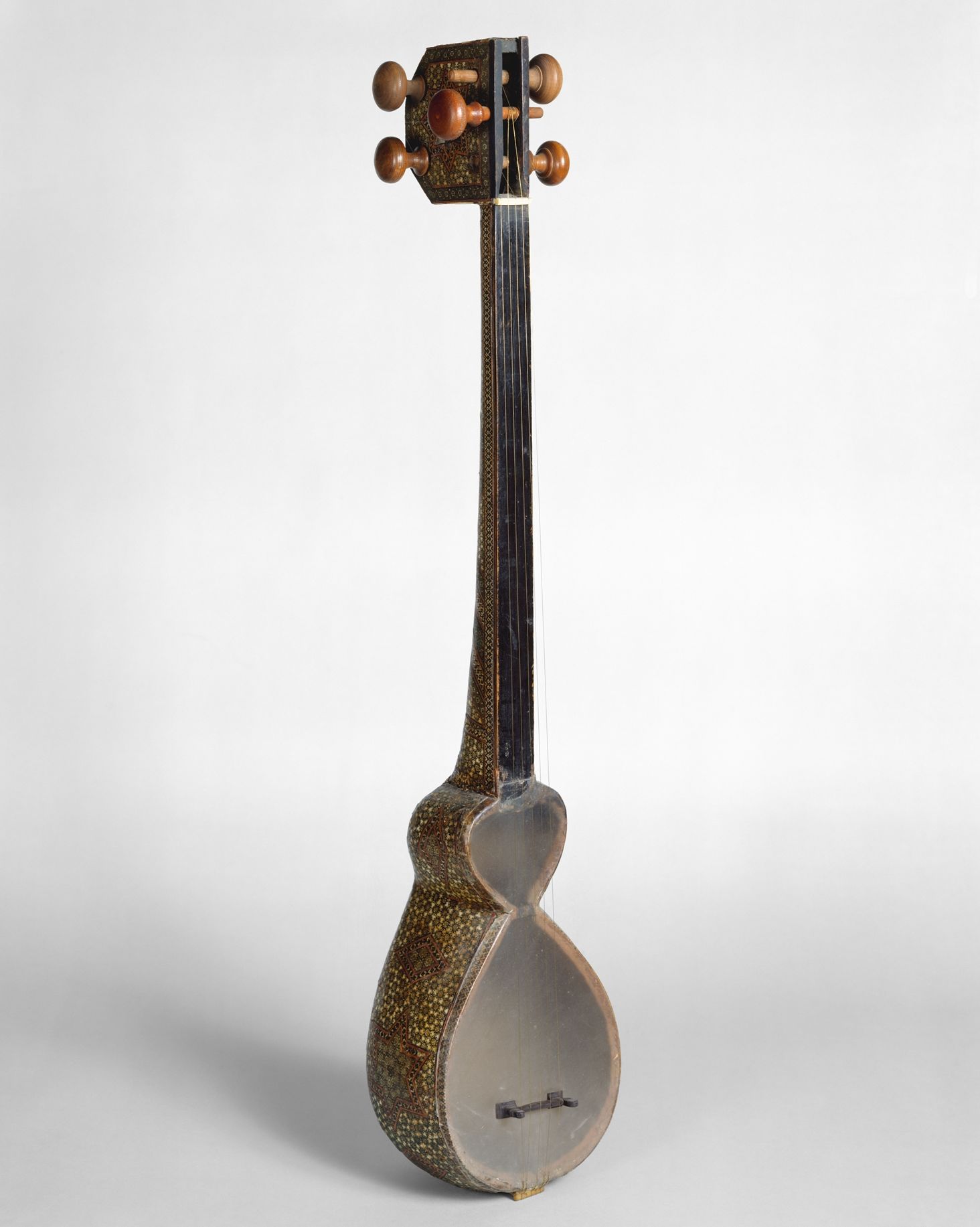
The name tar in Arabic-derived musical terminology is an unfortunate case of cross-family ambiguity: it also refers to the Persian and Azerbaijani long-necked plucked lute (a completely different instrument), and the MET catalogue includes specimens of both kinds under the same word. The frame drum covered in this article is the Moroccan-Arab instrument; the plucked lute is covered separately.
Origin & History
Frame drums are documented across the Mediterranean and Middle East for at least 5,000 years — Sumerian, Egyptian, and Mesopotamian artefacts and depictions consistently show single-headed circular hand drums in religious and ceremonial use. The Arab tar is a member of this very old family.
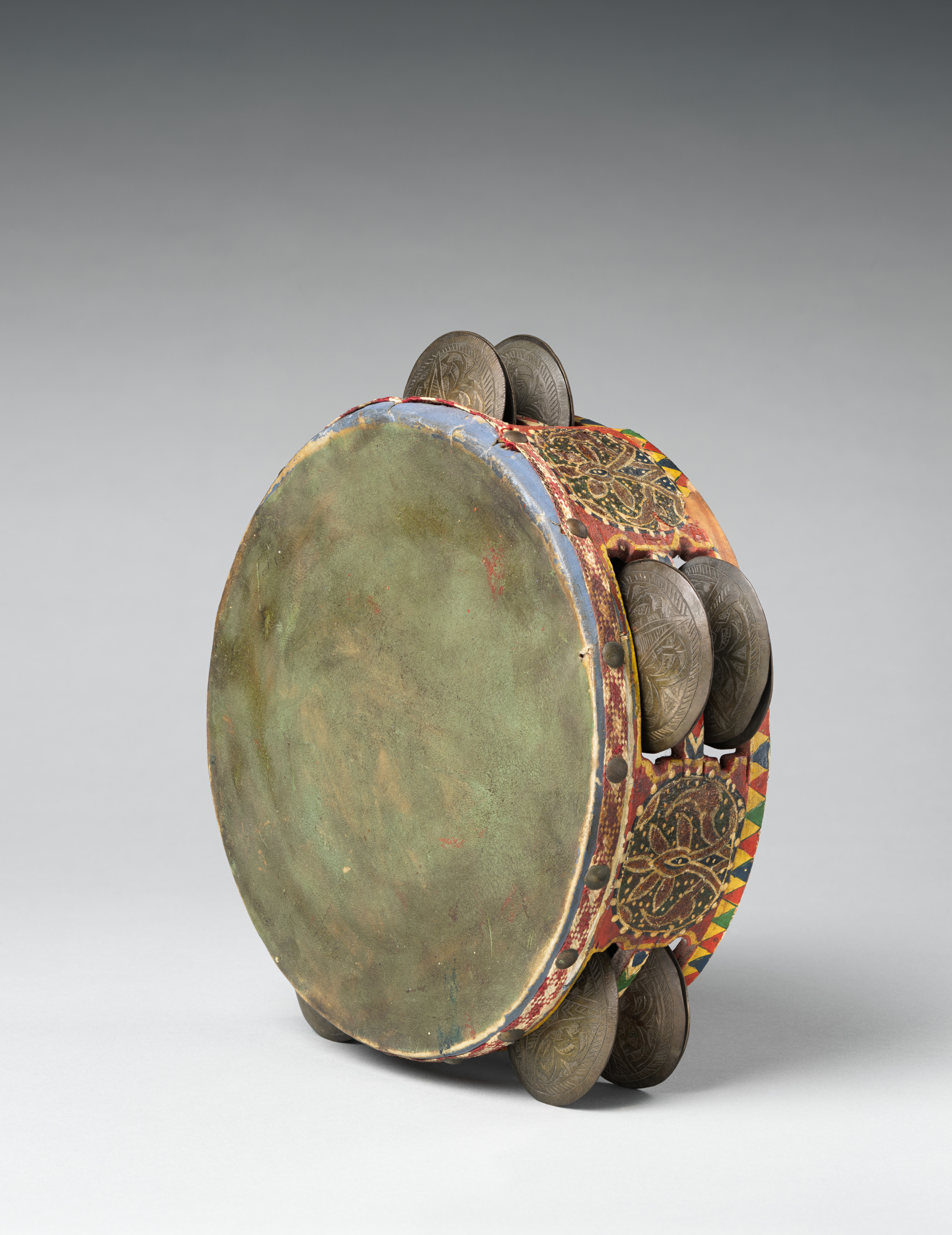
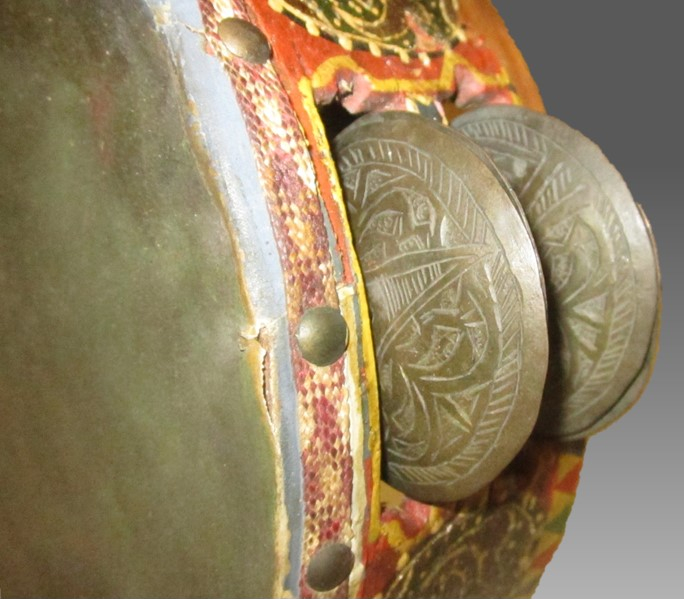
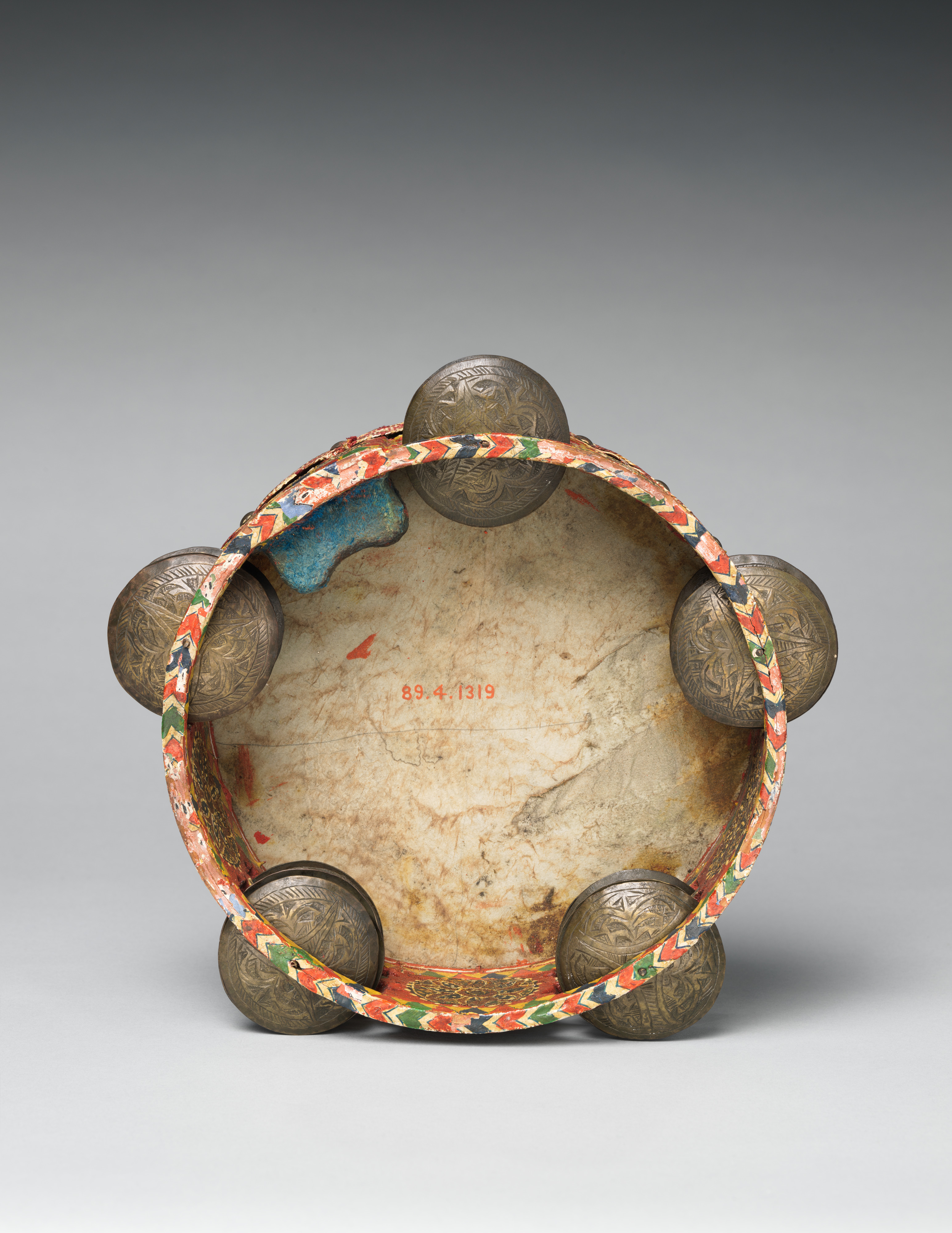
The MET collection illustrates the global frame-drum family precisely. Object 501885 is a late-19th-century Moroccan tar made of wood and skin — a textbook example of the simple Arab frame drum. The wider MET frame-drum holdings include similar instruments from across the Mediterranean and Middle East under various local names (riq, bendir, deff, mazhar, daff, daira).
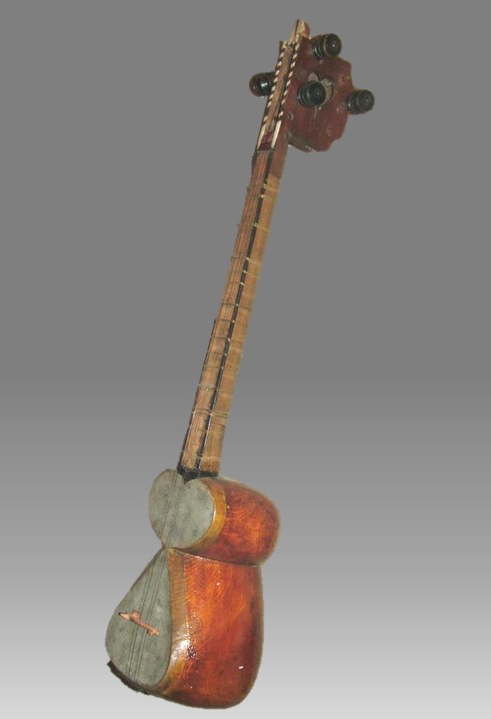
The other two MET tar specimens belong to a different instrument family entirely. Object 502457 is a 19th-century Azerbaijani tār — a long-necked plucked lute with a figure-of-eight body. Object 502242 is a late-19th-century Iranian Persian tār — a closely related plucked lute. The shared name tar across both families reflects the Arabic word’s wide currency rather than any shared instrumental design.
In modern Arab classical and folk music the tar (frame drum) is one of the standard hand-percussion voices, used alongside the riq (frame drum with cymbals — distinct from the plain tar), the bendir (Moroccan and North African frame drum with snares), the daf (Iranian and Kurdish ritual frame drum), and the darbuka (goblet drum).
Construction & Materials
A standard tar is a single circular wooden frame — typically 25 to 50 cm in diameter and about 5 to 8 cm deep — with a single animal-skin head (cow, goat, or fish) glued and laced to one side. The frame is generally hardwood (walnut, beech, or rosewood); some Egyptian and Levantine tars use thin laminated wood for lighter weight.
Unlike the related riq (which has metal jingles in the frame), the bendir (which has snares stretched across the inside of the head), or the mazhar (which has very loose tension and a heavier head for a deep slap tone), the plain tar has no additional acoustic features — just a circular frame and a single tensioned head. This makes it the simplest member of the wider Arab frame-drum family.
How It’s Played
The player holds the tar vertically in one hand, with the thumb and forefinger gripping the frame and the other fingers curled around the back. The other hand (and sometimes the holding-hand fingers) strikes the head at different points: the centre for a deep bass tone (dum), near the rim for a sharp treble tone (tek), and various intermediate positions and stroke types for the wider rhythmic vocabulary.
Standard Arab classical and folk repertoire uses a vocabulary of named rhythmic patterns — maqsum, baladi, masmoudi kebir, ayyub, saidi, malfuf — that the tar and other frame-drum players follow. In ensemble contexts the tar typically supplies a steady rhythmic foundation while the riq or darbuka adds higher-pitched ornamental work.
Cultural Significance
The tar appears in essentially every Arab classical and folk-music tradition from Morocco to Iraq. In Egyptian tarab (the classical orchestral-and-vocal music of the early-to-mid 20th century, defined by Umm Kulthum, Mohammed Abdel Wahab, Farid al-Atrash) the tar fills a steady-rhythm role behind the more melodically active percussion. In Moroccan gnawa and aissawa devotional traditions the tar appears alongside the larger bendir and karkabou (large iron castanets). In Sufi zikr (devotional remembrance) ceremonies across the wider Arab world, the tar and its frame-drum cousins supply the steady pulse against which the ritual chant is sung.
In Western folk and world-music contexts the tar has been adopted into a wider hand-drum revival movement that began in the 1980s with players including Glen Velez, Layne Redmond, Yousif Sheronick, and the Egyptian master Hossam Ramzy. This cross-tradition adoption has produced both new repertoire and a substantial commercial-instrument market for non-Arab players.
Notable Examples & Recordings
- Hossam Ramzy, Sabla Tolo and the wider Ramzy catalogue — Egyptian frame-drum reference recordings.
- Glen Velez, Pan-Eros and the wider Velez solo catalogue — Western frame-drum-revival reference.
- Souhail Kaspar, Master of Arabic Drumming — Lebanese instructional and performance reference.
- Karim Nagi, Khabbeer — modern Arab-American frame-drum and dance reference.
- Field recordings in the Music in the World of Islam series (Tangent Records) and the Ocora Maroc recordings.
Related Instruments
- Riq — the frame drum with metal jingles.
- Bendir — the North African frame drum with snares.
- Daf — the Iranian and Kurdish ritual frame drum.
- Frame drum (general) — the wider global family.
- — the Arab and Mediterranean goblet drum.
- — the larger Arab goblet drum, distinct from the Indian tabla.
- Tar (Persian lute) — the unrelated plucked-lute family that shares the name.
Where to Hear It
In Morocco: gnawa festivals (Festival d’Essaouira, every June), aissawa processions in Fez and Meknes, and the wider folk-music circuit. In Egypt: every classical-music tarab performance, every wedding band. Internationally: the World Frame Drum Festival (US, biennial), the Glen Velez and Layne Redmond workshop circuit, and the wider WOMAD and world-music festival programming. Recording labels include Ocora (France), World Music Network (UK), and ARC Music.
- Wikipedia: Tar (drum)
- Wikidata: Tar (Q203861)
- DBpedia: Tar
- MET Object 501885 (Moroccan tar, late 19th c.)
- MET Object 502457 (Azerbaijani tār plucked lute, 19th c.) — note: different instrument family
- Wikimedia Commons: Frame drums
Learning Resources
A starter tar from a Moroccan, Egyptian, or Turkish maker costs 80 to 200 USD; a high-end professional instrument from a named maker (Cooperman in the US, Atelier Saghaye in Cairo) runs 200 to 500 USD. Pedagogy: Glen Velez’s Handance method (book and DVD), Hossam Ramzy’s instructional recordings, Karim Nagi’s online courses, and the World Frame Drum Festival workshop programmes are the established contemporary teaching routes.
Frequently Asked Questions
Is the tar a drum or a stringed instrument?
Both — but they are completely different instruments that share the same Arabic-derived name. The Moroccan-Arab tar is a single-headed frame drum; the Persian and Azerbaijani tar is a long-necked plucked lute. The MET catalogue includes specimens of both under the same word.
What is the difference between a tar and a riq?
The riq has metal jingles inset into the frame; the plain tar does not. The riq is therefore louder and brighter, used for melodic-rhythm ornamental work; the tar is quieter and steadier, used for foundation rhythm.
Is the tar always played by hand?
Yes — the tar is a hand-played frame drum. Unlike the davul or the timpani, it is not played with sticks or mallets.
What rhythms does the tar play?
The standard Arab rhythmic catalogue: maqsum, baladi, masmoudi kebir, ayyub, saidi, malfuf, and many others, depending on the regional and stylistic context.
How is the tar tuned?
By controlling the head tension during construction. The instrument is not retuned in performance; players select the size and tension of the tar to match the musical context.


