
Image: Toglenn, CC BY-SA 3.0 — via Wikimedia Commons
handpan
handpan
| Category | Percussion |
|---|---|
| Country of origin | Switzerland |
| Wikipedia | en.wikipedia.org |
| Wikidata | Q5647544 |
Listen
Audio: Pavel Paseka, CC BY / via Internet Archive
Overview
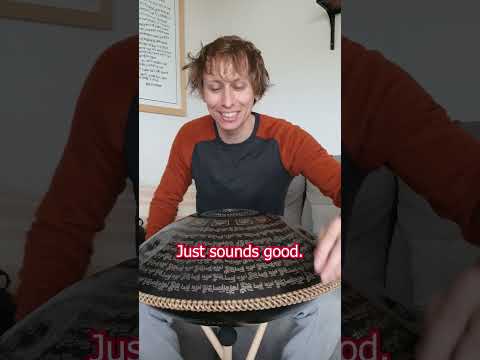
The handpan is a tuned percussion instrument made from two thin steel shells joined together to form a flying-saucer shape. A central note in the middle, surrounded by a ring of further notes hammered into the upper shell, allows a player to produce melodies and chords with the bare hands. The instrument’s gentle, bell-like tone has made it a favourite in meditative, ambient, and street-performance settings since the early twenty-first century.
Origin & History
The handpan is a recent invention. Its first form, called the Hang, was developed in Bern, Switzerland in the year 2000 by Felix Rohner and Sabina Schärer of the company PANArt. They drew on decades of work with the Trinidadian steelpan and on experiments with steel sound sculptures, combining ideas to create a new kind of melodic hand-played drum.
Demand for the original Hang quickly outstripped supply, and PANArt eventually limited and then discontinued public sales. In response, makers in many countries began building their own versions, and a generic name was needed for instruments not produced by the original company. The term handpan came into use during the late 2000s and is now the standard name for the wider instrument family.
Today there are dozens of independent handpan builders worldwide, each with their own scales, tuning systems, and aesthetic choices. The instrument has only existed for around a quarter-century, which makes it one of the youngest acoustic instruments to gain a global following.
How It’s Played
A player usually sits with the handpan resting flat on the lap or on a stand, striking the central note (the ding) and the surrounding notes with the fingers and thumbs of both hands. Because the notes are arranged in a ring rather than a row, players often move in alternating left-right patterns, which encourages flowing, circular phrases.
Most handpans are tuned to a single scale, often in a minor or pentatonic mode, so that almost any combination of notes sounds harmonious. This makes the instrument unusually welcoming for beginners: simple improvisation can produce pleasant results from the very first sitting.
More advanced techniques include muting notes for percussive effects, using the soft pads of the fingers for a darker tone, and exploiting the rim and shell of the instrument to add subtle percussion.
Cultural Significance
Unlike most instruments in this collection, the handpan does not emerge from a centuries-old folk tradition tied to a single region. Instead, it has become associated with contemporary scenes around meditation, yoga, sound healing, and busking. Its calming, sustained timbre fits well into ambient and acoustic music, and its visual appeal makes it a regular sight in city squares and at festivals worldwide.
The handpan community is closely connected through online forums, gatherings, and a small but dedicated network of professional builders. Conversations about ethics, accessibility, and the heritage of the steelpan from Trinidad and Tobago are an active part of that community.
Related Instruments
Where to Hear It
Recordings by Manu Delago, Daniel Waples, Sam Maher, and the duo Hang Massive give a clear sense of the instrument across solo, ensemble, and crossover settings. Many builders also publish demonstration videos that showcase the tonal differences between scales and models.
Learning Resources
Most players begin with simple alternating-hand patterns on a single scale, gradually adding accents and rhythmic variations. Online tutorials, in-person workshops at handpan gatherings, and a small body of tutorial books are all good starting points. Choosing the right scale matters as much as choosing a teacher: many beginners find it useful to listen to recordings in different scales before buying their first instrument.
Frequently Asked Questions
Is a handpan the same as a Hang drum?
Not exactly. The Hang is the original instrument made by PANArt in Switzerland. Handpan is the broader name for similar instruments now made by many other builders worldwide.
How is a handpan tuned?
Each note is hammered and shaped by hand into the steel shell. Most handpans are tuned to a single scale, with a central note surrounded by seven or more pitches.
Is the handpan easy to learn?
Producing pleasant sound is unusually easy for beginners because most handpans are tuned so that any combination of notes harmonises. Developing rhythmic and dynamic control to a high level still takes years.
How long has the handpan existed?
The first handpan-style instrument, the Hang, was developed in 2000, making this one of the youngest widely played acoustic instruments in the world.
Why are handpans expensive?
Each instrument is hand-hammered and tuned by a skilled maker, often over many days. Demand also continues to outstrip supply, which keeps prices high.


