
Pakhawaj
पखावज (pakhāvaj)
| Category | Percussion |
|---|---|
| Country of origin | North India |
| Wikipedia | en.wikipedia.org |
| Wikidata | Q2046658 |
Overview
The pakhawaj is a two-headed barrel-shaped drum from North India, played horizontally with both hands striking the two heads simultaneously. It is the principal accompaniment drum of dhrupad, the oldest surviving form of North Indian classical vocal music, and of the bin (rudra veena) repertoire. Compared with its better-known descendant the tabla, the pakhawaj has a deeper, more sustained, more thunderous sound, with longer-resonating bass tones that fit the slow, expansive structures of dhrupad performance.
Wikidata describes the pakhawaj as “a two-headed drum” and classes it within the percussion-instrument and barrel-drum families. The MET catalogues its specimen as Membranophone-double-headed / barrel drum.
Origin & History
The pakhawaj is a descendant of the ancient Indian mridanga drum documented in Sanskrit treatises from the first millennium CE. The South Indian mridangam and the North Indian pakhawaj are the two surviving classical descendants of this ancient barrel drum, and the two instruments share substantial structural and technical features despite their separate developmental paths.
By the late Mughal period the pakhawaj had become the standard classical accompaniment drum of the North Indian court. From it, around the 17th and 18th centuries, developed the modern tabla pair — the new two-drum instrument retained the pakhawaj’s basic playing-stroke vocabulary but split the bass and treble functions into two separate single-headed drums, giving the player much greater independence and rhythmic complexity. The pakhawaj continued unchanged in the older dhrupad tradition while the tabla carried the technical lineage into the newer khayal vocal genre and the wider concert repertoire.
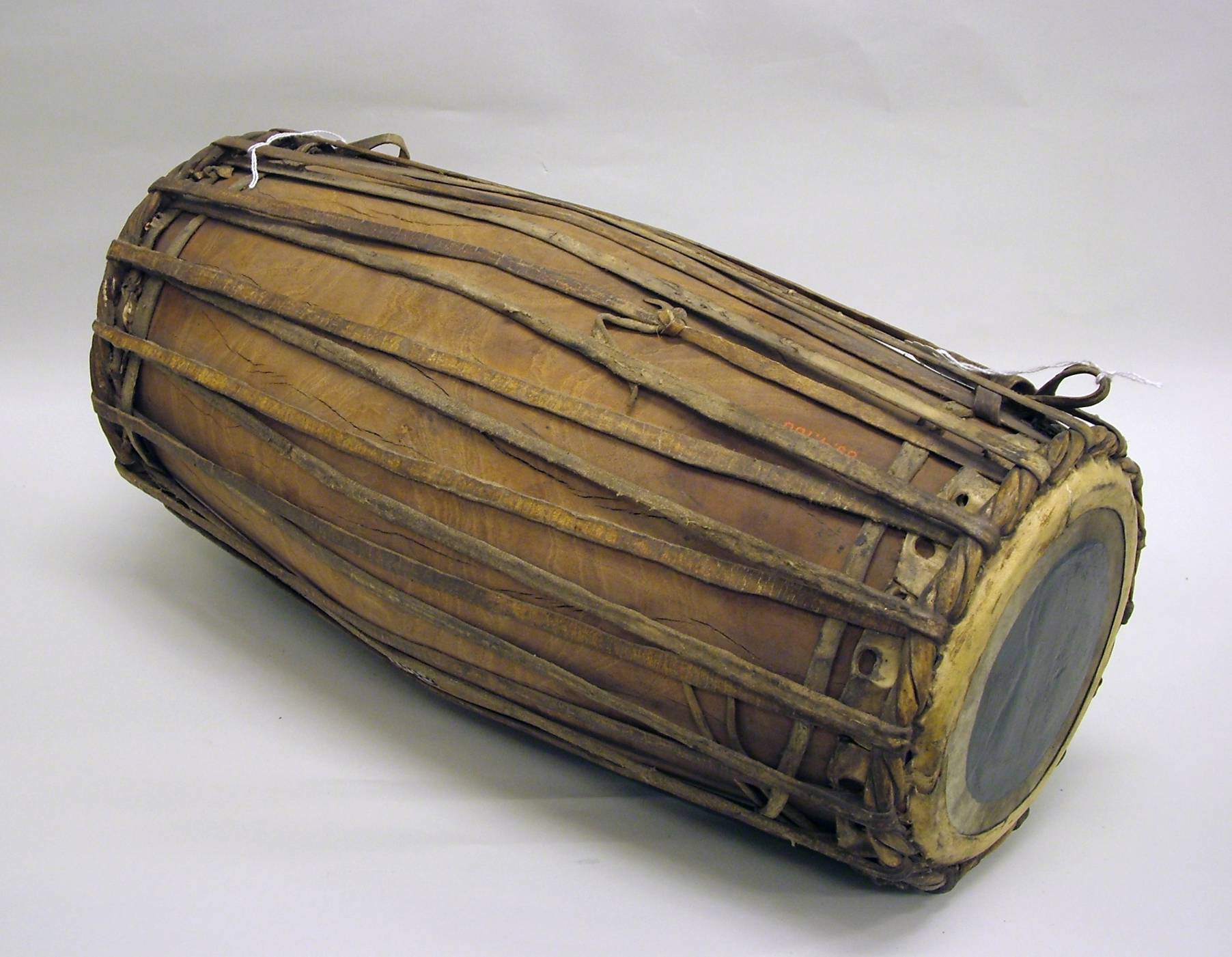
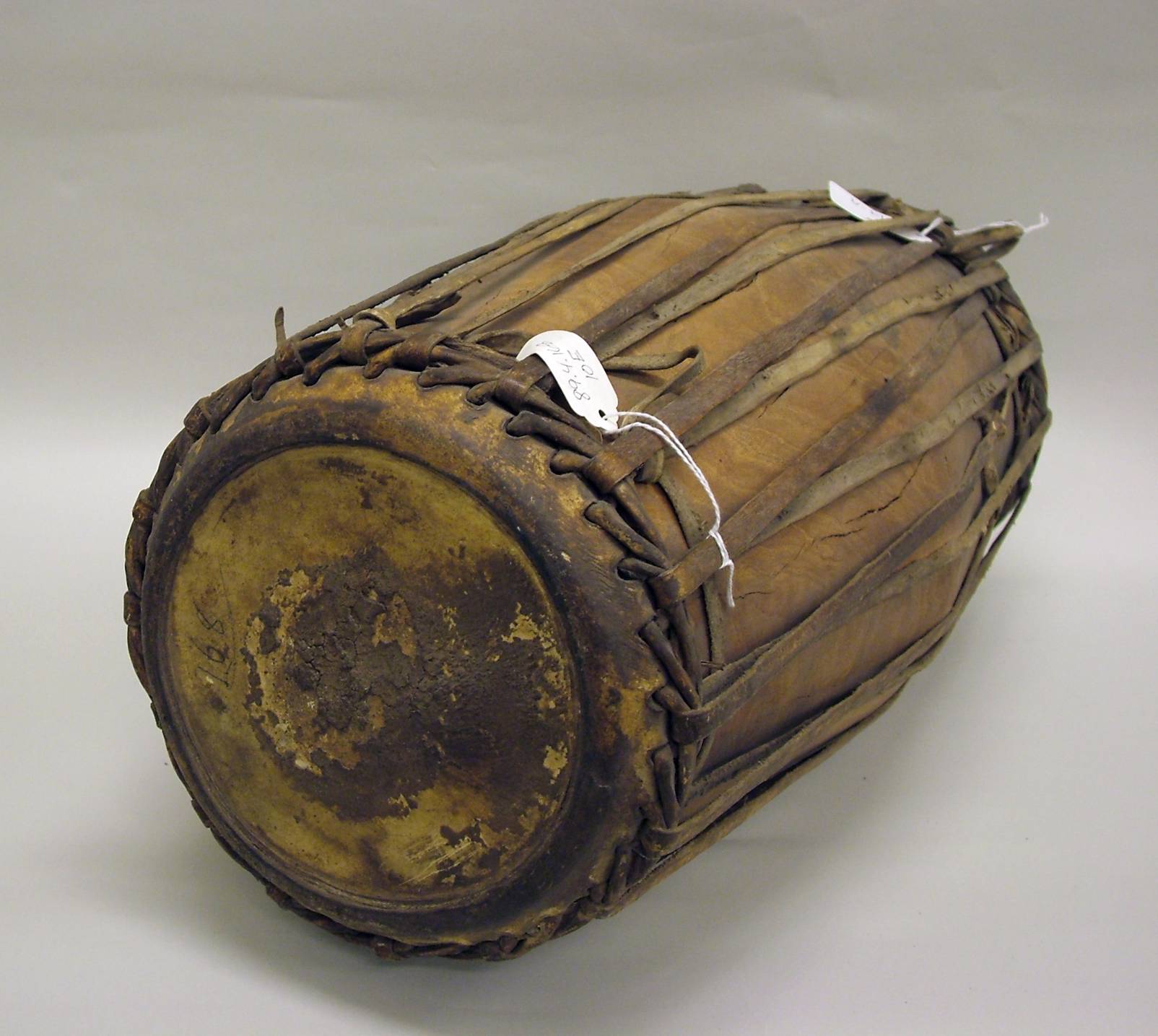
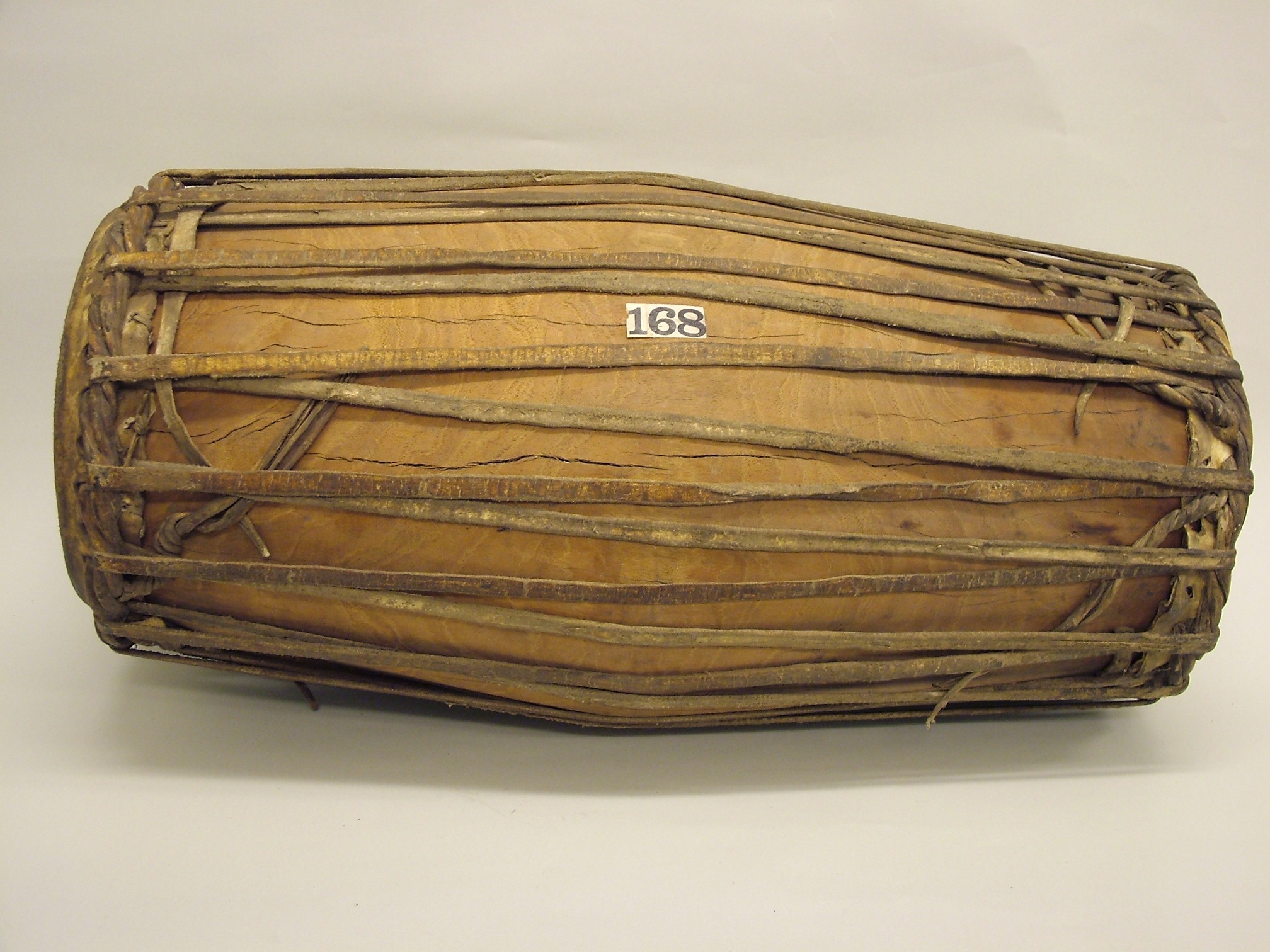
The Metropolitan Museum holds a North Indian pakhawaj of the late 19th century (object 500714), built of wood and skin, donated through the Crosby Brown Collection in 1889 and held in the Musical Instruments department.
The 20th century saw the dhrupad tradition narrow significantly, and with it the pakhawaj’s active playing community. The Dagar Brothers’ decades-long advocacy of dhrupad from the 1950s onward, together with the work of major pakhawaj masters such as Pandit Pagaldas Pakhawaji, Pandit Ramashish Pathak and the Kudau Singh, Nathdwara and Punjab gharanas (lineage schools), has kept the instrument actively transmitted into the present.
Construction & Materials
The pakhawaj shell is around 60 centimetres long and tapers slightly toward both heads, giving the body its characteristic barrel shape. The shell is carved from a single piece of jackwood, sheesham or another dense hardwood. Both heads are larger than the tabla heads — the right (treble) head around 19 centimetres in diameter, the left (bass) head around 25 centimetres — and both are made of layered goat or deer skin laced together over the shell with leather strips and tuning blocks.
The right head carries a permanent black loading paste called syahi (made of iron filings, gum, charcoal and other materials), the same loading technique used on the tabla; this paste lowers the head’s pitch and gives it its characteristic ringing tonal definition. The left head, by contrast, receives a fresh wheat-flour-and-water paste applied immediately before each performance, which provides the deep bass resonance — and which has to be carefully cleaned off after playing to prevent the head from being damaged.
This pre-performance application of the wet-flour bass paste is one of the most distinctive technical practices in any percussion tradition worldwide.
How It’s Played
The player sits cross-legged on the floor with the pakhawaj horizontal in front of the body, the smaller right head on the player’s right and the larger left head on the player’s left. Both hands strike the two heads simultaneously, with the right hand using fingertip and palm strokes (ti, ta, dhi, dha, ki, ke) and the left hand using full-palm and heel-of-palm strokes (ge, dhe).
The technical vocabulary is large but is structured around the requirements of dhrupad accompaniment: the pakhawaj must follow the slow opening alap of the singer or instrumentalist, then progress through the increasingly rhythmically complex jod and jhala sections, and finally accompany the strongly metric composed bandish on a fixed taal (rhythmic cycle). The 12-beat Chautal is the central pakhawaj-dhrupad rhythmic cycle.
Solo pakhawaj playing is also a developed art form, with elaborate composed paran and gat compositions that demonstrate the instrument’s full technical range.
Cultural Significance
The pakhawaj is the central rhythmic voice of dhrupad — the oldest continuously performed North Indian classical vocal genre, with documented continuity from the 13th century to the present day. The instrument’s deep, sustained sound and its capacity for very slow, very long rhythmic cycles fit the meditative architectural structure of dhrupad performance in a way that the more brilliant and more agile tabla cannot.
In the wider arc of North Indian classical music the pakhawaj also accompanies the rudra veena (bin), the sursringar and several other older instruments associated with the dhrupad lineage. In the modern era its playing community is much smaller than the tabla’s, but the dedicated revival of dhrupad through the Dagar tradition and through the work of the Dhrupad Sansthan in Bhopal has secured the pakhawaj’s continued transmission.
Notable Examples & Recordings
The MET’s late-19th-century specimen (object 500714) is a useful reference for the standard North Indian construction. The Sangeet Natak Akademi Museum in Delhi holds further important historical examples.
For listening:
- Pandit Pagaldas Pakhawaji with the Dagar Brothers — central archival recordings of dhrupad accompaniment.
- Pandit Ramashish Pathak, Pakhawaj Solo — leading modern solo player.
- Manik Munde, accompanying Uday Bhawalkar — modern dhrupad concert recordings.
- Pandit Bhavani Shankar, pakhawaj in fusion contexts — extended cross-genre work.
Related Instruments
- Tabla – the modern pair of drums that descend from the pakhawaj.
- Mridangam – the South Indian classical barrel drum that shares the pakhawaj’s ancient mridanga lineage.
- – the Bengali clay-bodied barrel drum used in kirtan.
- – the Manipuri barrel drum used in classical dance.
- Dholak – the smaller folk barrel drum used across South Asia in non-classical contexts.
Where to Hear It
The Dhrupad Mela in Varanasi every February-March is the largest annual dhrupad festival in India and features extensive pakhawaj playing. The Dover Lane Music Conference in Kolkata, the Saptak Festival in Ahmedabad and the Sawai Gandharva Music Festival in Pune all programme dhrupad performances with pakhawaj accompaniment. The Dhrupad Sansthan in Bhopal provides intensive year-round teaching and regular concert performances.
Learning Resources
Pakhawaj study traditionally takes place through guru-shishya parampara — long apprenticeship with a senior player from one of the established gharana lineages (Nathdwara, Kudau Singh, Punjab, Mathura). Conservatory-level instruction is available at the Dhrupad Sansthan in Bhopal, the Sangeet Natak Akademi in Delhi, the Banaras Hindu University music department and the Indira Kala Sangeet University in Khairagarh. Standard tutor materials include the Pakhawaj Vadan method by Pandit Ayodhya Prasad and modern publications by leading players. New concert-grade pakhawaj by makers in Varanasi and Delhi run from approximately 300 to 1,000 USD.
Frequently Asked Questions
What is the difference between a pakhawaj and a tabla?
The pakhawaj is a single two-headed barrel drum played horizontally with both hands striking the two heads. The tabla is a pair of two separate single-headed drums, with the right hand playing one and the left hand playing the other. The tabla developed from the pakhawaj in the 17th-18th centuries.
What music is the pakhawaj used for?
The pakhawaj is the principal accompaniment drum of dhrupad, the oldest surviving North Indian classical vocal genre, and of the rudra veena (bin) and several other instruments in the dhrupad lineage. It also has a developed solo concert repertoire.
Why is the left head loaded with wheat-flour paste?
The wet wheat-flour-and-water paste applied to the left head before each performance lowers the head’s pitch and provides the deep, resonant bass tone that defines the pakhawaj’s sound. The paste is washed off after playing to protect the head.
Are old pakhawaj in museums?
Yes. The Metropolitan Museum holds a late-19th-century North Indian pakhawaj (object 500714) in the Musical Instruments department.
Is the pakhawaj related to the South Indian mridangam?
Both descend from the same ancient mridanga drum documented in early Sanskrit musical texts. The two have developed along separate paths in North and South Indian classical music but retain shared structural and technical elements.
Is it possible to learn the pakhawaj outside India?
Yes. The Dhrupad Sansthan in Bhopal, several gharana teachers in Varanasi and Delhi, and the leading players Pandit Bhavani Shankar and Manik Munde teach international students through residential programmes, online masterclasses and tour-based workshops in Europe, North America and Japan.


