

Dholak
ढोलक
| Category | Percussion |
|---|---|
| Country of origin | South Asia |
| Wikipedia | en.wikipedia.org |
| Wikidata | Q936590 |
Listen
Audio: www.VintageSense.com, CC BY / via Internet Archive
Audio: www.VintageSense.com, CC BY / via Internet Archive
Audio: www.VintageSense.com, CC BY / via Internet Archive
Overview
The dholak is a two-headed cylindrical or barrel-shaped folk drum played across northern South Asia — India, Pakistan, Bangladesh, Nepal and Sri Lanka — and in the Indian and Pakistani diaspora communities worldwide. The two heads have very different sizes and tunings: the smaller right head sounds high, sharp and rhythmically articulate, while the larger left head sounds low and resonant. The drum is held horizontally on the player’s lap, on a strap, or set on the floor, and is played with both hands striking the heads directly.
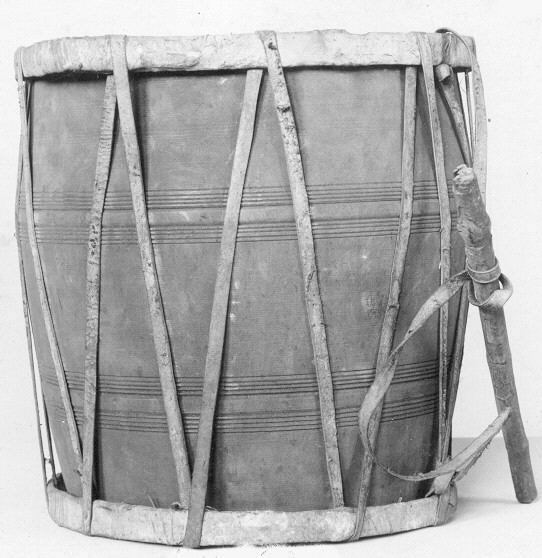
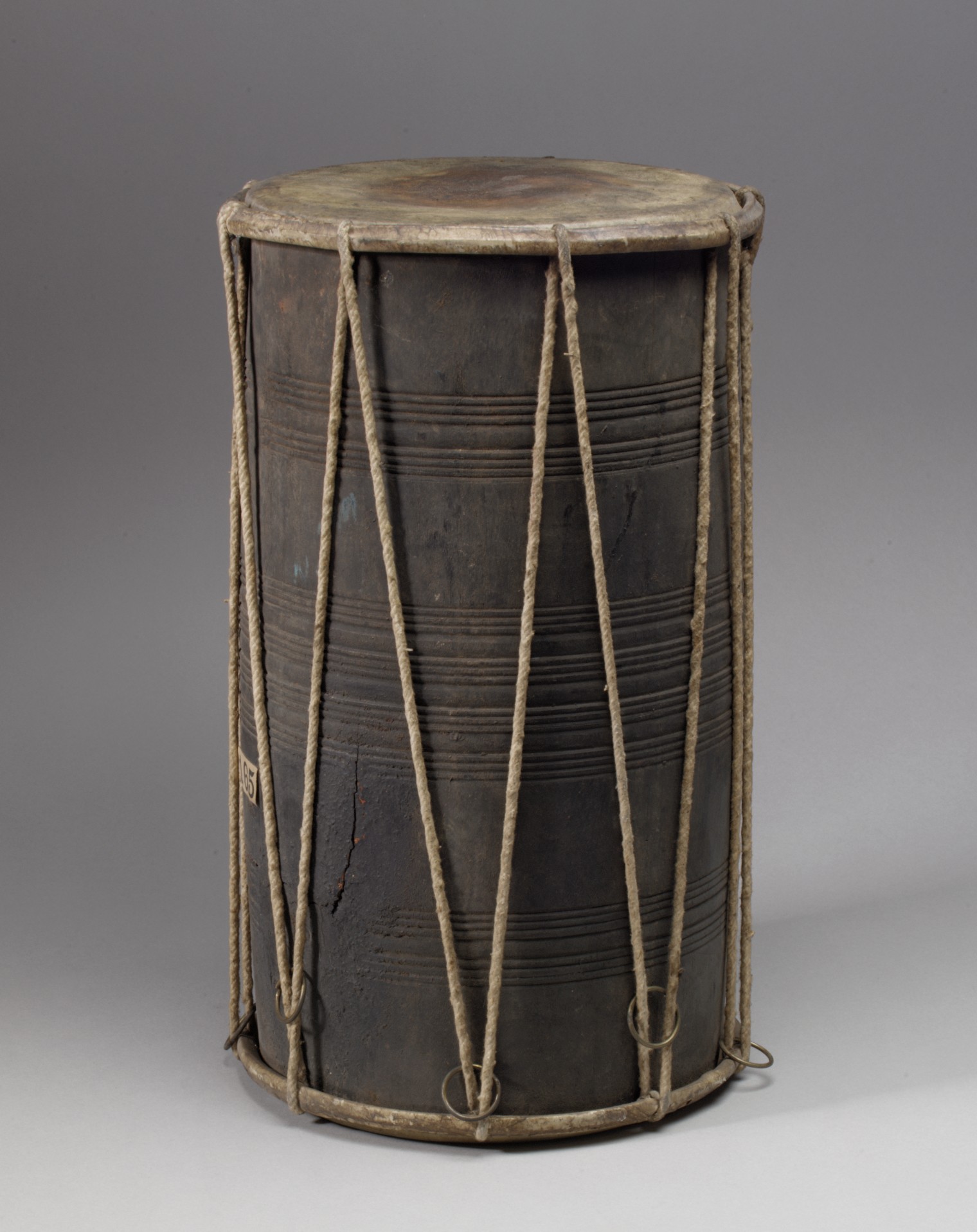
Wikidata describes the dholak as an “ancient Indian double-headed cylindrical or barrel drum” within the tubular drum family. Both MET specimens are catalogued as Membranophone-double-headed / cylindrical drum.
Origin & History
The dholak descends from the ancient Indian drum family documented in Sanskrit musical treatises from the first millennium CE. By the late medieval period it was well established as a folk and devotional drum across the northern Indian subcontinent, distinguished from the larger temple dhol by its smaller size, lighter weight and more nimble playing technique. From the late Mughal era through the colonial period the dholak became one of the standard accompaniment instruments for South Asian folk and devotional song, particularly in bhajan, kirtan and qawwali traditions.
The Metropolitan Museum holds two North Indian dholaks, both from the 19th century. Object 500739 is a 19th-century Indian dholak built of wood, parchment and skin. Object 500711 is a late-19th-century North Indian dholaka (a closely related variant) built of wood, skin, brass and cord. Both were donated through the Crosby Brown Collection in 1889 and both are catalogued in the Musical Instruments department as double-headed cylindrical drums.
In the 20th century the dholak entered Indian film music and became one of the foundational drums of the Bollywood sound. Through the same period it remained central to Sufi qawwali devotional music in Pakistan and India, and to the wedding-music and biraha traditions of the wider South Asian diaspora.
Construction & Materials
A standard dholak shell is around 45 to 55 centimetres long and tapers slightly outward toward the larger left head. The shell is normally carved from a single piece of mango, neem or sheesham wood, with the two heads laced together over the shell using either rope (in older folk instruments) or steel rods with adjustable bolts (in modern factory instruments). The MET specimens, with their parchment heads and rope or cord lacing, represent the late-19th-century pre-bolt construction standard.
The right (treble) head is the smaller of the two and is loaded on its inside with a paste called dholak masala — traditionally a mixture of flour, water and oil, though modern instruments often use rubber or epoxy substitutes. This paste lowers the pitch and adds resonance, giving the right head its characteristic warm, ringing high tone.
The left (bass) head is unloaded but often coated on the inside with a more permanent oil treatment to dampen overtones and produce a deep, dry low note. The interplay between the right head’s loaded ringing tone and the left head’s unloaded low thud is the dholak’s defining sound.
How It’s Played
The player sits cross-legged on the floor or on a low stool, with the dholak laid horizontally on the lap or held by a shoulder strap. The right hand plays the smaller treble head with the fingertips, palm and heel; the left hand plays the larger bass head with the open palm and finger pads. The technique uses a small vocabulary of named strokes (dha, na, ta, ge) that are combined into rhythmic patterns called theka — each theka corresponds to a specific song structure or rhythmic cycle.
In qawwali accompaniment the dholak provides the basic Keherwa eight-beat or Dadra six-beat cycle under the lead vocals; in folk and wedding music it underpins much faster dance patterns. The hands frequently cross over the heads to produce rolling textures and complex polyrhythms — a technique that requires significant practice to develop cleanly.
Cultural Significance
The dholak is the most widely played folk drum in South Asia and one of the most important devotional drums in the Sufi qawwali tradition. The qawwali ensembles led by figures such as Nusrat Fateh Ali Khan and the Sabri Brothers have made the dholak one of the most internationally recognised South Asian percussion instruments — Nusrat’s recordings reached Western audiences in the 1980s and 90s through collaborations with Peter Gabriel and Real World Records.
In Hindu devotional music the dholak underpins bhajan and kirtan gatherings across India and the diaspora, and at South Asian weddings the dholak is the central instrument of sangeet night, when groups of women sing traditional songs accompanied by the drum. In Bollywood film music the dholak has been one of the most-recorded drums since the 1950s and continues to feature in nearly every traditional-style song.
Notable Examples & Recordings
The MET’s two specimens (objects 500739 and 500711) are documented in the Musical Instruments department.
For listening:
- Nusrat Fateh Ali Khan, Shahen-Shah — qawwali with dholak accompaniment by Dildar Hussain.
- Sabri Brothers, Qawwali Masterworks — extended classical Sufi qawwali featuring dholak.
- Pandit Hari Prasad Chaurasia and Pandit Shivkumar Sharma, Call of the Valley — North Indian classical music featuring dholak.
- Bollywood film music archival recordings — film music dholak playing.
Related Instruments
- Tabla – the pair of single-headed drums of North Indian classical music; closely related in playing technique vocabulary but used in classical rather than folk contexts.
- Mridangam – the South Indian classical barrel drum, the southern counterpart to the dholak’s playing geometry.
- Pakhawaj – the older barrel drum of North Indian classical music, the ancestor of the modern tabla pair.
- – the larger, louder folk and processional drum used in Bhangra and Punjabi wedding music.
- Dholki – the smaller variant of the dholak used particularly in northern Indian and Pakistani folk music.
Where to Hear It
Sufi shrine concerts at the major dargahs in Pakistan, India and the Indian diaspora — Nizamuddin Auliya in Delhi, Data Darbar in Lahore, Ajmer Sharif in Rajasthan — feature regular qawwali performances with dholak accompaniment. The Sangeet Natak Akademi in Delhi, the National Centre for the Performing Arts in Mumbai and the South Asian Heritage Foundation cultural centres in London, Toronto and New York all program regular dholak-featuring concerts.
- Wikipedia: Dholak
- The MET: Dholak (object 500739)
- The MET: Dholaka (object 500711)
- Wikimedia Commons: Dholak
Learning Resources
The dholak is one of the more accessible South Asian drums for beginners — the basic strokes are quickly learned, and a child or beginner can produce satisfying basic rhythmic patterns within a few hours. Standard tutor materials include the Dholak Vadan Paddhati and Hindi/Urdu method books published in Lucknow and Lahore; in English the Dholak section of the SAA (South Asian Arts) Music Council resources covers the basic technique. New factory dholaks with steel-rod tuning run from approximately 60 to 200 USD; high-quality hand-made wood instruments by leading Lucknow makers run from approximately 300 to 800 USD.
Frequently Asked Questions
What is the difference between a dholak and a tabla?
The dholak is a single two-headed barrel drum played horizontally with both hands striking opposite sides; it is primarily a folk and devotional instrument. The tabla is a pair of two separate single-headed drums played by one player with each hand on its own drum; it is primarily a classical Hindustani instrument with a much more elaborate technical and rhythmic vocabulary.
What is dholak masala?
Dholak masala is the loading paste applied to the inside of the smaller treble head of the dholak, traditionally a mixture of flour, water and oil. It lowers the pitch and adds resonance, giving the right head its characteristic warm, ringing tone. Modern instruments often use rubber or epoxy substitutes.
Where did the dholak come from?
The dholak descends from the ancient Indian drum family documented in Sanskrit treatises from the first millennium CE. By the late medieval period it was widely played as a folk and devotional drum across the northern South Asian subcontinent.
Are old dholaks in museums?
Yes. The Metropolitan Museum holds two 19th-century North Indian specimens: a dholak (object 500739) and a closely related dholaka (object 500711), both donated through the Crosby Brown Collection in 1889.
Where is the dholak used today?
The dholak is used across South Asia and the diaspora in Sufi qawwali, Hindu bhajan and kirtan, Bollywood film music, wedding music, and many regional folk traditions. It is one of the most widely played folk drums in the world by population reach.
How long does it take to learn the dholak?
A beginner can play simple folk patterns within hours. Competent qawwali accompaniment typically requires two to three years of consistent practice. Master-level dholak playing for classical or film recording is a lifetime project comparable to any other serious percussion instrument.


